
Lyrics · Song of Solomon
Like an Army with Banners
Song of Solomon 6:1-13
Lyrics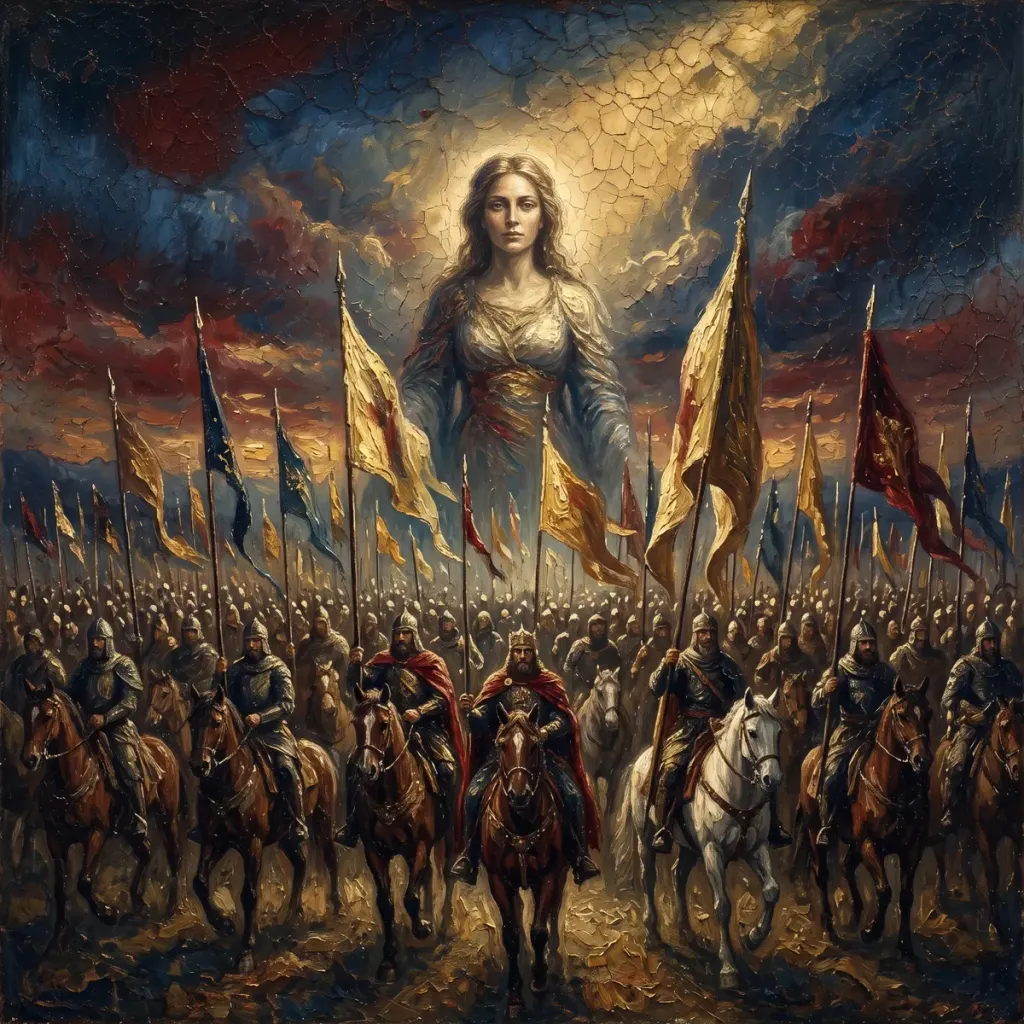
Playing next
About this song
About this song
This song belongs to the Song of Solomon collection. One recording is available to play here, with the complete lyrics below.
- Bible book
- Song of Solomon
- Collection
- Song of Solomon
- Musical styles
- World Music
Named in this songJerusalem
About the passage
Song of Solomon 6: The beloved remains one among many
The search in Song Of Solomon 6 changes shape almost immediately. The daughters who had questioned the beloved's distinction now offer to seek him, while the woman speaks with renewed confidence about the garden, lilies, and mutual belonging. Praise then returns with familiar images but on a larger scale. Tirzah, Jerusalem, and an army with banners make beauty formidable, while the woman's gaze is again said to overcome the one praising her. Courtly abundance follows: sixty queens, eighty concubines, and women without number are placed beside the claim that one beloved remains singular. Moon, sun, morning, and military imagery lift that distinction beyond the court. The final garden scene turns difficult and compressed, moving from budding vines to obscure chariot language and repeated calls to the Shulamite. The energy is unmistakable even where the exact sequence remains unresolved.
Study Song of Solomon 6 in depth