
Genesis 12:1–9; 15:1–6
God's promise to Abraham: stars in the sky

Ages 8 to 11
The account
God told Abram to leave his country, his relatives, and his father's house. God would show him a land. God promised to make Abram a great nation, bless him, make his name great, and make him a blessing. God also said that all families of the earth would be blessed through him.
Abram obeyed. He left Haran when he was seventy-five years old. Sarai, his wife, went with him. Lot, his brother's son, went too. They took their belongings and the people who were with them, and they came into Canaan.
Abram traveled through the land to Sichem and the plain of Moreh. The Canaanites were living in the land. There the LORD appeared to Abram and promised the land to his descendants. Abram built an altar to the LORD. Later he moved near Bethel, pitched his tent, built another altar, and called upon the name of the LORD.
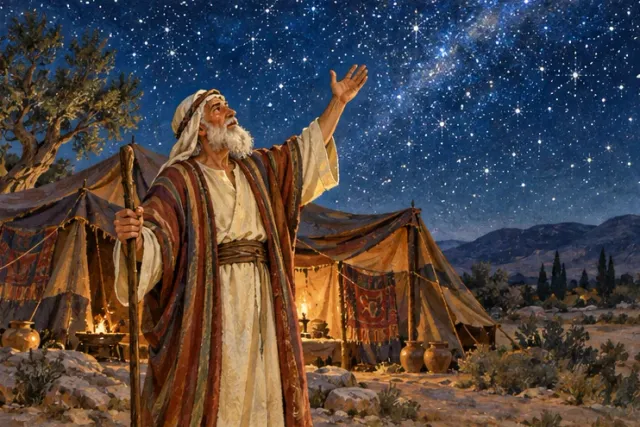
After these things, the word of the LORD came to Abram in a vision. God told Abram not to fear and said He was Abram's shield and great reward. Abram still had no child. God told him that his own son would be his heir. Then God brought Abram outside and told him to look toward heaven and count the stars, if he could. God said Abram's descendants would be like that. Abram believed the LORD, and the LORD counted it to him for righteousness.
Memory verse
And he believed in the LORD; and he counted it to him for righteousness.
Genesis 15:6
Talk about it
- What did God tell Abram to leave?
- Who went with Abram from Haran?
- What did God tell Abram to look at when He spoke about his descendants?
Try this
Draw a night sky and fill it with as many stars as you can. Try counting them, then write one sentence under your picture about the promise God gave Abram.
What can we learn?
A lesson we can draw from this account is that trusting God does not depend on already being able to see how everything will happen. Abram believed what God told him.
Ages 12 to 15
The account
In Genesis 12, God called Abram to leave his country, his relatives, and his father's house and go to a land God would show him. God attached remarkable promises to that command. He would make Abram a great nation, bless him, make his name great, and make him a blessing. God also said that all families of the earth would be blessed through Abram.
Abram went as the LORD had spoken. He was seventy-five years old when he left Haran. Sarai his wife and Lot his brother's son went with him. Abram also took their possessions and the people they had gained in Haran. Their destination was Canaan, and Genesis says plainly that they arrived there.
Abram passed through the land to Sichem and the plain of Moreh. The Canaanites were then in the land, an important detail because God next appeared to Abram and promised that land to his descendants. Abram built an altar to the LORD there. He later moved to a mountain east of Bethel, pitched his tent with Bethel to the west and Hai to the east, built another altar, and called upon the name of the LORD. Then he continued toward the south.
Genesis 15 returns to God's promise. The word of the LORD came to Abram in a vision and told him not to fear. The LORD said He was Abram's shield and exceeding great reward. Yet Abram pointed out a serious problem: he was still childless. Abram said that his steward was Eliezer of Damascus and that one born in his house was his heir. The LORD answered that this person would not be Abram's heir. Abram's heir would come from his own body.
Then God brought Abram outside. He told him to look toward heaven and count the stars, if he was able to number them. God said Abram's descendants would be like that. The picture was enormous, while Abram's present situation still looked small. The passage does not say that Abram suddenly received a child at that moment. Instead, it tells what Abram did with God's promise: he believed the LORD.
Genesis then gives the account its key statement. Abram believed, and the LORD counted it to him for righteousness. The promise of descendants was not based on what Abram could already see. At this point in the account, he had God's word and trusted it.
Memory verse
And he believed in the LORD; and he counted it to him for righteousness.
Genesis 15:6
Think about it
- Why is Abram's being childless important to understanding the promise about the stars?
- What does God's repeated promise show about what He wanted Abram to know?
- What actions did Abram take after arriving in Canaan?
- Why does the contrast between Abram's present situation and God's promise matter in this account?
Going deeper
Genesis later records that God renamed Abram Abraham and that Sarah bore Isaac, the promised son. Abraham's family continues through the Bible, and the New Testament looks back to him as an important example of faith in Romans 4. Galatians 3 also connects the promise that the nations would be blessed through Abraham with Christ. The promise in Genesis 12 and 15 therefore becomes part of a much larger line running through Scripture.
What can we learn?
One lesson we can draw from this account is that faith can involve trusting God's word before the result is visible. Abram's response also shows that questions and trust can appear in the same account: he spoke honestly about being childless, then believed the LORD's promise.