
Genesis 11:1–9
The tower of Babel

Ages 8 to 11
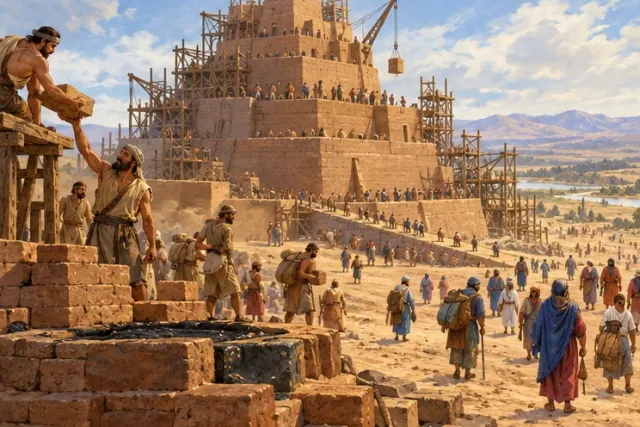
The account
At first, the whole earth had one language and one speech. As the people journeyed from the east, they found a plain in the land of Shinar and lived there.
They decided to make bricks and bake them well. They used brick instead of stone, and slime for mortar. Then they planned to build a city and a tower whose top might reach to heaven. They also wanted to make a name for themselves so they would not be scattered across the whole earth.
The LORD came down to see the city and the tower the people were building. He said that the people were one and had one language. God saw what they had begun to do.
Then the LORD confounded their language so they could no longer understand one another's speech. The LORD scattered them from that place across the whole earth, and they stopped building the city.
The city was called Babel because that was where the LORD confounded the language of the whole earth and scattered the people.
The account begins with everyone speaking the same language. It ends with many people no longer understanding one another and living in different places.
Memory verse
And the whole earth was of one language, and of one speech.
Genesis 11:1
Talk about it
- Where did the people settle?
- What did they decide to build?
- What happened after the LORD confounded their language?
Try this
Fold a sheet of paper into four boxes. Draw or write one part of the account in each box: one language, building the city and tower, languages being confounded, and the people being scattered.
What can we learn?
A lesson we can draw is that being united does not make every plan good. The people worked together, but God still stopped their plan and scattered them.
Ages 12 to 15
The account
Genesis says that the whole earth had one language and one speech. As the people journeyed from the east, they found a plain in the land of Shinar and settled there. The passage makes their shared language important because the LORD later points to their unity and common language when speaking about what they had begun to do.
The people decided to make bricks and burn them thoroughly. Genesis explains that they used brick in place of stone and slime for mortar. They spoke to one another first about making the bricks, then about what they would build with them. They planned a city and a tower whose top might reach to heaven. Their purpose was also clear: they wanted to make a name for themselves, and they did not want to be scattered across the face of the whole earth. The passage does not give the tower's measurements or describe what it looked like beyond that purpose and its intended height.
Then the LORD came down to see the city and the tower that the people had built. God said that the people were one and that they all had one language. He also said that this was only the beginning of what they had imagined to do, and that nothing would be restrained from them. Their common speech, which had helped them work together, now became the point at which God interrupted the project.
The LORD then confounded their language so that they could no longer understand one another's speech. The result was immediate. The LORD scattered them from that place across the face of all the earth, and they stopped building the city.
Genesis says the place was called Babel because the LORD confounded the language of all the earth there. From Babel, he scattered the people abroad over the whole earth.
The account is striking because the people's own goal included avoiding that very outcome. They built together so they would not be scattered, but scattering is exactly what followed. Genesis does not tell us how long they worked or how many people were there. Its attention stays on their shared language, their plan, the LORD's response, and the spreading of the people across the earth.
Memory verse
And the whole earth was of one language, and of one speech.
Genesis 11:1
Think about it
- Why do you think Genesis makes the people's shared language important to the account?
- What reasons did the people give for building the city and tower?
- Why is the scattering of the people important when compared with what they had hoped to prevent?
- What does the LORD's response show about the limits of human plans?
Going deeper
Earlier in Genesis, after the flood, God told Noah and his sons to be fruitful, multiply and replenish the earth (Genesis 9:1). At Babel, the people specifically hoped not to be scattered, but God scattered them across the earth. Much later, Acts 2:5–11 describes people from many nations gathered at Jerusalem who heard the apostles speaking in their own languages. The wider Bible returns to the subject of different languages and peoples in a very different setting.
What can we learn?
A lesson we can draw is that human cooperation is powerful, but purpose matters. The builders had a shared language, resources and a common plan, yet God interrupted what they were doing. The account also reminds us that human plans never place people beyond God's authority.