The big picture
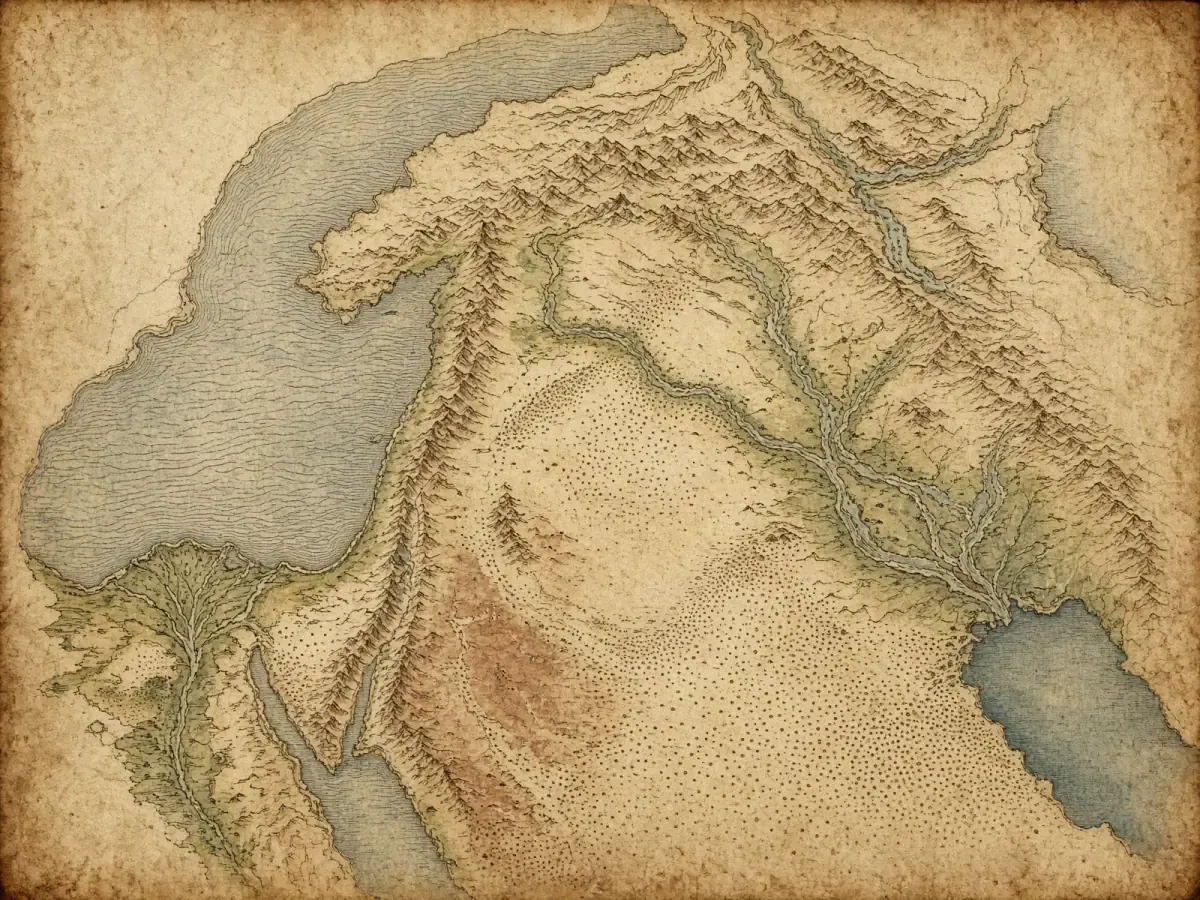
Genesis 10 listed many nations and languages after the flood. Genesis 11 now goes back to Babel, a city in Shinar, an ancient region in the area of modern Iraq. People there share one language and build together. God stops their project by confusing their speech and scattering them. The chapter then follows Shem, one of the three sons of Noah, the man whose family survived the flood. That family line reaches Terah, father of Abram, Nahor and Haran. The final scene follows Terah's household from Ur, an ancient city in that wider region, toward Canaan, a land along the eastern Mediterranean coast.
In this chapter
- God Confuses the Language at Babel Genesis 11:1-9
Everyone speaks one language and settles on a plain in Shinar.
- Shem's Family Reaches Terah Genesis 11:10-26
Genesis now follows one family line from Shem.
- Terah's Household Leaves Ur Genesis 11:27-32
Genesis gives more detail about Terah's family.
Central truth
Genesis 11 explains the scattering at Babel, then traces Shem's family line to Terah and Abram.
Scripture beside the summary
Genesis · King James Version · 32Genesis 11:1-9
God Confuses the Language at Babel
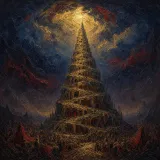
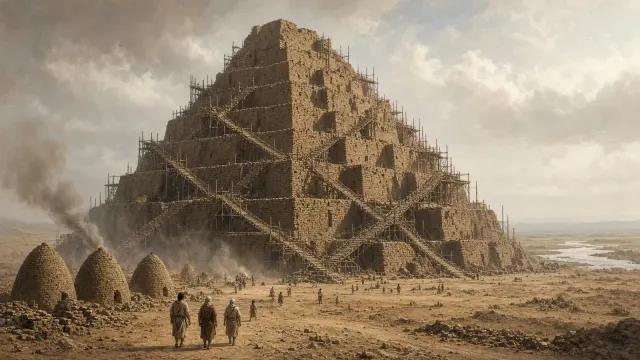
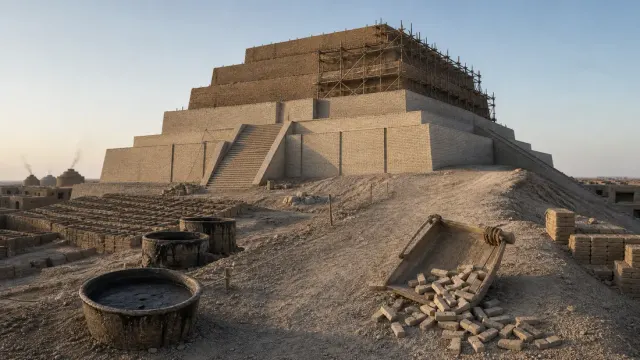
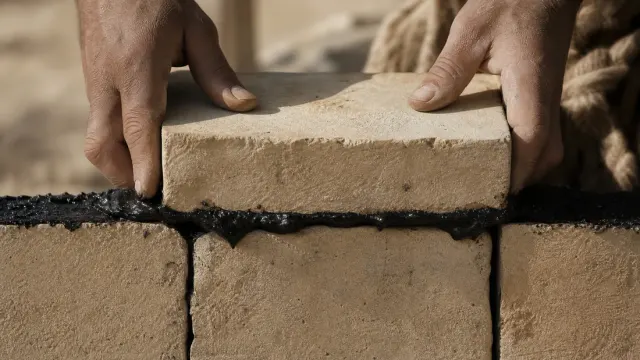
Everyone speaks one language and settles on a plain in Shinar. The people make bricks and use bitumen for mortar. They plan a city and a tower reaching toward heaven. They want to make a great name for themselves and avoid being scattered across the earth. God sees the city and says their shared speech lets them act together and keep carrying out their plans. God then confuses their language, so they can no longer understand one another. The building stops. God scatters the people across the earth. The place is called Babel because that is where their common speech is confused.

In everyday life
A foreman reaches a major road repair before sunrise. Half the workers receive one set of instructions, while the rest receive another in a language they do not understand. Machines stop, measurements clash and the job breaks down. Babel is different because God causes the language break and scatters whole populations.
Notice
Genesis 11:4 Verse 4 gives the builders' own goal: they do not want to be scattered. That matters because scattering is exactly what follows after God confuses their language.
Genesis 11:1-9
King James Version1And the whole earth was of one language, and of one speech.
2And it came to pass, as they journeyed from the east, that they found a plain in the land of Shinar; and they dwelt there.
3And they said one to another, Go to, let us make brick, and burn them throughly. And they had brick for stone, and slime had they for morter.
4And they said, Go to, let us build us a city and a tower, whose top may reach unto heaven; and let us make us a name, lest we be scattered abroad upon the face of the whole earth.
5And the LORD came down to see the city and the tower, which the children of men builded.
6And the LORD said, Behold, the people is one, and they have all one language; and this they begin to do: and now nothing will be restrained from them, which they have imagined to do.
7Go to, let us go down, and there confound their language, that they may not understand one another’s speech.
8So the LORD scattered them abroad from thence upon the face of all the earth: and they left off to build the city.
9Therefore is the name of it called Babel; because the LORD did there confound the language of all the earth: and from thence did the LORD scatter them abroad upon the face of all the earth.
Genesis 11:10-26
Shem's Family Reaches Terah
Genesis now follows one family line from Shem. Each generation names a father, the son who carries the line forward, and the father's age when that son is born. It also notes later years and other sons and daughters. The line runs through Arphaxad, Salah, Eber, Peleg, Reu, Serug and Nahor. It ends with Terah. Terah has three named sons: Abram, Nahor and Haran. The long list gives a clear link from the family saved through the flood to the household that will soon become central in Genesis.
In everyday life
An estate lawyer spreads a family tree across a table. She follows one branch from a dead great-grandfather to the living heirs named in a will. Most names need no biography. The chain matters because it shows how the people are related. Genesis uses the family line to prepare for Abram, not to settle a modern estate.
Notice
Genesis 11:26 Verse 26 changes the pattern by naming three sons of Terah instead of one son alone. That shift brings Abram, Nahor and Haran into view as one household.
Genesis 11:10-26
King James Version10These are the generations of Shem: Shem was an hundred years old, and begat Arphaxad two years after the flood:
11And Shem lived after he begat Arphaxad five hundred years, and begat sons and daughters.
12And Arphaxad lived five and thirty years, and begat Salah:
13And Arphaxad lived after he begat Salah four hundred and three years, and begat sons and daughters.
14And Salah lived thirty years, and begat Eber:
15And Salah lived after he begat Eber four hundred and three years, and begat sons and daughters.
16And Eber lived four and thirty years, and begat Peleg:
17And Eber lived after he begat Peleg four hundred and thirty years, and begat sons and daughters.
18And Peleg lived thirty years, and begat Reu:
19And Peleg lived after he begat Reu two hundred and nine years, and begat sons and daughters.
20And Reu lived two and thirty years, and begat Serug:
21And Reu lived after he begat Serug two hundred and seven years, and begat sons and daughters.
22And Serug lived thirty years, and begat Nahor:
23And Serug lived after he begat Nahor two hundred years, and begat sons and daughters.
24And Nahor lived nine and twenty years, and begat Terah:
25And Nahor lived after he begat Terah an hundred and nineteen years, and begat sons and daughters.
26And Terah lived seventy years, and begat Abram, Nahor, and Haran.
Genesis 11:27-32
Terah's Household Leaves Ur
Genesis gives more detail about Terah's family. Haran, one of his sons, becomes the father of Lot and dies in Ur of the Chaldees, his homeland. Abram marries Sarai. Nahor marries Milcah, a daughter of Haran. Sarai has no child. Terah then leaves Ur with Abram, Sarai and Lot. His stated goal is Canaan, the land along the eastern Mediterranean coast. The family reaches Haran, a city farther north, and settles there instead. Genesis does not say why the trip stops. Terah later dies there at the age of two hundred and five.
In everyday life
A widowed father packs a truck with his son, daughter-in-law and grandson. The family leaves its home for a distant region but settles in another city before reaching the planned destination. Years later, the father dies there. Terah's move belongs to an ancient clan world, and Genesis gives no reason for the stop.
Notice
Genesis 11:30 Verse 30 gives Sarai's childlessness its own short statement. That fact becomes important because the next chapter begins promises about Abram becoming a great nation.
Genesis 11:27-32
King James Version27Now these are the generations of Terah: Terah begat Abram, Nahor, and Haran; and Haran begat Lot.
28And Haran died before his father Terah in the land of his nativity, in Ur of the Chaldees.
29And Abram and Nahor took them wives: the name of Abram’s wife was Sarai; and the name of Nahor’s wife, Milcah, the daughter of Haran, the father of Milcah, and the father of Iscah.
30But Sarai was barren; she had no child.
31And Terah took Abram his son, and Lot the son of Haran his son’s son, and Sarai his daughter in law, his son Abram’s wife; and they went forth with them from Ur of the Chaldees, to go into the land of Canaan; and they came unto Haran, and dwelt there.
32And the days of Terah were two hundred and five years: and Terah died in Haran.
Details worth noticing
The opening image
Genesis 11:1 begins with “And the whole earth was of one language, and of one speech.”
Where the chapter turns
Genesis 11:9 forms a natural hinge: “Therefore is the name of it called Babel; because the LORD did there confound the language of all the earth: and from thence did the LORD scatter them…”
The final note
Genesis 11:32 leaves the reader with “And the days of Terah were two hundred and five years: and Terah died in Haran.”
A word trail through the chapter
The words begat, years, lived, Terah, daughters, Haran help reveal the chapter’s repeated concerns.
KJV words made clear
- slime
- Bitumen, a sticky asphalt-like material used here to bind bricks together.
- morter
- Mortar, material placed between bricks or stones to hold them together.
- confound
- Confuse or disrupt, here by making people unable to understand one another's speech.
- barren
- Unable to have children; Sarai is said to have no child.
- Chaldees
- A people linked with the region around Ur, where Terah's family had lived.
Music and video connected to the passage
Related media appears when its Scripture reference overlaps this study. Music and video can illuminate a theme while the biblical text remains the foundation.