New · FreePlay The Witnesses The in-depth puzzle battle quest through Bible history

Places of the Bible

Babel

A plain, a brick, and a tower built so that a name would not be scattered.

People travelling east find a plain in Shinar and settle there. The account pauses on the technology, brick instead of stone and tar instead of mortar, because the tower is only possible once the material is. The stated aim is not to reach God but to make a name and to avoid being scattered. What follows is the shortest possible answer: the languages divide, the work stops, and the people scatter anyway.

Where it appearsGenesis 10 to 11

Scroll down to the account
Babel

The movements, in the order the text gives them.

The Account of Babel

  1. 01

    Genesis 11:1-2

    One language

    The world speaks with one lip. The account treats that as a starting condition, not an achievement.

    The first thing Babel possesses is not a tower. It is effortless understanding. One language, and one speech gives the settlement a resource more basic than bricks: one person's words can become another person's work without explanation. The passage begins with a shared capacity, not with a declaration that speaking alike is itself wicked.

    There is a small chronological trap here. The previous chapter has already described peoples divided by their tongues, lands, and nations. Chapter 11 therefore looks behind that established map to explain the division; it does not require all those languages to vanish between chapters. The Book of Genesis can survey the result and then return to the event that accounts for it.

    Shinar has also appeared already, in 10:10, where Babel belongs to the beginning of Nimrod's kingdom. Yet these verses name no ruler and put no speech into Nimrod's mouth. The people move, find a plain, and settle together. The emphasis falls on the collective. Before any monument rises above the ground, the human machinery is already in place.

    Verse by verse

    1. 11:1

      Genesis 10:5, 10:20, and 10:31 already mention different tongues. The placement of this account explains the diversity described in that earlier survey.

    2. 11:2

      Shinar is also the land containing Babel in Genesis 10:10. Genesis 11 does not identify a named leader of the builders.

    Genesis 11:1-2

    King James Version · 2 verses

    11:1And the whole earth was of one language, and of one speech.

    11:2And it came to pass, as they journeyed from the east, that they found a plain in the land of Shinar; and they dwelt there.

    Genesis 11:1-2: One language
  2. 02

    Genesis 11:3-4

    Come, let us build

    The plan is spoken aloud, and it names its own motive. The tower is a defence against dispersal.

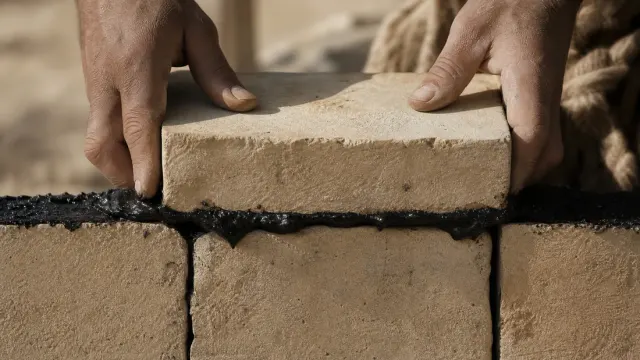
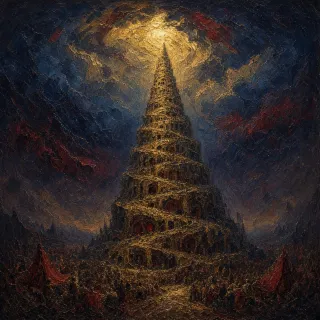
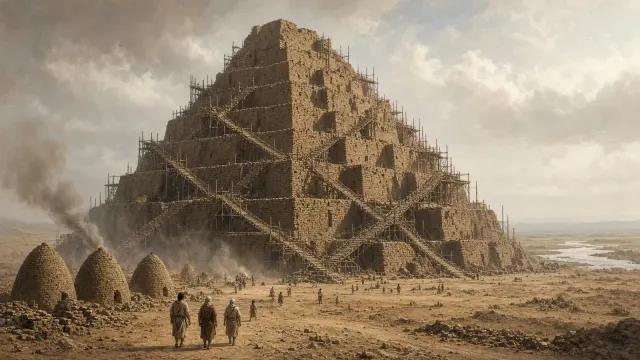
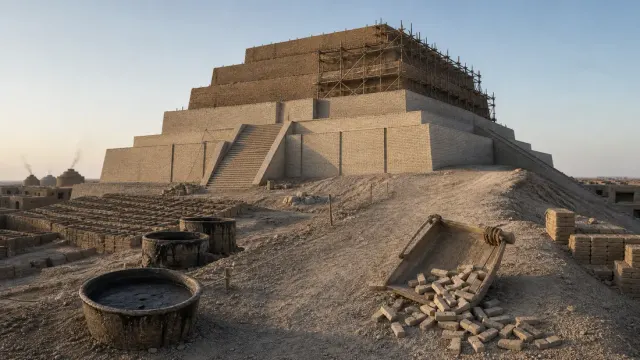
    The building materials receive a whole verse; the tower's measurements receive none. That is a useful correction to the enormous structures imagination supplies. The text is interested in how the undertaking becomes possible and what its builders say it is for. Fired brick replaces stone, and bitumen serves as mortar. This is organized, practical work, not a vague wish to be impressive.

    Their stated purpose has two parts: a name and protection against dispersal. The tower belongs to a city designed to hold its people together. Reaching heaven describes its intended grandeur, but the verse does not say they expect to climb into God's dwelling, escape another flood, or attack heaven. Those explanations add motives the builders never voice.

    The sharper contrast sits in the surrounding chapters. Humanity has been commanded to fill the earth in 9:1; here scattering is the outcome to prevent. In 12:2, God promises to make Abram's name great. Babel tries to manufacture a name by remaining together; Abram receives the promise of one while being told to leave. The issue is larger than the height of a tower. It is the difference between securing a future and receiving one.

    Verse by verse

    1. 11:3

      Slime here translates chemar, bitumen or asphalt, not ordinary wet mud. The verse distinguishes it from the material it replaces as mortar.

    2. 11:4

      Deuteronomy 1:28 also describes cities fortified up to heaven. Such language can express extraordinary height without implying literal entry into heaven.

    3. 11:4

      Make us a name contrasts with God's promise to make Abram's name great in Genesis 12:2. The same concern with a name appears in two very different settings.

    Genesis 11:3-4

    King James Version · 2 verses

    11:3And they said one to another, Go to, let us make brick, and burn them throughly. And they had brick for stone, and slime had they for morter.

    11:4And they said, Go to, let us build us a city and a tower, whose top may reach unto heaven; and let us make us a name, lest we be scattered abroad upon the face of the whole earth.

    Genesis 11:3-4: Come, let us build
  3. 03

    Genesis 11:5-9

    Scattered

    The confusion of speech is not a punishment aimed at language. It is the end of a single project.

    The tower intended for heaven is small enough that the LORD comes down to inspect it. The Book of Genesis delivers that reversal without a wink or an explanation. The builders' chosen scale and God's scale are simply placed beside each other. Heaven has not become difficult to defend.

    The intervention answers their own words. Their repeated Go to is met by God's Go to; their shared speech is met by the disruption of speech; their determination not to scatter ends in scattering. Nothing is said about a lightning strike, a collapsing tower, or the death of the workers. The city stops because the cooperation required to build it has been broken. The passage locates the project's strength, and therefore its point of interruption, in mutual understanding.

    They do receive a name, but not the kind they set out to secure. Babel is linked to balal, confound, so the name preserves the defeat of their program rather than its completion. The final verse repeats both the whole earth and the scattering. A project designed to prevent dispersion becomes the explanation for it. The monument does not need to fall for the ambition to fail.

    Verse by verse

    1. 11:5

      Coming down creates a contrast with the builders' claim about a tower reaching heaven. The verse does not give the tower's height.

    2. 11:8

      The text says construction of the city ceased. It does not report that God demolished the tower.

    3. 11:9

      Babel and the Hebrew verb balal, confound or mix, form the passage's wordplay. The explanation concerns the name's significance within this account.

    Genesis 11:5-9

    King James Version · 5 verses

    11:5And the LORD came down to see the city and the tower, which the children of men builded.

    11:6And the LORD said, Behold, the people is one, and they have all one language; and this they begin to do: and now nothing will be restrained from them, which they have imagined to do.

    11:7Go to, let us go down, and there confound their language, that they may not understand one another’s speech.

    11:8So the LORD scattered them abroad from thence upon the face of all the earth: and they left off to build the city.

    11:9Therefore is the name of it called Babel; because the LORD did there confound the language of all the earth: and from thence did the LORD scatter them abroad upon the face of all the earth.

    Genesis 11:5-9: Scattered

Why it matters

Babel explains the world the rest of the Bible happens in, a world of many nations and many languages. It is also the counterweight to the call of Abraham in the very next chapter: a name people make for themselves against a name given to one family for the blessing of all of them. The undoing of Babel is a specific promise, and Acts picks it up on a specific day.

2 songs

The music

Every song in the catalogue whose passage falls inside these chapters.

  1. Genesis 10:1-11:26

    A Name to Reach the Heavens

  2. Genesis 11:1-9

    One Tongue, One Tower

Nearby

All the places

Report an error on this page