New · FreePlay The Witnesses The in-depth puzzle battle quest through Bible history

People of the Bible

Nimrod

The first man to be called mighty, whose kingdom began at Babel and whose cities became Assyria.

Also called The mighty hunter before the LORD

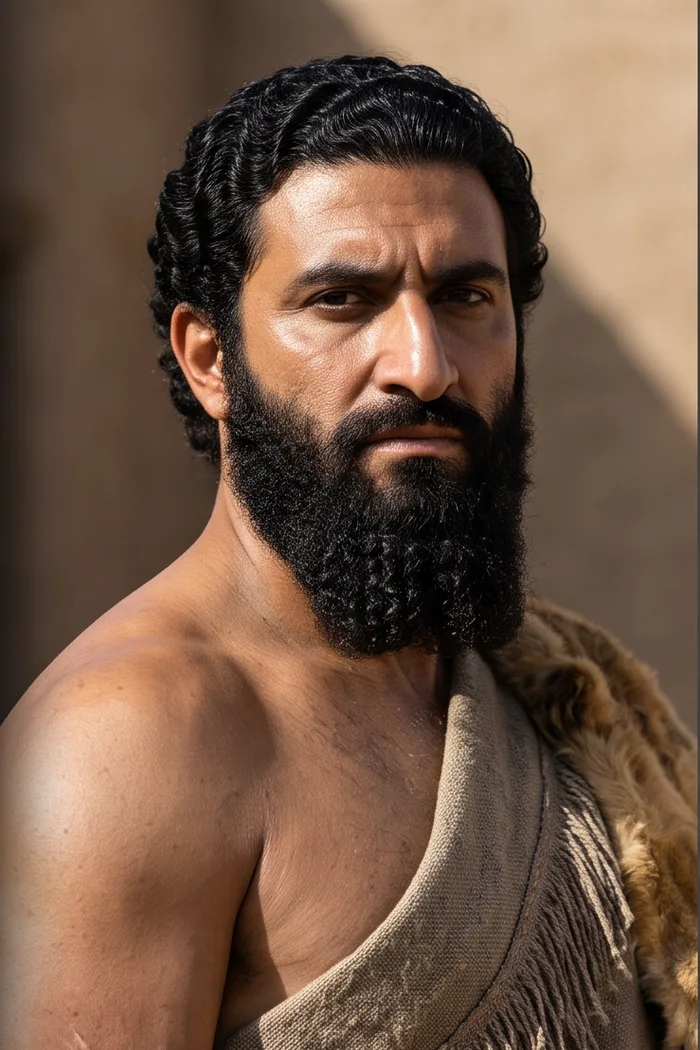
Nimrod is the son of Cush and the grandson of Ham, and he gets four verses in Genesis 10 where every other name in the Table of Nations gets a word. He began to be a mighty one in the earth, the text says, and he was a mighty hunter before the LORD, so much so that it became a saying. The beginning of his kingdom was Babel, Erech, Accad and Calneh in the land of Shinar, the plain of Mesopotamia, and from that land he went out to Assyria and built Nineveh, Rehoboth, Calah and Resen, the great city.

He is the first king in the Bible, though the word is never used of him, and the first empire builder. His name is remembered once more in the Old Testament, when Micah calls Assyria the land of Nimrod and promises a shepherd who will deliver Israel from it. The chapter that follows his in Genesis tells of a city and a tower on the plain of Shinar, built so that its builders could make a name for themselves, and every reader since has connected the two.

Where he appearsGenesis 10 to 11

Scroll down to the account
Nimrod

The movements, in the order the text gives them.

The Account of Nimrod

  1. 01

    Genesis 10:8-9

    A mighty hunter before the LORD

    Cush begets Nimrod, who begins to be a mighty one in the earth. He is a mighty hunter before the LORD, and his name becomes a proverb: even as Nimrod the mighty hunter before the LORD.

    In a chapter that is otherwise a list of names, Nimrod gets a sentence. Cush begat Nimrod: he began to be a mighty one in the earth. The word is gibbor, the word for a warrior or champion, used of the men of renown before the flood in 6:4. He is the first person after the flood described as mighty, and the first named king. The proverb that follows, even as Nimrod the mighty hunter before the LORD, was apparently still in use when Genesis was written. Before the LORD may mean in the LORD's sight, as Jonah's Nineveh was great before God, or it may carry the sense of against him; the ancient Jewish readers took the second, and his name, which sounds like the Hebrew for let us rebel, encouraged them. The text itself neither praises nor condemns. It records a hunter who became a ruler.

    Verse by verse

    1. 10:8

      Cush is the son of Ham, so Nimrod is Ham's grandson and the founder of the first empires stands outside the line of Shem.

    2. 10:9

      Mighty hunter: of animals, and, by the old reading, of men. Before the LORD is the phrase for anything done in God's presence, good or bad.

    Genesis 10:8-9

    King James Version · 2 verses

    10:8And Cush begat Nimrod: he began to be a mighty one in the earth.

    10:9He was a mighty hunter before the LORD: wherefore it is said, Even as Nimrod the mighty hunter before the LORD.

    Genesis 10:8-9: A mighty hunter before the LORD
  2. 02

    Genesis 10:10

    The beginning of his kingdom

    Babel, Erech, Accad and Calneh, in the land of Shinar. Four cities on the Mesopotamian plain, the first kingdom the Bible records, and the first of them is the city whose tower the next chapter describes.

    The beginning of his kingdom was Babel. This is the first use of the word kingdom in the Bible, and its first capital is the city whose tower is told of in the next chapter. Erech, Accad and Calneh in the land of Shinar are the cities of southern Mesopotamia, the oldest cities in the world, and Accad gave its name to the first empire known to history. The verse places Nimrod at the head of that world. Whatever else he was, the Bible remembers him as the man who first gathered cities under one rule, and it locates the gathering at the place where the nations would be scattered.

    Verse by verse

    1. 10:10

      Shinar is Sumer, the plain between the Tigris and Euphrates. Erech is Uruk, the city of Gilgamesh; Accad is Akkad, the seat of Sargon.

    Genesis 10:10

    King James Version · 1 verse

    10:10And the beginning of his kingdom was Babel, and Erech, and Accad, and Calneh, in the land of Shinar.

    Genesis 10:10: The beginning of his kingdom
  3. 03

    Genesis 10:11-12

    Out of that land to Assyria

    From Shinar he goes out into Assyria and builds Nineveh, the city Rehoboth, Calah and Resen between Nineveh and Calah. The text calls it the great city, the phrase Jonah will use of Nineveh.

    Out of that land went forth Asshur, or, as the Hebrew can also be read, out of that land he went forth into Assyria, and built Nineveh. Most readers take the second sense, so that Nimrod's kingdom spread north from Babylon to the four cities of Assyria, Nineveh, Rehoboth, Calah and Resen, the same is a great city. Nineveh will be the capital of the empire that destroys the northern kingdom of Israel and besieges Jerusalem, and the city Jonah is sent to. Genesis traces its foundation to the hunter king. Babylon and Assyria, the two powers that will take God's people into exile, are given one founder here, and Micah's phrase, the land of Nimrod, keeps the connection alive seven centuries later.

    Verse by verse

    1. 10:11

      Asshur: the name of Shem's son in verse 22, and of the land. The verse is usually read as Nimrod going into Asshur.

    2. 10:12

      Calah is Nimrud, the mound that still carries his name. A great city: Jonah 1:2 says the same of Nineveh.

    Genesis 10:11-12

    King James Version · 2 verses

    10:11Out of that land went forth Asshur, and builded Nineveh, and the city Rehoboth, and Calah,

    10:12And Resen between Nineveh and Calah: the same is a great city.

    Genesis 10:11-12: Out of that land to Assyria
  4. 04

    Genesis 11:1-9

    The plain of Shinar

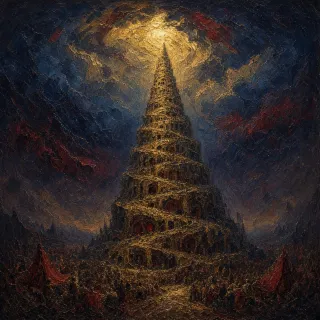
    The whole earth, journeying from the east, finds a plain in Shinar and settles to build a city and a tower with its top in heaven, to make a name and not be scattered. The LORD confounds their language and scatters them, and the city is called Babel.

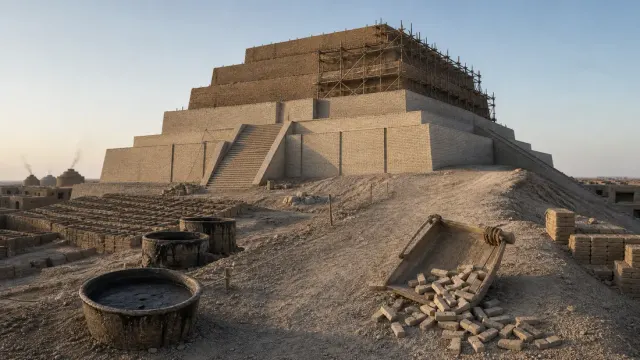
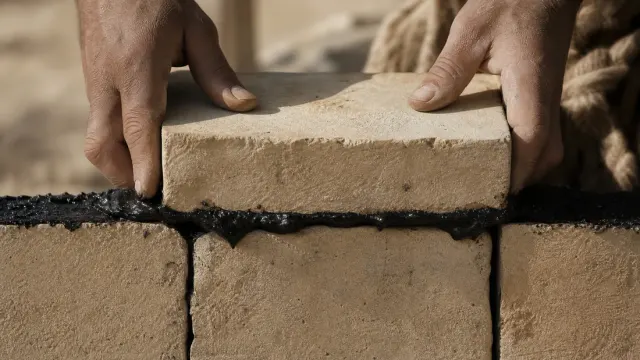
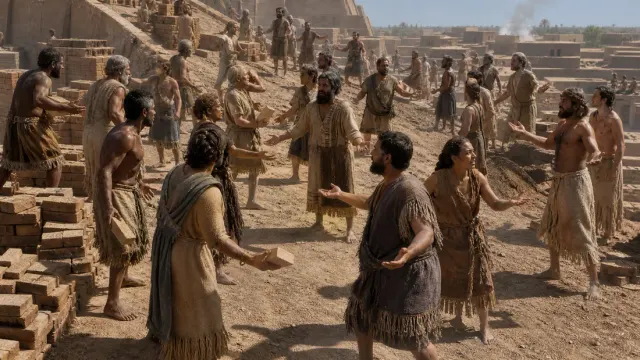
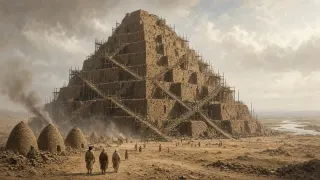
    Nimrod is not named in the account of the tower, but his kingdom began at Babel, and Jewish tradition from Josephus onward made him its builder. The chapter tells of a single people with one speech who journey from the east, find the plain of Shinar, and decide to build. Their materials are described, brick for stone and slime for mortar, because the plain has no stone; their purpose is stated in their own words: a city, a tower whose top may reach unto heaven, and a name for themselves, lest they be scattered. The three ambitions are the ones every empire after them will share, and the third is the direct refusal of the command to fill the earth.

    The LORD came down to see. The tower that was to reach heaven is so small that God must descend to look at it, and the writer means the irony. The judgement matches the sin: the one language that made the project possible is confounded, and the scattering they built against is the scattering they receive. Babel, which the Babylonians took to mean gate of God, is made to mean confusion. The nations of chapter 10 are the result. Pentecost, when every man heard the apostles in his own tongue, has been read since the early church as the reversal of this scene.

    Verse by verse

    1. 11:2

      From the east: the direction of Cain's exile and of Eden's gate, and the direction Abram will be called back from.

    2. 11:4

      Let us make us a name: the name Abram is promised in 12:2 is given, not made. Lest we be scattered: the refusal of 9:1.

    3. 11:5

      Came down to see: the same language as 18:21 before Sodom. God investigates before he judges.

    4. 11:7

      Let us go down: the plural of 1:26 again, answering the builders' let us of verses 3 and 4.

    5. 11:9

      Babel, from balal, to confuse. The ziggurats of Mesopotamia, temple towers of brick, are the kind of building described.

    Genesis 11:1-9

    King James Version · 9 verses

    11:1And the whole earth was of one language, and of one speech.

    11:2And it came to pass, as they journeyed from the east, that they found a plain in the land of Shinar; and they dwelt there.

    11:3And they said one to another, Go to, let us make brick, and burn them throughly. And they had brick for stone, and slime had they for morter.

    11:4And they said, Go to, let us build us a city and a tower, whose top may reach unto heaven; and let us make us a name, lest we be scattered abroad upon the face of the whole earth.

    11:5And the LORD came down to see the city and the tower, which the children of men builded.

    11:6And the LORD said, Behold, the people is one, and they have all one language; and this they begin to do: and now nothing will be restrained from them, which they have imagined to do.

    11:7Go to, let us go down, and there confound their language, that they may not understand one another’s speech.

    11:8So the LORD scattered them abroad from thence upon the face of all the earth: and they left off to build the city.

    11:9Therefore is the name of it called Babel; because the LORD did there confound the language of all the earth: and from thence did the LORD scatter them abroad upon the face of all the earth.

    Genesis 11:1-9: The plain of Shinar
  5. 05

    1 Chronicles 1:10

    In Israel's record

    The Chronicler repeats the line from Genesis: Cush begat Nimrod, he began to be mighty upon the earth. Even the bare genealogy pauses to note what he was.

    The Chronicler repeats the line from Genesis almost word for word and stops: Cush begat Nimrod: he began to be mighty upon the earth. Of all the names in the table of nations, his is the only one the Chronicler gives a description to, which shows how firmly the memory of him had held. A people just back from Babylon, writing their history, note the founder of Babylon in one line and move on to Abraham.

    Verse by verse

    1. 1:10

      The only descriptive clause in the Chronicler's copy of Genesis 10. Everyone else is a name.

    1 Chronicles 1:10

    King James Version · 1 verse

    1:10And Cush begat Nimrod: he began to be mighty upon the earth.

    1 Chronicles 1:10: In Israel's record
  6. 06

    Micah 5:6

    The land of Nimrod

    Micah promises that when the Assyrian comes into the land, shepherds raised up from Bethlehem will waste the land of Assyria with the sword, and the land of Nimrod in its entrances. Assyria is still Nimrod's land seven centuries later.

    Micah's prophecy of the ruler from Bethlehem, whose goings forth are from of old, continues with a promise of deliverance from the Assyrian, and names Assyria a second way: they shall waste the land of Assyria with the sword, and the land of Nimrod in the entrances thereof. Seven hundred years after Genesis, the empire threatening Judah is still called by its founder. Nimrod has become a name for the whole tradition of conquering power that began at Babel, and Micah sets against it the shepherd king from a small town. The contrast is the Bible's: the mighty hunter who built cities and made a name, and the one who shall be great unto the ends of the earth by being the peace.

    Verse by verse

    1. 5:6

      Land of Nimrod: Assyria and Babylon together, the two kingdoms of Genesis 10:10-11. The verse follows the Bethlehem prophecy of 5:2.

    Micah 5:6

    King James Version · 1 verse

    5:6And they shall waste the land of Assyria with the sword, and the land of Nimrod in the entrances thereof: thus shall he deliver us from the Assyrian, when he cometh into our land, and when he treadeth within our borders.

    Micah 5:6: The land of Nimrod

The people, the places and the rest of Scripture.

Reading Nimrod closely

The people he dealt with

Nimrod's family is the family of Ham. His father Cush is the ancestor of the peoples south of Egypt, and his brothers' names in Genesis 10 are Arabian and African tribes, which makes Nimrod's kingdom in Mesopotamia a departure from his line rather than an inheritance. The text does not say who lived in his cities or who fought for him. It says he began, he was, and he built.

What the text implies is a relationship with everyone. A mighty hunter in the ancient world was a king, since hunting the lion and the wild bull was the royal sport of Mesopotamia and Assyria and the kings had themselves carved doing it. The saying that grew up around his name means his reputation outlasted him, and the four cities he founded and four he built are the whole map of the two empires that would later carry Israel and Judah into exile.

With God, the text gives one phrase and two ways to read it. Before the LORD can mean that God saw and recognised his strength. It can also mean in defiance of the LORD, and the rabbis and many early Christian readers took it that way, making Nimrod the tyrant who set the peoples to building the tower. Genesis itself does not name the tower's builder. It only puts Nimrod's Babel and the tower's Babel on the same plain.

Genesis 11
Genesis 11

The cities

Babel is Babylon, on the Euphrates, the city of Nebuchadnezzar and of Daniel's captivity, and the name Genesis gives it means confusion. Erech is Uruk, one of the oldest cities in the world and the city of Gilgamesh, whose account of a flood and a search for life the ancient world told alongside its own. Accad gave its name to the Akkadian empire and language. Calneh has not been found with certainty.

Nineveh, on the Tigris, was the capital of Assyria at its height, the great city of Jonah, the bloody city of Nahum, whose fall in 612 BC ended the empire. Calah is Nimrud, whose modern name still carries his, and whose palaces held the carved hunting scenes of the Assyrian kings. Resen lay between the two. Rehoboth, the broad places, may be a quarter of Nineveh rather than a separate city. Genesis is describing the two powers of the writer's world, Babylon in the south and Assyria in the north, and giving them one founder.

Genesis 11

What came before and what followed

Before Nimrod, the flood and the blessing on Noah's sons to fill the earth. He is the first man after the flood to gather people rather than spread them, and the first to be described by his own greatness rather than by his father's name. The word for mighty one is the word Genesis 6 used for the mighty men of old, the men of renown, in the generation the flood destroyed. His account hints that the old ambition had survived the water.

What follows is Babel. The next chapter opens on the plain of Shinar, where his kingdom began, with a people who want to build a tower and make a name, the very word the men of renown had made before the flood. God comes down, confuses their speech, and scatters them, and the scattering produces the map of nations that Genesis 10 has already drawn. Then the account leaves Mesopotamia with one family, Terah's, travelling out of Ur of the Chaldees toward Canaan. Nimrod's world is the world Abraham is called out of.

Where the rest of Scripture reaches back

Nimrod is named twice more. The Chronicler keeps his line from Genesis word for word. Micah, in the same breath as the promise of a ruler out of Bethlehem, calls Assyria the land of Nimrod and promises deliverance from it, which shows that seven hundred years later the name still meant the empire on the Tigris.

Without his name, his cities are everywhere. Babylon is the captor of Judah in Kings, Chronicles, Jeremiah, Ezekiel and Daniel, and in Revelation it is the name given to every power that sets itself against God. Nineveh is the city Jonah is sent to and Nahum condemns. When Isaiah mocks the king of Babylon who said in his heart, I will ascend into heaven, the tower on the plain of Shinar is behind the taunt. Nimrod is the Bible's first word for a kind of greatness it will spend the rest of its pages answering.

Why it matters

Nimrod stands at the head of the Bible's long quarrel with empire. His cities are the cities the prophets will spend their breath on: Babel, which is Babylon, where Judah will be carried captive, and Nineveh, where Jonah will be sent and Nahum will pronounce the end. That both were founded by one man from the line of Ham, in the generation after the flood, is Genesis saying that the powers that would crush Israel began as one hunter's ambition.

He is also the Bible's first picture of the strong man who makes himself great. The phrase mighty one is the word used in Genesis 6 for the giants of the days before the flood, and the text is quiet about whether before the LORD means in God's sight or in God's face. Jewish tradition took the second reading and made Nimrod the builder of the tower and the enemy of Abraham. The plain text is more restrained, but it puts his kingdom and the tower on the same plain in consecutive chapters and lets the reader draw the line.

2 songs

The music

Every song in the catalogue whose passage falls inside these chapters.

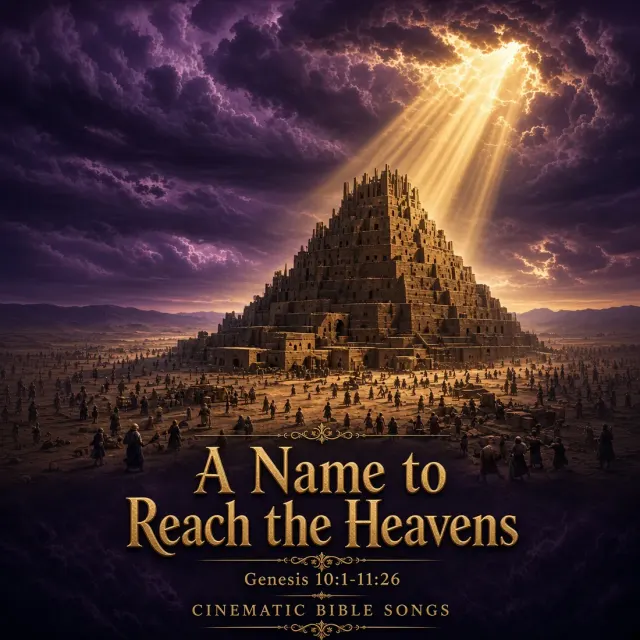
  1. Genesis 10:1-11:26

    A Name to Reach the Heavens

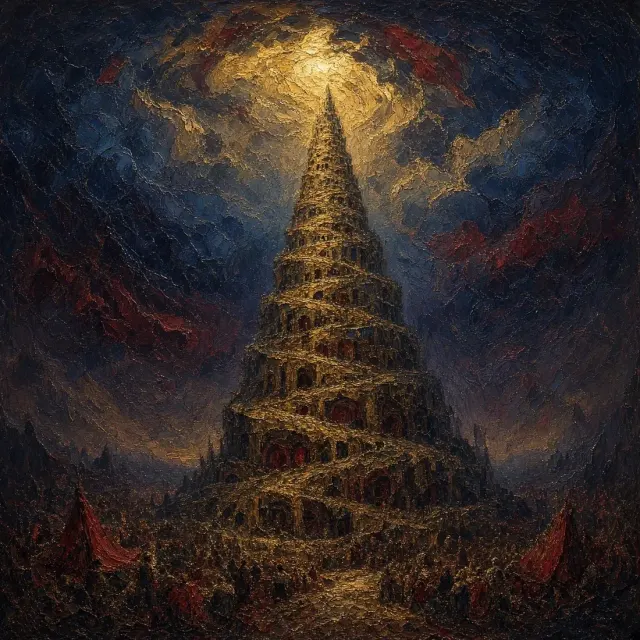
  2. Genesis 11:1-9

    One Tongue, One Tower

Nearby

All the people

Report an error on this page