New · FreePlay The Witnesses The in-depth puzzle battle quest through Bible history

People of the Bible

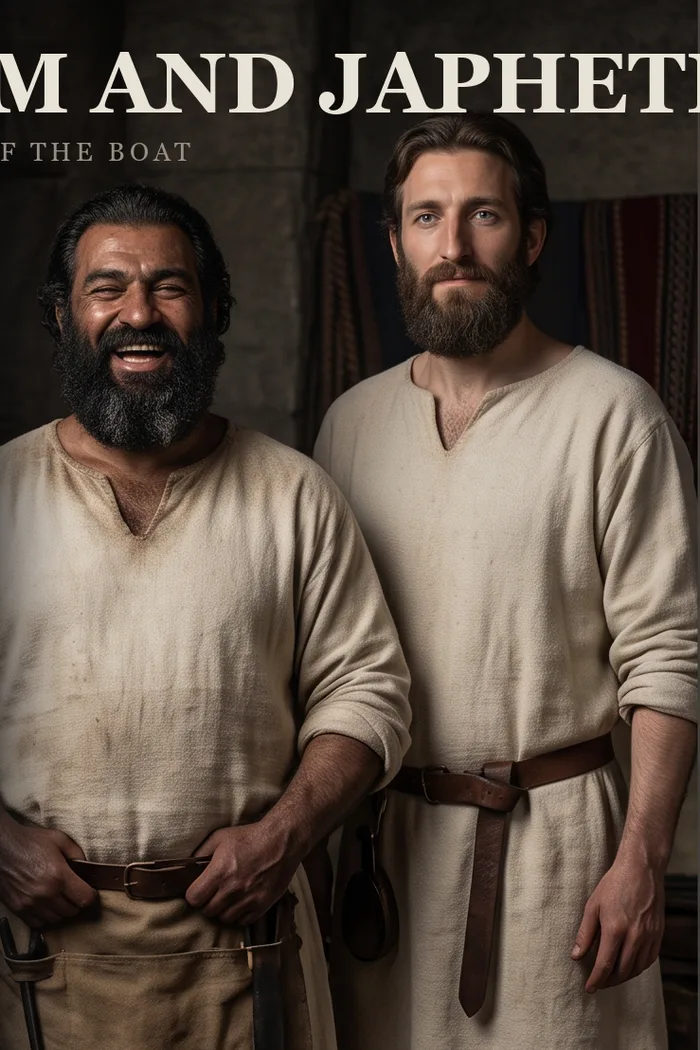
Shem, Ham and Japheth

Three brothers who walked off a boat into an empty world, and became every nation in it.

Also called The sons of Noah; in Luke's Greek, Sem

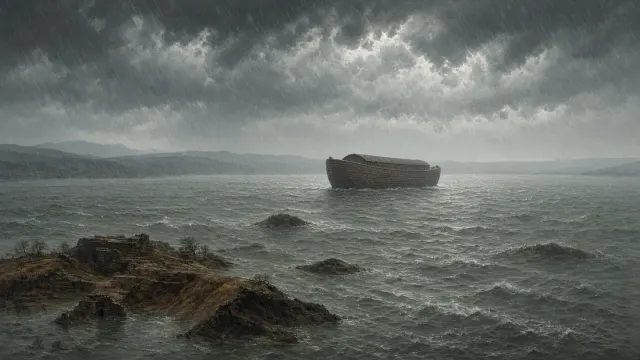
Shem, Ham and Japheth are the three sons of Noah, born after he was five hundred years old, and the only men besides their father to survive the flood. They are always named in that order, though the text implies Japheth was the eldest and Ham the youngest. They enter the ark with their wives, spend a year on the water, and come out to a blessing that repeats the words of creation: be fruitful, multiply, fill the earth. Genesis 10 then traces seventy peoples from them, the whole known world of the writer, and says plainly that from these three the earth was overspread.

The one scene in which they act is in their father's tent. Noah lies drunk and uncovered. Ham sees him and tells his brothers outside. Shem and Japheth take a garment on their shoulders, walk in backwards, and cover him without looking. When Noah wakes he curses Canaan, Ham's son, blesses the LORD God of Shem, and asks that God enlarge Japheth and let him dwell in Shem's tents. Those three sentences are the oldest map of the nations in the Bible, and the line of promise runs through Shem to Abraham.

Where they appearGenesis 9 to 11

Scroll down to the account
Shem, Ham and Japheth

The movements, in the order the text gives them.

The Account of Shem, Ham and Japheth

  1. 01

    Genesis 5:32; 6:10

    Three sons at five hundred

    Noah, at five hundred years old, begets Shem, Ham and Japheth. When God tells Noah the end of all flesh has come, the three sons are named again as the ones who will go into the ark with him.

    The three sons are named twice before anything happens to them, once at the end of the genealogy of chapter 5 and once at the start of the flood account. Noah is five hundred when they are born, a hundred years before the rain, so they are grown men who help build the ark and are married when they enter it. Shem is listed first in every mention, though verse 10:21 calls Japheth the elder; the order is by importance to the account, not by birth. Shem is the ancestor of Abraham and of the writer's own people, Ham the father of Egypt and Canaan, Japheth the father of the peoples to the north and west. The whole later world is in these two verses, in three names.

    Verse by verse

    1. 5:32

      Shem means name; Ham is usually taken as hot or dark; Japheth sounds like the Hebrew for enlarge, which Noah plays on in 9:27.

    2. 6:10

      Repeated at the head of the flood account so that the reader knows who the eight will be.

    Genesis 5:32; 6:10

    King James Version · 2 verses

    5:32And Noah was five hundred years old: and Noah begat Shem, Ham, and Japheth.

    6:10And Noah begat three sons, Shem, Ham, and Japheth.

    Genesis 5:32; 6:10: Three sons at five hundred
  2. 02

    Genesis 7:7, 13

    Into the ark

    On the day the flood begins, Noah and his sons and his wife and his sons' wives enter the ark. The text repeats the eight of them twice, and the LORD shuts the door.

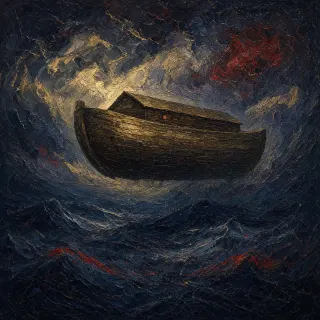
    Twice the narrative lists who went into the ark, and the second time it gives the day: in the selfsame day entered Noah, and Shem, and Ham, and Japheth, and the four wives. The sons are not spectators of their father's salvation but sharers in it, and their wives with them, though none of the women is named. Eight people carry the whole future of humanity through the door the LORD shuts. Peter counts them, eight souls were saved by water, and the three sons are the reason there are eight rather than two.

    Verse by verse

    1. 7:7

      Because of the waters: the phrase gives the reason for entering, not the moment. They go in before the rain.

    2. 7:13

      The selfsame day: the day the fountains broke, 7:11. The three wives are the first women of the new world.

    Genesis 7:7, 13

    King James Version · 2 verses

    7:7And Noah went in, and his sons, and his wife, and his sons’ wives with him, into the ark, because of the waters of the flood.

    7:13In the selfsame day entered Noah, and Shem, and Ham, and Japheth, the sons of Noah, and Noah’s wife, and the three wives of his sons with them, into the ark;

    Genesis 7:7, 13: Into the ark
  3. 03

    Genesis 9:1-7

    Be fruitful and fill the earth

    God blesses Noah and his sons together. The commission of Genesis 1 is given again to four men standing on a washed earth, with a new permission to eat flesh and a new law against shedding blood.

    God blessed Noah and his sons: the blessing after the flood is spoken to all four men, not to the father alone, and it is the blessing of Genesis 1 given again, be fruitful, and multiply, and replenish the earth. Whatever is said in these verses about food, fear, blood and the image of God is said to the three sons as the fathers of everyone who will come after. The permission to eat flesh, the ban on blood, and the law that whoever sheds man's blood shall have his blood shed by man, are the rules under which their descendants, all of humanity, will live. Jewish tradition calls these the laws of the sons of Noah, binding on every nation, and the apostles' council in Acts 15 draws on them when it asks Gentile believers to abstain from blood.

    Verse by verse

    1. 9:1

      The command to fill the earth is what the builders of Babel will refuse in 11:4.

    2. 9:3-4

      Every moving thing: the vegetarian rule of 1:29 ends. But not the blood: life belongs to God.

    3. 9:6

      In the image of God: the sons carry it forward. The verse founds human justice on the doctrine of chapter 1.

    Genesis 9:1-7

    King James Version · 7 verses

    9:1And God blessed Noah and his sons, and said unto them, Be fruitful, and multiply, and replenish the earth.

    9:2And the fear of you and the dread of you shall be upon every beast of the earth, and upon every fowl of the air, upon all that moveth upon the earth, and upon all the fishes of the sea; into your hand are they delivered.

    9:3Every moving thing that liveth shall be meat for you; even as the green herb have I given you all things.

    9:4But flesh with the life thereof, which is the blood thereof, shall ye not eat.

    9:5And surely your blood of your lives will I require; at the hand of every beast will I require it, and at the hand of man; at the hand of every man’s brother will I require the life of man.

    9:6Whoso sheddeth man’s blood, by man shall his blood be shed: for in the image of God made he man.

    9:7And you, be ye fruitful, and multiply; bring forth abundantly in the earth, and multiply therein.

  4. 04

    Genesis 9:18-19

    From these was the whole earth overspread

    The sons who came out of the ark are named, Ham is marked as the father of Canaan, and the writer states the thesis of the next chapter: from these three the whole earth was populated.

    The Book of Genesis pauses to introduce the three again before the vineyard account, and adds one clause that prepares for it: and Ham is the father of Canaan. The reader is meant to hold that in mind. Then the sentence that the table of nations will spell out: these are the three sons of Noah, and of them was the whole earth overspread. Every people, language and land in chapter 10 traces to one of these three men who walked out of the ark. Whatever happens in the tent in the next verses happens to the fathers of the world.

    Verse by verse

    1. 9:18

      Ham is the father of Canaan: mentioned before it matters, so that the curse on Canaan in 9:25 does not come out of nowhere.

    2. 9:19

      Overspread: scattered, the word of 11:8. The scattering God commands here is the one Babel resists.

    Genesis 9:18-19

    King James Version · 2 verses

    9:18And the sons of Noah, that went forth of the ark, were Shem, and Ham, and Japheth: and Ham is the father of Canaan.

    9:19These are the three sons of Noah: and of them was the whole earth overspread.

    Genesis 9:18-19: From these was the whole earth overspread
  5. 05

    Genesis 9:20-27

    The tent

    Noah, drunk, lies uncovered. Ham sees and tells. Shem and Japheth cover him with their faces turned away. Noah wakes and speaks: cursed be Canaan; blessed be the LORD God of Shem; God shall enlarge Japheth, and he shall dwell in the tents of Shem.

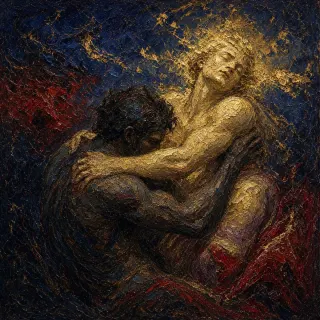
    Noah plants a vineyard and is found drunk and uncovered in his tent. What the three sons do about it is the whole point of the passage. Ham sees and tells, which in the language of the Old Testament is to make a spectacle of a father's shame. Shem and Japheth take a garment on both their shoulders, walk backward, and cover him with their faces turned away; the Book of Genesis describes their care in detail, as if to show the reader how it should be done. Honour thy father is not yet written, but it is already the standard.

    Noah's words when he wakes are the first blessing and curse spoken by a man in the Bible, and they run through the rest of Scripture. Cursed be Canaan: not Ham, but his son, the ancestor of the peoples Israel will find in the land. Blessed be the LORD God of Shem: Shem is blessed by naming his God, and the line of promise is marked by whose God is named. God shall enlarge Japheth, and he shall dwell in the tents of Shem: the peoples of the north and west will one day share Shem's dwelling, which the church has read as the Gentiles coming into Israel's inheritance through Christ. The whole shape of the Old Testament, Canaan dispossessed, Shem carrying the promise, the nations gathered in, is spoken over three sons at a tent door.

    Verse by verse

    1. 9:22

      Told his two brethren without: the offence is the telling. Proverbs 30:17 describes the eye that mocketh at his father.

    2. 9:23

      Both their shoulders: they act together. Backward, and their faces backward: the care is doubled in the telling.

    3. 9:24

      His younger son: Ham is named third but here called youngest, or smallest, in standing.

    4. 9:25

      Servant of servants: the lowest servant. Joshua 9:23 uses the same idea of the Gibeonites, a Canaanite people.

    5. 9:26

      The LORD God of Shem: the covenant name attached to one son, for the first time in Genesis.

    6. 9:27

      Enlarge, yapht, plays on Japheth. Dwell in the tents of Shem: Isaiah 54:2-3 and Ephesians 2:12-19 fill it out.

    Genesis 9:20-27

    King James Version · 8 verses

    9:20And Noah began to be an husbandman, and he planted a vineyard:

    9:21And he drank of the wine, and was drunken; and he was uncovered within his tent.

    9:22And Ham, the father of Canaan, saw the nakedness of his father, and told his two brethren without.

    9:23And Shem and Japheth took a garment, and laid it upon both their shoulders, and went backward, and covered the nakedness of their father; and their faces were backward, and they saw not their father’s nakedness.

    9:24And Noah awoke from his wine, and knew what his younger son had done unto him.

    9:25And he said, Cursed be Canaan; a servant of servants shall he be unto his brethren.

    9:26And he said, Blessed be the LORD God of Shem; and Canaan shall be his servant.

    9:27God shall enlarge Japheth, and he shall dwell in the tents of Shem; and Canaan shall be his servant.

    Genesis 9:20-27: The tent
  6. 06

    Genesis 10:1-32

    The Table of Nations

    Japheth's line spreads to the coastlands. Ham's includes Cush, Egypt, Canaan and Nimrod's cities. Shem's includes Elam, Asshur, Aram, and the line of Eber. Seventy peoples in all, after their families, tongues, lands and nations.

    The table of nations is the only document of its kind in the ancient world: a map of every people the writer knew, drawn as a family tree from three brothers. Seventy names, which became the traditional number of the nations, are arranged by Japheth, Ham and Shem, in that order, with Shem saved for last because the book will follow his line. Japheth's sons are the peoples of Asia Minor, the Aegean and the north, the isles of the Gentiles; Ham's are Egypt, Cush, Put and Canaan, with Nimrod and his cities given a paragraph of their own; Shem's are the peoples of Mesopotamia and Arabia, and among them Eber, from whom the name Hebrew comes.

    The refrain that closes each section, after their families, after their tongues, in their lands, in their nations, shows that the writer knows about the scattering of Babel before he tells it in chapter 11. The chapter is arranged by theology, not by date. It asserts that all nations are kin, that they descend from one blessed household, and that the promise God will make to Abram in chapter 12, that in him all families of the earth shall be blessed, has a definite address: these families, listed here.

    Verse by verse

    1. 10:2-5

      Japheth: Gomer, Magog, Madai, Javan, Tubal, Meshech, Tiras. Javan is Greece; Madai the Medes; Tarshish and Kittim the far west.

    2. 10:6-20

      Ham: Cush, Mizraim, Phut, Canaan. Mizraim is Egypt; Canaan's sons are the eleven peoples of the land; the Philistines come from Mizraim's line.

    3. 10:21

      The father of all the children of Eber: Shem is introduced by his most important descendant, from whom Hebrew takes its name.

    4. 10:25

      Peleg: division. In his days was the earth divided, the writer's cross-reference to Babel.

    5. 10:32

      By these were the nations divided: seventy names, the number Jesus sends out in Luke 10.

    Genesis 10:1-32: The Table of Nations

    Genesis 10:1-32

    King James Version · 32 verses

    10:1Now these are the generations of the sons of Noah, Shem, Ham, and Japheth: and unto them were sons born after the flood.

    10:2The sons of Japheth; Gomer, and Magog, and Madai, and Javan, and Tubal, and Meshech, and Tiras.

    10:3And the sons of Gomer; Ashkenaz, and Riphath, and Togarmah.

    10:4And the sons of Javan; Elishah, and Tarshish, Kittim, and Dodanim.

    10:5By these were the isles of the Gentiles divided in their lands; every one after his tongue, after their families, in their nations.

    10:6And the sons of Ham; Cush, and Mizraim, and Phut, and Canaan.

    10:7And the sons of Cush; Seba, and Havilah, and Sabtah, and Raamah, and Sabtecha: and the sons of Raamah; Sheba, and Dedan.

    10:8And Cush begat Nimrod: he began to be a mighty one in the earth.

    10:9He was a mighty hunter before the LORD: wherefore it is said, Even as Nimrod the mighty hunter before the LORD.

    10:10And the beginning of his kingdom was Babel, and Erech, and Accad, and Calneh, in the land of Shinar.

    10:11Out of that land went forth Asshur, and builded Nineveh, and the city Rehoboth, and Calah,

    10:12And Resen between Nineveh and Calah: the same is a great city.

    10:13And Mizraim begat Ludim, and Anamim, and Lehabim, and Naphtuhim,

    10:14And Pathrusim, and Casluhim, (out of whom came Philistim,) and Caphtorim.

    10:15And Canaan begat Sidon his firstborn, and Heth,

    10:16And the Jebusite, and the Amorite, and the Girgasite,

    10:17And the Hivite, and the Arkite, and the Sinite,

    10:18And the Arvadite, and the Zemarite, and the Hamathite: and afterward were the families of the Canaanites spread abroad.

    10:19And the border of the Canaanites was from Sidon, as thou comest to Gerar, unto Gaza; as thou goest, unto Sodom, and Gomorrah, and Admah, and Zeboim, even unto Lasha.

    10:20These are the sons of Ham, after their families, after their tongues, in their countries, and in their nations.

    10:21Unto Shem also, the father of all the children of Eber, the brother of Japheth the elder, even to him were children born.

    10:22The children of Shem; Elam, and Asshur, and Arphaxad, and Lud, and Aram.

    10:23And the children of Aram; Uz, and Hul, and Gether, and Mash.

    10:24And Arphaxad begat Salah; and Salah begat Eber.

    10:25And unto Eber were born two sons: the name of one was Peleg; for in his days was the earth divided; and his brother’s name was Joktan.

    10:26And Joktan begat Almodad, and Sheleph, and Hazarmaveth, and Jerah,

    10:27And Hadoram, and Uzal, and Diklah,

    10:28And Obal, and Abimael, and Sheba,

    10:29And Ophir, and Havilah, and Jobab: all these were the sons of Joktan.

    10:30And their dwelling was from Mesha, as thou goest unto Sephar a mount of the east.

    10:31These are the sons of Shem, after their families, after their tongues, in their lands, after their nations.

    10:32These are the families of the sons of Noah, after their generations, in their nations: and by these were the nations divided in the earth after the flood.

  7. 07

    Genesis 11:10-26

    The generations of Shem

    After Babel the narrative narrows to one line: Shem to Arphaxad, born two years after the flood, and on through Eber, Peleg, Serug and Nahor to Terah, the father of Abram. Shem lives six hundred years and, by the numbers, outlives Abraham.

    After Babel the book narrows to one of the three brothers. These are the generations of Shem: ten generations, as from Adam to Noah, from Shem to Terah and his three sons, of whom one is Abram. The formula of chapter 5 returns, the years before the son, the years after, sons and daughters, but the refrain and he died is dropped and the lives grow shorter as the list goes on, from Shem's six hundred years to Nahor's hundred and forty-eight. The world is aging.

    Eber, from whom the Hebrews are named, and Peleg, in whose days the earth was divided, are the two names that carry meaning. The rest are the road from the ark to Ur of the Chaldees. Shem himself lives five hundred years after the flood, long enough by the chapter's arithmetic to be alive when Abram is born. The chapter ends with Terah begetting Abram, Nahor and Haran, and the book of Genesis turns from the nations to one family.

    Verse by verse

    1. 11:10

      Two years after the flood: the genealogy is dated from the judgement, as the new world's year one.

    2. 11:14-16

      Eber begat Peleg: Eber gives the Hebrews their name, Genesis 14:13; Peleg marks the division at Babel.

    3. 11:26

      Abram, Nahor and Haran: three sons again, as Noah had three. Luke 3:34-36 runs the line from Shem to Abraham through these names.

    Genesis 11:10-26

    King James Version · 17 verses

    11:10These are the generations of Shem: Shem was an hundred years old, and begat Arphaxad two years after the flood:

    11:11And Shem lived after he begat Arphaxad five hundred years, and begat sons and daughters.

    11:12And Arphaxad lived five and thirty years, and begat Salah:

    11:13And Arphaxad lived after he begat Salah four hundred and three years, and begat sons and daughters.

    11:14And Salah lived thirty years, and begat Eber:

    11:15And Salah lived after he begat Eber four hundred and three years, and begat sons and daughters.

    11:16And Eber lived four and thirty years, and begat Peleg:

    11:17And Eber lived after he begat Peleg four hundred and thirty years, and begat sons and daughters.

    11:18And Peleg lived thirty years, and begat Reu:

    11:19And Peleg lived after he begat Reu two hundred and nine years, and begat sons and daughters.

    11:20And Reu lived two and thirty years, and begat Serug:

    11:21And Reu lived after he begat Serug two hundred and seven years, and begat sons and daughters.

    11:22And Serug lived thirty years, and begat Nahor:

    11:23And Serug lived after he begat Nahor two hundred years, and begat sons and daughters.

    11:24And Nahor lived nine and twenty years, and begat Terah:

    11:25And Nahor lived after he begat Terah an hundred and nineteen years, and begat sons and daughters.

    11:26And Terah lived seventy years, and begat Abram, Nahor, and Haran.

The people, the places and the rest of Scripture.

Reading Shem, Ham and Japheth closely

Three brothers, three parts of the world

Japheth's sons are the northern and western peoples: Gomer, Magog, Madai the Medes, Javan the Greeks, Tubal, Meshech and Tiras. The text says the isles of the Gentiles were divided from these, which means the Mediterranean coasts and islands. His name sounds like the Hebrew for enlarge, and Noah's blessing plays on it.

Ham's sons are Cush to the south, Mizraim which is Egypt, Phut which is Libya, and Canaan. The Psalms three times call Egypt the land of Ham. From Cush comes Nimrod, the first mighty man, whose kingdom begins at Babel and whose cities include Nineveh. From Canaan come the peoples of the land Israel would later enter: Sidon, the Hittites, the Jebusites, the Amorites and the rest, whose borders the chapter draws from Sidon to Gaza to Sodom.

Shem's sons are Elam, Asshur which is Assyria, Arphaxad, Lud and Aram which is Syria. Through Arphaxad the line reaches Eber, from whose name the word Hebrew is usually derived, and Eber's son Peleg, in whose days the earth was divided. Genesis 11 takes that line alone and follows it to Terah and Abram.

Genesis 9
Genesis 9

The scene in the tent

Everything the three brothers are remembered for in Scripture turns on a few verses. Noah, the first vintner, drinks and lies uncovered inside his tent. Ham, called here the father of Canaan, sees his father's nakedness and tells his two brothers outside. The text uses the language of seeing and telling rather than of any other act, and the offence is that Ham exposed his father's shame rather than covering it.

Shem and Japheth answer with a small ceremony of respect. They lay a garment on both their shoulders, walk in backwards, and cover him, and the text says twice that they did not see. When Noah wakes and learns what his younger son has done, he speaks three sentences that are usually read as prophecy rather than temper. Canaan is cursed to serve his brothers. The LORD is called the God of Shem, the first time God is named as belonging to a line, and Canaan will serve him. God will enlarge Japheth and he will dwell in the tents of Shem, and Canaan will serve him too.

Why Canaan and not Ham is the question every reader asks. The text does not answer it. The most careful reading is that the account is told by and for Israel, who would meet Canaan's descendants in the land, and that the writer lets the tent scene explain a history his first readers already knew.

Genesis 10
Genesis 11

What came before and what followed

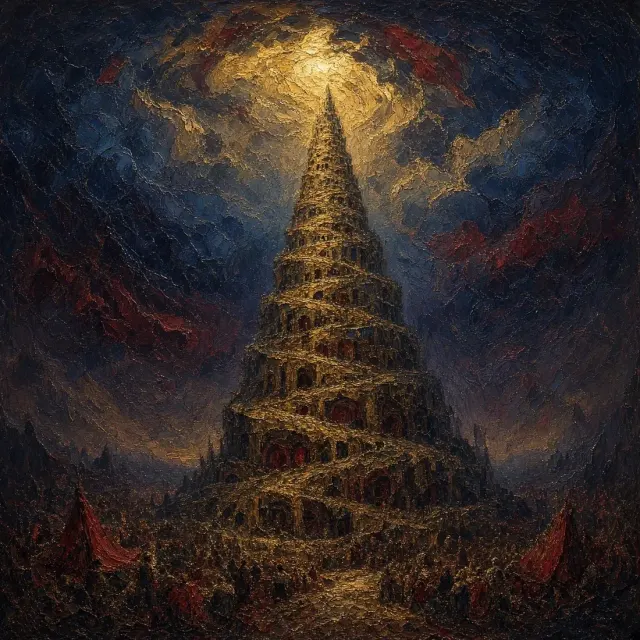
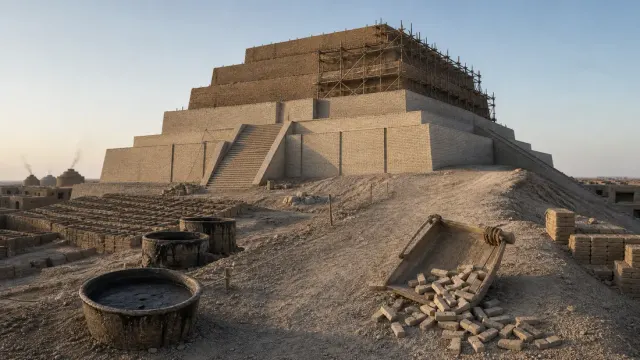
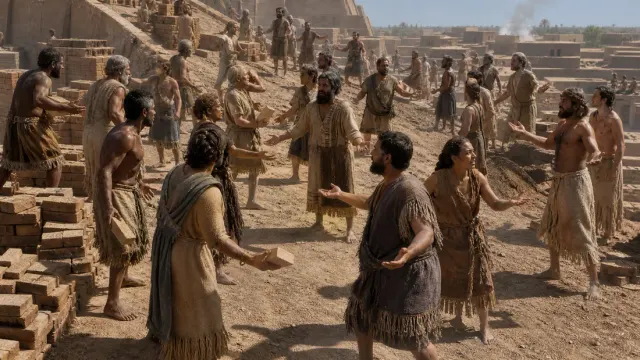
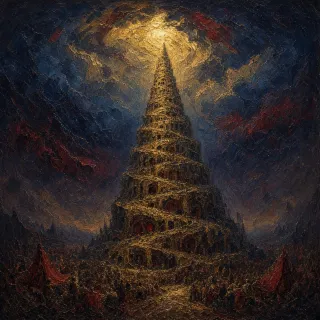
Before the brothers, the flood. They are introduced only as their father's sons, and they do nothing in the ark but survive. After the flood, everything. The blessing to be fruitful and fill the earth is theirs, and Genesis 10 shows it kept. Genesis 11 shows it resisted: their descendants gather at Shinar to build a city and a tower and to avoid being scattered, and God scatters them by confusing their speech. The Table of Nations, with its families and tongues and lands, is the result of Babel told in advance.

From there the account follows Shem alone. The genealogy of Genesis 11 runs from him to Abram in ten generations, the same number as from Adam to Noah, and the next thing God says in Genesis is to Abram: go. The whole world of nations is set out in Genesis 10 so that the reader knows what the blessing of Abraham, in whom all families of the earth would be blessed, was meant to reach.

Genesis 11
Genesis 11

Where the rest of Scripture reaches back

1 Chronicles 1 repeats the Table of Nations almost verbatim as the opening of Israel's history, sons of Japheth, sons of Ham, sons of Shem, and then follows Shem to Abraham. The Psalms remember the land of Ham as the Egypt where Israel was a stranger and where God did his wonders. Ezekiel's oracles name Gomer, Magog, Meshech, Tubal, Javan and Tarshish from Japheth's line among the nations of the earth, and Revelation borrows Gog and Magog for the last rebellion.

Luke's genealogy of Jesus passes through Sem the son of Noe. Paul at Athens says God made of one blood all nations to dwell on all the face of the earth, which is the Table of Nations turned into a sermon to Greeks, Japheth's children, about the God of Shem. The prayer Noah made in his tent, that Japheth would dwell in the tents of Shem, is what the early church believed it was watching come true.

Genesis 11

Why it matters

The three brothers are how the Bible explains the world. The Table of Nations in Genesis 10 is not a list of Israel's ancestors but of everyone else: the coastlands and Greeks and northern peoples from Japheth, Egypt and Cush and Canaan and the cities of Nimrod from Ham, and the peoples of Mesopotamia and Arabia from Shem. It insists that all of them are one family with one origin, which Paul repeats in Athens when he says God made of one blood all nations of men.

The scene in the tent turns that map into an account. Shem's blessing is the first time God is called the God of one man's line, and from Shem comes Eber, from whom the Hebrews take their name, and then Abraham. Japheth's enlargement and his dwelling in Shem's tents were read by later Christians as the nations coming in to share Israel's God. Canaan's curse looks ahead to the land Israel would take. Together the three sons carry the promise made to Eve past the flood and set it on the road to one family, one nation, and one Son.

3 songs

The music

Every song in the catalogue whose passage falls inside these chapters.

  1. Genesis 9:1-17

    The Bow in the Cloud

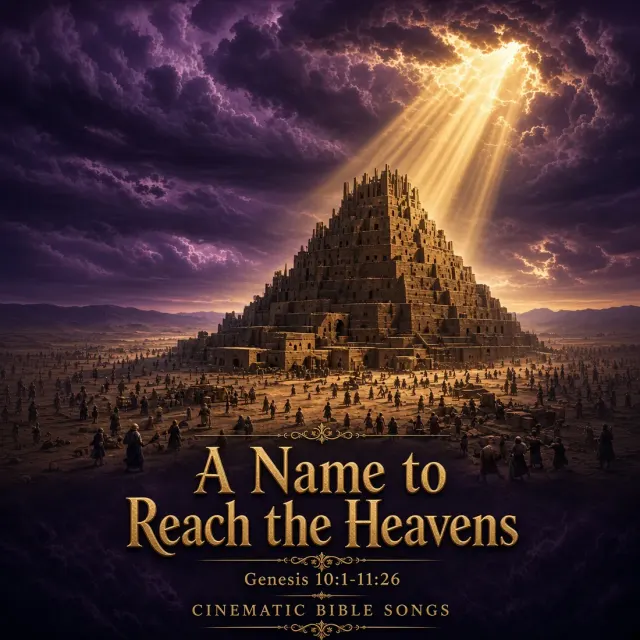
  2. Genesis 10:1-11:26

    A Name to Reach the Heavens

  3. Genesis 11:1-9

    One Tongue, One Tower

Nearby

All the people

Report an error on this page