New · FreePlay The Witnesses The in-depth puzzle battle quest through Bible history

People of the Bible

Noah

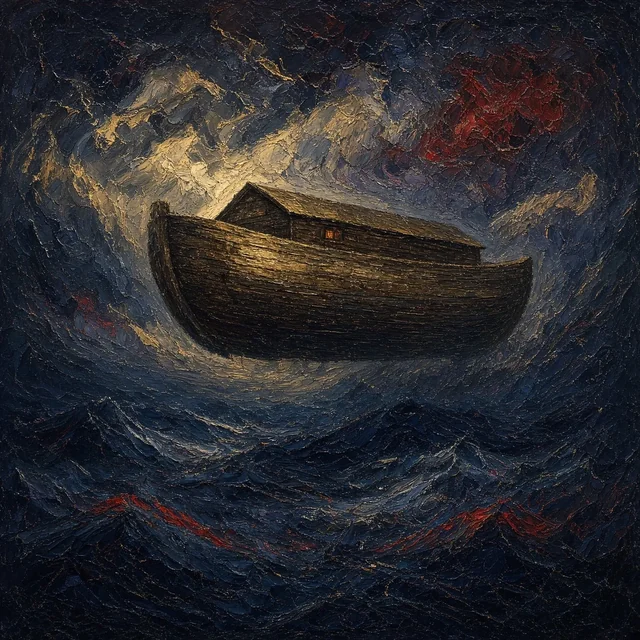
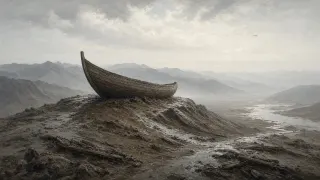
The one righteous man in a violent world, who built a boat on dry land because God said the rain was coming.

Also called In Hebrew, Noach, rest; in the Greek of the New Testament, Noe

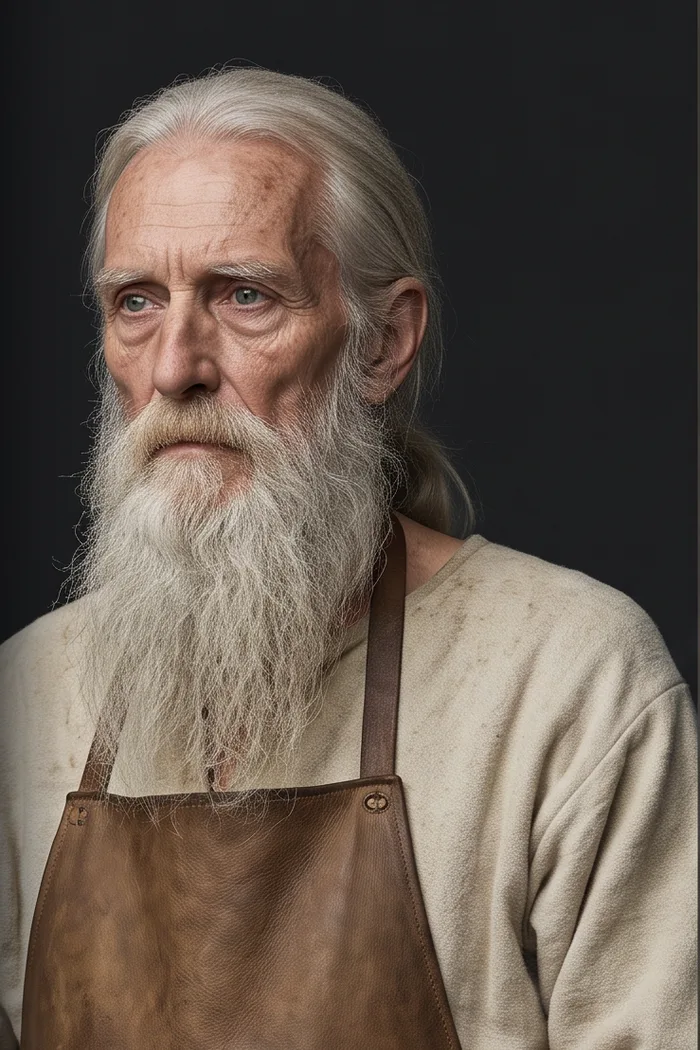
Noah is the tenth man from Adam through the line of Seth, the son of Lamech and the grandson of Methuselah. His father names him for rest, hoping he will bring comfort from the toil of the cursed ground. He grows up in the world of Genesis 6, where the wickedness of man is great and every imagination of the heart is only evil, and the text says of him alone that he found grace in the eyes of the LORD. He is just, whole in his generation, and he walks with God.

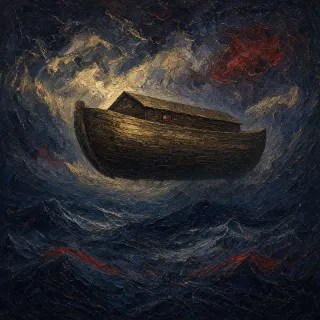
God tells him the end of all flesh has come, gives him the dimensions of an ark of gopher wood, and he does everything he is commanded. He is six hundred years old when the flood comes. He, his wife, his three sons and their wives, and the animals ride out a year and ten days on the water. When the ground is dry he builds the first altar in Scripture, and God promises never again to destroy the earth by flood, and sets the bow in the cloud as the sign. Then Noah plants a vineyard, drinks, and is found uncovered in his tent by his son Ham. He curses Ham's son Canaan, blesses Shem and Japheth, lives three hundred and fifty years more, and dies at nine hundred and fifty.

Where he appearsGenesis 5 to 10

Scroll down to the account
Noah

The movements, in the order the text gives them.

The Account of Noah

  1. 01

    Genesis 5:28-32

    Named for rest

    Lamech names his son Noah, saying this one shall comfort us concerning our work and the toil of our hands because of the ground which the LORD has cursed. At five hundred Noah begets Shem, Ham and Japheth.

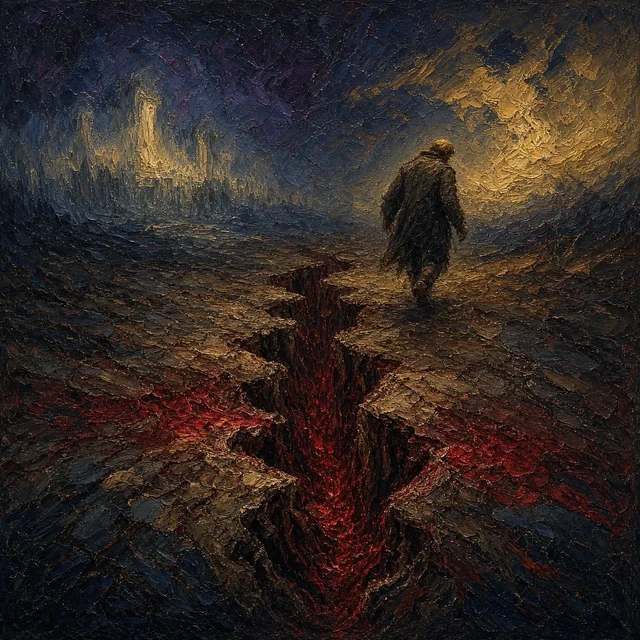
    Noah is the tenth from Adam, and his entry in the genealogy breaks the pattern in one place: his father explains the name. Lamech, not the Lamech of Cain's line but his namesake in Seth's, calls the boy Noah, rest, and says why: this same shall comfort us concerning our work and toil of our hands, because of the ground which the LORD hath cursed. The curse of chapter 3 is still felt nine generations on, and a father hopes his son will be relief from it. He was right in a way he did not expect. The relief came through judgement, and the ground got its rest by being drowned.

    The verse also tells us Noah was five hundred years old before his sons were born, which means he waited longer for children than anyone else in the chapter, and that the ark was built by a man with three grown sons to help him.

    Verse by verse

    1. 5:29

      Noah, Noach, sounds like nacham, to comfort. The name is a prayer against the curse of 3:17.

    2. 5:32

      Shem, Ham and Japheth: the three from whom, in chapter 10, every nation descends.

    Genesis 5:28-32

    King James Version · 5 verses

    5:28And Lamech lived an hundred eighty and two years, and begat a son:

    5:29And he called his name Noah, saying, This same shall comfort us concerning our work and toil of our hands, because of the ground which the LORD hath cursed.

    5:30And Lamech lived after he begat Noah five hundred ninety and five years, and begat sons and daughters:

    5:31And all the days of Lamech were seven hundred seventy and seven years: and he died.

    5:32And Noah was five hundred years old: and Noah begat Shem, Ham, and Japheth.

    Genesis 5:28-32: Named for rest
  2. 02

    Genesis 6:5-13

    Grace in a violent world

    God sees that the wickedness of man is great, is grieved at heart, and resolves to destroy all flesh. But Noah finds grace in the eyes of the LORD: a just man, whole in his generation, who walks with God. God tells him the end has come.

    The description of the world before the flood is as severe as anything in the Bible. Every imagination of the thoughts of man's heart was only evil continually: not some, every; not partly, only; not sometimes, continually. And the verse that follows is one of the few places where God is said to grieve. It repented the LORD that he had made man, and it grieved him at his heart. The maker's verdict on the sixth day, very good, has been reversed by the creature, and the response is not rage but sorrow.

    Into that sentence comes the verse on which everything turns: but Noah found grace in the eyes of the LORD. Grace comes before the description of Noah's character in verse 9, and readers have long noticed the order. He is then called just, perfect in his generations, and one who walked with God, the phrase used of Enoch. The earth is corrupt and filled with violence, and God tells Noah what he intends: the end of all flesh is come before me. The whole flood account is God speaking to one man about what he is about to do, and that man building in response.

    Verse by verse

    1. 6:5

      Every, only, continually: the three words leave no room. Jesus quotes the days of Noah as a warning in Matthew 24:37.

    2. 6:6

      It repented the LORD: he changed his course of action, not his nature. Grieved him at his heart is the language of a wounded parent.

    3. 6:8

      Grace: the first use of the word in the Bible, and it is found, not earned. Noah's name reversed spells the Hebrew for grace.

    4. 6:9

      Perfect in his generations: blameless among his contemporaries. Walked with God: as Enoch did, 5:24.

    5. 6:11-13

      Violence, hamas, twice. The earth is judged for what people did to one another.

    Genesis 6:5-13

    King James Version · 9 verses

    6:5And GOD saw that the wickedness of man was great in the earth, and that every imagination of the thoughts of his heart was only evil continually.

    6:6And it repented the LORD that he had made man on the earth, and it grieved him at his heart.

    6:7And the LORD said, I will destroy man whom I have created from the face of the earth; both man, and beast, and the creeping thing, and the fowls of the air; for it repenteth me that I have made them.

    6:8But Noah found grace in the eyes of the LORD.

    6:9These are the generations of Noah: Noah was a just man and perfect in his generations, and Noah walked with God.

    6:10And Noah begat three sons, Shem, Ham, and Japheth.

    6:11The earth also was corrupt before God, and the earth was filled with violence.

    6:12And God looked upon the earth, and, behold, it was corrupt; for all flesh had corrupted his way upon the earth.

    6:13And God said unto Noah, The end of all flesh is come before me; for the earth is filled with violence through them; and, behold, I will destroy them with the earth.

    Genesis 6:5-13: Grace in a violent world
  3. 03

    Genesis 6:14-22

    The ark

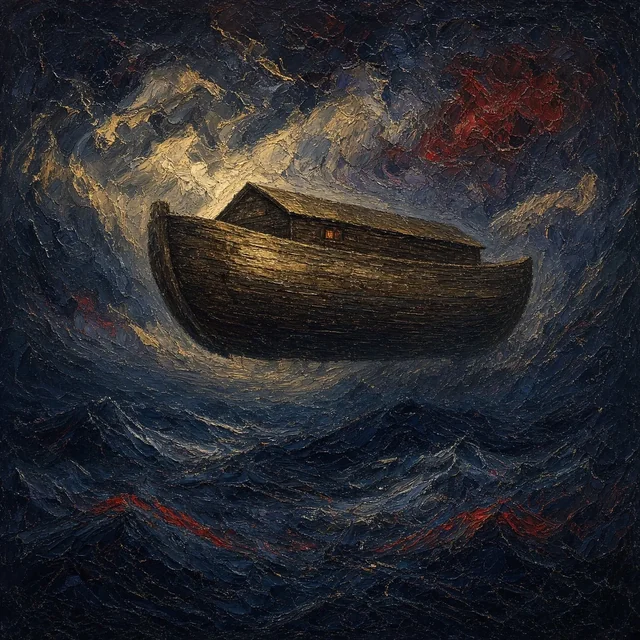
    Gopher wood, pitched inside and out, three hundred cubits long, fifty wide, thirty high, with rooms, three decks, a window and a door in the side. Two of every living thing, and food for all. Noah does according to all that God commands him.

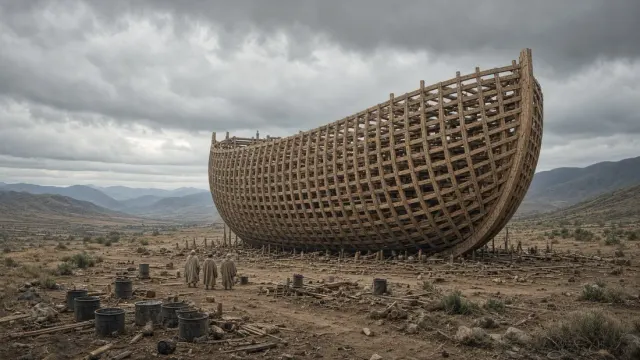
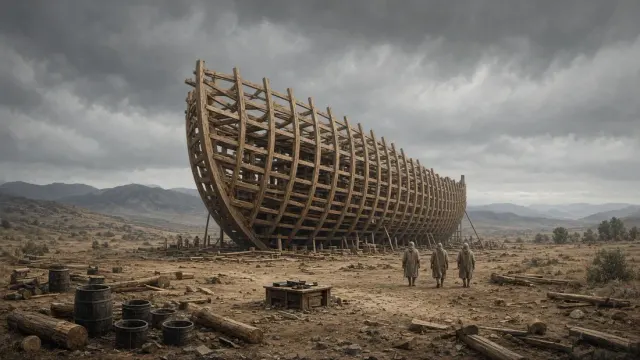
    The instructions for the ark are exact: gopher wood, rooms, pitch within and without, three hundred cubits long, fifty broad, thirty high, a window a cubit from the top, a door in the side, three decks. It is a box, not a ship, with no rudder or sail, built to float and be kept, not to be steered. The proportions are those of a stable vessel, and the size is that of a large cargo ship, roughly four hundred and fifty feet long.

    Then the reason and the promise. God will bring a flood of waters to destroy all flesh, but with thee will I establish my covenant, the first use of that word in the Bible. Noah and his household will come into the ark, and of every living thing two, male and female, to be kept alive, and food for all. The chapter ends with the sentence that is Noah's whole character: thus did Noah; according to all that God commanded him, so did he. He has not yet said a word.

    Verse by verse

    1. 6:14

      Gopher wood: the word occurs only here; cypress is the usual guess. Pitch, kopher, is the word used later for atonement, a covering.

    2. 6:15-16

      300 by 50 by 30 cubits: a ratio of 6 to 1, the proportion of a barge. One door, one window.

    3. 6:18

      My covenant: the first covenant named in Scripture, made with one man on behalf of all life.

    4. 6:22

      Thus did Noah: the verse Hebrews 11:7 reads as faith. He built for a hundred years on a warning of a thing not yet seen.

    Genesis 6:14-22

    King James Version · 9 verses

    6:14Make thee an ark of gopher wood; rooms shalt thou make in the ark, and shalt pitch it within and without with pitch.

    6:15And this is the fashion which thou shalt make it of: The length of the ark shall be three hundred cubits, the breadth of it fifty cubits, and the height of it thirty cubits.

    6:16A window shalt thou make to the ark, and in a cubit shalt thou finish it above; and the door of the ark shalt thou set in the side thereof; with lower, second, and third stories shalt thou make it.

    6:17And, behold, I, even I, do bring a flood of waters upon the earth, to destroy all flesh, wherein is the breath of life, from under heaven; and every thing that is in the earth shall die.

    6:18But with thee will I establish my covenant; and thou shalt come into the ark, thou, and thy sons, and thy wife, and thy sons’ wives with thee.

    6:19And of every living thing of all flesh, two of every sort shalt thou bring into the ark, to keep them alive with thee; they shall be male and female.

    6:20Of fowls after their kind, and of cattle after their kind, of every creeping thing of the earth after his kind, two of every sort shall come unto thee, to keep them alive.

    6:21And take thou unto thee of all food that is eaten, and thou shalt gather it to thee; and it shall be for food for thee, and for them.

    6:22Thus did Noah; according to all that God commanded him, so did he.

  4. 04

    Genesis 7:1-16

    Come into the ark

    Seven pairs of clean animals and one pair of unclean, and seven days' warning. In the six hundredth year of Noah's life the fountains of the deep break open and the windows of heaven are opened. He and his household enter, and the LORD shuts him in.

    Come thou and all thy house into the ark: the invitation comes from inside. Seven days' notice, and a new detail: seven pairs of clean animals, two of the unclean, so that there will be something to sacrifice and eat when the water goes down. Noah is six hundred years old. The date is given to the day, the seventeenth day of the second month, and on that day the fountains of the great deep were broken up and the windows of heaven were opened. The waters of creation, which were divided on the second and third days, come back together.

    The chapter repeats itself, listing again who went in, and the repetition is the point: Noah, his sons, his wife, his sons' wives, and the animals two and two, as God had commanded him. Then the last sentence of the section, and the LORD shut him in. Noah does not close the door. The hand that shuts it is the one that will open it, and until then the eight are as helpless inside as the world is outside.

    Verse by verse

    1. 7:1

      Come: God is already in the ark, or on the side of it. Righteous before me: the reason for the eight.

    2. 7:2

      By sevens: clean animals for the altar of 8:20. The distinction is older than the law of Leviticus 11.

    3. 7:11

      Fountains of the deep and windows of heaven: water from below and above, the undoing of 1:6-9.

    4. 7:16

      The LORD shut him in: the only act in the chapter that is God's alone.

    Genesis 7:1-16: Come into the ark

    Genesis 7:1-16

    King James Version · 16 verses

    7:1And the LORD said unto Noah, Come thou and all thy house into the ark; for thee have I seen righteous before me in this generation.

    7:2Of every clean beast thou shalt take to thee by sevens, the male and his female: and of beasts that are not clean by two, the male and his female.

    7:3Of fowls also of the air by sevens, the male and the female; to keep seed alive upon the face of all the earth.

    7:4For yet seven days, and I will cause it to rain upon the earth forty days and forty nights; and every living substance that I have made will I destroy from off the face of the earth.

    7:5And Noah did according unto all that the LORD commanded him.

    7:6And Noah was six hundred years old when the flood of waters was upon the earth.

    7:7And Noah went in, and his sons, and his wife, and his sons’ wives with him, into the ark, because of the waters of the flood.

    7:8Of clean beasts, and of beasts that are not clean, and of fowls, and of every thing that creepeth upon the earth,

    7:9There went in two and two unto Noah into the ark, the male and the female, as God had commanded Noah.

    7:10And it came to pass after seven days, that the waters of the flood were upon the earth.

    7:11In the six hundredth year of Noah’s life, in the second month, the seventeenth day of the month, the same day were all the fountains of the great deep broken up, and the windows of heaven were opened.

    7:12And the rain was upon the earth forty days and forty nights.

    7:13In the selfsame day entered Noah, and Shem, and Ham, and Japheth, the sons of Noah, and Noah’s wife, and the three wives of his sons with them, into the ark;

    7:14They, and every beast after his kind, and all the cattle after their kind, and every creeping thing that creepeth upon the earth after his kind, and every fowl after his kind, every bird of every sort.

    7:15And they went in unto Noah into the ark, two and two of all flesh, wherein is the breath of life.

    7:16And they that went in, went in male and female of all flesh, as God had commanded him: and the LORD shut him in.

  5. 05

    Genesis 7:17-24

    The waters prevail

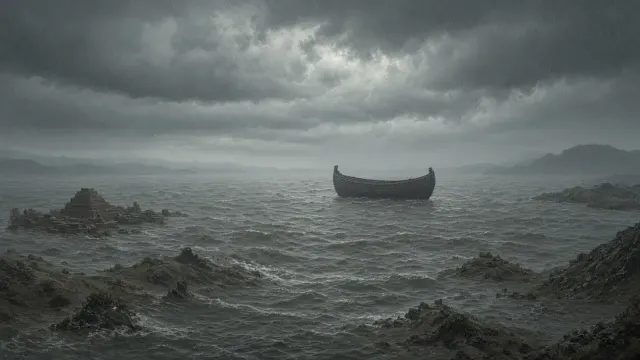
    Forty days of rain, and the waters rise until the highest mountains are covered fifteen cubits deep. Everything that breathes on dry land dies. Only Noah remains alive, and those with him in the ark. The waters prevail for a hundred and fifty days.

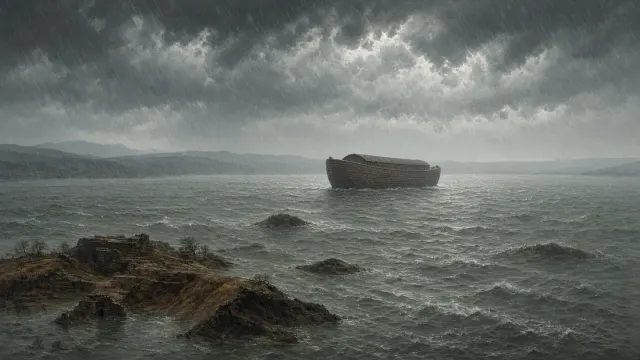
    Forty days of rain, and the water rises. The narrative watches it lift the ark, then cover the hills, then stand fifteen cubits above the highest mountains, and it says the same thing four ways: the waters prevailed. Then it lists the dead in the order of chapter 1, fowl, cattle, beast, creeping thing, and every man, all in whose nostrils was the breath of life. The phrase is the one used of Adam's making in 2:7. The breath God gave is taken back from everyone except the eight and what they carry.

    A hundred and fifty days the waters prevail. The ark drifts on a world with nothing above the surface. The text does not describe the inside, the smell or the noise or the fear; it records only that Noah remained alive, and they that were with him in the ark. Peter says the eight were saved by water, the same water that judged the world, and makes it a figure of baptism.

    Verse by verse

    1. 7:19

      All the high hills under the whole heaven: the language is total. Fifteen cubits is half the ark's height, its draught.

    2. 7:22

      Breath of life in his nostrils: the phrase of 2:7. Creation is unmade.

    3. 7:23

      Noah only remained: the Hebrew stresses the only. 1 Peter 3:20, eight souls saved by water.

    Genesis 7:17-24

    King James Version · 8 verses

    7:17And the flood was forty days upon the earth; and the waters increased, and bare up the ark, and it was lift up above the earth.

    7:18And the waters prevailed, and were increased greatly upon the earth; and the ark went upon the face of the waters.

    7:19And the waters prevailed exceedingly upon the earth; and all the high hills, that were under the whole heaven, were covered.

    7:20Fifteen cubits upward did the waters prevail; and the mountains were covered.

    7:21And all flesh died that moved upon the earth, both of fowl, and of cattle, and of beast, and of every creeping thing that creepeth upon the earth, and every man:

    7:22All in whose nostrils was the breath of life, of all that was in the dry land, died.

    7:23And every living substance was destroyed which was upon the face of the ground, both man, and cattle, and the creeping things, and the fowl of the heaven; and they were destroyed from the earth: and Noah only remained alive, and they that were with him in the ark.

    7:24And the waters prevailed upon the earth an hundred and fifty days.

  6. 06

    Genesis 8:1-14

    God remembered Noah

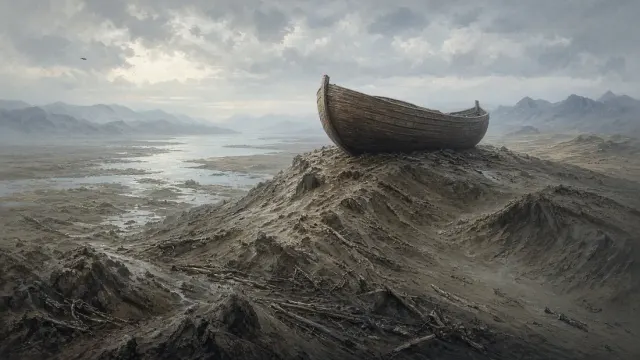
    A wind passes over the earth and the waters abate. The ark rests on the mountains of Ararat. Noah sends a raven, then a dove three times; the second time it returns with an olive leaf, and the third time it does not return. He removes the covering and sees the ground dry.

    And God remembered Noah. The verb does not mean God had forgotten; in the Bible to remember is to act on behalf of, and the turning point of the flood is God's attention returning to the ark. A wind passes over the earth as the Spirit moved on the waters in chapter 1, the fountains and windows are stopped, and the water begins to go down. The ark rests, the verb of Noah's name, on the mountains of Ararat on the seventeenth day of the seventh month, five months after the rain began.

    Then the slow patience of a man who cannot see out. Forty days after the mountaintops appear he opens the window and sends a raven, which does not come back. He sends a dove, which finds no rest and returns; seven days later, a dove that returns at evening with an olive leaf; seven days more, a dove that does not return. He removes the covering and sees that the ground is dry. He still does not leave. The whole passage is a year of waiting for the word that will match the word that shut him in.

    Verse by verse

    1. 8:1

      Remembered: the verb of Exodus 2:24 and Luke 1:72, God acting on his covenant. The wind, ruach, is the word for Spirit in 1:2.

    2. 8:4

      Rested, nuach: Noah's own name. Ararat is the Urartu of Assyrian records, the mountains of Armenia.

    3. 8:7-12

      Raven and dove: the unclean bird ranges over the carrion; the clean bird comes home. The olive leaf is the first green thing after the judgement, and the dove has been a sign of peace since.

    4. 8:13-14

      The first day of the first month of the six hundred and first year: a new year and a new world. Dry, and then dried: two words, the ground surface and then its depth.

    Genesis 8:1-14: God remembered Noah

    Genesis 8:1-14

    King James Version · 14 verses

    8:1And God remembered Noah, and every living thing, and all the cattle that was with him in the ark: and God made a wind to pass over the earth, and the waters asswaged;

    8:2The fountains also of the deep and the windows of heaven were stopped, and the rain from heaven was restrained;

    8:3And the waters returned from off the earth continually: and after the end of the hundred and fifty days the waters were abated.

    8:4And the ark rested in the seventh month, on the seventeenth day of the month, upon the mountains of Ararat.

    8:5And the waters decreased continually until the tenth month: in the tenth month, on the first day of the month, were the tops of the mountains seen.

    8:6And it came to pass at the end of forty days, that Noah opened the window of the ark which he had made:

    8:7And he sent forth a raven, which went forth to and fro, until the waters were dried up from off the earth.

    8:8Also he sent forth a dove from him, to see if the waters were abated from off the face of the ground;

    8:9But the dove found no rest for the sole of her foot, and she returned unto him into the ark, for the waters were on the face of the whole earth: then he put forth his hand, and took her, and pulled her in unto him into the ark.

    8:10And he stayed yet other seven days; and again he sent forth the dove out of the ark;

    8:11And the dove came in to him in the evening; and, lo, in her mouth was an olive leaf pluckt off: so Noah knew that the waters were abated from off the earth.

    8:12And he stayed yet other seven days; and sent forth the dove; which returned not again unto him any more.

    8:13And it came to pass in the six hundredth and first year, in the first month, the first day of the month, the waters were dried up from off the earth: and Noah removed the covering of the ark, and looked, and, behold, the face of the ground was dry.

    8:14And in the second month, on the seven and twentieth day of the month, was the earth dried.

  7. 07

    Genesis 8:15-22

    The first altar

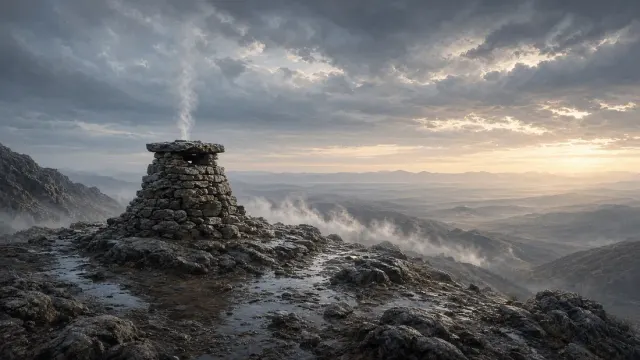
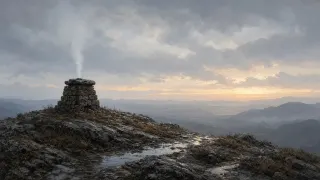
    God tells him to go out. Noah builds an altar and offers burnt offerings of every clean beast and bird, and the LORD smells the sweet savour and says in his heart that he will not again curse the ground for man's sake, nor smite every living thing, while the earth remains.

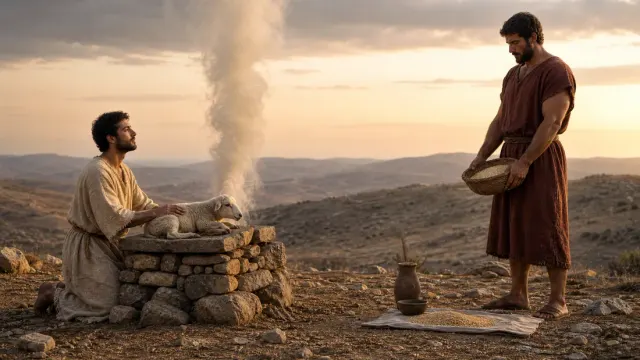
    God speaks, and only then does Noah go forth, with the same list as went in. The command to the animals is the command of creation, be fruitful and multiply upon the earth. Noah's first act on dry ground is worship. He builds an altar, the first named in the Bible, and offers of every clean beast and fowl, which is why the sevens were taken aboard. The LORD smells a sweet savour, the phrase that will describe every acceptable sacrifice in Leviticus, and says in his heart the words that govern all history after: I will not again curse the ground any more for man's sake.

    The reason given is startling. Not because man has improved, but for the imagination of man's heart is evil from his youth, the same verdict as 6:5. God has not changed his mind about people; he has bound himself not to answer their evil with another flood. While the earth remains, seedtime and harvest, cold and heat, summer and winter, day and night shall not cease. The order of the world after the flood rests on a promise, not on the world's deserving.

    Verse by verse

    1. 8:20

      Builded an altar: the first altar named in Scripture, though Cain and Abel offered. Of every clean beast: worship costs him a seventh of what he saved.

    2. 8:21

      Sweet savour: literally a smell of rest, nichoach, the same root as Noah. From his youth: the evil is native, not learned late.

    3. 8:22

      While the earth remaineth: the promise has a term, and 2 Peter 3:7 names it.

    Genesis 8:15-22

    King James Version · 8 verses

    8:15And God spake unto Noah, saying,

    8:16Go forth of the ark, thou, and thy wife, and thy sons, and thy sons’ wives with thee.

    8:17Bring forth with thee every living thing that is with thee, of all flesh, both of fowl, and of cattle, and of every creeping thing that creepeth upon the earth; that they may breed abundantly in the earth, and be fruitful, and multiply upon the earth.

    8:18And Noah went forth, and his sons, and his wife, and his sons’ wives with him:

    8:19Every beast, every creeping thing, and every fowl, and whatsoever creepeth upon the earth, after their kinds, went forth out of the ark.

    8:20And Noah builded an altar unto the LORD; and took of every clean beast, and of every clean fowl, and offered burnt offerings on the altar.

    8:21And the LORD smelled a sweet savour; and the LORD said in his heart, I will not again curse the ground any more for man’s sake; for the imagination of man’s heart is evil from his youth; neither will I again smite any more every thing living, as I have done.

    8:22While the earth remaineth, seedtime and harvest, and cold and heat, and summer and winter, and day and night shall not cease.

  8. 08

    Genesis 9:1-17

    The covenant and the bow

    God blesses Noah and his sons: be fruitful, fill the earth, eat every moving thing but not its blood, and whoever sheds man's blood, by man shall his blood be shed, for God made man in his image. He establishes his covenant with all flesh never to flood the earth again, and sets his bow in the cloud as the token.

    God blesses Noah and his sons with the words spoken to Adam, be fruitful and multiply and replenish the earth, and then changes the terms of life after the flood. The animals will fear man, and man may now eat them, every moving thing that liveth, as freely as the green herb. Two limits are set. The blood, which is the life, is not to be eaten; and human blood is sacred, whoso sheddeth man's blood, by man shall his blood be shed, because in the image of God made he man. The image survives the flood. Murder is forbidden not because life is useful but because the victim bears God's likeness, and human government is given its first task.

    Then the covenant, spoken four times over so that no one can miss it, with Noah, his seed, and every living creature, and the earth itself: never again a flood to destroy all flesh. The sign is the bow in the cloud. A bow is a weapon, and God hangs his in the sky pointed away from the earth; when the clouds come, I will look upon it, that I may remember. The sign is for God's memory as much as for man's. It is the first of the covenant signs, before circumcision and the Sabbath, and it is given to every living thing, not to a chosen people.

    Verse by verse

    1. 9:1

      The blessing of 1:28 repeated; the word subdue is left out. The world after the flood is harder to hold.

    2. 9:4

      Flesh with the life thereof, which is the blood: the principle behind Leviticus 17:11 and the apostles' rule in Acts 15:20.

    3. 9:6

      By man shall his blood be shed: the basis of capital justice, and the reason for it, the image of God, is given in the same breath.

    4. 9:11

      Never again: the covenant is unconditional. It asks nothing of Noah.

    5. 9:13-16

      My bow: a war-bow set aside. Ezekiel 1:28 and Revelation 4:3 put the bow around God's throne.

    Genesis 9:1-17: The covenant and the bow

    Genesis 9:1-17

    King James Version · 17 verses

    9:1And God blessed Noah and his sons, and said unto them, Be fruitful, and multiply, and replenish the earth.

    9:2And the fear of you and the dread of you shall be upon every beast of the earth, and upon every fowl of the air, upon all that moveth upon the earth, and upon all the fishes of the sea; into your hand are they delivered.

    9:3Every moving thing that liveth shall be meat for you; even as the green herb have I given you all things.

    9:4But flesh with the life thereof, which is the blood thereof, shall ye not eat.

    9:5And surely your blood of your lives will I require; at the hand of every beast will I require it, and at the hand of man; at the hand of every man’s brother will I require the life of man.

    9:6Whoso sheddeth man’s blood, by man shall his blood be shed: for in the image of God made he man.

    9:7And you, be ye fruitful, and multiply; bring forth abundantly in the earth, and multiply therein.

    9:8And God spake unto Noah, and to his sons with him, saying,

    9:9And I, behold, I establish my covenant with you, and with your seed after you;

    9:10And with every living creature that is with you, of the fowl, of the cattle, and of every beast of the earth with you; from all that go out of the ark, to every beast of the earth.

    9:11And I will establish my covenant with you; neither shall all flesh be cut off any more by the waters of a flood; neither shall there any more be a flood to destroy the earth.

    9:12And God said, This is the token of the covenant which I make between me and you and every living creature that is with you, for perpetual generations:

    9:13I do set my bow in the cloud, and it shall be for a token of a covenant between me and the earth.

    9:14And it shall come to pass, when I bring a cloud over the earth, that the bow shall be seen in the cloud:

    9:15And I will remember my covenant, which is between me and you and every living creature of all flesh; and the waters shall no more become a flood to destroy all flesh.

    9:16And the bow shall be in the cloud; and I will look upon it, that I may remember the everlasting covenant between God and every living creature of all flesh that is upon the earth.

    9:17And God said unto Noah, This is the token of the covenant, which I have established between me and all flesh that is upon the earth.

  9. 09

    Genesis 9:18-29

    The vineyard

    Noah plants a vineyard, drinks the wine, and lies uncovered in his tent. Ham sees and tells; Shem and Japheth walk in backwards with a garment and cover him. Noah wakes, curses Canaan, blesses the LORD God of Shem, and prays that God will enlarge Japheth. He lives three hundred and fifty years more and dies.

    The man who walked with God ends his account drunk in his tent. Noah plants a vineyard, the first after the flood, drinks of the wine, and is uncovered. The Book of Genesis neither excuses nor lingers. What follows is about the sons. Ham sees his father's nakedness and tells his two brethren without, which in the idiom of the Old Testament is a shaming, not an accident; Shem and Japheth walk backward with a garment on their shoulders and cover him without looking. The two responses to a father's disgrace are the two responses to any disgrace: to broadcast it or to cover it.

    Noah wakes and curses not Ham but Canaan, Ham's son, and the reason has been argued over for centuries; the text's own interest is that Canaan's descendants are the peoples Israel will dispossess. Shem is blessed through his God, blessed be the LORD God of Shem, and Japheth is to be enlarged and to dwell in the tents of Shem, which the church has read as the Gentiles coming into the inheritance of Israel. Noah lives three hundred and fifty years after the flood, and the refrain of chapter 5 that he escaped as long as anyone finally falls on him: and he died.

    Verse by verse

    1. 9:20-21

      Husbandman: literally a man of the ground, Adam's calling. The first vineyard and the first drunkenness are one verse apart.

    2. 9:22

      Saw and told: the sin is in the telling. Leviticus 18 uses uncovering nakedness for sexual shame, and some read more here than the text says.

    3. 9:23

      Their faces were backward: the care is described in detail, as the offence was not.

    4. 9:25

      Cursed be Canaan: the only curse Noah speaks, and it names a grandson. Its fulfilment is Joshua's conquest, not any later people.

    5. 9:26-27

      The LORD God of Shem: the line of promise is marked by whose God is named. Japheth in the tents of Shem: Ephesians 2:19 in seed.

    6. 9:29

      950 years, and he died: the last of the long-lived, and the last time the formula of chapter 5 is used.

    Genesis 9:18-29

    King James Version · 12 verses

    9:18And the sons of Noah, that went forth of the ark, were Shem, and Ham, and Japheth: and Ham is the father of Canaan.

    9:19These are the three sons of Noah: and of them was the whole earth overspread.

    9:20And Noah began to be an husbandman, and he planted a vineyard:

    9:21And he drank of the wine, and was drunken; and he was uncovered within his tent.

    9:22And Ham, the father of Canaan, saw the nakedness of his father, and told his two brethren without.

    9:23And Shem and Japheth took a garment, and laid it upon both their shoulders, and went backward, and covered the nakedness of their father; and their faces were backward, and they saw not their father’s nakedness.

    9:24And Noah awoke from his wine, and knew what his younger son had done unto him.

    9:25And he said, Cursed be Canaan; a servant of servants shall he be unto his brethren.

    9:26And he said, Blessed be the LORD God of Shem; and Canaan shall be his servant.

    9:27God shall enlarge Japheth, and he shall dwell in the tents of Shem; and Canaan shall be his servant.

    9:28And Noah lived after the flood three hundred and fifty years.

    9:29And all the days of Noah were nine hundred and fifty years: and he died.

    Genesis 9:18-29: The vineyard

The people, the places and the rest of Scripture.

Reading Noah closely

The people he dealt with

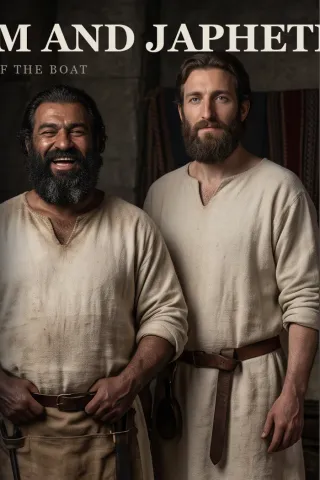
Noah's household is the only company he keeps in the account, and the text counts them carefully: eight souls. His wife and his sons' wives are never named. His three sons are named in the same order every time, Shem, Ham and Japheth, though Japheth seems to be the eldest and Ham the youngest, and they are old enough to have wives when the flood comes. Nothing they say is recorded until after the flood, and then the only scene they share with their father is the one in his tent.

That scene is what the reader is left with. Ham sees his father naked and tells his brothers outside, which in the honour-bound world of the text is an exposure rather than an accident. Shem and Japheth answer it with a garment across both shoulders and their faces turned away. When Noah wakes he curses not Ham but Ham's son Canaan, and blesses the God of Shem, and prays that Japheth will dwell in the tents of Shem. Readers have argued for centuries about why Canaan carries the curse. The plainest answer is that the writer is looking ahead to the land of Canaan, whose people Israel will displace, and reading their fate back into the tent.

The rest of humanity are the people Noah did not deal with, and 2 Peter insists he tried. A preacher of righteousness in a world where every imagination of the heart was evil, he built a boat on dry land for a hundred years in full view, and no one outside his family came in.

Genesis 5
Genesis 5

The flood, in order

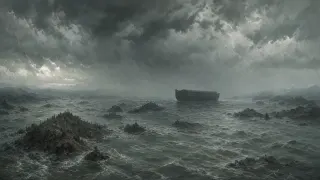
The account is dated like a ship's log, and the numbers are worth following. Noah is six hundred. On the seventeenth day of the second month the fountains of the deep and the windows of heaven open. Rain falls for forty days and nights. The waters prevail for a hundred and fifty days and cover the highest mountains by fifteen cubits, about the draught of a loaded ark. On the seventeenth day of the seventh month the ark rests on the mountains of Ararat. On the first day of the tenth month the tops of the mountains appear. Forty days later Noah opens the window and sends the raven, then the dove, at seven-day intervals. On the first day of the first month of his six hundred and first year he removes the covering; on the twenty-seventh day of the second month the earth is dry, and God tells him to go out. A year and ten days had passed since the door was shut.

God shut the door and God remembered Noah. Those two verbs frame the whole voyage. Noah does nothing on the water except wait, feed the animals, and send out birds, and the text gives him no words at all until he has built the altar.

Genesis 6
Genesis 6

What came before and what followed

Before Noah there is the descent from Adam and the rising violence of Cain's line, and there is a father who looks at the cursed ground and hopes his son will bring rest from it. The world of Genesis 6 is described in the strongest terms the Bible uses of any age: every imagination of the thoughts of the heart only evil continually, and the earth filled with violence. Noah is introduced against that background, and his righteousness is measured by it.

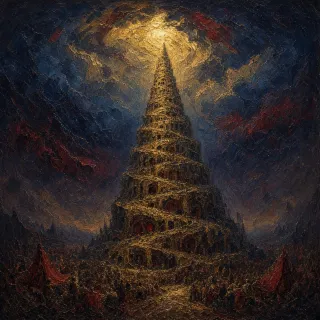
What follows is a new world with the old heart in it. The covenant, the bow, the blessing to be fruitful and fill the earth are all echoes of Genesis 1, a second creation. Then the vineyard shows that the flood did not change what people are, and Genesis 11 shows Noah's descendants gathering on a plain to build a tower and make a name rather than filling the earth as they were told. The Table of Nations in Genesis 10 traces seventy peoples from his three sons, and one of those lines, Shem to Arphaxad to Eber, leads to Abraham. The Bible's second beginning, like its first, narrows quickly to one family carrying a promise.

Genesis 6
Genesis 7

Where the rest of Scripture reaches back

Isaiah calls the exile's end the waters of Noah: as God swore that the waters would no more go over the earth, so he swears not to be angry with his people again. Ezekiel names Noah with Daniel and Job as three men whose righteousness would deliver only themselves if judgment fell on a land, which is a hard word about how far one man's goodness reaches. The Chronicler and Luke both pass through him in their genealogies.

Jesus uses him twice, in Matthew 24 and Luke 17, and the point is always the same: the flood came on people who were eating, drinking, marrying and being given in marriage, and knew nothing until it took them all away. So will the coming of the Son of Man be. Hebrews 11 places him third on its roll and says his obedience condemned the world and made him heir of the righteousness that is by faith. 1 Peter 3 counts the eight souls saved through water and calls baptism the like figure. 2 Peter 2 calls him the eighth person, a preacher of righteousness, spared when the old world was not, and 2 Peter 3 warns that the world which perished by water is reserved for fire. Every one of these writers assumes the reader knows the whole account, including how it ends.

Genesis 7
Genesis 8

Why it matters

Noah is the hinge of the Bible's first history. Everything before him is washed away, and every nation after him descends from his three sons. The covenant God makes with him is the first covenant named in Scripture, and it is made not with Israel but with all flesh and with the earth itself, which is why the rainbow belongs to everyone. The commands given to him after the flood, to fill the earth, to eat meat but not blood, and to require a reckoning for the blood of a man made in God's image, are the oldest laws the Bible records.

He is also the Bible's standing example of faith that acts. Hebrews says he was warned of things not yet seen and, moved with fear, prepared an ark to the saving of his house, and by it condemned the world. Ezekiel names him with Daniel and Job as one of three whose righteousness could not save anyone but themselves. Jesus says the days of the Son of Man will be as the days of Noah, when people ate and drank and married until the day he entered the ark. Peter calls him a preacher of righteousness and reads the eight souls saved through water as a figure of baptism. The account ends with the righteous man drunk and exposed, and the Bible leaves that in, because the flood did not wash sin out of the human heart, and the next chapters will show it.

5 songs

The music

Every song in the catalogue whose passage falls inside these chapters.

  1. Genesis 3:1-5:32

    Blood in the Ground

  2. Genesis 6:1-9:29

    The Ark Above the Deep

  3. Genesis 6-8

    Waters Over the Earth

  4. Genesis 9:1-17

    The Bow in the Cloud

  5. Genesis 10:1-11:26

    A Name to Reach the Heavens

Nearby

All the people

Report an error on this page