

Genesis 8:1-5
The waters go down
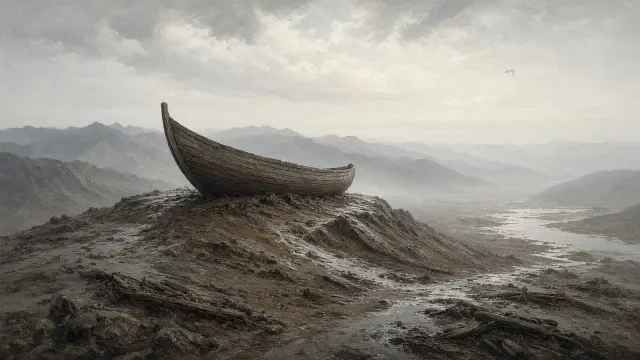
The wind passes over the earth and the account reverses its own opening, water giving way to land a second time.
Verse by verse
- 8:1
Remembered marks divine attention expressed in action, as it does when God remembers Abraham in Genesis 19:29.
- 8:1
The Hebrew ruach means wind here and is also the word translated Spirit in Genesis 1:2. The shared vocabulary contributes to the creation echo.
- 8:4-5
The ark rests in the seventh month; visible mountain tops are dated to the tenth. These are distinct stages, not alternate descriptions of the same day.
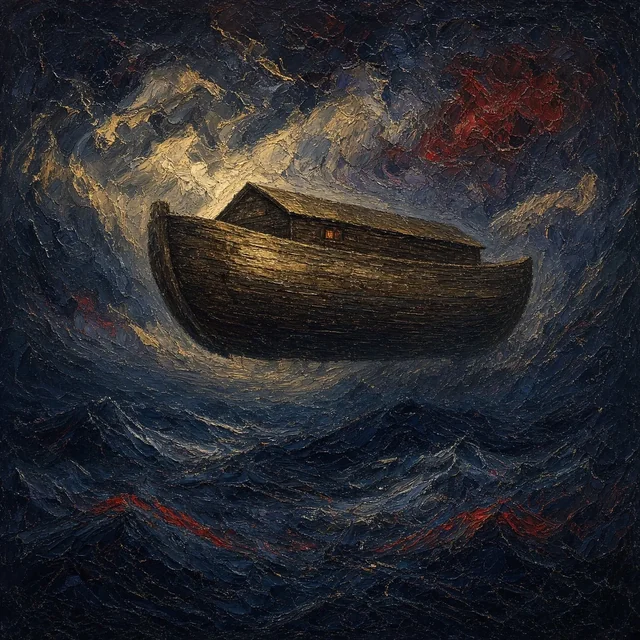
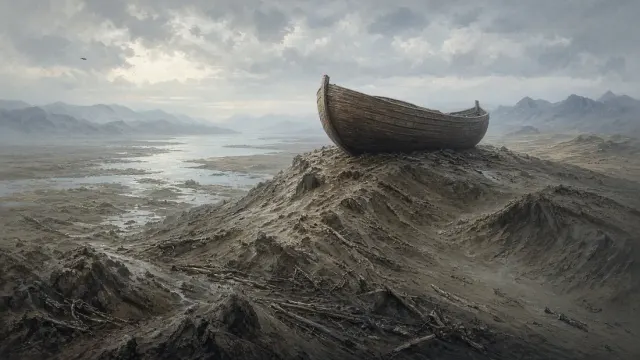
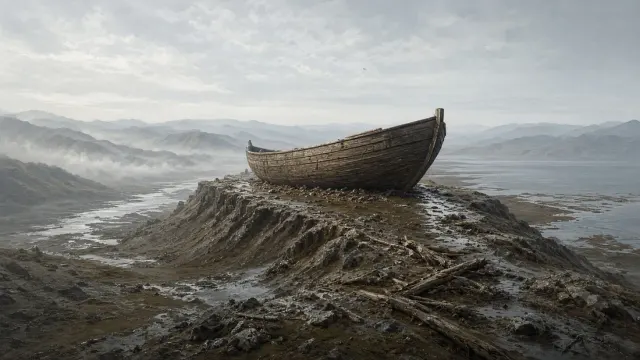
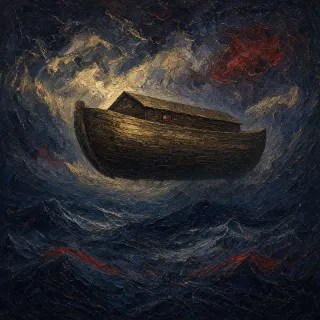



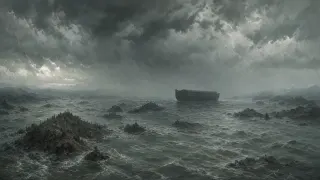
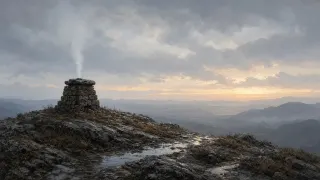

The ark finds a resting place long before anyone receives permission to leave it. That distinction matters. Its hull settles on the seventeenth day of the seventh month, but the mountain tops do not appear until the first day of the tenth. Arrival is not yet release. The Book of Genesis refuses to hurry past the calendar.
God remembered Noah opens the change, and the sentence immediately includes the animals. Remembering here is not an admission that someone slipped God's mind. It marks the action that follows: wind passes over the earth, the sources of the flood close, and water withdraws from land. The vocabulary recalls the opening chapter, where God's Spirit is over the waters and dry ground emerges. A devastated creation is becoming habitable again.
Yet the renewed world is disclosed by degrees. First the vessel stops moving. Later the mountains can be seen. Dry ground and the command to come out still belong to subsequent dates. Ararat is not a finish line with a celebration waiting beside it. It is the place where safety becomes something solid beneath the ark, while the long work of waiting continues.