New · FreePlay The Witnesses The in-depth puzzle battle quest through Bible history

People of the Bible

Abraham

Told to leave everything he could name for a country he was not shown.

Also called Abram, until Genesis 17; the friend of God

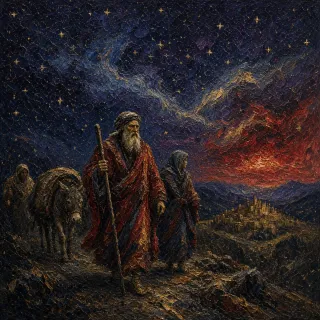
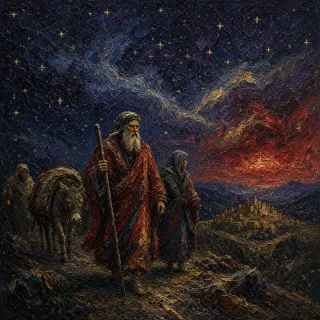
Abraham is the man the rest of the Bible calls father. He is born Abram in Ur of the Chaldees, the son of Terah, and travels with his father to Haran, where Terah dies. There the LORD tells him to leave his country, his kindred and his father's house for a land he will be shown, and promises him a great nation, a great name, and a blessing that will reach every family of the earth. He is seventy-five, his wife Sarai is barren, and he goes.

What follows is a century of living inside the gap between that promise and its keeping. He walks the length of Canaan building altars, goes down to Egypt in a famine and lies about his wife, gives his nephew Lot the better land, rescues him from four kings with three hundred and eighteen men, and is blessed by Melchizedek on the way home. God cuts a covenant with him between the halves of slaughtered animals, changes his name to Abraham, father of a multitude, and gives him circumcision as the sign. He takes Hagar at Sarah's word and fathers Ishmael. He argues with God over Sodom. At a hundred he holds Isaac, the son of the promise, and some years later he carries a knife and the wood up Mount Moriah because God has asked for that son back. The ram is in the thicket. He buys a cave at Machpelah to bury Sarah, sends a servant to find Isaac a wife, marries Keturah, and dies at a hundred and seventy-five, buried by Isaac and Ishmael together.

Where he appearsGenesis 12 to 25

Scroll down to the account
Abraham

The movements, in the order the text gives them.

The Account of Abraham

  1. 01

    Genesis 11:27-32

    Ur and Haran

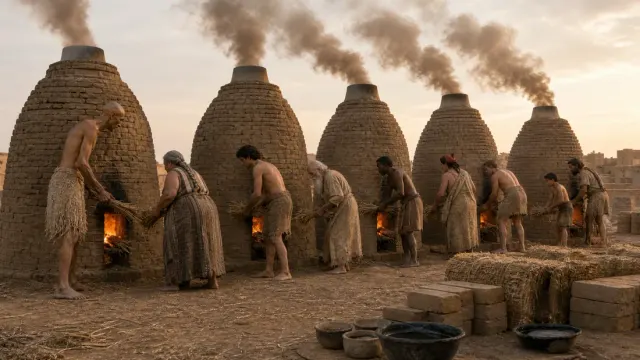
    Terah takes Abram, Sarai and Lot out of Ur of the Chaldees to go to Canaan, and stops at Haran. Sarai is barren. Terah dies at Haran, two hundred and five years old. Stephen says the God of glory had already appeared to Abram in Mesopotamia before Haran.

    Abram enters the Bible in a genealogy, as the eldest of three sons of Terah, and the first thing recorded about his family is a death: Haran died before his father Terah in Ur of the Chaldees. Lot is left fatherless, and the two surviving brothers marry, Abram to Sarai and Nahor to Milcah. Then the sentence that sets up everything after it: but Sarai was barren; she had no child. The whole account of Abraham is the account of what God does with that sentence.

    Terah takes the family out of Ur to go into the land of Canaan, and stops at Haran. Genesis does not say why he set out or why he stopped, but Joshua 24 says Terah served other gods, and Stephen in Acts 7 says the God of glory appeared to Abraham while he was in Mesopotamia, before he dwelt in Haran. The call of chapter 12 may have come first at Ur, and the journey stalled with the old man. Terah dies in Haran at two hundred and five, and only then does Abram move again.

    Verse by verse

    1. 11:28

      Ur of the Chaldees: the great city of southern Mesopotamia, a centre of the moon cult. Haran dies there, the first death in the family.

    2. 11:29

      Sarai: her name, like Abram's, will be changed by God in chapter 17. Iscah, Milcah's sister, is otherwise unknown; some ancient readers identified her with Sarai.

    3. 11:30

      Barren: the word that governs the next fourteen chapters. Rebekah and Rachel will be described the same way.

    4. 11:31

      To go into the land of Canaan: the destination is named before the call is recorded. They came unto Haran, and dwelt there: the journey halts halfway.

    5. 11:32

      Terah's death frees Abram; Acts 7:4 says he left Haran when his father was dead.

    Genesis 11:27-32

    King James Version · 6 verses

    11:27Now these are the generations of Terah: Terah begat Abram, Nahor, and Haran; and Haran begat Lot.

    11:28And Haran died before his father Terah in the land of his nativity, in Ur of the Chaldees.

    11:29And Abram and Nahor took them wives: the name of Abram’s wife was Sarai; and the name of Nahor’s wife, Milcah, the daughter of Haran, the father of Milcah, and the father of Iscah.

    11:30But Sarai was barren; she had no child.

    11:31And Terah took Abram his son, and Lot the son of Haran his son’s son, and Sarai his daughter in law, his son Abram’s wife; and they went forth with them from Ur of the Chaldees, to go into the land of Canaan; and they came unto Haran, and dwelt there.

    11:32And the days of Terah were two hundred and five years: and Terah died in Haran.

    Genesis 11:27-32: Ur and Haran
  2. 02

    Genesis 12:1-9

    Get thee out

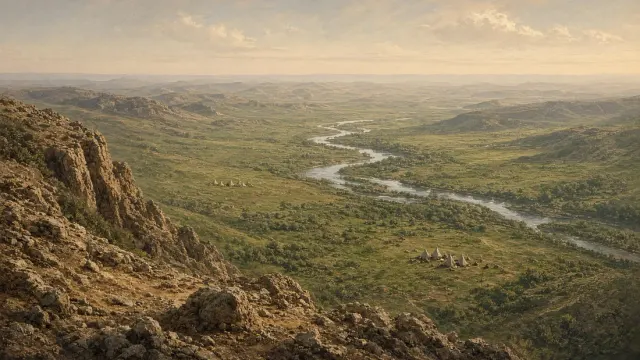
    The LORD tells Abram to leave country, kindred and father's house for a land he will be shown, and promises a nation, a name, and blessing for all families of the earth. At seventy-five he goes, with Sarai and Lot, to Shechem, where the LORD appears and he builds his first altar, then to Bethel, then south.

    Now the LORD had said unto Abram: get thee out. The command has three parts, country, kindred, father's house, each closer than the last, and the destination is withheld, a land that I will shew thee. The promise that follows is sevenfold: a great nation, a blessing, a great name, a blessing to others, blessing for those who bless him, a curse on those who curse him, and, at the end, in thee shall all families of the earth be blessed. The name the builders of Babel tried to make for themselves is here given by God, and the nations they were scattered into are named as the beneficiaries.

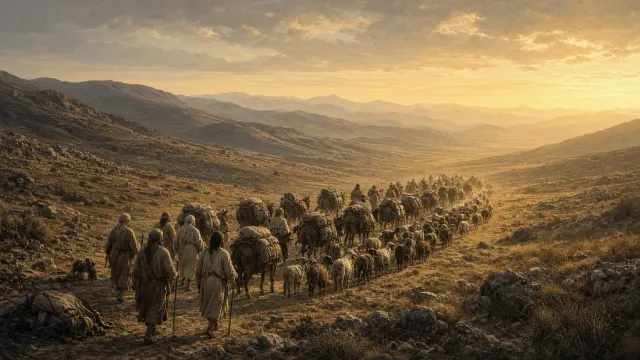
    So Abram departed, as the LORD had spoken unto him. Hebrews says he went out, not knowing whither he went. He is seventy-five, and he takes Sarai, Lot, their possessions and the souls that they had gotten in Haran, a household already large. He passes through the land to Sichem, to the oak of Moreh, and the Book of Genesis adds, and the Canaanite was then in the land: the promise is made about occupied ground. At Shechem the LORD appears, and for the first time says unto thy seed will I give this land. Abram builds an altar there, and another between Bethel and Hai, where he calls upon the name of the LORD, and goes on southward. He owns nothing yet but altars.

    Verse by verse

    1. 12:1

      Had said: the pluperfect allows the call to have come in Ur. Get thee out: literally go for yourself, the same phrase as 22:2, go for yourself to Moriah.

    2. 12:2-3

      Seven clauses. I will make of thee a great nation is said to a childless man of seventy-five. Galatians 3:8 calls verse 3 the gospel preached beforehand unto Abraham.

    3. 12:4

      So Abram departed: the obedience is stated as simply as the command. Hebrews 11:8.

    4. 12:6

      The plain of Moreh: the oak of the teacher, a Canaanite holy place. The Canaanite was then in the land: the writer looks back from a later day.

    5. 12:7

      Unto thy seed: the land is promised to descendants, not to Abram, who will own only a grave in it.

    6. 12:8

      Bethel: the place where Jacob will see the ladder. Called upon the name of the LORD: the worship of Seth's line, 4:26.

    Genesis 12:1-9

    King James Version · 9 verses

    12:1Now the LORD had said unto Abram, Get thee out of thy country, and from thy kindred, and from thy father’s house, unto a land that I will shew thee:

    12:2And I will make of thee a great nation, and I will bless thee, and make thy name great; and thou shalt be a blessing:

    12:3And I will bless them that bless thee, and curse him that curseth thee: and in thee shall all families of the earth be blessed.

    12:4So Abram departed, as the LORD had spoken unto him; and Lot went with him: and Abram was seventy and five years old when he departed out of Haran.

    12:5And Abram took Sarai his wife, and Lot his brother’s son, and all their substance that they had gathered, and the souls that they had gotten in Haran; and they went forth to go into the land of Canaan; and into the land of Canaan they came.

    12:6And Abram passed through the land unto the place of Sichem, unto the plain of Moreh. And the Canaanite was then in the land.

    12:7And the LORD appeared unto Abram, and said, Unto thy seed will I give this land: and there builded he an altar unto the LORD, who appeared unto him.

    12:8And he removed from thence unto a mountain on the east of Beth-el, and pitched his tent, having Beth-el on the west, and Hai on the east: and there he builded an altar unto the LORD, and called upon the name of the LORD.

    12:9And Abram journeyed, going on still toward the south.

    Genesis 12:1-9: Get thee out
  3. 03

    Genesis 12:10-20

    Down into Egypt

    A famine drives him to Egypt. Afraid for his life, he has Sarai say she is his sister. Pharaoh takes her into his house and is struck with plagues. Abram is sent away rebuked, and rich.

    The first test after the promise is a famine, and Abram fails it. He goes down into Egypt, and at the border he asks Sarai to say she is his sister so that the Egyptians will not kill him for her. It is a half-truth, as 20:12 will explain, and it puts the mother of the promised seed into Pharaoh's house. Abram is treated well for her sake and grows rich in sheep, oxen, asses, servants and camels, the price of his wife.

    The LORD plagues Pharaoh and his house with great plagues, and Pharaoh, who has done nothing knowingly wrong, has to teach the man of faith his own ethics: what is this that thou hast done unto me? Why saidst thou, she is my sister? He gives her back and sends Abram away with everything he has acquired. The shape of the account, a descent into Egypt under famine, plagues on Pharaoh, and an exodus with great wealth, is the shape of the book of Exodus in small, and readers since the rabbis have said that the deeds of the fathers are a sign for the children.

    Verse by verse

    1. 12:10

      Went down into Egypt: the direction is always down, from the hills to the Nile. Sojourn: to stay as a foreigner, not to settle.

    2. 12:11-13

      Thou art a fair woman: Sarai is sixty-five. That it may be well with me for thy sake: he says the motive plainly.

    3. 12:15

      Taken into Pharaoh's house: the promise of seed is put at risk by the man who received it.

    4. 12:17

      Great plagues: the word of Exodus 11:1. God protects Sarai without a word from Abram.

    5. 12:18-19

      Pharaoh's three questions have no answer, and Abram gives none.

    6. 12:20

      Sent him away: the verb of Exodus 12:33. He leaves with Egypt's goods and an Egyptian maid, Hagar, 16:1.

    Genesis 12:10-20

    King James Version · 11 verses

    12:10And there was a famine in the land: and Abram went down into Egypt to sojourn there; for the famine was grievous in the land.

    12:11And it came to pass, when he was come near to enter into Egypt, that he said unto Sarai his wife, Behold now, I know that thou art a fair woman to look upon:

    12:12Therefore it shall come to pass, when the Egyptians shall see thee, that they shall say, This is his wife: and they will kill me, but they will save thee alive.

    12:13Say, I pray thee, thou art my sister: that it may be well with me for thy sake; and my soul shall live because of thee.

    12:14And it came to pass, that, when Abram was come into Egypt, the Egyptians beheld the woman that she was very fair.

    12:15The princes also of Pharaoh saw her, and commended her before Pharaoh: and the woman was taken into Pharaoh’s house.

    12:16And he entreated Abram well for her sake: and he had sheep, and oxen, and he asses, and menservants, and maidservants, and she asses, and camels.

    12:17And the LORD plagued Pharaoh and his house with great plagues because of Sarai Abram’s wife.

    12:18And Pharaoh called Abram, and said, What is this that thou hast done unto me? why didst thou not tell me that she was thy wife?

    12:19Why saidst thou, She is my sister? so I might have taken her to me to wife: now therefore behold thy wife, take her, and go thy way.

    12:20And Pharaoh commanded his men concerning him: and they sent him away, and his wife, and all that he had.

  4. 04

    Genesis 13

    Lot chooses the plain

    Their herdsmen quarrel and Abram gives Lot first choice. Lot takes the well-watered plain of Jordan and pitches toward Sodom. Abram is told to walk the land in its length and breadth, and settles by the oaks of Mamre at Hebron.

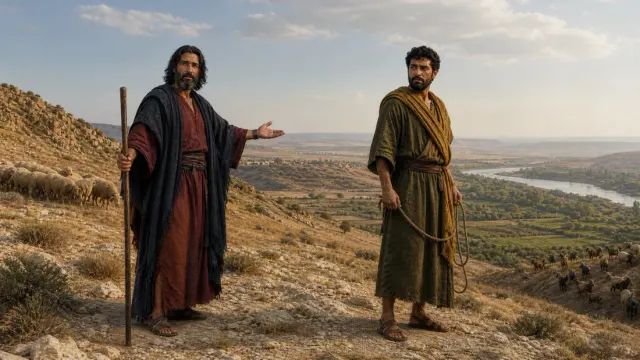
    Abram comes up out of Egypt very rich, returns to the altar between Bethel and Hai, and calls again on the name of the LORD; the account restarts where it went wrong. Then the wealth becomes the problem. Abram's herdmen and Lot's strive over grazing, and the Book of Genesis notes again that the Canaanite and the Perizzite dwelled then in the land, so the quarrel is witnessed by the people whose land it is. Abram's answer is the first act in the book that fits the man God chose: let there be no strife, for we be brethren; if thou wilt take the left hand, I will go to the right. The elder gives the younger the choice of the whole land he was promised.

    Lot lifts up his eyes and sees the plain of Jordan, well watered everywhere, as the garden of the LORD, like the land of Egypt, and chooses it, pitching his tent toward Sodom. The Book of Genesis adds at once that the men of Sodom were wicked and sinners before the LORD exceedingly. Lot chose by sight. After he is gone, the LORD tells Abram to lift up his own eyes, north, south, east and west, and promises all of it, for ever, to him and his seed, who will be as the dust of the earth. Abram walks the length and breadth of it as God tells him, and settles by the oaks of Mamre at Hebron, and builds another altar.

    Verse by verse

    1. 13:2

      Very rich in cattle, in silver and in gold: the first time the word rich is used of a person in the Bible.

    2. 13:4

      Unto the place of the altar: repentance is a return to the last place of worship.

    3. 13:7

      Strife between the herdmen: the Canaanite dwelled then in the land, watching two brothers quarrel over ground neither owned.

    4. 13:8-9

      We be brethren: Abram treats his nephew as an equal and gives him first choice. The generosity is the faith; he knows the land is God's to give.

    5. 13:10

      As the garden of the LORD, like the land of Egypt: Lot measures by Eden and by Egypt. Before the LORD destroyed Sodom: the Book of Genesis knows the end.

    6. 13:13

      Wicked and sinners before the LORD exceedingly: the verdict is given before Lot has unpacked.

    7. 13:14-17

      Lift up now thine eyes: the same words Lot heard from himself. Walk through the land: the ancient act of taking possession.

    8. 13:18

      Mamre, which is in Hebron: his home for the rest of the account, and the place of Sarah's burial.

    Genesis 13

    King James Version · 18 verses

    13:1And Abram went up out of Egypt, he, and his wife, and all that he had, and Lot with him, into the south.

    13:2And Abram was very rich in cattle, in silver, and in gold.

    13:3And he went on his journeys from the south even to Beth-el, unto the place where his tent had been at the beginning, between Beth-el and Hai;

    13:4Unto the place of the altar, which he had made there at the first: and there Abram called on the name of the LORD.

    13:5And Lot also, which went with Abram, had flocks, and herds, and tents.

    13:6And the land was not able to bear them, that they might dwell together: for their substance was great, so that they could not dwell together.

    13:7And there was a strife between the herdmen of Abram’s cattle and the herdmen of Lot’s cattle: and the Canaanite and the Perizzite dwelled then in the land.

    13:8And Abram said unto Lot, Let there be no strife, I pray thee, between me and thee, and between my herdmen and thy herdmen; for we be brethren.

    13:9Is not the whole land before thee? separate thyself, I pray thee, from me: if thou wilt take the left hand, then I will go to the right; or if thou depart to the right hand, then I will go to the left.

    13:10And Lot lifted up his eyes, and beheld all the plain of Jordan, that it was well watered every where, before the LORD destroyed Sodom and Gomorrah, even as the garden of the LORD, like the land of Egypt, as thou comest unto Zoar.

    13:11Then Lot chose him all the plain of Jordan; and Lot journeyed east: and they separated themselves the one from the other.

    13:12Abram dwelled in the land of Canaan, and Lot dwelled in the cities of the plain, and pitched his tent toward Sodom.

    13:13But the men of Sodom were wicked and sinners before the LORD exceedingly.

    13:14And the LORD said unto Abram, after that Lot was separated from him, Lift up now thine eyes, and look from the place where thou art northward, and southward, and eastward, and westward:

    13:15For all the land which thou seest, to thee will I give it, and to thy seed for ever.

    13:16And I will make thy seed as the dust of the earth: so that if a man can number the dust of the earth, then shall thy seed also be numbered.

    13:17Arise, walk through the land in the length of it and in the breadth of it; for I will give it unto thee.

    13:18Then Abram removed his tent, and came and dwelt in the plain of Mamre, which is in Hebron, and built there an altar unto the LORD.

  5. 05

    Genesis 14

    The rescue and the priest

    Four kings from the east take Sodom and Lot with it. Abram arms three hundred and eighteen men of his house, strikes by night, and brings back everything. Melchizedek, king of Salem and priest of the most high God, meets him with bread and wine and blesses him, and Abram gives him a tenth of all.

    Chapter 14 is the only place Abram appears as a soldier, and the only chapter that sets him in the politics of the ancient world. Four kings from the east, led by Chedorlaomer of Elam, have ruled the cities of the plain for twelve years; the five kings of the plain rebel, are beaten in the vale of Siddim, which is full of slime pits, and Sodom and Gomorrah are plundered. Lot, who dwelt in Sodom, goes with the spoil. One who escaped tells Abram the Hebrew, the first use of that name, at the oaks of Mamre.

    Abram arms three hundred and eighteen trained servants born in his own house, pursues the four kings to Dan, divides his men by night, defeats them, and chases them past Damascus. He brings back everything, and Lot, and the women, and the people. The victory is told in three verses; what follows is told in eight. Two kings come out to meet him in the king's dale: the king of Sodom, and Melchizedek king of Salem, priest of the most high God, who brings bread and wine and blesses Abram, and to whom Abram gives a tenth of all. The king of Sodom offers him the goods; Abram refuses even a thread or a shoelatchet, lest thou shouldest say, I have made Abram rich. He has lifted his hand to the LORD, the most high God, possessor of heaven and earth, taking Melchizedek's title for his own God. He will be enriched by God or not at all.

    Verse by verse

    1. 14:1-4

      Amraphel, Arioch, Chedorlaomer, Tidal: kings of Shinar, Ellasar, Elam and nations. The war of four kings against five is the first war in the Bible.

    2. 14:10

      Slimepits: bitumen wells, still found by the Dead Sea. The kings of Sodom and Gomorrah fall into them.

    3. 14:12

      Lot, who dwelt in Sodom: in 13:12 he pitched toward Sodom; now he lives in it.

    4. 14:13

      Abram the Hebrew: the first time the name is used, and it is used by a foreigner. Mamre, Eshcol and Aner are his Amorite allies.

    5. 14:14

      Three hundred and eighteen: an exact number in a chapter full of them. Unto Dan: the northern limit of the later land.

    6. 14:18

      Melchizedek: king of righteousness, king of Salem, which is peace, and Jerusalem. Bread and wine: a meal for the returning army, and more, as Hebrews 7 will say.

    7. 14:19-20

      Possessor of heaven and earth: Abram adopts the phrase in verse 22 and adds the name the LORD. Tithes of all: the first tithe in Scripture, given to a priest older than Levi.

    8. 14:23

      From a thread even to a shoelatchet: nothing, however small. He takes only what the young men have eaten and his allies' share.

    Genesis 14: The rescue and the priest

    Genesis 14

    King James Version · 24 verses

    14:1And it came to pass in the days of Amraphel king of Shinar, Arioch king of Ellasar, Chedorlaomer king of Elam, and Tidal king of nations;

    14:2That these made war with Bera king of Sodom, and with Birsha king of Gomorrah, Shinab king of Admah, and Shemeber king of Zeboiim, and the king of Bela, which is Zoar.

    14:3All these were joined together in the vale of Siddim, which is the salt sea.

    14:4Twelve years they served Chedorlaomer, and in the thirteenth year they rebelled.

    14:5And in the fourteenth year came Chedorlaomer, and the kings that were with him, and smote the Rephaims in Ashteroth Karnaim, and the Zuzims in Ham, and the Emims in Shaveh Kiriathaim,

    14:6And the Horites in their mount Seir, unto El-paran, which is by the wilderness.

    14:7And they returned, and came to En-mishpat, which is Kadesh, and smote all the country of the Amalekites, and also the Amorites, that dwelt in Hazezon-tamar.

    14:8And there went out the king of Sodom, and the king of Gomorrah, and the king of Admah, and the king of Zeboiim, and the king of Bela (the same is Zoar;) and they joined battle with them in the vale of Siddim;

    14:9With Chedorlaomer the king of Elam, and with Tidal king of nations, and Amraphel king of Shinar, and Arioch king of Ellasar; four kings with five.

    14:10And the vale of Siddim was full of slimepits; and the kings of Sodom and Gomorrah fled, and fell there; and they that remained fled to the mountain.

    14:11And they took all the goods of Sodom and Gomorrah, and all their victuals, and went their way.

    14:12And they took Lot, Abram’s brother’s son, who dwelt in Sodom, and his goods, and departed.

    14:13And there came one that had escaped, and told Abram the Hebrew; for he dwelt in the plain of Mamre the Amorite, brother of Eshcol, and brother of Aner: and these were confederate with Abram.

    14:14And when Abram heard that his brother was taken captive, he armed his trained servants, born in his own house, three hundred and eighteen, and pursued them unto Dan.

    14:15And he divided himself against them, he and his servants, by night, and smote them, and pursued them unto Hobah, which is on the left hand of Damascus.

    14:16And he brought back all the goods, and also brought again his brother Lot, and his goods, and the women also, and the people.

    14:17And the king of Sodom went out to meet him after his return from the slaughter of Chedorlaomer, and of the kings that were with him, at the valley of Shaveh, which is the king’s dale.

    14:18And Melchizedek king of Salem brought forth bread and wine: and he was the priest of the most high God.

    14:19And he blessed him, and said, Blessed be Abram of the most high God, possessor of heaven and earth:

    14:20And blessed be the most high God, which hath delivered thine enemies into thy hand. And he gave him tithes of all.

    14:21And the king of Sodom said unto Abram, Give me the persons, and take the goods to thyself.

    14:22And Abram said to the king of Sodom, I have lift up mine hand unto the LORD, the most high God, the possessor of heaven and earth,

    14:23That I will not take from a thread even to a shoelatchet, and that I will not take any thing that is thine, lest thou shouldest say, I have made Abram rich:

    14:24Save only that which the young men have eaten, and the portion of the men which went with me, Aner, Eshcol, and Mamre; let them take their portion.

  6. 06

    Genesis 15

    Counted for righteousness

    Abram asks what God can give him when he has no heir but a servant. He is taken outside to count the stars: so shall thy seed be. He believes the LORD, and it is counted to him for righteousness. That night a smoking furnace and a burning lamp pass between the pieces of the animals, and God swears the land to his seed.

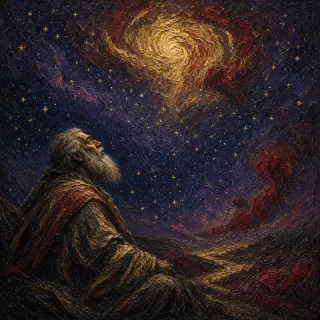
    After these things the word of the LORD comes to Abram in a vision, and the first words are fear not, which suggests the aftermath of the war has left him afraid. I am thy shield, and thy exceeding great reward: God himself is the reward he refused from Sodom. Abram answers with the first complaint of the account. What wilt thou give me, seeing I go childless, and the heir of my house is Eliezer of Damascus? Ten years have passed since the promise and there is no child. God brings him outside, shows him the stars, and says so shall thy seed be. And he believed in the LORD; and he counted it to him for righteousness. That sentence is the foundation of Romans 4 and Galatians 3: righteousness by faith, before circumcision, before the law, before any work.

    Then the covenant. Abram asks how he will know he will inherit the land, and God answers with a ceremony older than any written law: animals cut in two, the pieces laid opposite each other, and the parties passing between them, calling the fate of the animals on themselves if they break their word. Abram drives off the birds of prey, falls into a deep sleep, and is told the future: four hundred years of affliction for his seed in a land not theirs, judgement on that nation, and a return in the fourth generation, for the iniquity of the Amorites is not yet full. Then, in the dark, a smoking furnace and a burning lamp pass between the pieces. Only God passes. The covenant is his to keep, and the land is named from the river of Egypt to the Euphrates.

    Verse by verse

    1. 15:1

      The word of the LORD came: the first use of the prophetic formula. Thy shield: the word of Deuteronomy 33:29 and Psalm 3:3.

    2. 15:2-3

      Eliezer of Damascus: a servant adopted as heir, a known custom. Abram's complaint is the first time he talks back to God.

    3. 15:5

      Tell the stars: the promise was dust in 13:16; now it is stars. Both are uncountable.

    4. 15:6

      He believed, and it was counted for righteousness: quoted in Romans 4:3, Galatians 3:6 and James 2:23. The verb counted is a bookkeeping word.

    5. 15:9-10

      Heifer, goat, ram, turtledove, pigeon: the animals of the later sacrificial law. Divided them in the midst: Jeremiah 34:18 describes the rite.

    6. 15:12

      Deep sleep: the word of Adam's sleep, 2:21. Horror of great darkness: the vision comes in fear.

    7. 15:13-16

      Four hundred years: Exodus 12:40 counts four hundred and thirty. The fourth generation: a generation reckoned at a hundred years. Iniquity of the Amorites not yet full: the conquest is judgement, delayed by patience.

    8. 15:17

      Smoking furnace and burning lamp: fire is how God appears, at the bush and on Sinai. Passed between: God binds himself alone.

    9. 15:18

      The river of Egypt to the Euphrates: the borders reached briefly under Solomon, 1 Kings 4:21.

    Genesis 15

    King James Version · 21 verses

    15:1After these things the word of the LORD came unto Abram in a vision, saying, Fear not, Abram: I am thy shield, and thy exceeding great reward.

    15:2And Abram said, Lord GOD, what wilt thou give me, seeing I go childless, and the steward of my house is this Eliezer of Damascus?

    15:3And Abram said, Behold, to me thou hast given no seed: and, lo, one born in my house is mine heir.

    15:4And, behold, the word of the LORD came unto him, saying, This shall not be thine heir; but he that shall come forth out of thine own bowels shall be thine heir.

    15:5And he brought him forth abroad, and said, Look now toward heaven, and tell the stars, if thou be able to number them: and he said unto him, So shall thy seed be.

    15:6And he believed in the LORD; and he counted it to him for righteousness.

    15:7And he said unto him, I am the LORD that brought thee out of Ur of the Chaldees, to give thee this land to inherit it.

    15:8And he said, Lord GOD, whereby shall I know that I shall inherit it?

    15:9And he said unto him, Take me an heifer of three years old, and a she goat of three years old, and a ram of three years old, and a turtledove, and a young pigeon.

    15:10And he took unto him all these, and divided them in the midst, and laid each piece one against another: but the birds divided he not.

    15:11And when the fowls came down upon the carcases, Abram drove them away.

    15:12And when the sun was going down, a deep sleep fell upon Abram; and, lo, an horror of great darkness fell upon him.

    15:13And he said unto Abram, Know of a surety that thy seed shall be a stranger in a land that is not theirs, and shall serve them; and they shall afflict them four hundred years;

    15:14And also that nation, whom they shall serve, will I judge: and afterward shall they come out with great substance.

    15:15And thou shalt go to thy fathers in peace; thou shalt be buried in a good old age.

    15:16But in the fourth generation they shall come hither again: for the iniquity of the Amorites is not yet full.

    15:17And it came to pass, that, when the sun went down, and it was dark, behold a smoking furnace, and a burning lamp that passed between those pieces.

    15:18In the same day the LORD made a covenant with Abram, saying, Unto thy seed have I given this land, from the river of Egypt unto the great river, the river Euphrates:

    15:19The Kenites, and the Kenizzites, and the Kadmonites,

    15:20And the Hittites, and the Perizzites, and the Rephaims,

    15:21And the Amorites, and the Canaanites, and the Girgashites, and the Jebusites.

  7. 07

    Genesis 16

    Hagar and Ishmael

    After ten years in Canaan Sarai gives Abram her Egyptian maid Hagar. Hagar conceives and despises her mistress, is driven out, is met by the angel of the LORD at a well, and returns. Ishmael is born when Abram is eighty-six.

    Ten years in the land and Sarai has no child, so she does what the law of the ancient world allowed: she gives her Egyptian maid Hagar to Abram, that I may obtain children by her. Abram hearkened to the voice of Sarai, the phrase used of Adam hearkening to Eve. Hagar conceives, and her mistress is despised in her eyes. Sarai blames Abram, my wrong be upon thee, and Abram hands Hagar back, do to her as it pleaseth thee. Sarai deals hardly with her, and the pregnant slave runs into the wilderness. Every person in the chapter acts within their rights and every one of them does wrong.

    The angel of the LORD finds Hagar by a fountain on the way to Shur, the road to Egypt, and this is the first appearance of the angel of the LORD in the Bible. He calls her by name and by station, Hagar, Sarai's maid, asks where she has come from and where she is going, and sends her back to submit. Then he gives her a promise in the form God gave Abram: I will multiply thy seed exceedingly. The child will be Ishmael, God hears, a wild man, his hand against every man, dwelling in the presence of all his brethren. Hagar names the God who spoke to her, Thou God seest me, the only person in the Bible to give God a name, and the well is called Beer-lahai-roi, the well of the living one who sees me. Ishmael is born when Abram is eighty-six, and Abram names him as the angel said.

    Verse by verse

    1. 16:2

      The LORD hath restrained me: Sarai reads her barrenness as God's act and takes matters into her own hands. Hearkened to the voice: 3:17.

    2. 16:3

      Ten years: the promise of 12:2 is a decade old. To be his wife: a secondary wife, with legal standing.

    3. 16:5

      The LORD judge between me and thee: Sarai invokes God against her husband.

    4. 16:7

      The angel of the LORD: the first of his appearances, and to a slave. Shur: the wall, the border with Egypt.

    5. 16:8

      Whence camest thou, and whither wilt thou go: God's questions to Hagar are the questions of Genesis 3 and 4.

    6. 16:10-12

      I will multiply thy seed: Hagar receives the promise in Abram's words. Wild man: a wild ass of a man, free, untamed.

    7. 16:13

      Thou God seest me: El Roi. Have I also here looked after him that seeth me: she has seen God and lived.

    8. 16:16

      Eighty and six: thirteen years before God speaks again in chapter 17.

    Genesis 16

    King James Version · 16 verses

    16:1Now Sarai Abram’s wife bare him no children: and she had an handmaid, an Egyptian, whose name was Hagar.

    16:2And Sarai said unto Abram, Behold now, the LORD hath restrained me from bearing: I pray thee, go in unto my maid; it may be that I may obtain children by her. And Abram hearkened to the voice of Sarai.

    16:3And Sarai Abram’s wife took Hagar her maid the Egyptian, after Abram had dwelt ten years in the land of Canaan, and gave her to her husband Abram to be his wife.

    16:4And he went in unto Hagar, and she conceived: and when she saw that she had conceived, her mistress was despised in her eyes.

    16:5And Sarai said unto Abram, My wrong be upon thee: I have given my maid into thy bosom; and when she saw that she had conceived, I was despised in her eyes: the LORD judge between me and thee.

    16:6But Abram said unto Sarai, Behold, thy maid is in thy hand; do to her as it pleaseth thee. And when Sarai dealt hardly with her, she fled from her face.

    16:7And the angel of the LORD found her by a fountain of water in the wilderness, by the fountain in the way to Shur.

    16:8And he said, Hagar, Sarai’s maid, whence camest thou? and whither wilt thou go? And she said, I flee from the face of my mistress Sarai.

    16:9And the angel of the LORD said unto her, Return to thy mistress, and submit thyself under her hands.

    16:10And the angel of the LORD said unto her, I will multiply thy seed exceedingly, that it shall not be numbered for multitude.

    16:11And the angel of the LORD said unto her, Behold, thou art with child, and shalt bear a son, and shalt call his name Ishmael; because the LORD hath heard thy affliction.

    16:12And he will be a wild man; his hand will be against every man, and every man’s hand against him; and he shall dwell in the presence of all his brethren.

    16:13And she called the name of the LORD that spake unto her, Thou God seest me: for she said, Have I also here looked after him that seeth me?

    16:14Wherefore the well was called Beer-lahai-roi; behold, it is between Kadesh and Bered.

    16:15And Hagar bare Abram a son: and Abram called his son’s name, which Hagar bare, Ishmael.

    16:16And Abram was fourscore and six years old, when Hagar bare Ishmael to Abram.

  8. 08

    Genesis 17

    The name and the sign

    At ninety-nine he is told to walk before God and be perfect. His name becomes Abraham, father of a multitude; Sarai becomes Sarah; circumcision is given as the sign of an everlasting covenant. He laughs at the thought of a son at a hundred and prays that Ishmael might live before God. God answers: Sarah will bear Isaac, and the covenant is with him.

    Thirteen years of silence, and then, when Abram is ninety-nine, the LORD appears and names himself for the first time as God Almighty, El Shaddai. Walk before me, and be thou perfect. The covenant of chapter 15 is now spelled out: Abram becomes Abraham, father of a multitude, because I have made thee a father of many nations; kings shall come out of him; the land of Canaan is an everlasting possession; and God will be a God to him and to his seed after him. That last clause is the heart of it, repeated in Exodus, Jeremiah and Revelation: I will be their God.

    The sign is circumcision, every male at eight days, including the slave bought with money, and whoever is not circumcised has broken the covenant. Then Sarai becomes Sarah, princess, and God says the thing Abraham cannot believe: I will bless her, and give thee a son also of her. Abraham falls on his face and laughs, and pleads for the son he has, O that Ishmael might live before thee. God answers both. Sarah shall bear a son, and his name will be Isaac, laughter, and the covenant is with him; Ishmael is heard too, and will be blessed and become a great nation of twelve princes, but the covenant is Isaac's, next year at this set time. The chapter ends with Abraham circumcising himself at ninety-nine, Ishmael at thirteen, and every man of his house, in the selfsame day, as God had said.

    Verse by verse

    1. 17:1

      The Almighty God: El Shaddai, the name the patriarchs knew, Exodus 6:3. Perfect: whole, undivided.

    2. 17:5

      Abraham: father of a multitude, the letter added to the name. The promise is written into how he is addressed for the rest of his life.

    3. 17:7

      Everlasting covenant, to be a God unto thee and to thy seed: the formula of Leviticus 26:12, Jeremiah 31:33, Revelation 21:3.

    4. 17:10-14

      Circumcision: practised by neighbouring peoples as a rite of puberty, here made a covenant sign on infants. Romans 4:11 calls it a seal of the righteousness he already had by faith.

    5. 17:15

      Sarah: princess. She, too, is renamed, the only woman in the Bible whose name God changes.

    6. 17:17

      Laughed: the first laugh, at a hundred and ninety. Isaac's name is born here, in the father's disbelief.

    7. 17:18

      O that Ishmael might live before thee: Abraham is content with what he has. God is not.

    8. 17:20

      As for Ishmael, I have heard thee: the name means God hears, and God does. Twelve princes: fulfilled in 25:16.

    9. 17:23-27

      In the selfsame day: obedience without delay, at ninety-nine, on himself first.

    Genesis 17: The name and the sign

    Genesis 17

    King James Version · 27 verses

    17:1And when Abram was ninety years old and nine, the LORD appeared to Abram, and said unto him, I am the Almighty God; walk before me, and be thou perfect.

    17:2And I will make my covenant between me and thee, and will multiply thee exceedingly.

    17:3And Abram fell on his face: and God talked with him, saying,

    17:4As for me, behold, my covenant is with thee, and thou shalt be a father of many nations.

    17:5Neither shall thy name any more be called Abram, but thy name shall be Abraham; for a father of many nations have I made thee.

    17:6And I will make thee exceeding fruitful, and I will make nations of thee, and kings shall come out of thee.

    17:7And I will establish my covenant between me and thee and thy seed after thee in their generations for an everlasting covenant, to be a God unto thee, and to thy seed after thee.

    17:8And I will give unto thee, and to thy seed after thee, the land wherein thou art a stranger, all the land of Canaan, for an everlasting possession; and I will be their God.

    17:9And God said unto Abraham, Thou shalt keep my covenant therefore, thou, and thy seed after thee in their generations.

    17:10This is my covenant, which ye shall keep, between me and you and thy seed after thee; Every man child among you shall be circumcised.

    17:11And ye shall circumcise the flesh of your foreskin; and it shall be a token of the covenant betwixt me and you.

    17:12And he that is eight days old shall be circumcised among you, every man child in your generations, he that is born in the house, or bought with money of any stranger, which is not of thy seed.

    17:13He that is born in thy house, and he that is bought with thy money, must needs be circumcised: and my covenant shall be in your flesh for an everlasting covenant.

    17:14And the uncircumcised man child whose flesh of his foreskin is not circumcised, that soul shall be cut off from his people; he hath broken my covenant.

    17:15And God said unto Abraham, As for Sarai thy wife, thou shalt not call her name Sarai, but Sarah shall her name be.

    17:16And I will bless her, and give thee a son also of her: yea, I will bless her, and she shall be a mother of nations; kings of people shall be of her.

    17:17Then Abraham fell upon his face, and laughed, and said in his heart, Shall a child be born unto him that is an hundred years old? and shall Sarah, that is ninety years old, bear?

    17:18And Abraham said unto God, O that Ishmael might live before thee!

    17:19And God said, Sarah thy wife shall bear thee a son indeed; and thou shalt call his name Isaac: and I will establish my covenant with him for an everlasting covenant, and with his seed after him.

    17:20And as for Ishmael, I have heard thee: Behold, I have blessed him, and will make him fruitful, and will multiply him exceedingly; twelve princes shall he beget, and I will make him a great nation.

    17:21But my covenant will I establish with Isaac, which Sarah shall bear unto thee at this set time in the next year.

    17:22And he left off talking with him, and God went up from Abraham.

    17:23And Abraham took Ishmael his son, and all that were born in his house, and all that were bought with his money, every male among the men of Abraham’s house; and circumcised the flesh of their foreskin in the selfsame day, as God had said unto him.

    17:24And Abraham was ninety years old and nine, when he was circumcised in the flesh of his foreskin.

    17:25And Ishmael his son was thirteen years old, when he was circumcised in the flesh of his foreskin.

    17:26In the selfsame day was Abraham circumcised, and Ishmael his son.

    17:27And all the men of his house, born in the house, and bought with money of the stranger, were circumcised with him.

  9. 09

    Genesis 18

    Three visitors and a city

    Three men come to his tent at Mamre in the heat of the day. He runs to serve them. One is the LORD, who promises a son within the year and hears Sarah laugh. As they turn toward Sodom, Abraham stands before the LORD and bargains from fifty righteous down to ten.

    The LORD appears to Abraham in the heat of the day as three men standing by his tent at Mamre, and Abraham runs to them, bows, and does what hospitality demands with the energy of a young man: water for their feet, a morsel of bread that becomes cakes of fine meal, a calf tender and good, butter and milk. He stands by them under the tree while they eat. Then the guest asks where Sarah is, and says he will return according to the time of life, and Sarah shall have a son. Sarah, listening at the tent door, laughs within herself, old as she is, and the LORD asks Abraham why. Is any thing too hard for the LORD? She denies it, afraid; he answers, nay, but thou didst laugh. The child's name is settled by his mother's laughter as it was by his father's.

    The men rise and look toward Sodom, and the LORD asks himself whether he should hide from Abraham what he is about to do, since Abraham will become a great nation and will command his children to keep the way of the LORD. So Abraham learns that the cry of Sodom is great, and that the LORD is going down to see. Two of the men go on; Abraham stands before the LORD, and the chapter ends with the longest prayer in Genesis. Wilt thou also destroy the righteous with the wicked? Peradventure there be fifty. Shall not the Judge of all the earth do right? He bargains down, fifty, forty-five, forty, thirty, twenty, ten, and each time God agrees. Abraham stops at ten. He does not know that there is only one, and that God will get him out anyway.

    Verse by verse

    1. 18:1-2

      The LORD appeared, and three men: the Book of Genesis says who they are; Abraham finds out as they speak. Hebrews 13:2 has this scene in mind.

    2. 18:6-8

      Three measures of meal: enough for a crowd. Make ready quickly, ran, hasted: an old man moves fast for guests.

    3. 18:10

      According to the time of life: in a year. Sarah heard it in the tent door: she is behind the speaker, unseen.

    4. 18:12

      Laughed within herself: the same verb as Abraham's in 17:17. My lord being old also: 1 Peter 3:6 quotes her calling him lord.

    5. 18:14

      Is any thing too hard for the LORD: the question Jeremiah 32:27 answers and Luke 1:37 echoes to Mary.

    6. 18:17-19

      Shall I hide from Abraham: the first man called God's friend is let into God's counsel. That he will command his children: the reason for the confidence.

    7. 18:22

      Abraham stood yet before the LORD: an ancient scribal note says the original read, the LORD stood before Abraham.

    8. 18:25

      Shall not the Judge of all the earth do right: the question that makes intercession possible. Abraham appeals to God's character against the outcome he fears.

    9. 18:32

      Ten: the last number. Abraham stops, and God is more merciful than the prayer, saving Lot for four.

    Genesis 18: Three visitors and a city

    Genesis 18

    King James Version · 33 verses

    18:1And the LORD appeared unto him in the plains of Mamre: and he sat in the tent door in the heat of the day;

    18:2And he lift up his eyes and looked, and, lo, three men stood by him: and when he saw them, he ran to meet them from the tent door, and bowed himself toward the ground,

    18:3And said, My Lord, if now I have found favour in thy sight, pass not away, I pray thee, from thy servant:

    18:4Let a little water, I pray you, be fetched, and wash your feet, and rest yourselves under the tree:

    18:5And I will fetch a morsel of bread, and comfort ye your hearts; after that ye shall pass on: for therefore are ye come to your servant. And they said, So do, as thou hast said.

    18:6And Abraham hastened into the tent unto Sarah, and said, Make ready quickly three measures of fine meal, knead it, and make cakes upon the hearth.

    18:7And Abraham ran unto the herd, and fetcht a calf tender and good, and gave it unto a young man; and he hasted to dress it.

    18:8And he took butter, and milk, and the calf which he had dressed, and set it before them; and he stood by them under the tree, and they did eat.

    18:9And they said unto him, Where is Sarah thy wife? And he said, Behold, in the tent.

    18:10And he said, I will certainly return unto thee according to the time of life; and, lo, Sarah thy wife shall have a son. And Sarah heard it in the tent door, which was behind him.

    18:11Now Abraham and Sarah were old and well stricken in age; and it ceased to be with Sarah after the manner of women.

    18:12Therefore Sarah laughed within herself, saying, After I am waxed old shall I have pleasure, my lord being old also?

    18:13And the LORD said unto Abraham, Wherefore did Sarah laugh, saying, Shall I of a surety bear a child, which am old?

    18:14Is any thing too hard for the LORD? At the time appointed I will return unto thee, according to the time of life, and Sarah shall have a son.

    18:15Then Sarah denied, saying, I laughed not; for she was afraid. And he said, Nay; but thou didst laugh.

    18:16And the men rose up from thence, and looked toward Sodom: and Abraham went with them to bring them on the way.

    18:17And the LORD said, Shall I hide from Abraham that thing which I do;

    18:18Seeing that Abraham shall surely become a great and mighty nation, and all the nations of the earth shall be blessed in him?

    18:19For I know him, that he will command his children and his household after him, and they shall keep the way of the LORD, to do justice and judgment; that the LORD may bring upon Abraham that which he hath spoken of him.

    18:20And the LORD said, Because the cry of Sodom and Gomorrah is great, and because their sin is very grievous;

    18:21I will go down now, and see whether they have done altogether according to the cry of it, which is come unto me; and if not, I will know.

    18:22And the men turned their faces from thence, and went toward Sodom: but Abraham stood yet before the LORD.

    18:23And Abraham drew near, and said, Wilt thou also destroy the righteous with the wicked?

    18:24Peradventure there be fifty righteous within the city: wilt thou also destroy and not spare the place for the fifty righteous that are therein?

    18:25That be far from thee to do after this manner, to slay the righteous with the wicked: and that the righteous should be as the wicked, that be far from thee: Shall not the Judge of all the earth do right?

    18:26And the LORD said, If I find in Sodom fifty righteous within the city, then I will spare all the place for their sakes.

    18:27And Abraham answered and said, Behold now, I have taken upon me to speak unto the Lord, which am but dust and ashes:

    18:28Peradventure there shall lack five of the fifty righteous: wilt thou destroy all the city for lack of five? And he said, If I find there forty and five, I will not destroy it.

    18:29And he spake unto him yet again, and said, Peradventure there shall be forty found there. And he said, I will not do it for forty’s sake.

    18:30And he said unto him, Oh let not the Lord be angry, and I will speak: Peradventure there shall thirty be found there. And he said, I will not do it, if I find thirty there.

    18:31And he said, Behold now, I have taken upon me to speak unto the Lord: Peradventure there shall be twenty found there. And he said, I will not destroy it for twenty’s sake.

    18:32And he said, Oh let not the Lord be angry, and I will speak yet but this once: Peradventure ten shall be found there. And he said, I will not destroy it for ten’s sake.

    18:33And the LORD went his way, as soon as he had left communing with Abraham: and Abraham returned unto his place.

  10. 10

    Genesis 20

    Gerar

    In the south he calls Sarah his sister again, and Abimelech king of Gerar takes her. God warns the king in a dream that Abraham is a prophet. Abimelech gives her back with gifts and a rebuke, and Abraham prays for his house.

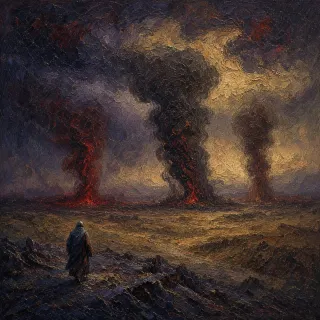
    After Sodom, and with Sarah's son promised within the year, Abraham moves south to Gerar and does again what he did in Egypt twenty-five years before: she is my sister. Abimelech king of Gerar takes her. This time God intervenes directly, in a dream: thou art but a dead man, for the woman which thou hast taken is a man's wife. Abimelech pleads his innocence, wilt thou slay also a righteous nation? And God agrees that he acted in the integrity of his heart, and says he was kept from touching her. Restore the man his wife, for he is a prophet, and he shall pray for thee. The word prophet is used here for the first time in the Bible, of a man who has just lied about his wife.

    Abimelech rises early, tells his servants, and confronts Abraham with the same questions Pharaoh asked: what hast thou done unto us? Abraham's answer is the fullest he ever gives for the deception: I thought, surely the fear of God is not in this place; she is indeed my sister, the daughter of my father but not of my mother; and it was Sarah's kindness to say so wherever they went. The excuses are three and none of them is good. Abimelech gives him sheep, oxen, servants, land to dwell in, and a thousand pieces of silver as a covering of the eyes for Sarah, a public clearing of her honour. Abraham prays, and God heals Abimelech's household, whose wombs had been closed for Sarah's sake. The intercessor of chapter 18 prays for the pagan he wronged, and the pagan's wives conceive just before Sarah does.

    Verse by verse

    1. 20:2

      She is my sister: the second time. Sarah is ninety and about to conceive; the risk to the promise is greater than in Egypt.

    2. 20:3

      God came to Abimelech in a dream: God speaks to the Philistine king before he speaks to Abraham in this chapter.

    3. 20:6

      I withheld thee from sinning against me: God protected Sarah, and Abimelech, without Abraham's help.

    4. 20:7

      He is a prophet: the first use of the word. A prophet is one who prays for others, and Abraham does.

    5. 20:11-13

      I thought: Abraham's reasoning, given at last. The fear of God is not in this place: it was, as it turned out, more than in Abraham.

    6. 20:16

      A thousand pieces of silver, a covering of the eyes: compensation and vindication, so that no one can look at Sarah with suspicion.

    7. 20:17-18

      Abraham prayed, God healed: the chapter ends with the barren wombs of Gerar opened. Sarah's is next.

    Genesis 20

    King James Version · 18 verses

    20:1And Abraham journeyed from thence toward the south country, and dwelled between Kadesh and Shur, and sojourned in Gerar.

    20:2And Abraham said of Sarah his wife, She is my sister: and Abimelech king of Gerar sent, and took Sarah.

    20:3But God came to Abimelech in a dream by night, and said to him, Behold, thou art but a dead man, for the woman which thou hast taken; for she is a man’s wife.

    20:4But Abimelech had not come near her: and he said, Lord, wilt thou slay also a righteous nation?

    20:5Said he not unto me, She is my sister? and she, even she herself said, He is my brother: in the integrity of my heart and innocency of my hands have I done this.

    20:6And God said unto him in a dream, Yea, I know that thou didst this in the integrity of thy heart; for I also withheld thee from sinning against me: therefore suffered I thee not to touch her.

    20:7Now therefore restore the man his wife; for he is a prophet, and he shall pray for thee, and thou shalt live: and if thou restore her not, know thou that thou shalt surely die, thou, and all that are thine.

    20:8Therefore Abimelech rose early in the morning, and called all his servants, and told all these things in their ears: and the men were sore afraid.

    20:9Then Abimelech called Abraham, and said unto him, What hast thou done unto us? and what have I offended thee, that thou hast brought on me and on my kingdom a great sin? thou hast done deeds unto me that ought not to be done.

    20:10And Abimelech said unto Abraham, What sawest thou, that thou hast done this thing?

    20:11And Abraham said, Because I thought, Surely the fear of God is not in this place; and they will slay me for my wife’s sake.

    20:12And yet indeed she is my sister; she is the daughter of my father, but not the daughter of my mother; and she became my wife.

    20:13And it came to pass, when God caused me to wander from my father’s house, that I said unto her, This is thy kindness which thou shalt shew unto me; at every place whither we shall come, say of me, He is my brother.

    20:14And Abimelech took sheep, and oxen, and menservants, and womenservants, and gave them unto Abraham, and restored him Sarah his wife.

    20:15And Abimelech said, Behold, my land is before thee: dwell where it pleaseth thee.

    20:16And unto Sarah he said, Behold, I have given thy brother a thousand pieces of silver: behold, he is to thee a covering of the eyes, unto all that are with thee, and with all other: thus she was reproved.

    20:17So Abraham prayed unto God: and God healed Abimelech, and his wife, and his maidservants; and they bare children.

    20:18For the LORD had fast closed up all the wombs of the house of Abimelech, because of Sarah Abraham’s wife.

  11. 11

    Genesis 21

    Isaac, and Ishmael sent away

    Sarah bears Isaac when Abraham is a hundred. At the weaning feast Sarah sees Ishmael mocking and demands the boy and his mother be sent away. It grieves Abraham, but God tells him to listen to Sarah, and he sends them into the wilderness with bread and water. He makes a covenant with Abimelech at Beersheba and plants a tamarisk there.

    And the LORD visited Sarah as he had said, and did unto Sarah as he had spoken. Twenty-five years after the call, at the set time God had named, Isaac is born to a man of a hundred and a woman of ninety. Abraham names him and circumcises him at eight days, as commanded, and Sarah says: God hath made me to laugh, so that all that hear will laugh with me. The laughter that was disbelief in chapters 17 and 18 is joy now, and the boy carries it as his name.

    The feast on the day Isaac is weaned is where the household breaks. Sarah sees the son of Hagar mocking, the same verb as laughing, and demands: cast out this bondwoman and her son, for the son of this bondwoman shall not be heir with my son. The thing is very grievous in Abraham's sight because of his son, but God tells him to listen to Sarah, for in Isaac shall thy seed be called, and promises to make a nation of the bondwoman's son also. Abraham rises early, gives Hagar bread and a bottle of water, puts the child on her shoulder, and sends them into the wilderness of Beersheba. The water fails, Hagar puts the boy under a shrub and sits a bowshot away so as not to watch him die, and God hears the voice of the lad. The angel calls from heaven, opens her eyes to a well, and Ishmael grows up an archer in Paran with an Egyptian wife. The chapter closes with Abimelech coming to make a covenant with Abraham, a dispute over a well settled with seven ewe lambs, and the naming of Beersheba, the well of the oath, where Abraham plants a grove and calls on the name of the everlasting God.

    Verse by verse

    1. 21:1-2

      As he had said, as he had spoken, at the set time: three times the Book of Genesis insists the birth is the keeping of a word.

    2. 21:4

      Circumcised at eight days: the first infant circumcision in the covenant, as 17:12 required.

    3. 21:6

      God hath made me to laugh: Isaac's name explained a third time, now in joy.

    4. 21:9

      Mocking: laughing, playing, or, as Galatians 4:29 takes it, persecuting. Ishmael is about sixteen.

    5. 21:10

      Cast out this bondwoman: Paul quotes Sarah's words in Galatians 4:30 as the word of Scripture.

    6. 21:12

      In Isaac shall thy seed be called: quoted in Romans 9:7 and Hebrews 11:18. The promise narrows to one son.

    7. 21:14

      Rose up early: Abraham obeys at dawn, as he will in 22:3. Bread and a bottle of water: a poor provision for a rich man's son.

    8. 21:17

      God heard the voice of the lad: Ishmael's name, God hears, is kept. The angel of God calls out of heaven, as in 22:11.

    9. 21:22

      God is with thee in all that thou doest: Abimelech's confession about the man who deceived him.

    10. 21:31-33

      Beersheba: well of the seven, or well of the oath. The everlasting God, El Olam: a new name for God, given by Abraham at the boundary of the land.

    Genesis 21: Isaac, and Ishmael sent away

    Genesis 21

    King James Version · 34 verses

    21:1And the LORD visited Sarah as he had said, and the LORD did unto Sarah as he had spoken.

    21:2For Sarah conceived, and bare Abraham a son in his old age, at the set time of which God had spoken to him.

    21:3And Abraham called the name of his son that was born unto him, whom Sarah bare to him, Isaac.

    21:4And Abraham circumcised his son Isaac being eight days old, as God had commanded him.

    21:5And Abraham was an hundred years old, when his son Isaac was born unto him.

    21:6And Sarah said, God hath made me to laugh, so that all that hear will laugh with me.

    21:7And she said, Who would have said unto Abraham, that Sarah should have given children suck? for I have born him a son in his old age.

    21:8And the child grew, and was weaned: and Abraham made a great feast the same day that Isaac was weaned.

    21:9And Sarah saw the son of Hagar the Egyptian, which she had born unto Abraham, mocking.

    21:10Wherefore she said unto Abraham, Cast out this bondwoman and her son: for the son of this bondwoman shall not be heir with my son, even with Isaac.

    21:11And the thing was very grievous in Abraham’s sight because of his son.

    21:12And God said unto Abraham, Let it not be grievous in thy sight because of the lad, and because of thy bondwoman; in all that Sarah hath said unto thee, hearken unto her voice; for in Isaac shall thy seed be called.

    21:13And also of the son of the bondwoman will I make a nation, because he is thy seed.

    21:14And Abraham rose up early in the morning, and took bread, and a bottle of water, and gave it unto Hagar, putting it on her shoulder, and the child, and sent her away: and she departed, and wandered in the wilderness of Beer-sheba.

    21:15And the water was spent in the bottle, and she cast the child under one of the shrubs.

    21:16And she went, and sat her down over against him a good way off, as it were a bowshot: for she said, Let me not see the death of the child. And she sat over against him, and lift up her voice, and wept.

    21:17And God heard the voice of the lad; and the angel of God called to Hagar out of heaven, and said unto her, What aileth thee, Hagar? fear not; for God hath heard the voice of the lad where he is.

    21:18Arise, lift up the lad, and hold him in thine hand; for I will make him a great nation.

    21:19And God opened her eyes, and she saw a well of water; and she went, and filled the bottle with water, and gave the lad drink.

    21:20And God was with the lad; and he grew, and dwelt in the wilderness, and became an archer.

    21:21And he dwelt in the wilderness of Paran: and his mother took him a wife out of the land of Egypt.

    21:22And it came to pass at that time, that Abimelech and Phichol the chief captain of his host spake unto Abraham, saying, God is with thee in all that thou doest:

    21:23Now therefore swear unto me here by God that thou wilt not deal falsely with me, nor with my son, nor with my son’s son: but according to the kindness that I have done unto thee, thou shalt do unto me, and to the land wherein thou hast sojourned.

    21:24And Abraham said, I will swear.

    21:25And Abraham reproved Abimelech because of a well of water, which Abimelech’s servants had violently taken away.

    21:26And Abimelech said, I wot not who hath done this thing: neither didst thou tell me, neither yet heard I of it, but to day.

    21:27And Abraham took sheep and oxen, and gave them unto Abimelech; and both of them made a covenant.

    21:28And Abraham set seven ewe lambs of the flock by themselves.

    21:29And Abimelech said unto Abraham, What mean these seven ewe lambs which thou hast set by themselves?

    21:30And he said, For these seven ewe lambs shalt thou take of my hand, that they may be a witness unto me, that I have digged this well.

    21:31Wherefore he called that place Beer-sheba; because there they sware both of them.

    21:32Thus they made a covenant at Beer-sheba: then Abimelech rose up, and Phichol the chief captain of his host, and they returned into the land of the Philistines.

    21:33And Abraham planted a grove in Beer-sheba, and called there on the name of the LORD, the everlasting God.

    21:34And Abraham sojourned in the Philistines’ land many days.

  12. 12

    Genesis 22

    Moriah

    God tests him: take thy son, thine only son Isaac, whom thou lovest, and offer him. He rises early, cuts the wood, and walks three days. Isaac carries the wood and asks where the lamb is. God will provide himself a lamb, Abraham says. The knife is raised, the angel calls his name twice, and the ram is in the thicket. The promise is sworn by God's own name.

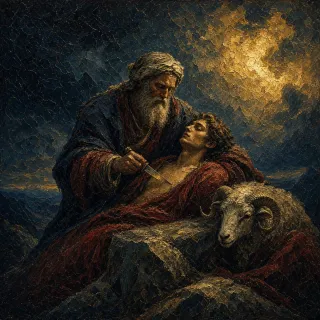
    God did tempt Abraham: the word means test. Take now thy son, thine only son Isaac, whom thou lovest, and get thee into the land of Moriah, and offer him there for a burnt offering. Every phrase tightens the knife. The son of the promise, born after twenty-five years and named laughter, is to be given back on a mountain God will show, the same words as the land God would show in 12:1. Abraham rises early, saddles his ass, cuts the wood, and goes. The Book of Genesis gives him no thought and no speech for three days.

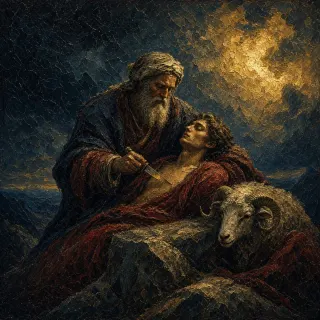
    On the third day he sees the place, leaves the servants, and says the sentence that Hebrews takes as his faith: I and the lad will go yonder and worship, and come again to you. Isaac carries the wood; Abraham carries the fire and the knife. My father. Here am I, my son. Where is the lamb? God will provide himself a lamb, my son. So they went both of them together, twice. At the place he builds the altar, lays the wood, binds Isaac, lays him on the wood, and stretches forth his hand with the knife. The angel of the LORD calls out of heaven, Abraham, Abraham, lay not thine hand upon the lad, for now I know that thou fearest God. A ram is caught in a thicket by its horns and offered in the stead of his son, and Abraham names the place Jehovah-jireh, the LORD will see to it. Then the angel calls a second time, and God swears by himself, the only time he does so in Genesis: because thou hast done this thing, in blessing I will bless thee, thy seed shall possess the gate of his enemies, and in thy seed shall all the nations of the earth be blessed. The promise of chapter 12 is repeated with an oath, and Hebrews 6 says the oath was for our sake.

    Verse by verse

    1. 22:1

      Tempt: test, prove. God tests; he does not tempt to evil, James 1:13. Behold, here I am: Abraham's answer to God, to Isaac and to the angel, three times in the chapter.

    2. 22:2

      Thy son, thine only son, whom thou lovest: Ishmael is gone; Isaac is the only one. Moriah: 2 Chronicles 3:1 puts the temple there. Love is mentioned here for the first time in the Bible.

    3. 22:3

      Rose up early: no argument, no delay. He argued for Sodom; he does not argue for Isaac.

    4. 22:5

      We will come again to you: Hebrews 11:19 reads this as faith that God could raise him from the dead.

    5. 22:7-8

      Where is the lamb: the only words Isaac speaks. God will provide himself a lamb: John 1:29 is the answer the church heard.

    6. 22:9

      Bound Isaac his son: the Akedah, the binding, in Jewish memory the greatest act of the fathers. Isaac does not resist.

    7. 22:12

      Now I know that thou fearest God: the test was for Abraham to show, not for God to learn. Thine only son: the phrase God will use of his own.

    8. 22:13

      A ram caught in a thicket: the substitute. In the stead of his son: the principle of every sacrifice after.

    9. 22:14

      Jehovah-jireh: the LORD will see, or provide. In the mount of the LORD it shall be seen: a proverb still spoken when Genesis was written.

    10. 22:16-18

      By myself have I sworn: Hebrews 6:13-18. Thy seed shall possess the gate of his enemies: the promise gains a military edge. In thy seed: Galatians 3:16, singular.

    11. 22:19

      So Abraham returned unto his young men: Isaac is not mentioned on the way down, and Jewish readers noticed.

    Genesis 22

    King James Version · 24 verses

    22:1And it came to pass after these things, that God did tempt Abraham, and said unto him, Abraham: and he said, Behold, here I am.

    22:2And he said, Take now thy son, thine only son Isaac, whom thou lovest, and get thee into the land of Moriah; and offer him there for a burnt offering upon one of the mountains which I will tell thee of.

    22:3And Abraham rose up early in the morning, and saddled his ass, and took two of his young men with him, and Isaac his son, and clave the wood for the burnt offering, and rose up, and went unto the place of which God had told him.

    22:4Then on the third day Abraham lifted up his eyes, and saw the place afar off.

    22:5And Abraham said unto his young men, Abide ye here with the ass; and I and the lad will go yonder and worship, and come again to you.

    22:6And Abraham took the wood of the burnt offering, and laid it upon Isaac his son; and he took the fire in his hand, and a knife; and they went both of them together.

    22:7And Isaac spake unto Abraham his father, and said, My father: and he said, Here am I, my son. And he said, Behold the fire and the wood: but where is the lamb for a burnt offering?

    22:8And Abraham said, My son, God will provide himself a lamb for a burnt offering: so they went both of them together.

    22:9And they came to the place which God had told him of; and Abraham built an altar there, and laid the wood in order, and bound Isaac his son, and laid him on the altar upon the wood.

    22:10And Abraham stretched forth his hand, and took the knife to slay his son.

    22:11And the angel of the LORD called unto him out of heaven, and said, Abraham, Abraham: and he said, Here am I.

    22:12And he said, Lay not thine hand upon the lad, neither do thou any thing unto him: for now I know that thou fearest God, seeing thou hast not withheld thy son, thine only son from me.

    22:13And Abraham lifted up his eyes, and looked, and behold behind him a ram caught in a thicket by his horns: and Abraham went and took the ram, and offered him up for a burnt offering in the stead of his son.

    22:14And Abraham called the name of that place Jehovah-jireh: as it is said to this day, In the mount of the LORD it shall be seen.

    22:15And the angel of the LORD called unto Abraham out of heaven the second time,

    22:16And said, By myself have I sworn, saith the LORD, for because thou hast done this thing, and hast not withheld thy son, thine only son:

    22:17That in blessing I will bless thee, and in multiplying I will multiply thy seed as the stars of the heaven, and as the sand which is upon the sea shore; and thy seed shall possess the gate of his enemies;

    22:18And in thy seed shall all the nations of the earth be blessed; because thou hast obeyed my voice.

    22:19So Abraham returned unto his young men, and they rose up and went together to Beer-sheba; and Abraham dwelt at Beer-sheba.

    22:20And it came to pass after these things, that it was told Abraham, saying, Behold, Milcah, she hath also born children unto thy brother Nahor;

    22:21Huz his firstborn, and Buz his brother, and Kemuel the father of Aram,

    22:22And Chesed, and Hazo, and Pildash, and Jidlaph, and Bethuel.

    22:23And Bethuel begat Rebekah: these eight Milcah did bear to Nahor, Abraham’s brother.

    22:24And his concubine, whose name was Reumah, she bare also Tebah, and Gaham, and Thahash, and Maachah.

  13. 13

    Genesis 23

    Machpelah

    Sarah dies at Hebron, a hundred and twenty-seven years old. Abraham, a stranger and a sojourner, buys the cave of Machpelah from Ephron the Hittite for four hundred shekels of silver before all the sons of Heth. It is the only piece of the promised land he ever owns.

    Sarah dies at Hebron at a hundred and twenty-seven, the only woman in the Bible whose age at death is given, and Abraham comes to mourn and to weep for her. Then he stands up from before his dead and does the practical thing: he asks the sons of Heth for a burying place. The whole chapter is the negotiation, recorded with the formality of a legal deed, because it matters that the first piece of the promised land Abraham owns is a grave, and that he pays for it.

    He calls himself a stranger and a sojourner. The Hittites call him a mighty prince and offer him any of their tombs. He asks specifically for the cave of Machpelah at the end of Ephron's field. Ephron, in the gate before all who enter, offers the field and the cave as a gift, three times, which in the manners of the east means name a price. Abraham insists on paying; Ephron names four hundred shekels of silver, what is that betwixt me and thee, and Abraham weighs it out, current money with the merchant, without haggling. The field, the cave, and every tree in the borders are made sure unto Abraham for a possession in the presence of the children of Heth. He buries Sarah there. Isaac, Rebekah, Jacob and Leah will follow her, and Jacob will die in Egypt asking to be carried back to that cave.

    Verse by verse

    1. 23:1

      A hundred and twenty-seven: Sarah was ninety at Isaac's birth, so he is thirty-seven. Kirjath-arba, the same is Hebron.

    2. 23:2

      To mourn and to weep: the first record of grief for a wife. Abraham came: he was elsewhere when she died, perhaps at Beersheba.

    3. 23:4

      A stranger and a sojourner: after sixty years in the land, he owns none of it. Hebrews 11:13 uses his words of all the patriarchs.

    4. 23:6

      A mighty prince among us: literally a prince of God. The Hittites know what he is.

    5. 23:9

      Machpelah: the double cave. For as much money as it is worth: Abraham will not be given the land by men.

    6. 23:11

      I give it thee: Ephron's threefold gift is the opening of a bargain, and everyone in the gate knows it.

    7. 23:15

      Four hundred shekels: a high price, paid in full. Jeremiah 32 records another purchase of land as a sign of hope.

    8. 23:17-18

      Made sure: the language of a deed, with the field, the cave and the trees itemised. The first title deed in the Bible.

    9. 23:19

      Buried Sarah his wife: the cave at Hebron is still shown, under a building Herod raised over it.

    Genesis 23: Machpelah

    Genesis 23

    King James Version · 20 verses

    23:1And Sarah was an hundred and seven and twenty years old: these were the years of the life of Sarah.

    23:2And Sarah died in Kirjath-arba; the same is Hebron in the land of Canaan: and Abraham came to mourn for Sarah, and to weep for her.

    23:3And Abraham stood up from before his dead, and spake unto the sons of Heth, saying,

    23:4I am a stranger and a sojourner with you: give me a possession of a buryingplace with you, that I may bury my dead out of my sight.

    23:5And the children of Heth answered Abraham, saying unto him,

    23:6Hear us, my lord: thou art a mighty prince among us: in the choice of our sepulchres bury thy dead; none of us shall withhold from thee his sepulchre, but that thou mayest bury thy dead.

    23:7And Abraham stood up, and bowed himself to the people of the land, even to the children of Heth.

    23:8And he communed with them, saying, If it be your mind that I should bury my dead out of my sight; hear me, and intreat for me to Ephron the son of Zohar,

    23:9That he may give me the cave of Machpelah, which he hath, which is in the end of his field; for as much money as it is worth he shall give it me for a possession of a buryingplace amongst you.

    23:10And Ephron dwelt among the children of Heth: and Ephron the Hittite answered Abraham in the audience of the children of Heth, even of all that went in at the gate of his city, saying,

    23:11Nay, my lord, hear me: the field give I thee, and the cave that is therein, I give it thee; in the presence of the sons of my people give I it thee: bury thy dead.

    23:12And Abraham bowed down himself before the people of the land.

    23:13And he spake unto Ephron in the audience of the people of the land, saying, But if thou wilt give it, I pray thee, hear me: I will give thee money for the field; take it of me, and I will bury my dead there.

    23:14And Ephron answered Abraham, saying unto him,

    23:15My lord, hearken unto me: the land is worth four hundred shekels of silver; what is that betwixt me and thee? bury therefore thy dead.

    23:16And Abraham hearkened unto Ephron; and Abraham weighed to Ephron the silver, which he had named in the audience of the sons of Heth, four hundred shekels of silver, current money with the merchant.

    23:17And the field of Ephron, which was in Machpelah, which was before Mamre, the field, and the cave which was therein, and all the trees that were in the field, that were in all the borders round about, were made sure

    23:18Unto Abraham for a possession in the presence of the children of Heth, before all that went in at the gate of his city.

    23:19And after this, Abraham buried Sarah his wife in the cave of the field of Machpelah before Mamre: the same is Hebron in the land of Canaan.

    23:20And the field, and the cave that is therein, were made sure unto Abraham for a possession of a buryingplace by the sons of Heth.

  14. 14

    Genesis 24

    A wife for Isaac

    He makes his oldest servant swear not to take Isaac a wife from the Canaanites but from his own kindred, and not to take Isaac back there. The servant goes to the city of Nahor and comes home with Rebekah.

    The longest chapter in Genesis is about finding a wife for Isaac, and it is told at leisure because it is the account of how the promise passes to the next generation. Abraham, old and well stricken in age, makes his eldest servant swear with his hand under his master's thigh that he will not take a wife for Isaac from the Canaanites, but from Abraham's own kindred in Mesopotamia, and that he will not take Isaac back there. The LORD God of heaven, which took me from my father's house, shall send his angel before thee. Abraham's last recorded act is to arrange the marriage, and his last recorded words are faith that God will do the finding.

    The servant, unnamed but usually taken as Eliezer, goes with ten camels to the city of Nahor and prays at the well at evening a prayer with a test in it: let the damsel who offers to water my camels be the one. Before he has finished, Rebekah comes with her pitcher, gives him drink, and draws for all ten camels until they have done, which is hard labour. He watches in silence, gives her a gold earring and two bracelets, learns she is Bethuel's daughter, and bows his head and worships. In Laban's house he will not eat until he has told his errand, and the Book of Genesis has him repeat the whole account, so that the chapter tells it twice. Laban and Bethuel answer: the thing proceedeth from the LORD. In the morning they want ten days; the servant wants to go; they ask Rebekah, and she says, I will go. They bless her, be thou the mother of thousands of millions, and she rides south. Isaac, walking in the field at eventide, lifts up his eyes and sees the camels; Rebekah lights off her camel and covers herself with a veil. He brings her into his mother Sarah's tent, takes her, loves her, and is comforted after his mother's death. The chapter that began with a father's oath ends with a son consoled.

    Verse by verse

    1. 24:2

      Put thy hand under my thigh: an oath sworn on the organ of generation, on the promise of seed. His eldest servant: 15:2 names Eliezer as steward.

    2. 24:3

      Not of the daughters of the Canaanites: the concern of every patriarch after him, and of Ezra.

    3. 24:7

      He shall send his angel before thee: Abraham's faith stated plainly, and the last thing he says in Genesis.

    4. 24:12-14

      The servant's prayer: the first prayer for guidance in the Bible, specific and testable. Shew kindness unto my master: chesed, covenant love.

    5. 24:15

      Before he had done speaking: the answer arrives during the prayer, Isaiah 65:24.

    6. 24:19-20

      Until they have done drinking: ten camels can drink two hundred gallons. The test was of character, and she passed it running.

    7. 24:21

      Wondering at her, held his peace: he waits to see whether the LORD had made his journey prosperous or not.

    8. 24:27

      I being in the way, the LORD led me: the servant's testimony, remembered for its balance of going and being led.

    9. 24:33

      I will not eat until I have told mine errand: the servant's loyalty. Jesus uses the same figure in John 4:34.

    10. 24:50

      The thing proceedeth from the LORD: Laban and Bethuel recognise the hand of God. Laban's later dealings with Jacob make the moment ironic.

    11. 24:58

      Wilt thou go with this man? I will go: Rebekah is asked, and answers in two words.

    12. 24:60

      Possess the gate of those which hate them: the blessing of 22:17 given to the bride.

    13. 24:63

      To meditate in the field at the eventide: the only glimpse of Isaac's inner life.

    14. 24:67

      Into his mother Sarah's tent: Rebekah takes Sarah's place as matriarch. He loved her: the first love between husband and wife named in the Bible.

    Genesis 24: A wife for Isaac

    Genesis 24

    King James Version · 67 verses

    24:1And Abraham was old, and well stricken in age: and the LORD had blessed Abraham in all things.

    24:2And Abraham said unto his eldest servant of his house, that ruled over all that he had, Put, I pray thee, thy hand under my thigh:

    24:3And I will make thee swear by the LORD, the God of heaven, and the God of the earth, that thou shalt not take a wife unto my son of the daughters of the Canaanites, among whom I dwell:

    24:4But thou shalt go unto my country, and to my kindred, and take a wife unto my son Isaac.

    24:5And the servant said unto him, Peradventure the woman will not be willing to follow me unto this land: must I needs bring thy son again unto the land from whence thou camest?

    24:6And Abraham said unto him, Beware thou that thou bring not my son thither again.

    24:7The LORD God of heaven, which took me from my father’s house, and from the land of my kindred, and which spake unto me, and that sware unto me, saying, Unto thy seed will I give this land; he shall send his angel before thee, and thou shalt take a wife unto my son from thence.

    24:8And if the woman will not be willing to follow thee, then thou shalt be clear from this my oath: only bring not my son thither again.

    24:9And the servant put his hand under the thigh of Abraham his master, and sware to him concerning that matter.

    24:10And the servant took ten camels of the camels of his master, and departed; for all the goods of his master were in his hand: and he arose, and went to Mesopotamia, unto the city of Nahor.

    24:11And he made his camels to kneel down without the city by a well of water at the time of the evening, even the time that women go out to draw water.

    24:12And he said, O LORD God of my master Abraham, I pray thee, send me good speed this day, and shew kindness unto my master Abraham.

    24:13Behold, I stand here by the well of water; and the daughters of the men of the city come out to draw water:

    24:14And let it come to pass, that the damsel to whom I shall say, Let down thy pitcher, I pray thee, that I may drink; and she shall say, Drink, and I will give thy camels drink also: let the same be she that thou hast appointed for thy servant Isaac; and thereby shall I know that thou hast shewed kindness unto my master.

    24:15And it came to pass, before he had done speaking, that, behold, Rebekah came out, who was born to Bethuel, son of Milcah, the wife of Nahor, Abraham’s brother, with her pitcher upon her shoulder.

    24:16And the damsel was very fair to look upon, a virgin, neither had any man known her: and she went down to the well, and filled her pitcher, and came up.

    24:17And the servant ran to meet her, and said, Let me, I pray thee, drink a little water of thy pitcher.

    24:18And she said, Drink, my lord: and she hasted, and let down her pitcher upon her hand, and gave him drink.

    24:19And when she had done giving him drink, she said, I will draw water for thy camels also, until they have done drinking.

    24:20And she hasted, and emptied her pitcher into the trough, and ran again unto the well to draw water, and drew for all his camels.

    24:21And the man wondering at her held his peace, to wit whether the LORD had made his journey prosperous or not.

    24:22And it came to pass, as the camels had done drinking, that the man took a golden earring of half a shekel weight, and two bracelets for her hands of ten shekels weight of gold;

    24:23And said, Whose daughter art thou? tell me, I pray thee: is there room in thy father’s house for us to lodge in?

    24:24And she said unto him, I am the daughter of Bethuel the son of Milcah, which she bare unto Nahor.

    24:25She said moreover unto him, We have both straw and provender enough, and room to lodge in.

    24:26And the man bowed down his head, and worshipped the LORD.

    24:27And he said, Blessed be the LORD God of my master Abraham, who hath not left destitute my master of his mercy and his truth: I being in the way, the LORD led me to the house of my master’s brethren.

    24:28And the damsel ran, and told them of her mother’s house these things.

    24:29And Rebekah had a brother, and his name was Laban: and Laban ran out unto the man, unto the well.

    24:30And it came to pass, when he saw the earring and bracelets upon his sister’s hands, and when he heard the words of Rebekah his sister, saying, Thus spake the man unto me; that he came unto the man; and, behold, he stood by the camels at the well.

    24:31And he said, Come in, thou blessed of the LORD; wherefore standest thou without? for I have prepared the house, and room for the camels.

    24:32And the man came into the house: and he ungirded his camels, and gave straw and provender for the camels, and water to wash his feet, and the men’s feet that were with him.

    24:33And there was set meat before him to eat: but he said, I will not eat, until I have told mine errand. And he said, Speak on.

    24:34And he said, I am Abraham’s servant.

    24:35And the LORD hath blessed my master greatly; and he is become great: and he hath given him flocks, and herds, and silver, and gold, and menservants, and maidservants, and camels, and asses.

    24:36And Sarah my master’s wife bare a son to my master when she was old: and unto him hath he given all that he hath.

    24:37And my master made me swear, saying, Thou shalt not take a wife to my son of the daughters of the Canaanites, in whose land I dwell:

    24:38But thou shalt go unto my father’s house, and to my kindred, and take a wife unto my son.

    24:39And I said unto my master, Peradventure the woman will not follow me.

    24:40And he said unto me, The LORD, before whom I walk, will send his angel with thee, and prosper thy way; and thou shalt take a wife for my son of my kindred, and of my father’s house:

    24:41Then shalt thou be clear from this my oath, when thou comest to my kindred; and if they give not thee one, thou shalt be clear from my oath.

    24:42And I came this day unto the well, and said, O LORD God of my master Abraham, if now thou do prosper my way which I go:

    24:43Behold, I stand by the well of water; and it shall come to pass, that when the virgin cometh forth to draw water, and I say to her, Give me, I pray thee, a little water of thy pitcher to drink;

    24:44And she say to me, Both drink thou, and I will also draw for thy camels: let the same be the woman whom the LORD hath appointed out for my master’s son.

    24:45And before I had done speaking in mine heart, behold, Rebekah came forth with her pitcher on her shoulder; and she went down unto the well, and drew water: and I said unto her, Let me drink, I pray thee.

    24:46And she made haste, and let down her pitcher from her shoulder, and said, Drink, and I will give thy camels drink also: so I drank, and she made the camels drink also.

    24:47And I asked her, and said, Whose daughter art thou? And she said, The daughter of Bethuel, Nahor’s son, whom Milcah bare unto him: and I put the earring upon her face, and the bracelets upon her hands.

    24:48And I bowed down my head, and worshipped the LORD, and blessed the LORD God of my master Abraham, which had led me in the right way to take my master’s brother’s daughter unto his son.

    24:49And now if ye will deal kindly and truly with my master, tell me: and if not, tell me; that I may turn to the right hand, or to the left.

    24:50Then Laban and Bethuel answered and said, The thing proceedeth from the LORD: we cannot speak unto thee bad or good.

    24:51Behold, Rebekah is before thee, take her, and go, and let her be thy master’s son’s wife, as the LORD hath spoken.

    24:52And it came to pass, that, when Abraham’s servant heard their words, he worshipped the LORD, bowing himself to the earth.

    24:53And the servant brought forth jewels of silver, and jewels of gold, and raiment, and gave them to Rebekah: he gave also to her brother and to her mother precious things.

    24:54And they did eat and drink, he and the men that were with him, and tarried all night; and they rose up in the morning, and he said, Send me away unto my master.

    24:55And her brother and her mother said, Let the damsel abide with us a few days, at the least ten; after that she shall go.

    24:56And he said unto them, Hinder me not, seeing the LORD hath prospered my way; send me away that I may go to my master.

    24:57And they said, We will call the damsel, and enquire at her mouth.

    24:58And they called Rebekah, and said unto her, Wilt thou go with this man? And she said, I will go.

    24:59And they sent away Rebekah their sister, and her nurse, and Abraham’s servant, and his men.

    24:60And they blessed Rebekah, and said unto her, Thou art our sister, be thou the mother of thousands of millions, and let thy seed possess the gate of those which hate them.

    24:61And Rebekah arose, and her damsels, and they rode upon the camels, and followed the man: and the servant took Rebekah, and went his way.

    24:62And Isaac came from the way of the well Lahai-roi; for he dwelt in the south country.

    24:63And Isaac went out to meditate in the field at the eventide: and he lifted up his eyes, and saw, and, behold, the camels were coming.

    24:64And Rebekah lifted up her eyes, and when she saw Isaac, she lighted off the camel.

    24:65For she had said unto the servant, What man is this that walketh in the field to meet us? And the servant had said, It is my master: therefore she took a vail, and covered herself.

    24:66And the servant told Isaac all things that he had done.

    24:67And Isaac brought her into his mother Sarah’s tent, and took Rebekah, and she became his wife; and he loved her: and Isaac was comforted after his mother’s death.

  15. 15

    Genesis 25:1-11

    Keturah, and the end

    He takes Keturah and has six more sons, gives them gifts and sends them east away from Isaac, to whom he gives all he has. He dies at a hundred and seventy-five, an old man and full of years, and Isaac and Ishmael bury him beside Sarah.

    Abraham marries again, Keturah, and has six more sons, among them Midian, whose descendants will give Moses a wife and Israel a war. The Book of Genesis records them to explain the tribes east and south of the land, and then records what Abraham did about them: he gave all that he had unto Isaac, and to the sons of the concubines he gave gifts and sent them away eastward, while he yet lived. The inheritance is Isaac's, undivided, and the other sons are provided for and removed, as Ishmael was. Abraham does deliberately, in his lifetime, what Sarah forced on him in chapter 21.

    He dies at a hundred and seventy-five, in a good old age, an old man, and full of years, and is gathered to his people, a phrase that means more than burial. His sons Isaac and Ishmael bury him in the cave of Machpelah, in the field he bought, with Sarah. The two brothers, separated for seventy years, stand at the same grave. After his death God blesses Isaac, who dwells by Beer-lahai-roi, the well where Hagar met the God who sees.

    Verse by verse

    1. 25:1-2

      Keturah: incense. Her six sons are Arabian tribes; Midian is the most important, Exodus 2:15, Judges 6.

    2. 25:5

      All that he had unto Isaac: the birthright kept whole, as it will not be in the next generation.

    3. 25:6

      Sent them away eastward: as Ishmael went south. The line of promise is kept clear by gifts and distance.
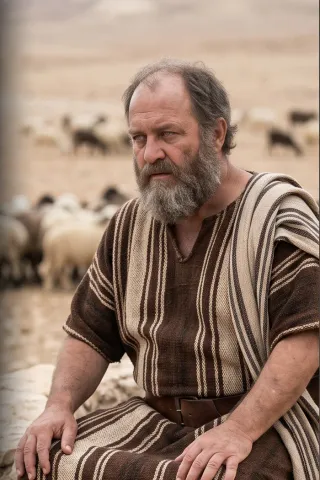
    4. 25:7

      A hundred threescore and fifteen: he lived a hundred years in the land. Isaac is seventy-five, Jacob and Esau fifteen.

    5. 25:8

      Gathered to his people: not to a grave, since his people were buried in Ur and Haran. The phrase implies a life beyond.

    6. 25:9

      Isaac and Ishmael buried him: the last time Ishmael appears in the account. Matthew 8:11 puts Abraham at a table in the kingdom.

    7. 25:11

      God blessed his son Isaac: the promise moves on. Beer-lahai-roi: 16:14, the well of the one who sees.

    Genesis 25:1-11

    King James Version · 11 verses

    25:1Then again Abraham took a wife, and her name was Keturah.

    25:2And she bare him Zimran, and Jokshan, and Medan, and Midian, and Ishbak, and Shuah.

    25:3And Jokshan begat Sheba, and Dedan. And the sons of Dedan were Asshurim, and Letushim, and Leummim.

    25:4And the sons of Midian; Ephah, and Epher, and Hanoch, and Abidah, and Eldaah. All these were the children of Keturah.

    25:5And Abraham gave all that he had unto Isaac.

    25:6But unto the sons of the concubines, which Abraham had, Abraham gave gifts, and sent them away from Isaac his son, while he yet lived, eastward, unto the east country.

    25:7And these are the days of the years of Abraham’s life which he lived, an hundred threescore and fifteen years.

    25:8Then Abraham gave up the ghost, and died in a good old age, an old man, and full of years; and was gathered to his people.

    25:9And his sons Isaac and Ishmael buried him in the cave of Machpelah, in the field of Ephron the son of Zohar the Hittite, which is before Mamre;

    25:10The field which Abraham purchased of the sons of Heth: there was Abraham buried, and Sarah his wife.

    25:11And it came to pass after the death of Abraham, that God blessed his son Isaac; and Isaac dwelt by the well Lahai-roi.

    Genesis 25:1-11: Keturah, and the end

The people, the places and the rest of Scripture.

Reading Abraham closely

The people he dealt with

Sarah is beside him from Ur to Hebron, and the account of their marriage is told with unusual honesty. Twice he lets a king take her to save his own life. She is the one who proposes Hagar, the one who laughs at the tent door, and the one who demands Ishmael's expulsion, and each time Abraham is shown reacting rather than leading. Yet the promise is hers as much as his: God will not let Isaac be born to anyone else, and Isaiah tells Israel to look to Abraham your father and to Sarah that bare you.

Lot is the nephew he brought from Ur, gave the best land to, rescued from an army, and argued with God to save. Nothing Abraham does for Lot is repaid, and the account of Sodom is finally an account about how far one man's intercession reaches. Hagar is the Egyptian maid who bears him his first son, and Ishmael is the boy he loves and prays for and finally sends into the wilderness at God's word with a skin of water. The text gives Abraham's grief a full verse. Isaac is the son of the promise, born to laughter, and the one he is asked to give back.

Beyond the family there are kings and a priest. Pharaoh and Abimelech both catch him in the same lie. Melchizedek, king of Salem, meets him once with bread and wine and a blessing, and Abraham pays him a tenth, an act Hebrews reads as the whole priesthood of Levi bowing to a greater one. The three visitors at Mamre are served with running feet and the best of the herd, and one of them is the LORD, with whom Abraham then bargains for a city, respectfully, from fifty down to ten.

Genesis 12
Genesis 12

The promise, and how it grew

The word given at Haran is short: a land, a nation, a name, a blessing for all families of the earth. Every later scene adds to it. At Shechem the land is named as this land. At Bethel, after Lot leaves, it is all the land he can see in every direction, forever, and a seed like the dust. In Genesis 15 the seed is like the stars and the promise becomes a covenant, sealed by God alone passing between the pieces while Abraham sleeps, with a timetable attached: four hundred years of affliction in a land not theirs, then out with great substance. In Genesis 17 it becomes everlasting, the name is changed, the sign of circumcision is given, and Isaac is named before he is conceived. On Moriah God swears by himself, and the seed will possess the gate of his enemies, and in it all nations will be blessed.

Abraham receives none of it. He owns one field with a cave in it, has one son by the promise, and dies in a tent. Hebrews makes that the whole lesson: he sojourned in the land of promise as in a strange country, and looked for a city whose builder and maker is God.

Genesis 12
Genesis 13

What came before and what followed

Before Abraham the account has narrowed twice, from the world to Noah's family, and from Noah's sons to Shem, and then scattered again at Babel. His call is God beginning again with one man from a city of idols, and the blessing for all families of the earth is Babel's curse answered. His father Terah, Joshua says, served other gods beyond the river; Abraham is called out of that.

What follows is Isaac, Jacob and the twelve sons, the four hundred years in Egypt that Genesis 15 foresaw, the exodus that God undertakes because he remembers his covenant with Abraham, the land divided among tribes named for Abraham's great-grandsons, and David, to whom the promise of a seed is renewed. The phrase the God of Abraham, Isaac and Jacob becomes God's own name for himself. When the New Testament opens, its first sentence calls Jesus the son of Abraham.

Genesis 13

Where the rest of Scripture reaches back

In the Old Testament he is the friend of God in Chronicles and Isaiah, the one alone whom God called and blessed and increased. Moses pleads Abraham's name when Israel deserves destruction. The Psalms remember the covenant made with him for a thousand generations. Nehemiah's prayer begins Israel's history with the God who chose Abram.

In the New Testament he is the test of every claim. Jesus tells the Pharisees that Abraham's children do the works of Abraham, and that before Abraham was, I am. Paul takes Genesis 15:6 and builds on it the doctrine that a person is justified by faith apart from works of the law, so that Abraham is the father of all who believe, and the blessing of Abraham comes on the Gentiles through Christ, the seed. Galatians 4 reads Hagar and Sarah as two covenants. James takes Genesis 22 and insists the faith was shown in the offering of Isaac. Hebrews 11 gives him more verses than anyone: called, he obeyed; promised, he waited; tried, he offered up his only son, reckoning that God could raise the dead. Luke 16 shows him in the place of the blessed with Lazarus in his bosom. No other figure of the Old Testament is used so often to explain the New.

Genesis 13
Genesis 14

Why it matters

Everything after Genesis 12 runs downstream of this call. Israel exists because a childless man in Haran was told to go, and the land, the nation and the blessing promised to him are the three things the rest of the Old Testament is about. God introduces himself to Moses at the bush as the God of Abraham, and the prophets, when Israel has forgotten who it is, tell it to look to the rock from which it was hewn, to Abraham its father.

The New Testament reaches back past Moses and past the law to him when it wants to say what trusting God looks like. He believed the LORD, and it was counted to him for righteousness, and Paul builds Romans 4 and Galatians 3 on that one verse: Abraham was made right with God by faith before he was circumcised and four hundred and thirty years before the law, so the promise belongs to everyone who believes as he did, Jew or Gentile. James adds that the faith was proved real on Moriah. Hebrews puts him at the centre of its roll of faith, a man who went out not knowing where, lived in tents in the land he was promised, and looked for a city with foundations. Jesus says Abraham rejoiced to see his day, and the Gospel of Matthew opens with him. The account keeps his lies and his shortcuts in, which is the point: the promise survived them, because it never rested on him.

14 songs

The music

Every song in the catalogue whose passage falls inside these chapters.

  1. Genesis 11:27-14:24

    Go Forth from Your Country

  2. Genesis 12:1-9

    Go From Your Country

  3. Genesis 14:1-24

    Blessed Be Abram of the Most High God

  4. Genesis 15

    Count the Stars

  5. Genesis 16; 21:8-21

    The God Who Sees

  6. Genesis 18:1-15; 21:1-7

    Laughter in the Tent

  7. Genesis 18:1-19:38

    Smoke over the Plain

  8. Genesis 18:16-19:29

    Smoke Rose Like a Furnace

  9. Genesis 18-19

    Sodom and Gomorrah

  10. Genesis 20:1-22:24

    The LORD Will Provide

  11. Genesis 22:1-19

    God Will Provide

  12. Genesis 23:1-25:18

    Led to the Well

  13. Genesis 24

    At the Well

  14. Genesis 25:19-34; 27

    The Blessing Taken

Nearby

All the people

Report an error on this page