New · FreePlay The Witnesses The in-depth puzzle battle quest through Bible history

People of the Bible

Hagar

The Egyptian maid who ran into the desert twice and was found there both times.

Also called In Galatians, Agar; Sarah's handmaid; the bondwoman

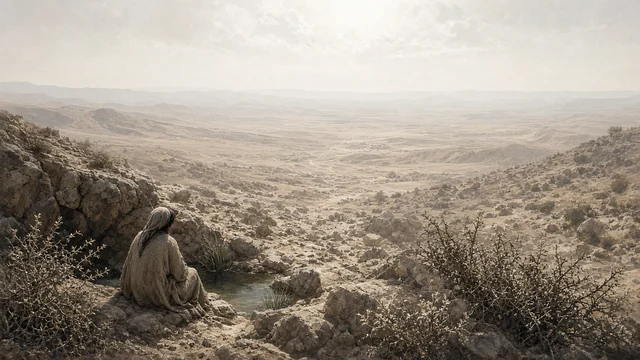
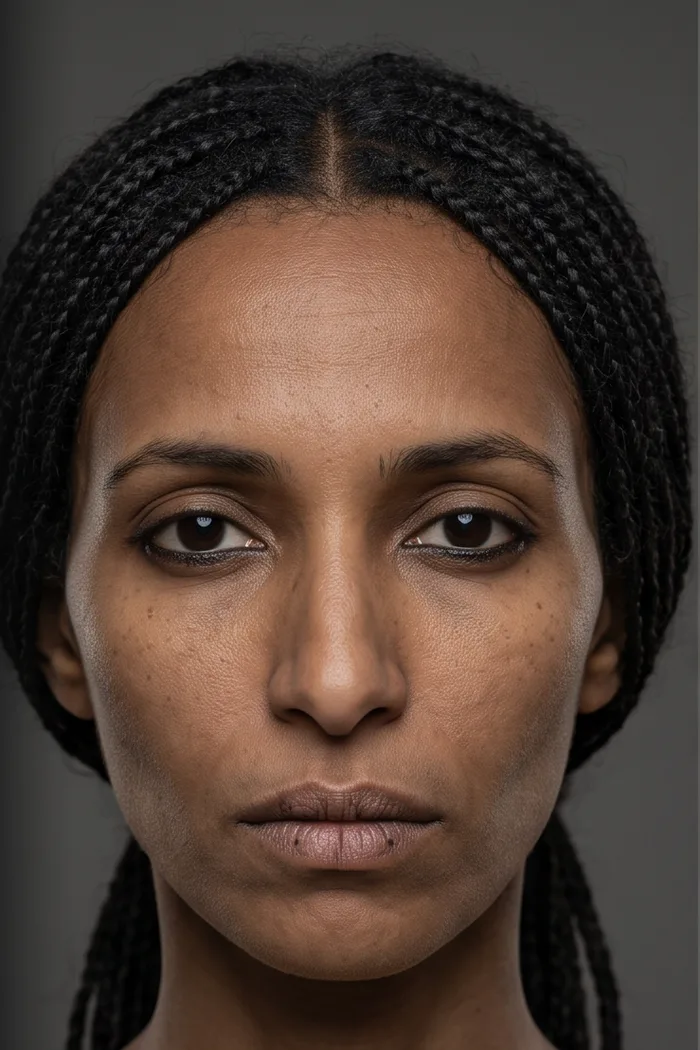
Hagar is Sarah's Egyptian servant, probably acquired during the household's stay in Egypt. After ten childless years in Canaan, Sarah gives her to Abraham to bear a child in Sarah's place, and she conceives. The text says she then looked on her mistress with contempt, and Sarah, with Abraham's leave, dealt so hardly with her that she fled into the wilderness on the road to Shur, toward Egypt. There, by a spring, the angel of the LORD finds her, calls her by name, tells her to return and submit, and promises that her seed will be too many to count. She is to call the child Ishmael, God hears, because the LORD has heard her affliction. She gives God a name of her own, the God who sees me, and the well is named for her words.

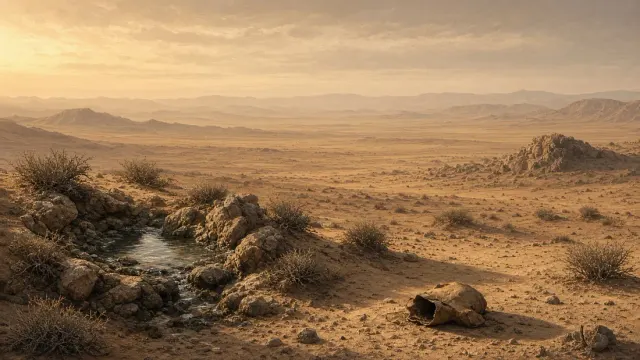
Fourteen years later Sarah bears Isaac, and at the weaning feast she sees Ishmael mocking and demands that Hagar and her son be sent away. Abraham rises early, gives Hagar bread and a skin of water, and sends her into the wilderness of Beersheba. When the water is gone she puts the boy under a shrub and sits a bowshot away so as not to watch him die. God hears the voice of the lad, an angel calls to her from heaven, and she sees a well. Ishmael grows up in the wilderness of Paran, and Hagar finds him a wife from Egypt.

Where she appearsGenesis 16 · Genesis 21

Scroll down to the account
Hagar

The movements, in the order the text gives them.

The Account of Hagar

  1. 01

    Genesis 16:1-4

    Given to Abram

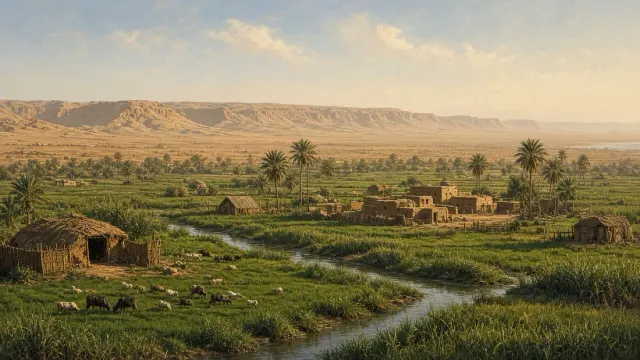
    Sarai, barren after ten years in Canaan, gives her Egyptian maid Hagar to Abram as a wife so that she might obtain children by her. Hagar conceives, and when she sees that she has conceived, her mistress is despised in her eyes.

    Ten years in Canaan and the promise has produced nothing. Sarai's solution is legal and ordinary for her world: a slave could bear on her mistress's behalf and the child would count as the mistress's own. What the Book of Genesis does with the scene is not ordinary. Sarai said, and Abram hearkened to the voice of Sarai, which is the sentence pattern of Genesis 3:17, where the man hearkened unto the voice of his wife and took the fruit. The reader is being told how to read this. Hagar is Egyptian, and Abram came out of Egypt with servants in 12:16, so she may be part of what he gained from the last time he tried to secure himself without waiting. She is given, she conceives, and the household tilts: her mistress was despised in her eyes.

    Verse by verse

    1. 16:1

      An handmaid, an Egyptian: her nationality is given before her name, and it will be repeated whenever she is mentioned.

    2. 16:2

      The LORD hath restrained me: Sarai reads her barrenness correctly as God's doing, then works around it.

    3. 16:3

      Gave her to her husband to be his wife: the arrangement is a marriage, not a single act, which is why the household cannot simply undo it.

    4. 16:4

      Despised: made light of. The slave who can do what the mistress cannot has power she is not supposed to have.
    Genesis 16:1-4

    King James Version · 4 verses

    16:1Now Sarai Abram’s wife bare him no children: and she had an handmaid, an Egyptian, whose name was Hagar.

    16:2And Sarai said unto Abram, Behold now, the LORD hath restrained me from bearing: I pray thee, go in unto my maid; it may be that I may obtain children by her. And Abram hearkened to the voice of Sarai.

    16:3And Sarai Abram’s wife took Hagar her maid the Egyptian, after Abram had dwelt ten years in the land of Canaan, and gave her to her husband Abram to be his wife.

    16:4And he went in unto Hagar, and she conceived: and when she saw that she had conceived, her mistress was despised in her eyes.

    Genesis 16:1-4: Given to Abram
  2. 02

    Genesis 16:5-6

    Dealt hardly with

    Sarai blames Abram and calls on the LORD to judge between them. Abram tells her the maid is in her hand to do as she pleases. Sarai deals hardly with her, and Hagar flees from her face.

    Sarai blames Abram for the outcome of her own proposal: my wrong be upon thee. Abram's answer is the abdication at the centre of the chapter. Behold, thy maid is in thy hand; do to her as it pleaseth thee. He will not choose between the two women, so he hands one of them over, and the wording gives Sarai an authority the marriage of verse 3 was supposed to have limited. Sarai dealt hardly with her. The verb is the one used of Egypt afflicting Israel in Exodus 1, and it is doing deliberate work here: the Hebrew household afflicts an Egyptian woman until she runs, which is the mirror image of the book that follows. Hagar fled from her face, into the desert, pregnant and alone.

    Verse by verse

    1. 16:5

      The LORD judge between me and thee: Sarai takes the quarrel to God, against the husband who agreed with her.

    2. 16:6

      Do to her as it pleaseth thee: Abram protects neither woman. Dealt hardly: the affliction verb of Exodus 1:11-12.

    Genesis 16:5-6

    King James Version · 2 verses

    16:5And Sarai said unto Abram, My wrong be upon thee: I have given my maid into thy bosom; and when she saw that she had conceived, I was despised in her eyes: the LORD judge between me and thee.

    16:6But Abram said unto Sarai, Behold, thy maid is in thy hand; do to her as it pleaseth thee. And when Sarai dealt hardly with her, she fled from her face.

    Genesis 16:5-6: Dealt hardly with
  3. 03

    Genesis 16:7-12

    The angel at the spring

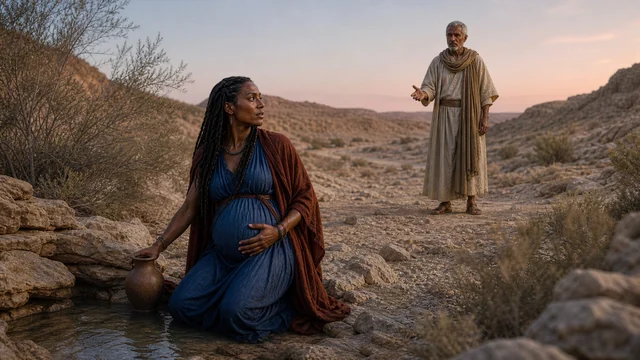
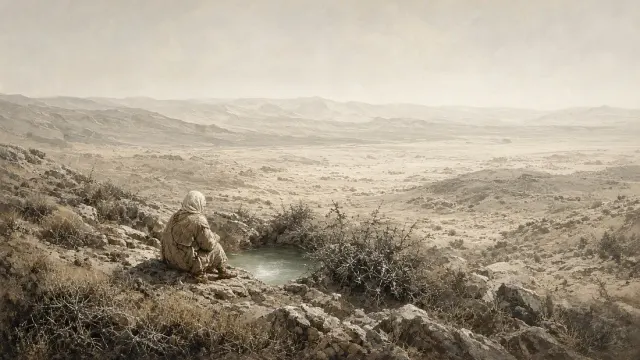
    The angel of the LORD finds her by a fountain in the wilderness on the way to Shur, and asks where she has come from and where she is going. He tells her to return and submit, and promises to multiply her seed beyond counting. She will bear a son and call him Ishmael, because the LORD has heard her affliction; he will be a wild man, his hand against every man.

    The angel of the LORD appears here for the first time in the Bible, and he appears to a runaway foreign slave. He found her by a fountain of water in the wilderness, on the road to Shur, which is the road back to Egypt. She is going home. He calls her Hagar, Sarai's maid, naming both who she is and what she is, and asks the two questions that let her say her own situation out loud: whence camest thou, and whither wilt thou go. She answers only the first. The command that follows is hard, return and submit, and it is paired with a promise given directly to her: I will multiply thy seed exceedingly, that it shall not be numbered for multitude. That is the promise made to Abram in 15:5, and Hagar is the only woman in Scripture who receives it in her own right. The son is named before birth, Ishmael, God hears, because the LORD hath heard thy affliction.

    Verse by verse

    1. 16:7

      The angel of the LORD: the first of many appearances, and the first is to a slave. The way to Shur runs toward Egypt.

    2. 16:8

      Hagar, Sarai's maid: he uses her name, which no one in the household has done in the text.

    3. 16:9

      Return and submit: the hardest word in the passage. The protection promised comes through going back, not through escape.

    4. 16:10

      I will multiply thy seed: the Abrahamic promise spoken to a woman, and to this woman.

    5. 16:11

      Ishmael: God hears. The name is a permanent record of this moment, carried by a man who will not remember it.

    6. 16:12

      A wild man: literally a wild donkey of a man, an image of freedom rather than savagery. He shall dwell in the presence of all his brethren: near them, not absorbed by them.

    Genesis 16:7-12

    King James Version · 6 verses

    16:7And the angel of the LORD found her by a fountain of water in the wilderness, by the fountain in the way to Shur.

    16:8And he said, Hagar, Sarai’s maid, whence camest thou? and whither wilt thou go? And she said, I flee from the face of my mistress Sarai.

    16:9And the angel of the LORD said unto her, Return to thy mistress, and submit thyself under her hands.

    16:10And the angel of the LORD said unto her, I will multiply thy seed exceedingly, that it shall not be numbered for multitude.

    16:11And the angel of the LORD said unto her, Behold, thou art with child, and shalt bear a son, and shalt call his name Ishmael; because the LORD hath heard thy affliction.

    16:12And he will be a wild man; his hand will be against every man, and every man’s hand against him; and he shall dwell in the presence of all his brethren.

    Genesis 16:7-12: The angel at the spring
  4. 04

    Genesis 16:13-16

    Thou God seest me

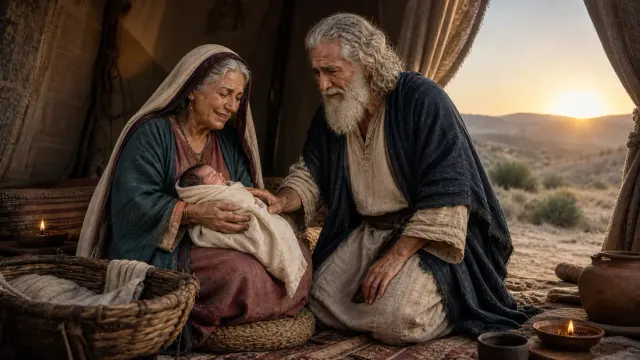
    Hagar names the LORD who spoke to her: thou God seest me. The well is called Beer-lahai-roi, the well of him that lives and sees me. She returns, and bears Ishmael to Abram when he is eighty-six.

    She called the name of the LORD that spake unto her, Thou God seest me. Hagar is the only person in the Bible who gives God a name. Not a title she has been taught, and not an altar built after the fact, but a name given on the spot by someone with no standing in the covenant household at all: El Roi, the God who sees me. Her reason is a question she can hardly finish, have I also here looked after him that seeth me, which reads as astonishment that she has survived the looking. The well is named after the sentence, Beer-lahai-roi, the well of the living one who sees me, and it stays on the map; Isaac will live beside it in 24:62 and 25:11. She returns, bears the son, and Abram names him Ishmael, which means Abram was told what happened at the spring.

    Verse by verse

    1. 16:13

      Thou God seest me: El Roi. The only name for God given by a human being in Scripture, and it comes from an Egyptian slave.

    2. 16:14

      Beer-lahai-roi: the well of the living one who sees me. Isaac settles there, 24:62 and 25:11.

    3. 16:15

      Abram called his son's name Ishmael: the name the angel gave her. She told him.

    4. 16:16

      Fourscore and six: Abram is eighty-six. Thirteen years of silence follow before chapter 17.

    Genesis 16:13-16

    King James Version · 4 verses

    16:13And she called the name of the LORD that spake unto her, Thou God seest me: for she said, Have I also here looked after him that seeth me?

    16:14Wherefore the well was called Beer-lahai-roi; behold, it is between Kadesh and Bered.

    16:15And Hagar bare Abram a son: and Abram called his son’s name, which Hagar bare, Ishmael.

    16:16And Abram was fourscore and six years old, when Hagar bare Ishmael to Abram.

    Genesis 16:13-16: Thou God seest me
  5. 05

    Genesis 21:9-14

    Cast out

    At Isaac's weaning feast Sarah sees the son of Hagar mocking and tells Abraham to cast out this bondwoman and her son. God tells Abraham to do it, promising to make a nation of the boy too. Abraham rises early, gives Hagar bread and a skin of water and the child, and sends her away. She wanders in the wilderness of Beersheba.

    At Isaac's weaning feast Sarah sees Ishmael mocking, and the word is the same root as Isaac's own name, laughter. Whatever the boy was doing, Sarah reads it as a claim on the inheritance and demands the removal of both mother and son: cast out this bondwoman and her son. The thing was very grievous in Abraham's sight because of his son. He is not indifferent, and the text says so plainly. God's answer does not excuse Sarah; it tells Abraham to do what she says while attaching a promise to the boy: also of the son of the bondwoman will I make a nation, because he is thy seed. Then the sending, described in small physical detail, bread, a bottle of water, put on her shoulder, and the child. A household worth flocks and herds sends a woman into the desert with what she can carry.

    Verse by verse

    1. 21:9

      Mocking: the participle of the verb behind Isaac's name. The word can mean playing, laughing or mocking, and translators have divided over it since antiquity.

    2. 21:10

      Cast out this bondwoman: Sarah names neither of them. Paul quotes this verse in Galatians 4:30.

    3. 21:11

      Very grievous: Abraham's distress is recorded before God's instruction, so the reader does not mistake the sending for indifference.

    4. 21:13

      Of the son of the bondwoman will I make a nation: the promise of 16:10 restated to the father.

    5. 21:14

      Bread and a bottle of water: the provision is enough for a short journey. Beer-sheba is where Abraham is living, so she is turned out of her own neighbourhood.

    Genesis 21:9-14

    King James Version · 6 verses

    21:9And Sarah saw the son of Hagar the Egyptian, which she had born unto Abraham, mocking.

    21:10Wherefore she said unto Abraham, Cast out this bondwoman and her son: for the son of this bondwoman shall not be heir with my son, even with Isaac.

    21:11And the thing was very grievous in Abraham’s sight because of his son.

    21:12And God said unto Abraham, Let it not be grievous in thy sight because of the lad, and because of thy bondwoman; in all that Sarah hath said unto thee, hearken unto her voice; for in Isaac shall thy seed be called.

    21:13And also of the son of the bondwoman will I make a nation, because he is thy seed.

    21:14And Abraham rose up early in the morning, and took bread, and a bottle of water, and gave it unto Hagar, putting it on her shoulder, and the child, and sent her away: and she departed, and wandered in the wilderness of Beer-sheba.

    Genesis 21:9-14: Cast out
  6. 06

    Genesis 21:15-19

    God heard the voice of the lad

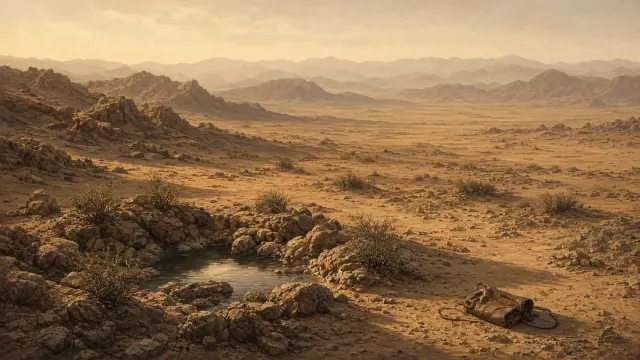
    The water is spent. She lays the boy under a shrub, sits a bowshot away so as not to see him die, and weeps. God hears the lad, and the angel of God calls to Hagar from heaven: fear not. God opens her eyes and she sees a well, fills the skin, and gives the boy drink.

    The water is spent, and the scene shrinks to two people who cannot look at each other. She cast the child under one of the shrubs, and sat down a bowshot away, and said, let me not see the death of the child. Then she lift up her voice, and wept. What follows is the sentence the chapter turns on: God heard the voice of the lad. Not her weeping, which the text has just described, but the boy's voice, and the reason is in his name. Ishmael means God hears, and the name given at the spring thirteen years earlier is what answers here. The angel calls her by name again, what aileth thee, Hagar, and repeats the promise about the nation. Then God opened her eyes, and she saw a well of water. The well was there. What changed was her seeing, which is the same word her own name for God was built on.

    Verse by verse

    1. 21:16

      A bowshot off: far enough not to watch, near enough not to leave. Her son will become an archer in verse 20.

    2. 21:17

      God heard the voice of the lad: the name Ishmael, God hears, is the hinge of the rescue. Where he is: God meets the boy in the place he was abandoned.

    3. 21:18

      Hold him in thine hand: she is told to pick him up. The promise needs her to act, not only to believe.

    4. 21:19

      God opened her eyes: the well existed already. The woman who named God the one who sees is here given sight.

    Genesis 21:15-19

    King James Version · 5 verses

    21:15And the water was spent in the bottle, and she cast the child under one of the shrubs.

    21:16And she went, and sat her down over against him a good way off, as it were a bowshot: for she said, Let me not see the death of the child. And she sat over against him, and lift up her voice, and wept.

    21:17And God heard the voice of the lad; and the angel of God called to Hagar out of heaven, and said unto her, What aileth thee, Hagar? fear not; for God hath heard the voice of the lad where he is.

    21:18Arise, lift up the lad, and hold him in thine hand; for I will make him a great nation.

    21:19And God opened her eyes, and she saw a well of water; and she went, and filled the bottle with water, and gave the lad drink.

    Genesis 21:15-19: God heard the voice of the lad
  7. 07

    Genesis 21:20-21

    The wilderness of Paran

    God is with the lad as he grows. He lives in the wilderness and becomes an archer, dwelling in the wilderness of Paran, and his mother takes him a wife out of the land of Egypt.

    Two verses close her account, and they are quiet ones. God was with the lad; and he grew, and dwelt in the wilderness, and became an archer. The formula God was with him is used later of Isaac, of Joseph and of David, and it is not withheld from the son who was sent away. Hagar's last recorded act is a mother's ordinary one: his mother took him a wife out of the land of Egypt. She goes back to her own people for a daughter-in-law, which is what Abraham will do for Isaac three chapters later. The Egyptian slave who was given to a Hebrew husband chooses an Egyptian wife for her son, and the line that follows her runs outside the covenant but under a promise of its own.

    Verse by verse

    1. 21:20

      God was with the lad: the same phrase used of Isaac in 26:3, Joseph in 39:2, and David in 1 Samuel 18:14.

    2. 21:21

      A wife out of the land of Egypt: Hagar does for Ishmael what Abraham does for Isaac in chapter 24, and looks to her own country to do it.

    Genesis 21:20-21

    King James Version · 2 verses

    21:20And God was with the lad; and he grew, and dwelt in the wilderness, and became an archer.

    21:21And he dwelt in the wilderness of Paran: and his mother took him a wife out of the land of Egypt.

    Genesis 21:20-21: The wilderness of Paran
  8. 08

    Galatians 4:21-31

    Two covenants

    Paul says Abraham had two sons, one by a bondmaid born after the flesh, one by a free woman born by promise, and that these are an allegory: Hagar is Mount Sinai and the Jerusalem that now is, in bondage with her children, while Sarah is the Jerusalem above. Cast out the bondwoman and her son, he quotes, and adds: we are not children of the bondwoman, but of the free.

    Paul is arguing with people who want to put themselves under the law, and he uses the two mothers as a figure: the one by a bondmaid, the other by a freewoman. Which things are an allegory, he says, naming his own method, and readers should hold him to it. He is not offering a verdict on Hagar the woman. He is using the difference between a son born after the flesh, by arrangement, and a son born by promise, to describe two ways of standing before God. Agar answers to mount Sinai and to Jerusalem which now is, in bondage with her children; Jerusalem which is above is free, which is the mother of us all. Then he quotes Sarah's hardest line, cast out the bondwoman and her son, as scripture rather than as example, and ends where the argument was always going: we are not children of the bondwoman, but of the free.

    Verse by verse

    1. 4:24

      Which things are an allegory: Paul names the figure as a figure. The historical Hagar is not being condemned.

    2. 4:25

      Agar is mount Sinai in Arabia: Paul places her geographically where Ishmael's descendants lived.

    3. 4:27

      Rejoice, thou barren: Isaiah 54:1, spoken to the woman who could not bear, which in the account is Sarah.

    4. 4:29

      Persecuted: Paul reads the mocking of 21:9 as persecution, which is one of the old readings of that word.

    Galatians 4:21-31

    King James Version · 11 verses

    4:21Tell me, ye that desire to be under the law, do ye not hear the law?

    4:22For it is written, that Abraham had two sons, the one by a bondmaid, the other by a freewoman.

    4:23But he who was of the bondwoman was born after the flesh; but he of the freewoman was by promise.

    4:24Which things are an allegory: for these are the two covenants; the one from the mount Sinai, which gendereth to bondage, which is Agar.

    4:25For this Agar is mount Sinai in Arabia, and answereth to Jerusalem which now is, and is in bondage with her children.

    4:26But Jerusalem which is above is free, which is the mother of us all.

    4:27For it is written, Rejoice, thou barren that bearest not; break forth and cry, thou that travailest not: for the desolate hath many more children than she which hath an husband.

    4:28Now we, brethren, as Isaac was, are the children of promise.

    4:29But as then he that was born after the flesh persecuted him that was born after the Spirit, even so it is now.

    4:30Nevertheless what saith the scripture? Cast out the bondwoman and her son: for the son of the bondwoman shall not be heir with the son of the freewoman.

    4:31So then, brethren, we are not children of the bondwoman, but of the free.

The people, the places and the rest of Scripture.

Reading Hagar closely

The people she dealt with

Sarah is her mistress and the mover of every scene. It is Sarah who gives her to Abraham, Sarah she despises when she conceives, Sarah who deals hardly with her until she runs, and Sarah who demands her expulsion fourteen years later. The text never calls Sarah's treatment right, and it never calls Hagar's contempt right either. Two women in one household, one with the promise and one with the child, are shown doing to each other what such an arrangement was always going to produce.

Abraham is passive in both crises. He tells Sarah the maid is in her hand, and when God tells him to send Hagar away he does it at dawn with a skin of water. The one line the text gives him, that the thing was very grievous in his sight because of his son, is about Ishmael rather than Hagar. She is never recorded speaking to him.

The angel of the LORD is the only one who speaks to her kindly, and he does it twice. He calls her by name and title, Hagar, Sarai's maid, asks her questions, gives her a promise and a name for her son, and later calls to her from heaven, tells her not to fear, and opens her eyes to the well. God, the account says plainly, heard her affliction and heard her son.

Genesis 21

What she named

Hagar does something no one else in the Bible does. After the angel speaks at the spring, she calls the name of the LORD that spoke to her, thou God seest me, El Roi, and adds, have I also here looked after him that sees me. The well takes its name from her sentence. Isaac will later live beside that well.

The naming matters because of who she is: an Egyptian, a woman, a slave, pregnant by her mistress's husband and running away. The book that will later forbid Israel to speak God's name lightly records that a foreign servant girl gave him a name, and that God accepted it. Her son's name is also given by God to her before it is given to Abraham. Ishmael, God hears, is the answer to the question the angel did not need to ask, whether anyone had heard her.

What came before and what followed

Before Hagar there is a promise with no child. Abram has been told his seed will be like the dust and the stars, Sarai is barren, and ten years have passed in the land. Hagar is the household's attempt to make the promise come true by the customs of the time, in which a maid could bear a child counted as her mistress's. The text does not condemn the custom. It shows what it cost.

After her come Ishmael's twelve sons, princes according to their nations, and the Ishmaelites who buy Joseph from his brothers and carry him to Egypt, the land Hagar came from. Hagar's line and Sarah's line meet again at Abraham's grave, where Isaac and Ishmael bury their father together. Centuries later Paul reaches for her account to explain the difference between a covenant of law and a covenant of promise, and the church has read her that way since, while Genesis goes on telling of the slave who was seen.

Where the rest of Scripture reaches back

Genesis mentions her once more, in the record of Ishmael's generations: these are the generations of Ishmael, Abraham's son, whom Hagar the Egyptian, Sarah's handmaid, bare unto Abraham. The Old Testament does not name her again. Some have found her descendants in the Hagarites of 1 Chronicles 5 and Psalm 83, a people east of Gilead.

Galatians 4 is the one New Testament passage, and it is a sustained allegory. Paul, arguing that the Galatians must not put themselves under the law, says the two sons of Abraham stand for two covenants: Hagar for Sinai and the present Jerusalem in bondage, Sarah for the Jerusalem above that is free and is our mother. He quotes Sarah's own words, cast out the bondwoman and her son, and ends: so then, brethren, we are not children of the bondwoman, but of the free. The allegory needs Hagar to be bondage. The narrative, read on its own, needs her to be heard.

Why it matters

Hagar is the first person in the Bible to be visited by the angel of the LORD, the first woman to receive a promise of countless descendants, and the only person in Scripture who gives God a name. A foreign slave, used as a womb and cast out twice, she is met in the desert by a God who asks where she has come from and where she is going, hears her, and provides. The name she gives him, El Roi, the God who sees, and the well she names, Beer-lahai-roi, the well of the living one who sees me, are hers.

Paul turns her into an allegory in Galatians 4: Hagar is Mount Sinai in Arabia, the covenant that bears children for bondage, and the earthly Jerusalem, set against Sarah, the free woman, whose children are born by promise. That reading is about two covenants and not about the woman, and Genesis is careful to give her the dignity Paul's argument does not need. Her son becomes twelve princes. Her account is the Bible's first proof that the God of Abraham hears people who are not Abraham.

3 songs

The music

Every song in the catalogue whose passage falls inside these chapters.

  1. Genesis 15:1-17:27

    Count the Stars

    Play hereOpen song pageRead lyrics
  2. Genesis 16; 21:8-21

    The God Who Sees

  3. Genesis 20:1-22:24

    The LORD Will Provide

Nearby

All the people

Report an error on this page