New · FreePlay The Witnesses The in-depth puzzle battle quest through Bible history

People of the Bible

Sarah

Barren for ninety years, laughed at the tent door, and named the mother of nations.

Also called Sarai, until Genesis 17; in the New Testament, Sara

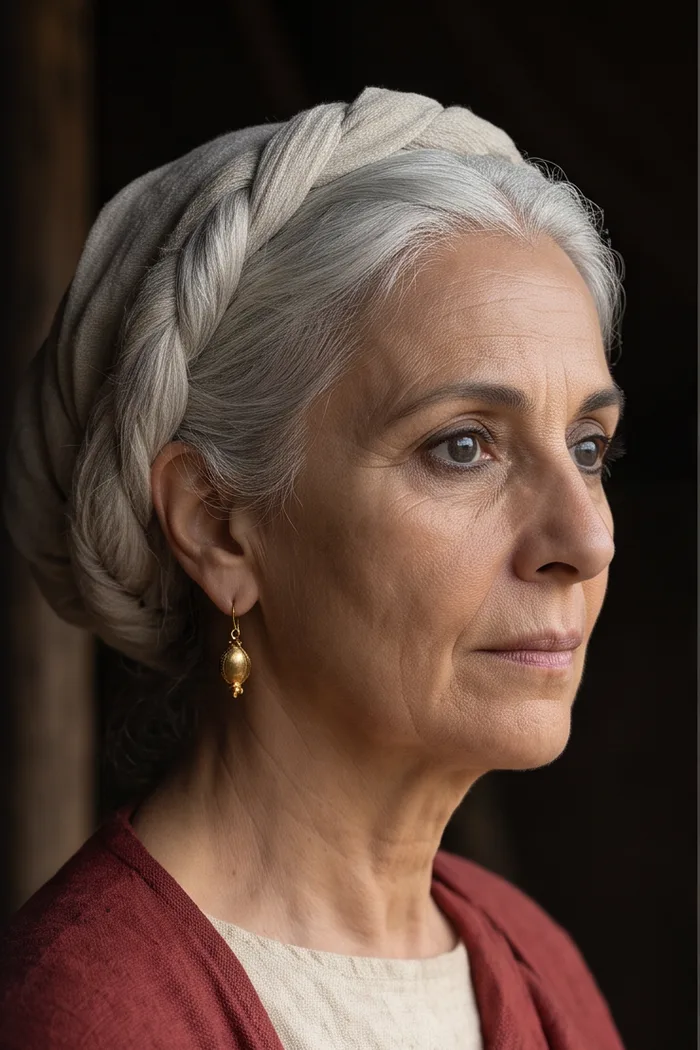
Sarah is the wife of Abraham and the only woman in the Bible whose age at death is recorded. She is introduced with one fact, that she is barren, and the whole of her account is what God does with that. She leaves Ur and Haran with her husband, is twice handed to a king as his sister to save his life, and after ten childless years in Canaan gives her Egyptian maid Hagar to Abraham to bear a son in her place. When Hagar conceives and despises her, Sarah drives her out.

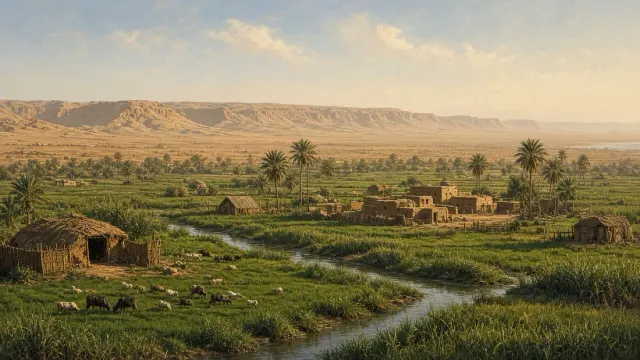
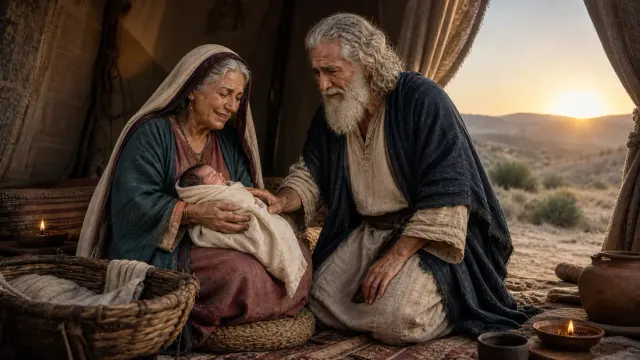
At eighty-nine her name is changed from Sarai to Sarah, princess, and God says he will bless her and she will be a mother of nations. She laughs at the tent door when the LORD says she will bear a son within the year, and denies laughing, and when the son comes she names him Isaac, laughter, and says that everyone who hears will laugh with her. She then sees Ishmael mocking at the weaning feast and demands that he and his mother be sent away, and God tells Abraham to do as she says. She dies at Hebron at a hundred and twenty-seven, and Abraham buys the cave of Machpelah to bury her.

Where she appearsGenesis 12 to 23

Scroll down to the account
Sarah

The movements, in the order the text gives them.

The Account of Sarah

  1. 01

    Genesis 11:29-31

    Sarai was barren

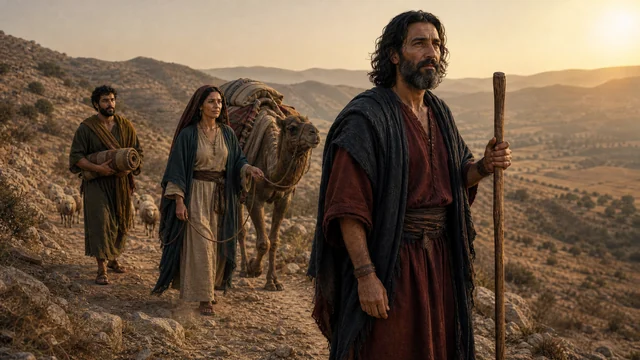
    Abram takes Sarai as his wife in Ur. The text says at once that she was barren, and had no child, and then she leaves for Canaan with Terah's household. Everything that follows hangs on that sentence.

    Sarai is introduced as a wife and, in the same breath, as barren. Abram took a wife, and her name was Sarai; but Sarai was barren, she had no child. The doubling of the statement is deliberate: the Book of Genesis says it twice so that no reader will forget it through the next fourteen chapters. Her name means princess, and 20:12 will tell us she is Abram's half-sister, daughter of Terah by another mother. She goes with Terah, Abram and Lot from Ur toward Canaan, and stops with them in Haran. The promise of chapter 12 will be made to a man whose wife cannot have children, and that fact is the whole difficulty God chooses to work through.

    Verse by verse

    1. 11:29

      Sarai: my princess. The name is changed to Sarah, princess, in 17:15. Milcah, her sister-in-law, is the grandmother of Rebekah.

    2. 11:30

      Barren; she had no child: said twice. The barrenness of Rebekah, Rachel, Hannah and Elisabeth will each repeat the pattern.

    3. 11:31

      Sarai his daughter in law, Abram's wife: her place in the caravan is by her relation to two men. She is sixty-five when they leave Haran.

    Genesis 11:29-31

    King James Version · 3 verses

    11:29And Abram and Nahor took them wives: the name of Abram’s wife was Sarai; and the name of Nahor’s wife, Milcah, the daughter of Haran, the father of Milcah, and the father of Iscah.

    11:30But Sarai was barren; she had no child.

    11:31And Terah took Abram his son, and Lot the son of Haran his son’s son, and Sarai his daughter in law, his son Abram’s wife; and they went forth with them from Ur of the Chaldees, to go into the land of Canaan; and they came unto Haran, and dwelt there.

    Genesis 11:29-31: Sarai was barren
  2. 02

    Genesis 12:10-20

    Say thou art my sister

    In Egypt Abram asks her to call herself his sister, because she is fair and he fears for his life. Pharaoh takes her into his house and is struck with plagues. She is given back with a rebuke to her husband and not a word of her own.

    In the famine Abram takes her down to Egypt and asks her to say she is his sister. Behold now, I know that thou art a fair woman to look upon: Sarai is sixty-five, and the princes of Pharaoh see what Abram saw, and commend her, and she is taken into Pharaoh's house. The text does not record her consent or her objection; 20:13 will say that she agreed to the arrangement everywhere they went. Abram is enriched for her sake, sheep and oxen and asses and menservants and maidservants, one of whom is probably Hagar.

    What saves her is not her husband but the LORD, who plagues Pharaoh and his house with great plagues because of Sarai Abram's wife. The Book of Genesis names her as wife at exactly the moment Abram has called her sister. Pharaoh, more honourable than the patriarch, gives her back and sends them away. Sarai has been silent throughout; she will not be silent when the same thing nearly happens again at Gerar.

    Verse by verse

    1. 12:11

      A fair woman to look upon: the first woman in the Bible described as beautiful.

    2. 12:13

      Say, I pray thee, thou art my sister: Abram asks; the text does not say she answered.

    3. 12:15

      Taken into Pharaoh's house: the harem. How long she was there is not said.

    4. 12:17

      Because of Sarai Abram's wife: the LORD's plagues answer for her while her husband takes gifts.

    Genesis 12:10-20

    King James Version · 11 verses

    12:10And there was a famine in the land: and Abram went down into Egypt to sojourn there; for the famine was grievous in the land.

    12:11And it came to pass, when he was come near to enter into Egypt, that he said unto Sarai his wife, Behold now, I know that thou art a fair woman to look upon:

    12:12Therefore it shall come to pass, when the Egyptians shall see thee, that they shall say, This is his wife: and they will kill me, but they will save thee alive.

    12:13Say, I pray thee, thou art my sister: that it may be well with me for thy sake; and my soul shall live because of thee.

    12:14And it came to pass, that, when Abram was come into Egypt, the Egyptians beheld the woman that she was very fair.

    12:15The princes also of Pharaoh saw her, and commended her before Pharaoh: and the woman was taken into Pharaoh’s house.

    12:16And he entreated Abram well for her sake: and he had sheep, and oxen, and he asses, and menservants, and maidservants, and she asses, and camels.

    12:17And the LORD plagued Pharaoh and his house with great plagues because of Sarai Abram’s wife.

    12:18And Pharaoh called Abram, and said, What is this that thou hast done unto me? why didst thou not tell me that she was thy wife?

    12:19Why saidst thou, She is my sister? so I might have taken her to me to wife: now therefore behold thy wife, take her, and go thy way.

    12:20And Pharaoh commanded his men concerning him: and they sent him away, and his wife, and all that he had.

  3. 03

    Genesis 16:1-6

    Go in unto my maid

    After ten years in Canaan she gives Abram her maid Hagar, hoping to obtain children by her. Hagar conceives and looks down on her mistress. Sarai blames Abram, deals hardly with Hagar, and Hagar flees.

    Ten years in Canaan and no child. Sarai speaks for the first time in the Bible, and what she says is a plan: behold now, the LORD hath restrained me from bearing; I pray thee, go in unto my maid; it may be that I may obtain children by her. The custom is documented in the laws of the ancient east; a childless wife could give her slave to her husband and count the child as her own. Sarai reads her barrenness as the LORD's doing and tries to get round it by a lawful means, and Abram hearkened to the voice of Sarai. The Book of Genesis does not say it was wrong. He shows what came of it.

    Hagar conceives, and her mistress was despised in her eyes. Sarai turns on Abram with a sentence that blames him for her own scheme, my wrong be upon thee, and calls on the LORD to judge between them. Abram gives Hagar back into her hand, and Sarai dealt hardly with her, so that Hagar flees. In six verses the wife who could not conceive has become the oppressor of the slave who could, and Paul will read the whole episode in Galatians as the difference between the flesh and the promise.

    Verse by verse

    1. 16:1

      An Egyptian, whose name was Hagar: probably acquired in Egypt, 12:16. The slave has a name; the narrative treats her as a person.

    2. 16:2

      The LORD hath restrained me: Sarai's theology is right and her remedy is her own. Obtain children: literally be built up by her.

    3. 16:4

      Despised in her eyes: the fertile slave looks down on the barren mistress, the reversal Proverbs 30:23 names as unbearable.

    4. 16:5

      My wrong be upon thee: the wrong done to me is your fault. The LORD judge: she invokes the judge she cannot face.

    5. 16:6

      Dealt hardly: afflicted, the verb used of Egypt afflicting Israel, Exodus 1:11. The Egyptian slave is afflicted by the Hebrew mistress.

    Genesis 16:1-6

    King James Version · 6 verses

    16:1Now Sarai Abram’s wife bare him no children: and she had an handmaid, an Egyptian, whose name was Hagar.

    16:2And Sarai said unto Abram, Behold now, the LORD hath restrained me from bearing: I pray thee, go in unto my maid; it may be that I may obtain children by her. And Abram hearkened to the voice of Sarai.

    16:3And Sarai Abram’s wife took Hagar her maid the Egyptian, after Abram had dwelt ten years in the land of Canaan, and gave her to her husband Abram to be his wife.

    16:4And he went in unto Hagar, and she conceived: and when she saw that she had conceived, her mistress was despised in her eyes.

    16:5And Sarai said unto Abram, My wrong be upon thee: I have given my maid into thy bosom; and when she saw that she had conceived, I was despised in her eyes: the LORD judge between me and thee.

    16:6But Abram said unto Sarai, Behold, thy maid is in thy hand; do to her as it pleaseth thee. And when Sarai dealt hardly with her, she fled from her face.

    Genesis 16:1-6: Go in unto my maid
  4. 04

    Genesis 17:15-21

    A princess and a mother of nations

    God changes her name to Sarah and promises to bless her, to give Abraham a son by her, and to make her a mother of nations and kings. Abraham laughs and pleads for Ishmael, and God names the coming child Isaac and fixes the time.

    Thirteen years after Ishmael's birth, God renames Sarai as he has renamed Abram. As for Sarai thy wife, thou shalt not call her name Sarai, but Sarah shall her name be. Both names mean princess; the new one is the form that will be carried by the mother of nations, and God says exactly that: I will bless her, and she shall be a mother of nations; kings of people shall be of her. Every promise made to Abraham about seed is now attached to Sarah by name. The child is not to come through any other woman.

    Abraham's response is to fall on his face and laugh, and to say in his heart the arithmetic: a hundred and ninety. Then he offers God an alternative, Ishmael, who is alive and thirteen. God's answer begins with a word that cannot be argued with, Sarah thy wife shall bear thee a son indeed, and names the son Isaac after the father's laughter, and fixes the date: at this set time in the next year. Sarah is not present for any of this. She will hear it a second time in the next chapter, at the tent door.

    Verse by verse

    1. 17:15

      Sarah: the only woman whose name God changes. The new name marks a new role, mother of nations.

    2. 17:16

      I will bless her: the verb is used twice in one verse of Sarah. Kings of people shall be of her: David and Christ are her seed.

    3. 17:17

      Shall Sarah, that is ninety years old, bear: Abraham's question is Sarah's in 18:12. Neither of them believes it the first time.

    4. 17:19

      Sarah thy wife shall bear thee a son indeed: the indeed answers the laugh. Isaac: he laughs.

    5. 17:21

      At this set time in the next year: the promise is dated, and 21:2 records that it was kept to the day.

    Genesis 17:15-21

    King James Version · 7 verses

    17:15And God said unto Abraham, As for Sarai thy wife, thou shalt not call her name Sarai, but Sarah shall her name be.

    17:16And I will bless her, and give thee a son also of her: yea, I will bless her, and she shall be a mother of nations; kings of people shall be of her.

    17:17Then Abraham fell upon his face, and laughed, and said in his heart, Shall a child be born unto him that is an hundred years old? and shall Sarah, that is ninety years old, bear?

    17:18And Abraham said unto God, O that Ishmael might live before thee!

    17:19And God said, Sarah thy wife shall bear thee a son indeed; and thou shalt call his name Isaac: and I will establish my covenant with him for an everlasting covenant, and with his seed after him.

    17:20And as for Ishmael, I have heard thee: Behold, I have blessed him, and will make him fruitful, and will multiply him exceedingly; twelve princes shall he beget, and I will make him a great nation.

    17:21But my covenant will I establish with Isaac, which Sarah shall bear unto thee at this set time in the next year.

    Genesis 17:15-21: A princess and a mother of nations
  5. 05

    Genesis 18:9-15

    The laugh at the tent door

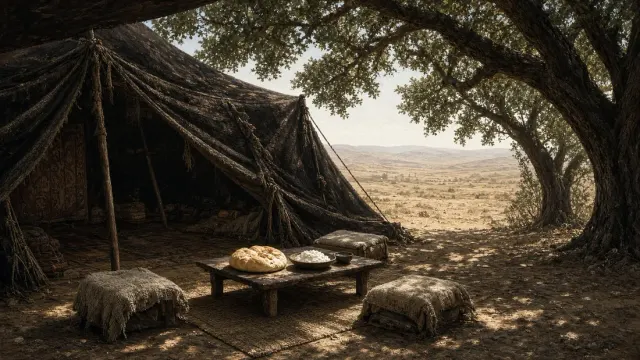
    Three visitors sit under the tree at Mamre and one of them says Sarah will have a son at this time next year. Listening at the tent door, old and past the way of women, she laughs to herself. The LORD asks why, and whether anything is too hard for him. She denies it, afraid. Nay, but thou didst laugh.

    The three visitors have eaten, and the guest asks the question that shows he knows the household: where is Sarah thy wife? Behold, in the tent. Then, spoken to Abraham but meant for her: I will certainly return unto thee according to the time of life, and lo, Sarah thy wife shall have a son. She is behind him in the tent door, listening, and the Book of Genesis pauses to give her age and her condition in plain words: old and well stricken in age, and it had ceased to be with Sarah after the manner of women. So she laughs, silently, within herself, and her laughter is the same word as Abraham's and the boy's name.

    The LORD hears the laugh no one could have heard, and asks Abraham why Sarah laughed, and then asks the question the whole chapter has been building toward: is any thing too hard for the LORD? Sarah, afraid, denies it: I laughed not. The answer is four words: nay, but thou didst laugh. It is a gentle correction, and it is the first time God speaks to her directly. Nine months later she will laugh again and mean it.

    Verse by verse

    1. 18:9

      Where is Sarah thy wife: the visitors know her name. She is inside; the promise is spoken outside, so that she overhears it.

    2. 18:11

      After the manner of women: the Book of Genesis states the impossibility so that the fulfilment cannot be explained away.

    3. 18:12

      Laughed within herself: silently. My lord: 1 Peter 3:6 holds up the word as her reverence for her husband.

    4. 18:14

      Is any thing too hard for the LORD: too wonderful, beyond him. Gabriel's answer to Mary in Luke 1:37 is this verse.

    5. 18:15

      I laughed not; nay, but thou didst laugh: the only exchange between Sarah and God recorded in her lifetime.

    Genesis 18:9-15

    King James Version · 7 verses

    18:9And they said unto him, Where is Sarah thy wife? And he said, Behold, in the tent.

    18:10And he said, I will certainly return unto thee according to the time of life; and, lo, Sarah thy wife shall have a son. And Sarah heard it in the tent door, which was behind him.

    18:11Now Abraham and Sarah were old and well stricken in age; and it ceased to be with Sarah after the manner of women.

    18:12Therefore Sarah laughed within herself, saying, After I am waxed old shall I have pleasure, my lord being old also?

    18:13And the LORD said unto Abraham, Wherefore did Sarah laugh, saying, Shall I of a surety bear a child, which am old?

    18:14Is any thing too hard for the LORD? At the time appointed I will return unto thee, according to the time of life, and Sarah shall have a son.

    18:15Then Sarah denied, saying, I laughed not; for she was afraid. And he said, Nay; but thou didst laugh.

    Genesis 18:9-15: The laugh at the tent door
  6. 06

    Genesis 20

    Gerar

    In the south Abraham calls her his sister again and Abimelech takes her. God tells the king in a dream that she is a man's wife. She is returned with a thousand pieces of silver, and the king's household, which had been closed up, is healed at Abraham's prayer.

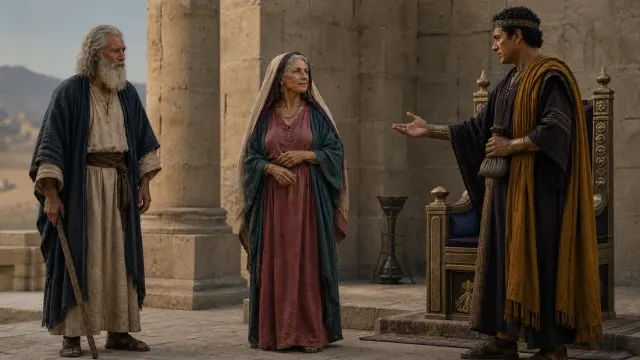
    Between the promise of chapter 18 and its keeping in chapter 21, Sarah is taken into another king's house. Abraham says of her in Gerar, she is my sister, and Abimelech sends and takes her. She is ninety, and the child of the promise is to be conceived within the year; the danger to the whole account is at its greatest exactly here. God comes to Abimelech in a dream and stops him before he touches her, and tells him she is a man's wife.

    Abraham's explanation, given to Abimelech, tells us for the first time what the arrangement was: she is indeed my sister, the daughter of my father but not of my mother; and when God caused me to wander from my father's house, I said unto her, this is thy kindness which thou shalt shew unto me; at every place say of me, he is my brother. So the deception was agreed between them at the start of the journey, thirty years before, and Sarah had kept her side of it twice. Abimelech restores her with gifts, and speaks the last word to Sarah herself: a thousand pieces of silver to her brother, a covering of the eyes unto all that are with thee, and with all other: thus she was reproved. The king vindicates her honour publicly and, with the word brother, gently mocks the account she had told.

    Verse by verse

    1. 20:2

      Abraham said of Sarah his wife: the Book of Genesis insists on wife, as in 12:17. She is my sister: the second time, and Sarah is ninety.

    2. 20:4

      Abimelech had not come near her: the Book of Genesis says it before God does, to protect the coming birth from any doubt.

    3. 20:12

      The daughter of my father, but not of my mother: the half-truth explained. Later law, Leviticus 18:9, forbids such a marriage.

    4. 20:13

      This is thy kindness: Abraham had asked it of her as a favour at the beginning. Sarah's loyalty to a bad plan lasted thirty years.

    5. 20:16

      Thy brother: Abimelech uses Sarah's own word back to her. A covering of the eyes: a public sign that no one may look on her as compromised.

    6. 20:18

      Closed up all the wombs of the house of Abimelech, because of Sarah: the barren woman is the cause of a barren household, until Abraham prays.

    Genesis 20: Gerar

    Genesis 20

    King James Version · 18 verses

    20:1And Abraham journeyed from thence toward the south country, and dwelled between Kadesh and Shur, and sojourned in Gerar.

    20:2And Abraham said of Sarah his wife, She is my sister: and Abimelech king of Gerar sent, and took Sarah.

    20:3But God came to Abimelech in a dream by night, and said to him, Behold, thou art but a dead man, for the woman which thou hast taken; for she is a man’s wife.

    20:4But Abimelech had not come near her: and he said, Lord, wilt thou slay also a righteous nation?

    20:5Said he not unto me, She is my sister? and she, even she herself said, He is my brother: in the integrity of my heart and innocency of my hands have I done this.

    20:6And God said unto him in a dream, Yea, I know that thou didst this in the integrity of thy heart; for I also withheld thee from sinning against me: therefore suffered I thee not to touch her.

    20:7Now therefore restore the man his wife; for he is a prophet, and he shall pray for thee, and thou shalt live: and if thou restore her not, know thou that thou shalt surely die, thou, and all that are thine.

    20:8Therefore Abimelech rose early in the morning, and called all his servants, and told all these things in their ears: and the men were sore afraid.

    20:9Then Abimelech called Abraham, and said unto him, What hast thou done unto us? and what have I offended thee, that thou hast brought on me and on my kingdom a great sin? thou hast done deeds unto me that ought not to be done.

    20:10And Abimelech said unto Abraham, What sawest thou, that thou hast done this thing?

    20:11And Abraham said, Because I thought, Surely the fear of God is not in this place; and they will slay me for my wife’s sake.

    20:12And yet indeed she is my sister; she is the daughter of my father, but not the daughter of my mother; and she became my wife.

    20:13And it came to pass, when God caused me to wander from my father’s house, that I said unto her, This is thy kindness which thou shalt shew unto me; at every place whither we shall come, say of me, He is my brother.

    20:14And Abimelech took sheep, and oxen, and menservants, and womenservants, and gave them unto Abraham, and restored him Sarah his wife.

    20:15And Abimelech said, Behold, my land is before thee: dwell where it pleaseth thee.

    20:16And unto Sarah he said, Behold, I have given thy brother a thousand pieces of silver: behold, he is to thee a covering of the eyes, unto all that are with thee, and with all other: thus she was reproved.

    20:17So Abraham prayed unto God: and God healed Abimelech, and his wife, and his maidservants; and they bare children.

    20:18For the LORD had fast closed up all the wombs of the house of Abimelech, because of Sarah Abraham’s wife.

  7. 07

    Genesis 21:1-7

    God hath made me to laugh

    The LORD visits Sarah as he had said, and she bears Isaac in Abraham's old age at the appointed time. She names the laughter herself: God has made me to laugh, and all who hear will laugh with me. Who would have said that Sarah should give children suck?

    The LORD visited Sarah as he had said, and the LORD did unto Sarah as he had spoken. The Book of Genesis says it twice, and names her both times: the promise was to her as much as to Abraham. Sarah conceived, and bare Abraham a son in his old age, at the set time of which God had spoken to him. Isaac is born on schedule, named by his father, and circumcised on the eighth day, the first child to receive the sign under the covenant.

    Then Sarah speaks, and for the first time in the account her words are joy. God hath made me to laugh, so that all that hear will laugh with me. The laugh of disbelief in chapter 18 has become the laugh that gives the boy his name, and she wants it shared. Who would have said unto Abraham that Sarah should have given children suck? The question mocks her own doubt. Hebrews puts her in the roll of faith for this: through faith also Sara herself received strength to conceive seed, because she judged him faithful who had promised.

    Verse by verse

    1. 21:1

      Visited: the verb of God coming to act for someone, as in Exodus 4:31. Sarah is named twice in one verse.

    2. 21:2

      At the set time: 17:21 and 18:14 kept exactly.

    3. 21:6

      God hath made me to laugh: Isaac, he laughs, is explained a third time, and Sarah's laughter is now the right kind.

    4. 21:7

      Given children suck: the word children is plural, a poetic flourish for one child who is more than she hoped. Hebrews 11:11 credits her faith.

    Genesis 21:1-7

    King James Version · 7 verses

    21:1And the LORD visited Sarah as he had said, and the LORD did unto Sarah as he had spoken.

    21:2For Sarah conceived, and bare Abraham a son in his old age, at the set time of which God had spoken to him.

    21:3And Abraham called the name of his son that was born unto him, whom Sarah bare to him, Isaac.

    21:4And Abraham circumcised his son Isaac being eight days old, as God had commanded him.

    21:5And Abraham was an hundred years old, when his son Isaac was born unto him.

    21:6And Sarah said, God hath made me to laugh, so that all that hear will laugh with me.

    21:7And she said, Who would have said unto Abraham, that Sarah should have given children suck? for I have born him a son in his old age.

    Genesis 21:1-7: God hath made me to laugh
  8. 08

    Genesis 21:8-12

    Cast out this bondwoman

    At Isaac's weaning feast she sees Hagar's son mocking and demands that both be sent away, so that the son of the bondwoman will not inherit with Isaac. Abraham is grieved. God tells him: in all that Sarah says to you, listen to her voice, for in Isaac shall your seed be called.

    Isaac is weaned, at two or three years old, and Abraham makes a great feast. Sarah sees the son of Hagar the Egyptian, which she had born unto Abraham, mocking. The word is the verb of laughing again, and can mean playing; what Sarah sees is the older boy, now about sixteen, laughing in a way that threatens her son's place, and Paul in Galatians reads it as persecution. She does not name Hagar or Ishmael. Cast out this bondwoman and her son: for the son of this bondwoman shall not be heir with my son, even with Isaac.

    The thing was very grievous in Abraham's sight because of his son, and he is not told he is wrong to grieve. But God tells him: in all that Sarah hath said unto thee, hearken unto her voice; for in Isaac shall thy seed be called. The woman who was despised by her maid in chapter 16 is told by God that her judgement is to be followed. It is a hard word for Hagar and Ishmael, and God adds a promise for them too. But the line of promise runs through Sarah's son alone, and Paul quotes her sentence in Galatians 4 as the word of Scripture itself: cast out the bondwoman and her son.

    Verse by verse

    1. 21:8

      Weaned: at two or three years, a stage of survival marked by a feast.

    2. 21:9

      Mocking: laughing, metsacheq, Isaac's name as a verb. Galatians 4:29 calls it persecuting him that was born after the Spirit.

    3. 21:10

      This bondwoman and her son: Sarah refuses them names. Shall not be heir: the legal issue, inheritance, is stated plainly.

    4. 21:12

      Hearken unto her voice: the phrase of 16:2, where hearkening to Sarai went wrong; here God commands it. In Isaac shall thy seed be called: Romans 9:7.

    Genesis 21:8-12

    King James Version · 5 verses

    21:8And the child grew, and was weaned: and Abraham made a great feast the same day that Isaac was weaned.

    21:9And Sarah saw the son of Hagar the Egyptian, which she had born unto Abraham, mocking.

    21:10Wherefore she said unto Abraham, Cast out this bondwoman and her son: for the son of this bondwoman shall not be heir with my son, even with Isaac.

    21:11And the thing was very grievous in Abraham’s sight because of his son.

    21:12And God said unto Abraham, Let it not be grievous in thy sight because of the lad, and because of thy bondwoman; in all that Sarah hath said unto thee, hearken unto her voice; for in Isaac shall thy seed be called.

    Genesis 21:8-12: Cast out this bondwoman
  9. 09

    Genesis 23

    Machpelah

    Sarah dies at Kirjath-arba, which is Hebron, at a hundred and twenty-seven. Abraham mourns and weeps for her, then buys the cave of Machpelah from Ephron the Hittite to bury her. Isaac, Rebekah, Jacob and Leah will be laid there after her.

    Sarah was an hundred and seven and twenty years old: these were the years of the life of Sarah. She is the only woman in the Bible whose lifespan is recorded, and the chapter is given to her death and burial as if she were a patriarch. She dies at Kirjath-arba, which is Hebron, in the land of Canaan, thirty-seven years after Isaac's birth, and Abraham came to mourn for Sarah, and to weep for her. The words are the only record in Genesis of a husband's grief.

    The rest of the chapter is Abraham buying the cave of Machpelah from Ephron the Hittite for four hundred shekels of silver, in the gate, before witnesses, with the field and every tree in it. And after this, Abraham buried Sarah his wife in the cave. The first ground the family owns in the promised land is bought for her, and the tomb becomes the family's one fixed place: Abraham, Isaac and Rebekah, Jacob and Leah will lie there with her. Isaiah tells Israel, look unto Abraham your father, and unto Sarah that bare you, and Peter calls believing women her daughters.

    Verse by verse

    1. 23:1

      A hundred and twenty-seven: sixty-five at the call, ninety at Isaac's birth. The years of the life of Sarah: the formula used for the patriarchs.

    2. 23:2

      Abraham came to mourn: the verb is used of the ritual mourning of Israel. To weep: the tears are recorded.

    3. 23:4

      That I may bury my dead out of my sight: Abraham's request for Sarah is the occasion of the first purchase in the land.

    4. 23:19

      Buried Sarah his wife: 49:31 lists the others who followed her. Isaiah 51:2 and 1 Peter 3:6 make her a mother of the faithful.

    Genesis 23: Machpelah

    Genesis 23

    King James Version · 20 verses

    23:1And Sarah was an hundred and seven and twenty years old: these were the years of the life of Sarah.

    23:2And Sarah died in Kirjath-arba; the same is Hebron in the land of Canaan: and Abraham came to mourn for Sarah, and to weep for her.

    23:3And Abraham stood up from before his dead, and spake unto the sons of Heth, saying,

    23:4I am a stranger and a sojourner with you: give me a possession of a buryingplace with you, that I may bury my dead out of my sight.

    23:5And the children of Heth answered Abraham, saying unto him,

    23:6Hear us, my lord: thou art a mighty prince among us: in the choice of our sepulchres bury thy dead; none of us shall withhold from thee his sepulchre, but that thou mayest bury thy dead.

    23:7And Abraham stood up, and bowed himself to the people of the land, even to the children of Heth.

    23:8And he communed with them, saying, If it be your mind that I should bury my dead out of my sight; hear me, and intreat for me to Ephron the son of Zohar,

    23:9That he may give me the cave of Machpelah, which he hath, which is in the end of his field; for as much money as it is worth he shall give it me for a possession of a buryingplace amongst you.

    23:10And Ephron dwelt among the children of Heth: and Ephron the Hittite answered Abraham in the audience of the children of Heth, even of all that went in at the gate of his city, saying,

    23:11Nay, my lord, hear me: the field give I thee, and the cave that is therein, I give it thee; in the presence of the sons of my people give I it thee: bury thy dead.

    23:12And Abraham bowed down himself before the people of the land.

    23:13And he spake unto Ephron in the audience of the people of the land, saying, But if thou wilt give it, I pray thee, hear me: I will give thee money for the field; take it of me, and I will bury my dead there.

    23:14And Ephron answered Abraham, saying unto him,

    23:15My lord, hearken unto me: the land is worth four hundred shekels of silver; what is that betwixt me and thee? bury therefore thy dead.

    23:16And Abraham hearkened unto Ephron; and Abraham weighed to Ephron the silver, which he had named in the audience of the sons of Heth, four hundred shekels of silver, current money with the merchant.

    23:17And the field of Ephron, which was in Machpelah, which was before Mamre, the field, and the cave which was therein, and all the trees that were in the field, that were in all the borders round about, were made sure

    23:18Unto Abraham for a possession in the presence of the children of Heth, before all that went in at the gate of his city.

    23:19And after this, Abraham buried Sarah his wife in the cave of the field of Machpelah before Mamre: the same is Hebron in the land of Canaan.

    23:20And the field, and the cave that is therein, were made sure unto Abraham for a possession of a buryingplace by the sons of Heth.

The people, the places and the rest of Scripture.

Reading Sarah closely

The people she dealt with

With Abraham she is partner and problem. She follows him out of Ur and out of Haran without a recorded word, and when he asks her to lie for him, twice, she does. The narrative never blames her for that; it blames him. Her own decisions are the ones she makes about children. She offers Hagar, she turns on Hagar when Hagar conceives, and she demands Hagar's expulsion when Ishmael threatens Isaac's place. In each case Abraham is passive, and in the last case God tells him to obey her.

With Hagar the text is unsparing. Sarah gives her maid to her husband as a womb, is despised by her, deals hardly with her until she runs, and years later sends her and her son into the wilderness with a skin of water. Nothing softens this, and Paul, when he reads the two women as two covenants, keeps the persecution in the picture. With Isaac she has one scene, his weaning, and she uses it to secure his inheritance. The mother of nations is a woman who fought for one child.

With God she is addressed directly only once, at the tent door, and it is to be caught in a lie about laughing. Yet the promise names her three times in Genesis 17, and the birth account begins, the LORD visited Sarah as he had said.

Genesis 12
Genesis 12

Why she laughed

Abraham laughs first, in Genesis 17, when told he will have a son at a hundred, and he is not rebuked. Sarah laughs a year later, at the tent door, and is asked why. The difference readers have found is that she laughs in unbelief at a promise she overhears, past the way of women, saying to herself, shall I have pleasure, my lord being old also. The LORD's question in reply, is any thing too hard for the LORD, is the hinge of her account. When Isaac is born she laughs a third time, and this time she says it aloud and invites everyone to join her. The boy's name is the laugh made permanent.

Hebrews reads the whole arc as faith: she judged him faithful who had promised. That is not how the tent door scene reads on its own, which is the point. The faith came after the laughter, and the child was given anyway.

Genesis 12

What came before and what followed

Before Sarah, the wives of Genesis are mothers first: Eve, the wives of Noah's sons, the daughters of men. Sarah is the first woman the account follows through a long barrenness, and she sets the pattern for Rebekah, Rachel, Hannah and Elizabeth after her, women whose sons arrive late and by promise. Her own life runs from Ur to Hebron, more than half of it before the call and the last thirty-seven years as Isaac's mother.

After her, the line she fought for holds. Isaac marries Rebekah in his mother's tent and is comforted after her death. The cave bought for her becomes the family grave of the patriarchs. The words in Isaac shall thy seed be called, spoken to settle her quarrel with Hagar, are the words Paul uses to explain who the children of God are. And Isaiah, calling a discouraged people back to their beginnings, gives her a place beside her husband: look unto Abraham your father, and unto Sarah that bare you.

Genesis 12
Genesis 13

Where the rest of Scripture reaches back

Isaiah 51 is the one Old Testament mention outside Genesis, and it makes her the rock from which Israel was hewn. In the New Testament she appears five times. Romans 4 says Abraham did not stagger at the deadness of Sarah's womb. Romans 9 quotes the promise, at this time will I come and Sarah shall have a son, to show that the children of promise are counted as the seed. Galatians 4 makes her the free woman, the mother of the children of promise, and the Jerusalem which is above, and reads Isaiah's song to the barren woman as her song.

Hebrews 11 lists her among those who died in faith not having received the promises. 1 Peter 3 names her as the model of the holy women of old, who obeyed Abraham and called him lord, and tells the church's wives that they are her daughters if they do well and are not afraid with any amazement. A woman who laughed at the tent door became, across the whole Bible, the picture of a promise kept.

Genesis 13
Genesis 13

Why it matters

Sarah is the proof that the promise to Abraham could not be delivered by human means. Every attempt to arrange the heir, the sister lie, the maid, the laughter, fails or makes things worse, and Isaac is born to a woman ninety years old because God said so. Isaiah tells Israel to look to Sarah that bare you, and Paul builds on her twice: in Romans 4 Abraham considered the deadness of Sarah's womb and believed anyway, and in Galatians 4 Sarah is the free woman whose son was born by promise, the Jerusalem above that is the mother of us all, set against Hagar and Sinai.

She is also, in Hebrews 11, a believer in her own right: through faith Sarah herself received strength to conceive, because she judged him faithful who had promised. Peter holds her up as the pattern of a wife who obeyed Abraham and called him lord, whose daughters are those who do well and are not afraid. The account keeps her cruelty to Hagar and her laughter in full view, which is how the Bible treats all its mothers of promise: the promise is not a reward for their goodness.

12 songs

The music

Every song in the catalogue whose passage falls inside these chapters.

  1. Genesis 11:27-14:24

    Go Forth from Your Country

  2. Genesis 12:1-9

    Go From Your Country

  3. Genesis 14:1-24

    Blessed Be Abram of the Most High God

  4. Genesis 15

    Count the Stars

  5. Genesis 16; 21:8-21

    The God Who Sees

  6. Genesis 18:1-15; 21:1-7

    Laughter in the Tent

  7. Genesis 18:1-19:38

    Smoke over the Plain

  8. Genesis 18:16-19:29

    Smoke Rose Like a Furnace

  9. Genesis 18-19

    Sodom and Gomorrah

  10. Genesis 20:1-22:24

    The LORD Will Provide

  11. Genesis 22:1-19

    God Will Provide

  12. Genesis 23:1-25:18

    Led to the Well

Nearby

All the people

Report an error on this page