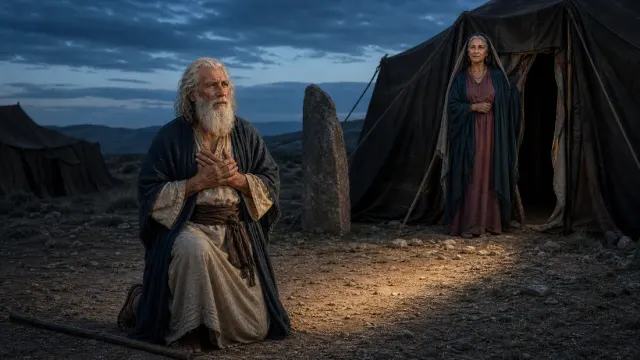
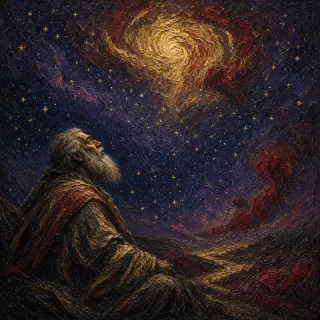
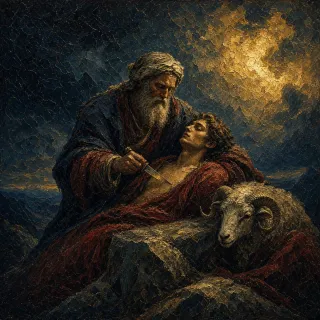
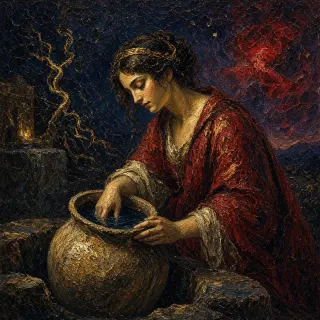
New · FreePlay The Witnesses The in-depth puzzle battle quest through Bible history

People of the Bible

Ishmael

Abraham's first son, named because God heard, and sent into the desert to become twelve princes.

Also called The son of the bondwoman; father of the Ishmaelites

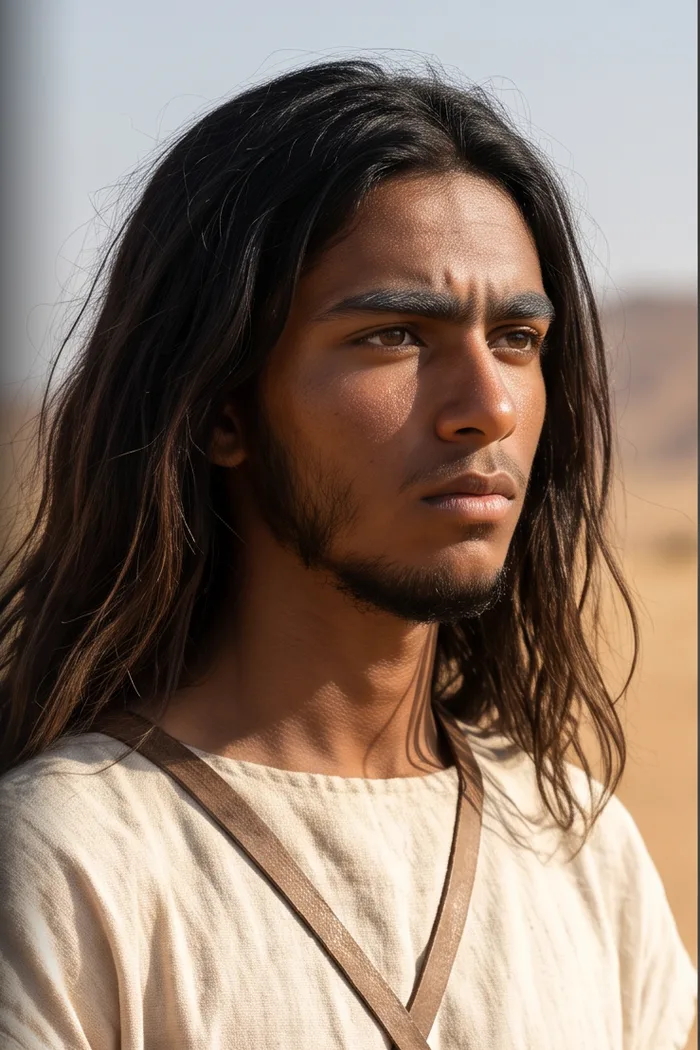
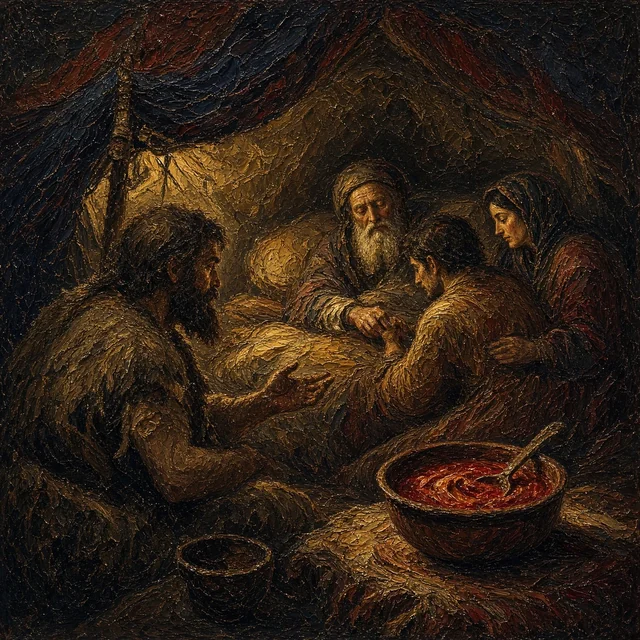
Ishmael is the son of Abraham and Hagar, Sarah's Egyptian maid, born when Abraham was eighty-six. His name, God hears, was given by the angel of the LORD to his mother before his birth, with a promise that he would be a wild man, his hand against every man and every man's hand against him, dwelling in the presence of all his brethren. For thirteen years he is Abraham's only son and heir. Then God tells Abraham that the covenant will pass through a son Sarah will bear, and Abraham's prayer, O that Ishmael might live before thee, is answered with a blessing of its own: twelve princes, and a great nation.

He is circumcised with his father on the day the covenant is given. At Isaac's weaning feast Sarah sees him mocking, and he and his mother are sent into the wilderness with bread and a skin of water. When the water fails God hears the voice of the lad, and he lives. He grows up in the wilderness of Paran as an archer, marries an Egyptian, fathers twelve sons who become the tribes of northern Arabia, and returns once, to stand beside Isaac and bury their father at Machpelah. He dies at a hundred and thirty-seven.

Where he appearsGenesis 16 to 17 · Genesis 21 · Genesis 25

Scroll down to the account
Ishmael

The movements, in the order the text gives them.

The Account of Ishmael

  1. 01

    Genesis 16:11-12

    Named before his birth

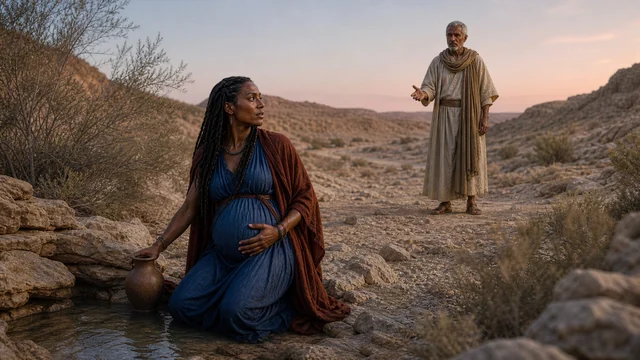
    The angel of the LORD tells Hagar she will bear a son and call his name Ishmael, because the LORD has heard her affliction. He will be a wild man, his hand against every man and every man's hand against him, and he will dwell in the presence of all his brethren.

    He is named before he is born, and not by his father. The angel gives the name to Hagar in the desert: Ishmael, God hears, because the LORD hath heard thy affliction. The name is a record of his mother's rescue, fixed to a man who will spend his life carrying it without remembering the day it was given. The description that follows has been read harshly for centuries, but the Hebrew behind a wild man is the wild donkey, an animal of the open country that no one owns. His hand will be against every man is the life of a people outside settled borders, not a curse of violence. And the last line is placed deliberately: he shall dwell in the presence of all his brethren. Near them. Not absorbed, not erased.

    Verse by verse

    1. 16:11

      Ishmael: God hears. The only person in Genesis named for what God did for his mother.

    2. 16:12

      A wild man: a wild donkey of a man, free-ranging rather than savage. In the presence of all his brethren: the same phrase returns at his death in 25:18.

    Genesis 16:11-12

    King James Version · 2 verses

    16:11And the angel of the LORD said unto her, Behold, thou art with child, and shalt bear a son, and shalt call his name Ishmael; because the LORD hath heard thy affliction.

    16:12And he will be a wild man; his hand will be against every man, and every man’s hand against him; and he shall dwell in the presence of all his brethren.

    Genesis 16:11-12: Named before his birth
  2. 02

    Genesis 16:15-16

    Born to Abram at eighty-six

    Hagar bears Abram a son, and Abram names him Ishmael as the angel had said. For thirteen years he is the only child in the household and the apparent heir of every promise.

    Two verses, and the important detail is easy to miss. Abram called his son's name Ishmael. The name was given to Hagar at a spring in the wilderness with no one else present, and Abram uses it. She told him. Whatever passed between them when she came back, the household took the name from her account of what happened, and the boy carries it. He is Abram's firstborn, and for the next thirteen years he is Abram's only son. The verse that closes the chapter fixes the date with unusual care: Abram was fourscore and six years old. The reader is being given a clock, because the next chapter opens thirteen years later and everything about the boy's standing changes in it.

    Verse by verse

    1. 16:15

      Abram called his son's name Ishmael: he uses the name the angel gave Hagar, which means the account of the spring was told in the camp.

    2. 16:16

      Fourscore and six: eighty-six. Genesis 17:1 opens when Abram is ninety-nine, so Ishmael is thirteen.

    Genesis 16:15-16

    King James Version · 2 verses

    16:15And Hagar bare Abram a son: and Abram called his son’s name, which Hagar bare, Ishmael.

    16:16And Abram was fourscore and six years old, when Hagar bare Ishmael to Abram.

    Genesis 16:15-16: Born to Abram at eighty-six
  3. 03

    Genesis 17:18-27

    O that Ishmael might live before thee

    When God says Sarah will bear the son of the covenant, Abraham pleads for Ishmael. God answers that he has heard: Ishmael is blessed, will be fruitful, will beget twelve princes, and will be a great nation, but the covenant is with Isaac. That day Ishmael, thirteen, is circumcised with his father.

    When God promises a son by Sarah, Abraham's answer is a father's: O that Ishmael might live before thee. He is not asking for a second heir, he is asking that the son he already has not be lost. God's reply divides cleanly and gives Abraham both halves. The covenant will go to Isaac; and as for Ishmael, I have heard thee, which is the boy's own name turned back on his father's prayer. Behold, I have blessed him, and will make him fruitful, twelve princes shall he beget, and I will make him a great nation. Then the chapter does something readers often pass over. Abraham circumcises Ishmael the same day, at thirteen, along with every male in the house. The son who will not inherit the covenant receives its sign in his flesh, from his father's own hand.

    Verse by verse

    1. 17:18

      O that Ishmael might live before thee: Abraham's only recorded prayer for this son, and it is a plea to keep him.

    2. 17:20

      I have heard thee: the verb behind Ishmael's name. God answers the father using the son's name.

    3. 17:20

      Twelve princes: fulfilled by name in 25:13-16, a list of twelve set beside Israel's twelve tribes.

    4. 17:25

      Thirteen years old: old enough to remember it. Descendants of Ishmael have marked circumcision at thirteen since antiquity.

    5. 17:26

      In the selfsame day was Abraham circumcised, and Ishmael his son: father and son together, before Isaac exists.

    Genesis 17:18-27

    King James Version · 10 verses

    17:18And Abraham said unto God, O that Ishmael might live before thee!

    17:19And God said, Sarah thy wife shall bear thee a son indeed; and thou shalt call his name Isaac: and I will establish my covenant with him for an everlasting covenant, and with his seed after him.

    17:20And as for Ishmael, I have heard thee: Behold, I have blessed him, and will make him fruitful, and will multiply him exceedingly; twelve princes shall he beget, and I will make him a great nation.

    17:21But my covenant will I establish with Isaac, which Sarah shall bear unto thee at this set time in the next year.

    17:22And he left off talking with him, and God went up from Abraham.

    17:23And Abraham took Ishmael his son, and all that were born in his house, and all that were bought with his money, every male among the men of Abraham’s house; and circumcised the flesh of their foreskin in the selfsame day, as God had said unto him.

    17:24And Abraham was ninety years old and nine, when he was circumcised in the flesh of his foreskin.

    17:25And Ishmael his son was thirteen years old, when he was circumcised in the flesh of his foreskin.

    17:26In the selfsame day was Abraham circumcised, and Ishmael his son.

    17:27And all the men of his house, born in the house, and bought with money of the stranger, were circumcised with him.

  4. 04

    Genesis 21:8-14

    Mocking, and sent away

    At Isaac's weaning feast Sarah sees the son of Hagar the Egyptian mocking, and demands he be cast out so that he will not be heir with Isaac. The thing is very grievous to Abraham because of his son. God tells him to listen to Sarah, and promises to make a nation of the bondwoman's son too.

    The feast is for Isaac's weaning, and Ishmael is about sixteen. Sarah sees him mocking, a word from the same root as Isaac's name, and the ambiguity is old: playing, laughing, or making sport of the younger boy. Her demand names neither of them, only this bondwoman and her son, and the reason is inheritance: shall not be heir with my son. Abraham's distress is recorded first, and plainly, because of his son. God does not call Sarah right, he tells Abraham to do as she says, and immediately attaches the promise again: also of the son of the bondwoman will I make a nation, because he is thy seed. Then the boy who was circumcised into this household walks out of it with his mother, carrying bread and a skin of water.

    Verse by verse

    1. 21:9

      Mocking: the participle of the verb behind Isaac's name, laughter. Translators have divided over it since antiquity; Paul reads it as persecution in Galatians 4:29.

    2. 21:10

      Shall not be heir: the objection is legal, not personal. A firstborn son of a wife, which Hagar became in 16:3, had a claim.

    3. 21:11

      Because of his son: the text calls Ishmael Abraham's son here, not the bondwoman's, exactly where Sarah refuses to.

    4. 21:13

      Because he is thy seed: the nation is promised on the grounds of fatherhood that Sarah's demand tried to sever.

    Genesis 21:8-14

    King James Version · 7 verses

    21:8And the child grew, and was weaned: and Abraham made a great feast the same day that Isaac was weaned.

    21:9And Sarah saw the son of Hagar the Egyptian, which she had born unto Abraham, mocking.

    21:10Wherefore she said unto Abraham, Cast out this bondwoman and her son: for the son of this bondwoman shall not be heir with my son, even with Isaac.

    21:11And the thing was very grievous in Abraham’s sight because of his son.

    21:12And God said unto Abraham, Let it not be grievous in thy sight because of the lad, and because of thy bondwoman; in all that Sarah hath said unto thee, hearken unto her voice; for in Isaac shall thy seed be called.

    21:13And also of the son of the bondwoman will I make a nation, because he is thy seed.

    21:14And Abraham rose up early in the morning, and took bread, and a bottle of water, and gave it unto Hagar, putting it on her shoulder, and the child, and sent her away: and she departed, and wandered in the wilderness of Beer-sheba.

  5. 05

    Genesis 21:15-21

    God heard the voice of the lad

    The water is spent in the wilderness of Beersheba and Hagar lays him under a shrub. God hears the lad where he is, an angel calls from heaven, and a well is seen. God is with him as he grows; he becomes an archer in the wilderness of Paran and his mother finds him a wife from Egypt.

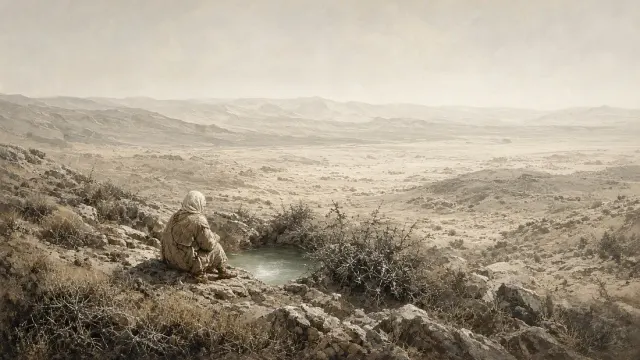
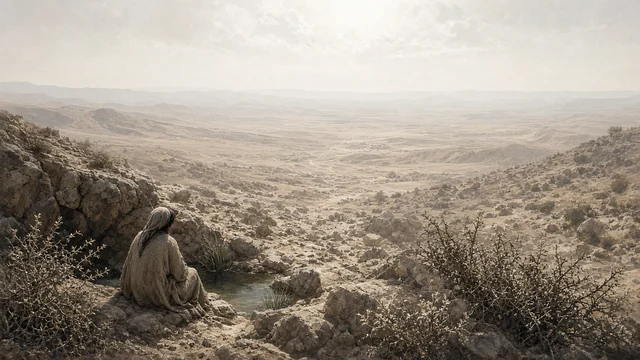
    In the desert the water runs out and his mother puts him under a bush and walks away, unable to watch him die. The rescue comes through his name. God heard the voice of the lad, and the angel says it twice, God hath heard the voice of the lad where he is. The boy is not asked to be anywhere else. What he needed was already beside him, and God opened her eyes, and she saw a well of water. Then four words that decide the rest of his life: God was with the lad. It is the formula used later of Isaac, Joseph and David, and it is not withheld from the son who was sent away. He grows, lives in the wilderness, becomes an archer, and his mother finds him a wife in Egypt, her own country.

    Verse by verse

    1. 21:17

      God heard the voice of the lad: the name Ishmael working as the hinge of the rescue, for the second time in his life.

    2. 21:18

      I will make him a great nation: the promise of 17:20 repeated in the desert, to the mother, over the boy.

    3. 21:20

      God was with the lad: the same phrase used of Isaac in 26:3, Joseph in 39:2 and David in 1 Samuel 18:14.

    4. 21:21

      An archer, in the wilderness of Paran: the wild donkey of 16:12 described as a life rather than a character.

    Genesis 21:15-21

    King James Version · 7 verses

    21:15And the water was spent in the bottle, and she cast the child under one of the shrubs.

    21:16And she went, and sat her down over against him a good way off, as it were a bowshot: for she said, Let me not see the death of the child. And she sat over against him, and lift up her voice, and wept.

    21:17And God heard the voice of the lad; and the angel of God called to Hagar out of heaven, and said unto her, What aileth thee, Hagar? fear not; for God hath heard the voice of the lad where he is.

    21:18Arise, lift up the lad, and hold him in thine hand; for I will make him a great nation.

    21:19And God opened her eyes, and she saw a well of water; and she went, and filled the bottle with water, and gave the lad drink.

    21:20And God was with the lad; and he grew, and dwelt in the wilderness, and became an archer.

    21:21And he dwelt in the wilderness of Paran: and his mother took him a wife out of the land of Egypt.

  6. 06

    Genesis 25:9

    Burying Abraham

    When Abraham dies at a hundred and seventy-five, his sons Isaac and Ishmael bury him in the cave of Machpelah beside Sarah. The two brothers, one sent away and one kept, stand at the same grave.

    One verse, and it undoes a great deal. His sons Isaac and Ishmael buried him in the cave of Machpelah. They are both there. The text puts Isaac first, because the covenant runs through him, but it calls them his sons and lets them stand together at the grave. Ishmael would be about eighty-nine, with a household and twelve sons of his own, and he comes back for his father's burial. Nothing is said about reconciliation, no speech is recorded, and the Book of Genesis offers no comment at all. The fact is left to do its own work: the son who was sent away with a skin of water returns to bury the man who sent him, beside the brother he was sent away from.

    Verse by verse

    1. 25:9

      His sons Isaac and Ishmael: named together, in birth order reversed, at the only event that brings them back into the same sentence.

    2. 25:9

      Machpelah: the cave Abraham bought in chapter 23, the only ground in Canaan he ever owned. Sarah is already buried there.

    Genesis 25:9

    King James Version · 1 verse

    25:9And his sons Isaac and Ishmael buried him in the cave of Machpelah, in the field of Ephron the son of Zohar the Hittite, which is before Mamre;

    Genesis 25:9: Burying Abraham
  7. 07

    Genesis 25:12-18

    The generations of Ishmael

    Genesis gives him his own record: twelve sons by their names, towns and castles, twelve princes according to their nations. He lives a hundred and thirty-seven years, and his people settle from Havilah to Shur, toward Assyria, and he dies in the presence of all his brethren.

    Genesis gives Ishmael a full genealogy, in the same formula it uses for the covenant line: now these are the generations of Ishmael. Twelve sons are named, and the Book of Genesis says plainly what that number means, twelve princes according to their nations, which is the promise of 17:20 paid out in a list. They have towns and castles, they hold territory from Havilah unto Shur, along the caravan routes between Egypt and Assyria. He lives a hundred and thirty-seven years and is gathered unto his people, the phrase used of Abraham, of Isaac, of Jacob. And the last line of his notice is the first line of his life returning: he died in the presence of all his brethren. What the angel said before he was born is recorded as how he ended.

    Verse by verse

    1. 25:12

      The generations of Ishmael: the same formula that opens the covenant genealogies. Hagar is named again, and again as the Egyptian.

    2. 25:16

      Twelve princes according to their nations: 17:20 fulfilled by name, set deliberately beside Israel's twelve.

    3. 25:17

      Gathered unto his people: used of Abraham in 25:8, Isaac in 35:29 and Jacob in 49:33. It is not withheld here.

    4. 25:18

      He died in the presence of all his brethren: the closing words repeat 16:12, so the prophecy is read as description rather than as curse.

    Genesis 25:12-18

    King James Version · 7 verses

    25:12Now these are the generations of Ishmael, Abraham’s son, whom Hagar the Egyptian, Sarah’s handmaid, bare unto Abraham:

    25:13And these are the names of the sons of Ishmael, by their names, according to their generations: the firstborn of Ishmael, Nebajoth; and Kedar, and Adbeel, and Mibsam,

    25:14And Mishma, and Dumah, and Massa,

    25:15Hadar, and Tema, Jetur, Naphish, and Kedemah:

    25:16These are the sons of Ishmael, and these are their names, by their towns, and by their castles; twelve princes according to their nations.

    25:17And these are the years of the life of Ishmael, an hundred and thirty and seven years: and he gave up the ghost and died; and was gathered unto his people.

    25:18And they dwelt from Havilah unto Shur, that is before Egypt, as thou goest toward Assyria: and he died in the presence of all his brethren.

    Genesis 25:12-18: The generations of Ishmael
  8. 08

    Genesis 28:9; 36:3

    Esau's wife

    Esau, seeing that his Canaanite wives displease his parents, goes to Ishmael and marries his daughter Mahalath, sister of Nebajoth. Abraham's two set-aside sons join their families.

    Two small verses tie the two passed-over sons together. Esau has just learned that his Canaanite wives displease his parents and that Jacob has been sent to Padan-aram for a wife from the family. His answer is to go to Ishmael and marry Mahalath, Ishmael's daughter, the sister of Nebajoth. Esau, the firstborn who lost the blessing, marries into the house of the firstborn who lost the covenant. The genealogy of chapter 36 names her Bashemath, one of the several double names in Esau's marriage lists, and the two lines join. Neither man is outside God's care and neither is inside the promise, and Genesis records their alliance without a word of judgement on it.

    Verse by verse

    1. 28:9

      Then went Esau unto Ishmael: to the household, since Ishmael himself dies in 25:17. Esau is trying to please parents he has already disappointed.

    2. 36:3

      Bashemath Ishmael's daughter: the same marriage under a different name. Esau's wives carry two sets of names across chapters 26, 28 and 36.

    Genesis 28:9; 36:3

    King James Version · 2 verses

    28:9Then went Esau unto Ishmael, and took unto the wives which he had Mahalath the daughter of Ishmael Abraham’s son, the sister of Nebajoth, to be his wife.

    36:3And Bashemath Ishmael’s daughter, sister of Nebajoth.

    Genesis 28:9; 36:3: Esau's wife
  9. 09

    Genesis 37:25-28

    The Ishmaelites and Joseph

    A company of Ishmaelites comes from Gilead with camels bearing spices, balm and myrrh, going down to Egypt. Judah proposes selling Joseph to them rather than killing him, and they carry him to Egypt for twenty pieces of silver.

    The brothers sit down to eat beside the pit they have thrown Joseph into, and look up to see a company of Ishmeelites came from Gilead with their camels bearing spicery and balm and myrrh, going to carry it down to Egypt. Judah's proposal is to sell rather than kill, and the price is twenty pieces of silver. The caravan is made of Ishmael's descendants, traders along the road their ancestor's territory straddled, and they carry the covenant's chosen son into Egypt. The family that was sent toward Egypt in chapter 21 delivers Israel's future there in chapter 37. Genesis does not remark on it. It simply arranges the two journeys so a reader who remembers the first will notice the second.

    Verse by verse

    1. 37:25

      Ishmeelites from Gilead: descendants of Ishmael working the trade route from 25:18, between Egypt and Assyria.

    2. 37:27

      He is our brother and our flesh: Judah's argument for selling him. The word brother is doing a great deal of work in a chapter about brothers.

    3. 37:28

      Midianites and Ishmeelites are used of the same caravan here and in 39:1, and both are sons of Abraham, by Keturah and by Hagar.

    Genesis 37:25-28

    King James Version · 4 verses

    37:25And they sat down to eat bread: and they lifted up their eyes and looked, and, behold, a company of Ishmeelites came from Gilead with their camels bearing spicery and balm and myrrh, going to carry it down to Egypt.

    37:26And Judah said unto his brethren, What profit is it if we slay our brother, and conceal his blood?

    37:27Come, and let us sell him to the Ishmeelites, and let not our hand be upon him; for he is our brother and our flesh. And his brethren were content.

    37:28Then there passed by Midianites merchantmen; and they drew and lifted up Joseph out of the pit, and sold Joseph to the Ishmeelites for twenty pieces of silver: and they brought Joseph into Egypt.

    Genesis 37:25-28: The Ishmaelites and Joseph

The people, the places and the rest of Scripture.

Reading Ishmael closely

The people he dealt with

His father loves him. That is stated in the only words Abraham speaks about him, O that Ishmael might live before thee, and in the verse that says the sending away was very grievous in Abraham's sight because of his son. Abraham circumcises him with his own hand, and Ishmael comes back at the end to bury him. Genesis does not report a single word between them, and the relationship is entirely in those three acts.

His mother is the person he shares the desert with, first in her womb and then under a shrub. She is the one who names him, on God's instruction, and the one who finds him a wife. Sarah is his adversary, though the text gives him only one act toward her household, the mocking at the feast, and readers have argued whether it was cruelty or play. Isaac is the brother who displaces him at his weaning, and whom he never speaks to in the text, and beside whom he stands at Machpelah.

God is the one who hears him. The name says it, the angel says it before his birth, and the Book of Genesis says it in the wilderness: God heard the voice of the lad. He is blessed, made fruitful, multiplied and made a nation, all with the same words used of Isaac, and the difference is only the covenant.

Genesis 16
Genesis 16

The wild man

The angel's description of him before his birth is unusual, a wild ass of a man, his hand against every man and every man's hand against him, dwelling before the face of all his brethren. The wild ass in the Bible is the animal of the open desert, untamed and free, that laughs at the city, and the picture is of a people who will not be settled or ruled. The last clause, in the presence of all his brethren, is repeated at his death, and it seems to mean that his descendants will live alongside their kin and in their sight, neither absorbed nor driven out.

The twelve princes fulfil the promise. Nebajoth and Kedar became the great tribes of the north Arabian desert, and Isaiah names both among the flocks and rams that will come to Jerusalem. Tema and Dumah are oases on the caravan roads. The Ishmaelites and the Midianites, both descended from Abraham, are the traders whose camels carry Joseph south. Ishmael's line is the desert edge of Abraham's family, and it never disappears from the account.

Genesis 17
Genesis 17

What came before and what followed

Before Ishmael there is a promise ten years old and a household trying to keep it by its own means. He is the child of that attempt, and for thirteen years no one in the account knows that he is not the heir. Genesis 17 changes everything at once: a new name for his father, a covenant sign in his own flesh, and a brother not yet conceived who will take his place.

After him come the Ishmaelites, the marriage with Esau's family, and the trading company on the road to Egypt. The Bible's later references keep him as the founder of a people: the Chronicler lists his twelve sons, and the psalmist counts the Ishmaelites among those who plot against Israel. Paul, reading the whole account as an allegory of two covenants, makes him the son born after the flesh whose mocking of Isaac is the pattern of every persecution of the children of promise.

Genesis 17

Where the rest of Scripture reaches back

1 Chronicles 1 repeats his generations as part of Israel's record, the sons of Ishmael by name, and calls Abraham's sons Isaac and Ishmael in that order. Psalm 83 names the Ishmaelites and the Hagarenes among the confederacy against Israel. Judges 8 identifies the Midianites Gideon defeats as Ishmaelites by their golden earrings.

Galatians 4 is the one New Testament passage, and it does not use his name. Paul says Abraham had two sons, one of the bondmaid born after the flesh, one of the free woman born by promise; he that was born after the flesh persecuted him that was born after the Spirit; and the Scripture says, cast out the bondwoman and her son, for the son of the bondwoman shall not be heir with the son of the free woman. Paul's point is about law and promise. Genesis, meanwhile, has already recorded that God heard the boy in the desert and made him a nation.

Genesis 17

Why it matters

Ishmael is the first son who is not the son of promise, and the Bible's way of showing that God's choosing of one line does not mean the abandoning of another. He is heard by God twice, once before his birth and once under a shrub in the desert, blessed with fruitfulness and princes, and given a nation, and none of it comes through Isaac. Genesis gives him a genealogy of his own, the generations of Ishmael, set beside Isaac's.

His account is also the first of the pattern Genesis repeats: the elder set aside and the younger chosen, not for merit but by promise. Paul makes him the type in Galatians 4 of the child born after the flesh, persecuting the child born after the Spirit, and reads Sarah's demand as Scripture's verdict on the law's claim to the inheritance. The Ishmaelites who buy Joseph from his brothers and carry him to Egypt are his descendants, so that the son sent away into the desert is, two generations later, the means by which the son of promise's line is preserved.

5 songs

The music

Every song in the catalogue whose passage falls inside these chapters.

  1. Genesis 15:1-17:27

    Count the Stars

    Play hereOpen song pageRead lyrics
  2. Genesis 16; 21:8-21

    The God Who Sees

  3. Genesis 20:1-22:24

    The LORD Will Provide

  4. Genesis 23:1-25:18

    Led to the Well

  5. Genesis 25:19-34; 27

    The Blessing Taken

Nearby

All the people

Report an error on this page