New · FreePlay The Witnesses The in-depth puzzle battle quest through Bible history

People of the Bible

Lot

Chose the well-watered plain, pitched his tent toward Sodom, and had to be dragged out by the hand.

Also called The son of Haran, Abraham's nephew; just Lot, in 2 Peter

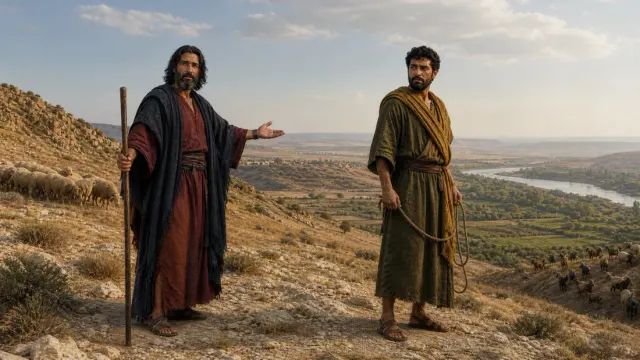
Lot is the son of Haran, Abraham's brother who died in Ur before the family left. Terah takes the fatherless boy with him to Haran, and Abraham takes him on to Canaan and down to Egypt and back. When their herds grow too large to share the land, Abraham offers him the choice and Lot lifts up his eyes, sees the plain of Jordan well watered like the garden of the LORD, and takes it. He pitches his tent toward Sodom. By the next chapter he is living in it.

He is carried off when four kings sack the city and is rescued by Abraham. He is sitting in the gate of Sodom when two angels come, and he takes them in and stands in his doorway against a mob to protect them, offering them his daughters instead. The angels blind the crowd, warn him to flee, and when he lingers they take him, his wife and his two daughters by the hand and lead them out. His wife looks back and becomes a pillar of salt. He begs to go to Zoar rather than the mountains, then is afraid of Zoar and goes to the mountains, where his daughters make him drunk and bear him Moab and Ammon. That is the last the Bible shows of him. Peter calls him just Lot, a righteous man whose soul was vexed day after day by what he saw.

Where he appearsGenesis 12 to 19

Scroll down to the account
Lot

The movements, in the order the text gives them.

The Account of Lot

  1. 01

    Genesis 11:27-31; 12:4-5

    The fatherless nephew

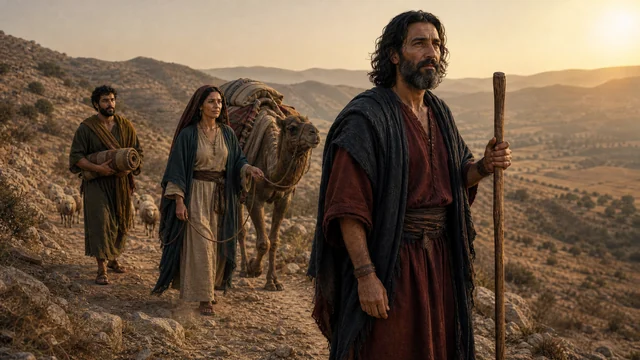
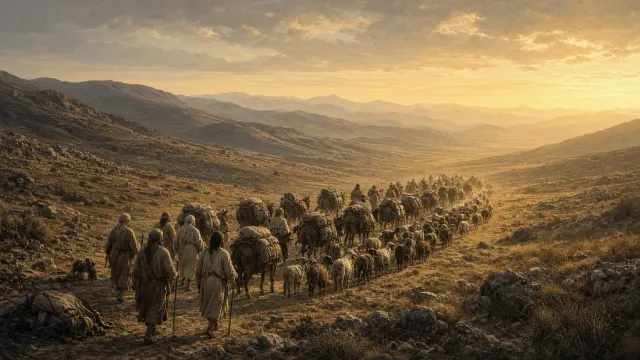
    Haran dies in Ur before his father Terah, leaving Lot. Terah takes Lot to Haran, and when Abram is called, Lot goes with him into Canaan with all their substance.

    Lot is introduced as a grandson without a father. Haran died before his father Terah in Ur, and Lot the son of Haran is taken into the household of his grandfather and then of his uncle. When Terah leaves Ur he takes Abram, and Lot the son of Haran his son's son, and Sarai; when Abram leaves Haran at seventy-five, Lot went with him. He is the only relative Abram brings out of Mesopotamia, and for the first years of the account he is the nearest thing Abram has to an heir. The text says nothing of his character yet, only that he came along, with substance and souls of his own, into the land of Canaan.

    Verse by verse

    1. 11:28

      Haran died before his father: the first orphan in the Bible is Lot.

    2. 11:31

      Lot the son of Haran his son's son: the Book of Genesis spells out the relation so that the reader knows why Abram is responsible for him.

    3. 12:4

      And Lot went with him: the only companion named. Abram is seventy-five and childless.

    4. 12:5

      Lot his brother's son: brother's son, nephew, though 14:14 will call him Abram's brother.

    Genesis 11:27-31; 12:4-5

    King James Version · 7 verses

    11:27Now these are the generations of Terah: Terah begat Abram, Nahor, and Haran; and Haran begat Lot.

    11:28And Haran died before his father Terah in the land of his nativity, in Ur of the Chaldees.

    11:29And Abram and Nahor took them wives: the name of Abram’s wife was Sarai; and the name of Nahor’s wife, Milcah, the daughter of Haran, the father of Milcah, and the father of Iscah.

    11:30But Sarai was barren; she had no child.

    11:31And Terah took Abram his son, and Lot the son of Haran his son’s son, and Sarai his daughter in law, his son Abram’s wife; and they went forth with them from Ur of the Chaldees, to go into the land of Canaan; and they came unto Haran, and dwelt there.

    12:4So Abram departed, as the LORD had spoken unto him; and Lot went with him: and Abram was seventy and five years old when he departed out of Haran.

    12:5And Abram took Sarai his wife, and Lot his brother’s son, and all their substance that they had gathered, and the souls that they had gotten in Haran; and they went forth to go into the land of Canaan; and into the land of Canaan they came.

  2. 02

    Genesis 13:5-13

    Lot lifted up his eyes

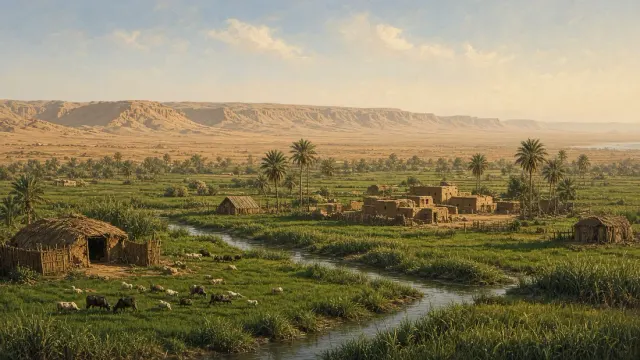
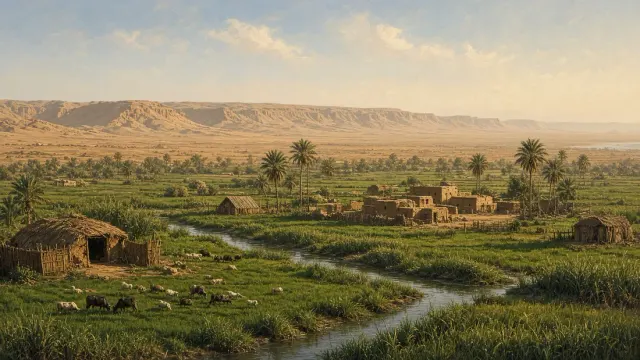
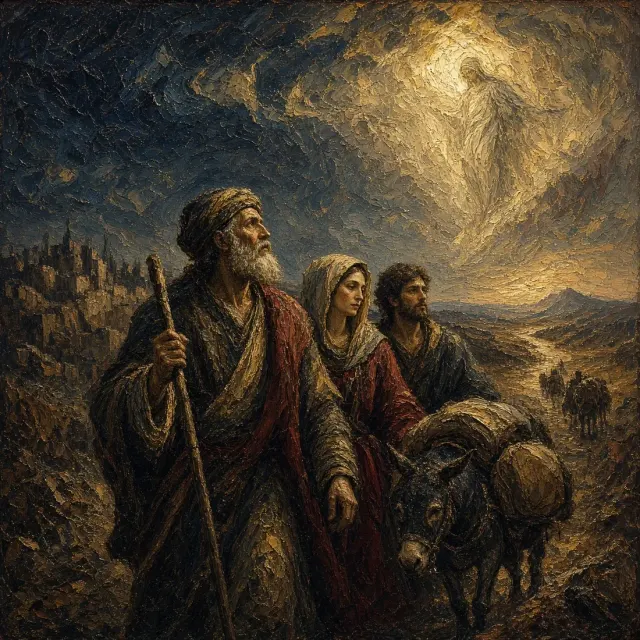
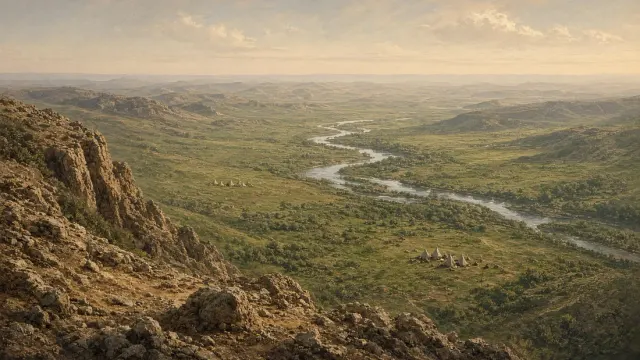
    Their herdsmen quarrel, and Abram lets Lot choose. Lot sees the plain of Jordan, well watered everywhere like the garden of the LORD and like Egypt, and takes it. He journeys east, dwells in the cities of the plain, and pitches his tent toward Sodom, whose men were wicked and sinners before the LORD exceedingly.

    Both men are rich, and the land cannot bear them. Their herdmen quarrel, and Abram offers Lot the choice of the whole country. Lot lifted up his eyes, and beheld all the plain of Jordan, that it was well watered every where, before the LORD destroyed Sodom and Gomorrah, even as the garden of the LORD, like the land of Egypt. The Book of Genesis lets us see what Lot sees, and then reminds us of what Lot cannot: that this garden is about to be destroyed. Lot chooses the plain, the brothers separate, and Lot pitched his tent toward Sodom. The verse that follows is the Book of Genesis's warning: but the men of Sodom were wicked and sinners before the LORD exceedingly.

    Nothing Lot does here is a sin. He was offered a choice and took the better land. But the account is arranged so that the reader sees a man choosing by what his eyes tell him, in the direction of a city whose character is known, and Abram staying in the hills with a promise. By chapter 14 Lot dwelt in Sodom; by chapter 19 he sits in its gate. The tent pitched toward the city ends inside it.

    Verse by verse

    1. 13:7

      The Canaanite and the Perizzite dwelled then in the land: the quarrel of the two Hebrews is watched by the people whose land it is.

    2. 13:9

      Is not the whole land before thee: Abram, the elder and the one with the promise, gives Lot first choice.

    3. 13:10

      As the garden of the LORD, like the land of Egypt: the plain is compared to Eden and to the place they just left. Before the LORD destroyed: the Book of Genesis knows the ending.

    4. 13:11

      Lot chose him: chose for himself. The verb of self-interest.

    5. 13:12

      Pitched his tent toward Sodom: the direction, not yet the address. 14:12 will say he dwelt in Sodom.

    6. 13:13

      Wicked and sinners before the LORD exceedingly: the Book of Genesis's verdict, placed right after Lot's choice.

    Genesis 13:5-13

    King James Version · 9 verses

    13:5And Lot also, which went with Abram, had flocks, and herds, and tents.

    13:6And the land was not able to bear them, that they might dwell together: for their substance was great, so that they could not dwell together.

    13:7And there was a strife between the herdmen of Abram’s cattle and the herdmen of Lot’s cattle: and the Canaanite and the Perizzite dwelled then in the land.

    13:8And Abram said unto Lot, Let there be no strife, I pray thee, between me and thee, and between my herdmen and thy herdmen; for we be brethren.

    13:9Is not the whole land before thee? separate thyself, I pray thee, from me: if thou wilt take the left hand, then I will go to the right; or if thou depart to the right hand, then I will go to the left.

    13:10And Lot lifted up his eyes, and beheld all the plain of Jordan, that it was well watered every where, before the LORD destroyed Sodom and Gomorrah, even as the garden of the LORD, like the land of Egypt, as thou comest unto Zoar.

    13:11Then Lot chose him all the plain of Jordan; and Lot journeyed east: and they separated themselves the one from the other.

    13:12Abram dwelled in the land of Canaan, and Lot dwelled in the cities of the plain, and pitched his tent toward Sodom.

    13:13But the men of Sodom were wicked and sinners before the LORD exceedingly.

    Genesis 13:5-13: Lot lifted up his eyes
  3. 03

    Genesis 14:12-16

    Taken, and taken back

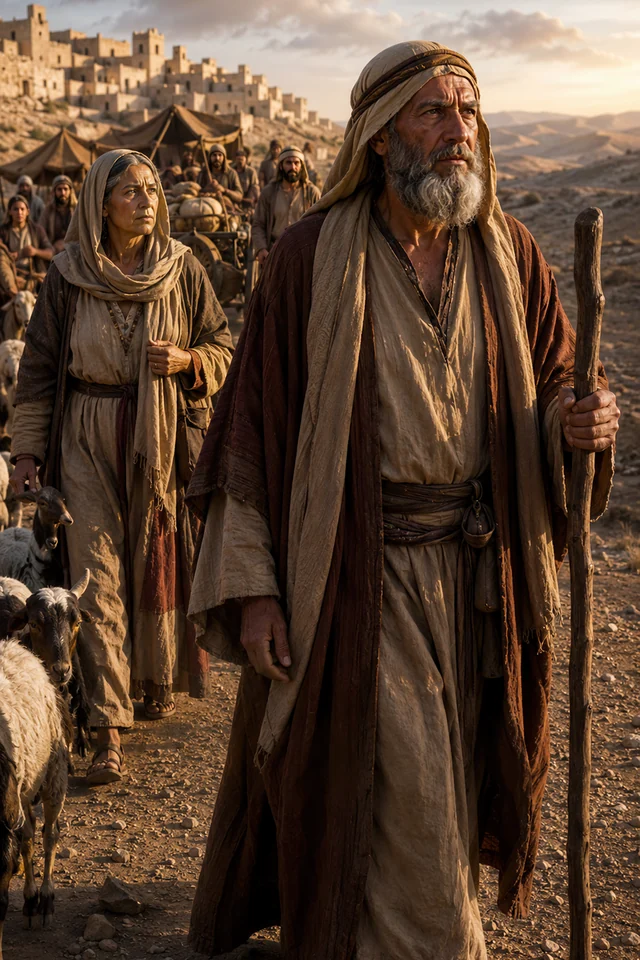
    Four kings from the east defeat the cities of the plain and carry off Lot, who dwelt in Sodom, with his goods. Abram arms his household, pursues to Dan and beyond Damascus, and brings back Lot, his goods, the women and the people.

    When the four kings of the east plunder Sodom, they took Lot, Abram's brother's son, who dwelt in Sodom, and his goods, and departed. The phrase who dwelt in Sodom tells us how far the tent has moved. Lot is now a citizen of the city he pitched toward, and he suffers its fate. Abram, told by one who escaped, arms his household, pursues the kings to Dan and beyond Damascus, and brought back all the goods, and also brought again his brother Lot, and his goods, and the women also, and the people.

    The rescue costs Abram a night raid and puts him in the path of the king of Sodom, whose goods he refuses. Lot says nothing in the chapter. He is rescued from the consequences of his choice and, the next time we see him, he is back in Sodom.

    Verse by verse

    1. 14:12

      Who dwelt in Sodom: the tent has become a house. The kings take him as they take the city's goods.

    2. 14:14

      His brother: kinsman. Abram treats the nephew as a brother and risks everything for him.

    3. 14:16

      Brought again his brother Lot: the first rescue. The second, in chapter 19, will be by angels.

    Genesis 14:12-16

    King James Version · 5 verses

    14:12And they took Lot, Abram’s brother’s son, who dwelt in Sodom, and his goods, and departed.

    14:13And there came one that had escaped, and told Abram the Hebrew; for he dwelt in the plain of Mamre the Amorite, brother of Eshcol, and brother of Aner: and these were confederate with Abram.

    14:14And when Abram heard that his brother was taken captive, he armed his trained servants, born in his own house, three hundred and eighteen, and pursued them unto Dan.

    14:15And he divided himself against them, he and his servants, by night, and smote them, and pursued them unto Hobah, which is on the left hand of Damascus.

    14:16And he brought back all the goods, and also brought again his brother Lot, and his goods, and the women also, and the people.

    Genesis 14:12-16: Taken, and taken back
  4. 04

    Genesis 19:1-11

    In the gate of Sodom

    Two angels arrive at evening and Lot, sitting in the gate, presses them to stay in his house. The men of the city surround it and demand the visitors. Lot goes out, shuts the door behind him, and offers his two daughters instead. The angels pull him in and strike the crowd blind.

    Two of the three visitors who ate with Abraham come to Sodom at evening, and Lot sat in the gate of Sodom, the place where a city's elders sat to judge. He has become a man of standing. He rises, bows, and presses hospitality on the strangers as Abraham did, and when they decline he presses harder, and they come in and he makes them a feast. Then the men of Sodom, both old and young, all the people from every quarter, surround the house and demand the visitors, that we may know them.

    Lot goes out, shuts the door behind him, and calls them brethren. He begs them not to do so wickedly, and then makes the offer that has appalled readers ever since: behold now, I have two daughters which have not known man; let me bring them out unto you. The code of hospitality that made a guest's safety absolute has driven him to sacrifice his own children, and the crowd answers by turning on him: this one fellow came in to sojourn, and he will needs be a judge. After all his years in Sodom he is still the foreigner. The men in the house pull him in, shut the door, and strike the crowd with blindness, so that they weary themselves to find the door. Peter says Lot was vexed with the filthy conversation of the wicked day after day; this is the night the vexation reaches his own threshold.

    Verse by verse

    1. 19:1

      Two angels: the third visitor of chapter 18, the LORD himself, stayed with Abraham. Sat in the gate: the seat of the city's elders.

    2. 19:3

      He pressed upon them greatly: Lot knows what the night in Sodom's street would bring.

    3. 19:5

      That we may know them: the sexual sense, as in 4:1. Jude 7 names the sin as going after strange flesh.

    4. 19:8

      I have two daughters: the offer is the measure of how far Sodom has bent him. The text records it without comment.

    5. 19:9

      This one fellow came in to sojourn: to the men of Sodom, Lot is still an outsider who presumes to judge.

    6. 19:11

      Smote the men with blindness: a dazzling, as in 2 Kings 6:18. They keep groping for the door.

    Genesis 19:1-11

    King James Version · 11 verses

    19:1And there came two angels to Sodom at even; and Lot sat in the gate of Sodom: and Lot seeing them rose up to meet them; and he bowed himself with his face toward the ground;

    19:2And he said, Behold now, my lords, turn in, I pray you, into your servant’s house, and tarry all night, and wash your feet, and ye shall rise up early, and go on your ways. And they said, Nay; but we will abide in the street all night.

    19:3And he pressed upon them greatly; and they turned in unto him, and entered into his house; and he made them a feast, and did bake unleavened bread, and they did eat.

    19:4But before they lay down, the men of the city, even the men of Sodom, compassed the house round, both old and young, all the people from every quarter:

    19:5And they called unto Lot, and said unto him, Where are the men which came in to thee this night? bring them out unto us, that we may know them.

    19:6And Lot went out at the door unto them, and shut the door after him,

    19:7And said, I pray you, brethren, do not so wickedly.

    19:8Behold now, I have two daughters which have not known man; let me, I pray you, bring them out unto you, and do ye to them as is good in your eyes: only unto these men do nothing; for therefore came they under the shadow of my roof.

    19:9And they said, Stand back. And they said again, This one fellow came in to sojourn, and he will needs be a judge: now will we deal worse with thee, than with them. And they pressed sore upon the man, even Lot, and came near to break the door.

    19:10But the men put forth their hand, and pulled Lot into the house to them, and shut to the door.

    19:11And they smote the men that were at the door of the house with blindness, both small and great: so that they wearied themselves to find the door.

  5. 05

    Genesis 19:12-22

    Led out by the hand

    The angels tell him to gather his family and flee. His sons-in-law think he is joking. At dawn he lingers, and the men take him, his wife and his daughters by the hand, the LORD being merciful to him, and set him outside the city. Escape for thy life, look not behind thee. He begs for Zoar, the little city, and is granted it.

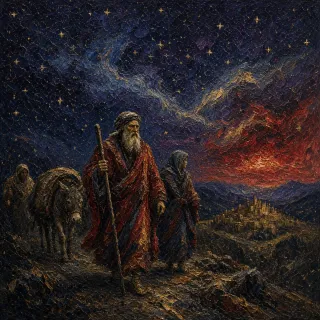
    The angels tell Lot to gather whoever is his, for we will destroy this place, because the cry of them is waxen great before the face of the LORD. Lot goes out to his sons-in-law, the men who were to marry his daughters, and tells them to get out, and he seemed as one that mocked unto his sons in law. He has no credibility in Sodom, even with his own family. At dawn the angels hasten him, and while he lingered, the men laid hold upon his hand, and upon the hand of his wife, and upon the hand of his two daughters; the LORD being merciful unto him. He is dragged out by the wrist.

    Outside the city, told to escape to the mountain, Lot bargains: I cannot escape to the mountain, lest some evil take me; behold, this city is near to flee unto, and it is a little one. He is negotiating with angels for a smaller Sodom. They grant it, Zoar, the little one, and say they can do nothing till he is there. The whole passage is mercy dragging a reluctant man to safety, and the Book of Genesis's phrase, the LORD being merciful unto him, is the reason Lot survives at all. 2 Peter calls him just Lot; the chapter shows what that justice looked like, delivered, not deserving.

    Verse by verse

    1. 19:14

      As one that mocked: Lot's warning sounds like a joke to men who have watched him live among them.

    2. 19:16

      While he lingered: the delay is his. Laid hold upon his hand: the rescue is by force. The LORD being merciful: the Book of Genesis's explanation.

    3. 19:17

      Look not behind thee: the command Lot's wife will break. Escape to the mountain: where he will end up anyway, in verse 30.

    4. 19:20

      Is it not a little one: Lot's plea for Zoar, whose name means small. He asks for a city because he cannot face the wilderness.

    5. 19:22

      I cannot do any thing till thou be come thither: judgement waits on one man's safety, as it waited on ten righteous in chapter 18.

    Genesis 19:12-22

    King James Version · 11 verses

    19:12And the men said unto Lot, Hast thou here any besides? son in law, and thy sons, and thy daughters, and whatsoever thou hast in the city, bring them out of this place:

    19:13For we will destroy this place, because the cry of them is waxen great before the face of the LORD; and the LORD hath sent us to destroy it.

    19:14And Lot went out, and spake unto his sons in law, which married his daughters, and said, Up, get you out of this place; for the LORD will destroy this city. But he seemed as one that mocked unto his sons in law.

    19:15And when the morning arose, then the angels hastened Lot, saying, Arise, take thy wife, and thy two daughters, which are here; lest thou be consumed in the iniquity of the city.

    19:16And while he lingered, the men laid hold upon his hand, and upon the hand of his wife, and upon the hand of his two daughters; the LORD being merciful unto him: and they brought him forth, and set him without the city.

    19:17And it came to pass, when they had brought them forth abroad, that he said, Escape for thy life; look not behind thee, neither stay thou in all the plain; escape to the mountain, lest thou be consumed.

    19:18And Lot said unto them, Oh, not so, my Lord:

    19:19Behold now, thy servant hath found grace in thy sight, and thou hast magnified thy mercy, which thou hast shewed unto me in saving my life; and I cannot escape to the mountain, lest some evil take me, and I die:

    19:20Behold now, this city is near to flee unto, and it is a little one: Oh, let me escape thither, (is it not a little one?) and my soul shall live.

    19:21And he said unto him, See, I have accepted thee concerning this thing also, that I will not overthrow this city, for the which thou hast spoken.

    19:22Haste thee, escape thither; for I cannot do any thing till thou be come thither. Therefore the name of the city was called Zoar.


  6. 06

    Genesis 19:23-29

    The pillar of salt

    The sun rises as Lot enters Zoar, and the LORD rains brimstone and fire on Sodom and Gomorrah. Lot's wife looks back from behind him and becomes a pillar of salt. Abraham, looking from Hebron, sees the smoke of the land go up like the smoke of a furnace. God remembered Abraham, and sent Lot out.

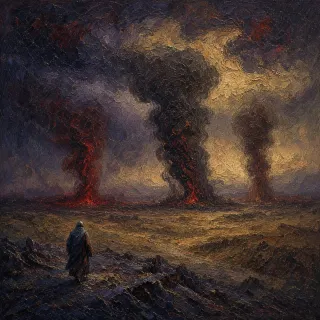
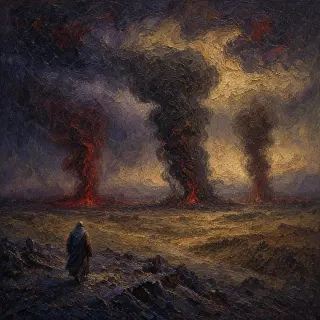
    The sun rises as Lot enters Zoar, and the LORD rains brimstone and fire upon Sodom and Gomorrah out of heaven, overthrowing the cities, the plain, the inhabitants and the very ground that grew things. Then the sentence about Lot's wife, eight words in Hebrew: but his wife looked back from behind him, and she became a pillar of salt. She had been told not to look. Whether she looked in longing or in disbelief, she was still turned toward the city when its judgement fell, and Jesus makes her three words of warning: remember Lot's wife.

    The chapter then goes back to Abraham, standing in the morning at the place where he had bargained with God, looking toward the smoke of the plain going up as the smoke of a furnace. And the Book of Genesis gives the reason Lot lives: God remembered Abraham, and sent Lot out of the midst of the overthrow. Abraham had stopped at ten righteous; God saved his nephew for Abraham's sake, not for Lot's. The salt of the Dead Sea's shore and the pillars of rock along it have been shown as Lot's wife since ancient times.

    Verse by verse

    1. 19:24

      Brimstone and fire from the LORD out of heaven: the judgement is from above, not from the ground. Deuteronomy 29:23 and Jude 7 make it the pattern of final judgement.

    2. 19:26

      Looked back from behind him: she was following, and turned. Luke 17:32, remember Lot's wife, is the shortest verse of warning in the gospels.

    3. 19:27-28

      Abraham gat up early: the intercessor watches the answer to his prayer rise as smoke.

    4. 19:29

      God remembered Abraham: Lot's deliverance is credited to another man's standing with God.

    Genesis 19:23-29

    King James Version · 7 verses

    19:23The sun was risen upon the earth when Lot entered into Zoar.

    19:24Then the LORD rained upon Sodom and upon Gomorrah brimstone and fire from the LORD out of heaven;

    19:25And he overthrew those cities, and all the plain, and all the inhabitants of the cities, and that which grew upon the ground.

    19:26But his wife looked back from behind him, and she became a pillar of salt.

    19:27And Abraham gat up early in the morning to the place where he stood before the LORD:

    19:28And he looked toward Sodom and Gomorrah, and toward all the land of the plain, and beheld, and, lo, the smoke of the country went up as the smoke of a furnace.

    19:29And it came to pass, when God destroyed the cities of the plain, that God remembered Abraham, and sent Lot out of the midst of the overthrow, when he overthrew the cities in the which Lot dwelt.

    Genesis 19:23-29: The pillar of salt
  7. 07

    Genesis 19:30-38

    The cave

    Afraid to stay in Zoar, Lot goes up into the mountains with his daughters and lives in a cave. Believing there is no man left to give them children, the daughters make their father drink wine on two nights and lie with him. The elder bears Moab, the younger Ben-ammi, the fathers of the Moabites and Ammonites.

    Lot went up out of Zoar, and dwelt in the mountain, for he feared to dwell in Zoar. The man who begged for a city is afraid of it, and ends in a cave with his two daughters, the mountain he refused. What follows is told without softening. The firstborn says that there is not a man in the earth to come in unto us, as though the world had ended with Sodom, and proposes to make their father drink wine and lie with him, that we may preserve seed of our father. Two nights, two daughters, and Lot perceived not when she lay down, nor when she arose. He is drunk both times, and the text holds him to it while giving the initiative to the daughters.

    The sons are Moab, from father, and Ben-ammi, son of my people, the fathers of the Moabites and the Ammonites, Israel's neighbours east of the Dead Sea. The chapter ends there, and Lot is never mentioned again in Genesis. He has no burial, no age, no last word. The daughters who were offered to the mob in verse 8 take their father in verse 33, and the account lets the symmetry stand.

    Verse by verse

    1. 19:30

      He feared to dwell in Zoar: the city he bargained for. He ends in the mountain he was first sent to.

    2. 19:31

      Not a man in the earth: the daughters believe the whole world was destroyed, as Noah's had been.

    3. 19:33

      He perceived not: the phrase is repeated for the second night. Lot's drunkenness echoes Noah's in 9:21.

    4. 19:37-38

      Moab and Ben-ammi: Moabites and Ammonites, named without disguise. Ruth the Moabitess descends from this cave and enters David's line.

    Genesis 19:30-38

    King James Version · 9 verses

    19:30And Lot went up out of Zoar, and dwelt in the mountain, and his two daughters with him; for he feared to dwell in Zoar: and he dwelt in a cave, he and his two daughters.

    19:31And the firstborn said unto the younger, Our father is old, and there is not a man in the earth to come in unto us after the manner of all the earth:

    19:32Come, let us make our father drink wine, and we will lie with him, that we may preserve seed of our father.

    19:33And they made their father drink wine that night: and the firstborn went in, and lay with her father; and he perceived not when she lay down, nor when she arose.

    19:34And it came to pass on the morrow, that the firstborn said unto the younger, Behold, I lay yesternight with my father: let us make him drink wine this night also; and go thou in, and lie with him, that we may preserve seed of our father.

    19:35And they made their father drink wine that night also: and the younger arose, and lay with him; and he perceived not when she lay down, nor when she arose.

    19:36Thus were both the daughters of Lot with child by their father.

    19:37And the firstborn bare a son, and called his name Moab: the same is the father of the Moabites unto this day.

    19:38And the younger, she also bare a son, and called his name Ben-ammi: the same is the father of the children of Ammon unto this day.

  8. 08

    Deuteronomy 2:9, 19

    The children of Lot

    On the way to Canaan Israel is told not to fight Moab or Ammon or take their land, because the LORD has given Ar to the children of Lot for a possession. Lot's descendants keep their inheritance by God's word.

    Four hundred years later, as Israel skirts the lands east of the Jordan on the way to Canaan, God tells Moses to leave two nations alone. Distress not the Moabites, neither contend with them in battle, for I will not give thee of their land for a possession, because I have given Ar unto the children of Lot for a possession. And again of Ammon: I have given it unto the children of Lot. The sons born in the cave have become nations with a land grant from God, and Israel may not touch it. Lot's descendants are called the children of Lot twice, and their inheritance is spoken of in the same terms as Israel's. The man who left Abraham for the plain is remembered by God as a kinsman whose children have rights.

    Verse by verse

    1. 2:9

      The children of Lot: Moab. Ar is the Moabite capital. God gives land to nations outside the covenant too.

    2. 2:19

      The children of Ammon: the second nation from the cave. Israel's kinship with both is the reason for restraint, as with Edom in 2:4-5.

    Deuteronomy 2:9, 19

    King James Version · 2 verses

    2:9And the LORD said unto me, Distress not the Moabites, neither contend with them in battle: for I will not give thee of their land for a possession; because I have given Ar unto the children of Lot for a possession.

    2:19And when thou comest nigh over against the children of Ammon, distress them not, nor meddle with them: for I will not give thee of the land of the children of Ammon any possession; because I have given it unto the children of Lot for a possession.

    Deuteronomy 2:9, 19: The children of Lot
  9. 09

    Luke 17:28-32; 2 Peter 2:6-8

    The days of Lot

    Jesus says it will be as in the days of Lot, when people ate, drank, bought, sold, planted and built until the day Lot went out of Sodom and fire fell, and adds: remember Lot's wife. Peter says God delivered just Lot, vexed with the filthy conversation of the wicked, as an example that the Lord knows how to deliver the godly.

    Jesus uses Lot's day as a picture of the day of the Son of man. They did eat, they drank, they bought, they sold, they planted, they builded; but the same day that Lot went out of Sodom it rained fire and brimstone from heaven, and destroyed them all. The point is the ordinariness of the last morning, and the suddenness. Then the warning to those on the housetop and in the field not to turn back for their goods, and the three words: remember Lot's wife. Jesus takes the account as history and its lesson as urgent.

    Peter's reading is kinder to Lot than Genesis seems to be. God turned the cities of Sodom and Gomorrah into ashes as an example, and delivered just Lot, vexed with the filthy conversation of the wicked, for that righteous man dwelling among them, in seeing and hearing, vexed his righteous soul from day to day with their unlawful deeds. Three times Peter calls him righteous. He was tormented by the city he lived in and did not leave it, and God got him out. Peter's conclusion is the doctrine the whole account teaches: the Lord knoweth how to deliver the godly out of temptations, and to reserve the unjust unto the day of judgement.

    Verse by verse

    1. 17:28-29

      Six ordinary verbs, and then fire. Jesus pairs Lot's day with Noah's in verses 26-27.

    2. 17:31

      Let him not return back: the goods left in the house are Sodom's goods. Lot's wife turned for them.

    3. 2:6

      An ensample: Sodom is the standing example of judgement, as in Jude 7 and Isaiah 1:9.

    4. 2:7-8

      Just Lot, that righteous man, his righteous soul: Peter's verdict, which readers of Genesis 19 have had to reconcile with the cave.

    Luke 17:28-32; 2 Peter 2:6-8

    King James Version · 8 verses

    17:28Likewise also as it was in the days of Lot; they did eat, they drank, they bought, they sold, they planted, they builded;

    17:29But the same day that Lot went out of Sodom it rained fire and brimstone from heaven, and destroyed them all.

    17:30Even thus shall it be in the day when the Son of man is revealed.

    17:31In that day, he which shall be upon the housetop, and his stuff in the house, let him not come down to take it away: and he that is in the field, let him likewise not return back.

    17:32Remember Lot’s wife.

    2:6And turning the cities of Sodom and Gomorrha into ashes condemned them with an overthrow, making them an ensample unto those that after should live ungodly;

    2:7And delivered just Lot, vexed with the filthy conversation of the wicked:

    2:8(For that righteous man dwelling among them, in seeing and hearing, vexed his righteous soul from day to day with their unlawful deeds;)

The people, the places and the rest of Scripture.

Reading Lot closely

The people he dealt with

Abraham is the uncle who raised him, brought him to Canaan, gave him first choice of the land, rescued him from an army, and argued with God for his city. Lot is never shown thanking him. When they part in Genesis 13 the text says they separated themselves the one from the other, and Lot does not appear in Abraham's account again except as the reason for the rescue and the reason for the bargaining. The relationship runs entirely one way, and that is the point the writer of Hebrews would later make about Abraham's generosity.

His wife is unnamed and speaks no word. She is led out by the hand with the rest of the family, and she looks back, and the text gives her no motive. Jesus makes her the warning for anyone who, on the day of the Son of Man, would turn back for what is in the house. His sons-in-law laugh at him. His two daughters are offered to a mob by their father and later make their father the instrument of their scheme in a cave; the account does not excuse either act.

The men of Sodom are the crowd at his door, every man of the city, young and old, and Lot's plea to them, I pray you, brethren, do not so wickedly, is the voice of a man who has lived among them long enough to call them brothers. The two angels are the only people in the chapter who are kind to him, and they have to force him to accept it.

Genesis 12
Genesis 12

Why Peter calls him righteous

Nothing in Genesis calls Lot righteous. He chooses by sight, lives in Sodom, offers his daughters, lingers, bargains for a smaller escape, and ends in a cave. Yet 2 Peter 2 calls him just Lot three times in two verses: delivered, vexed with the filthy conversation of the wicked, a righteous man who in seeing and hearing vexed his righteous soul from day to day with their unlawful deeds. Peter is not describing Lot's conduct. He is describing Lot's distress. A man who could not stand what he saw, and who did not leave, is still a man who could not stand it.

Genesis gives the reason he was saved in one clause: God remembered Abraham, and sent Lot out of the midst of the overthrow. Lot's rescue is Abraham's intercession answered. Peter's point is the same seen from the other side: the Lord knows how to deliver the godly out of temptation, even when the godly have made their own escape harder at every turn.

Genesis 12
Genesis 12

What came before and what followed

Before Lot is the death of his father in Ur, which is why he travels with Abraham at all. He is the only family Abraham has apart from Sarah, and for a time he may have looked like the heir; Abraham's complaint in Genesis 15 that his heir is a servant comes only after Lot has gone to Sodom.

After him come two nations. Moab and Ammon settle east of the Dead Sea, and their account with Israel runs through the whole Old Testament: Balak the Moabite king who hires Balaam, Eglon whom Ehud kills, Ruth the Moabitess who becomes David's great-grandmother, Nahash the Ammonite whom Saul defeats, the Ammonite gods Solomon builds high places for, and the oracles of Amos, Jeremiah, Ezekiel and Zephaniah against both. The cave in the mountains is the beginning of all of it, and the Bible, which does not hide where Moab came from, still puts a Moabite in the line of Christ.

Genesis 13

Where the rest of Scripture reaches back

Deuteronomy twice calls Moab and Ammon the children of Lot and forbids Israel to take their land. Psalm 83 lists the children of Lot among the nations conspiring against Israel. Those are the Old Testament's only uses of his name outside Genesis, and both treat him as the father of nations rather than as a man.

Jesus uses him as a man. In Luke 17 the days of Lot stand beside the days of Noah as the picture of a world going about its business until judgment fell in a single day, and the command to remember Lot's wife is the shortest sermon in the Gospels. 2 Peter 2 sets him between the flood and the false teachers of Peter's day as the proof that God can rescue the righteous from the middle of a doomed city. The overthrow of Sodom itself is the Bible's standing image of judgment, in Isaiah, Jeremiah, Ezekiel, Amos, the Gospels, Romans, Jude and Revelation, and every one of those passages assumes the reader knows who was led out of it by the hand.

Genesis 13
Genesis 14

Why it matters

Lot is the Bible's picture of a believer who chose where to live by what he could see. He is never called wicked. He is called righteous, by Peter, and his account is what righteousness looks like when it settles in a city like Sodom: vexed, compromised, offering his daughters to a mob, lingering when told to run, and saved by grace and a hand on his arm. Every reader who has watched a good man drift will know him.

His account is also the frame for the Bible's teaching on Sodom and on sudden judgment. Abraham's bargaining with God for ten righteous is about Lot. Jesus makes the days of Lot a parallel to the days of Noah: people bought, sold, planted and built until the day Lot went out of Sodom and fire fell, and so it will be when the Son of Man is revealed. Remember Lot's wife, he says, in three words that carry the whole chapter. And from the cave in the mountains come Moab and Ammon, Israel's cousins and enemies, whom Deuteronomy nonetheless tells Israel to leave alone because their land was given to the children of Lot.

9 songs

The music

Every song in the catalogue whose passage falls inside these chapters.

  1. Genesis 11:27-14:24

    Go Forth from Your Country

  2. Genesis 12:1-9

    Go From Your Country

  3. Genesis 14:1-24

    Blessed Be Abram of the Most High God

  4. Genesis 15

    Count the Stars

  5. Genesis 16; 21:8-21

    The God Who Sees

  6. Genesis 18:1-15; 21:1-7

    Laughter in the Tent

  7. Genesis 18:1-19:38

    Smoke over the Plain

  8. Genesis 18:16-19:29

    Smoke Rose Like a Furnace

  9. Genesis 18-19

    Sodom and Gomorrah

Nearby

All the people

Report an error on this page