Places of the Bible

Babylon

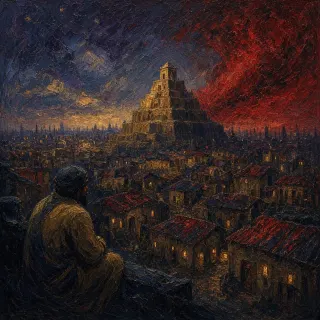
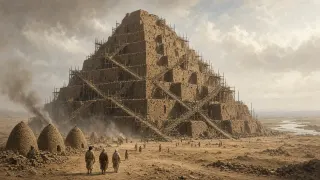
Started as a tower, ended as a word, and in between it was an address people were told to buy houses at.

It is not the same sheet as Babel, though the name is. Genesis 11 is a tower and a scattering; this is an empire that takes Jerusalem in three deportations, burns the temple, and carries the furniture away by weight. What makes the place strange in Scripture is that it is never only an enemy. Daniel serves in its civil service for seventy years. Nebuchadnezzar ends up writing a doxology. Jeremiah tells the captives to seek the peace of the city.

Where it appears2 Kings 24 to 25 · Daniel 1 to 5 · Jeremiah 29 · Revelation 17 to 18

Scroll down to the account
Babylon

The movements, in the order the text gives them.

The Account of Babylon

  1. 01

    2 Kings 25:8-12

    He carried away captive all Jerusalem

    The account is administrative: who was taken, who was left, and what the poor of the land were given to do instead.

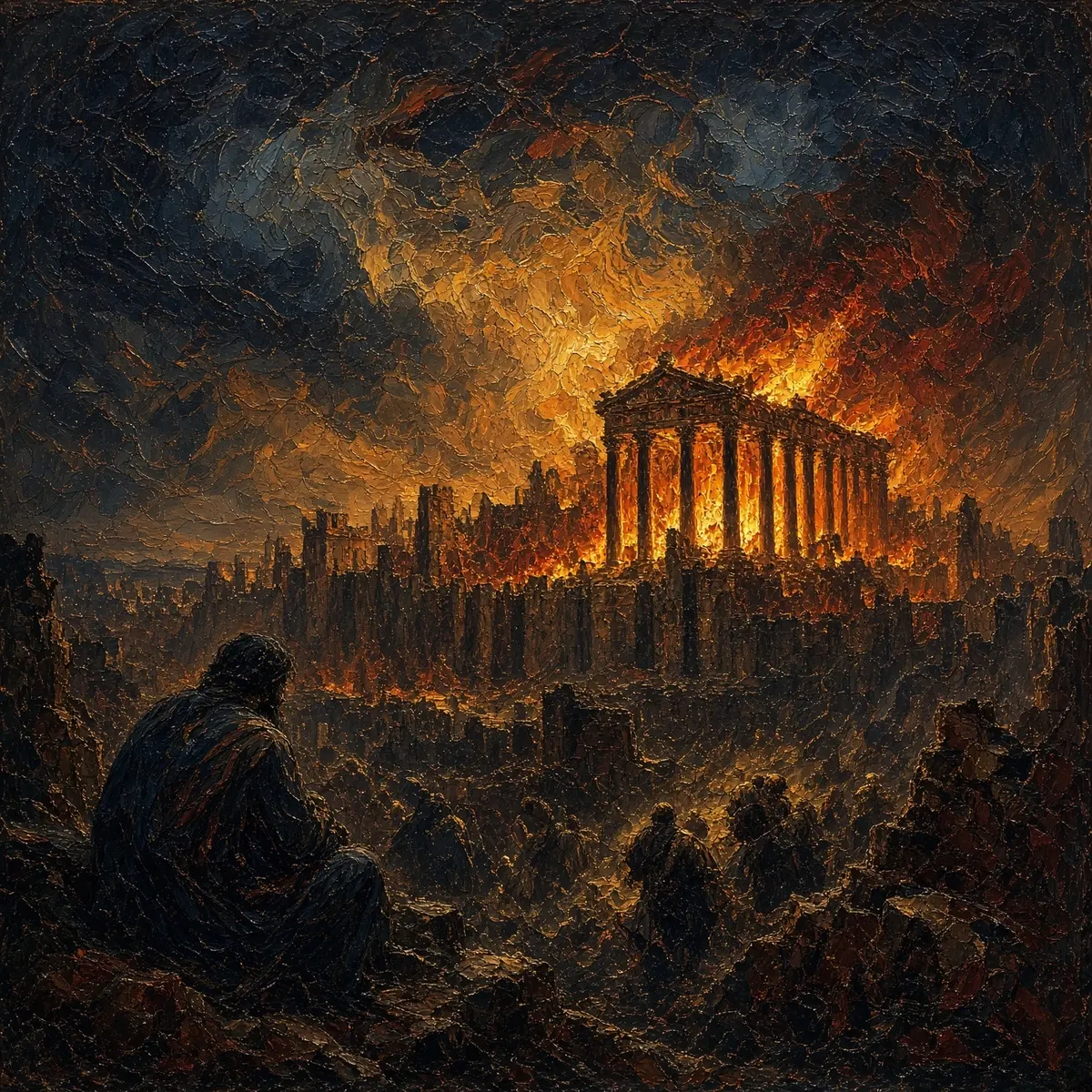
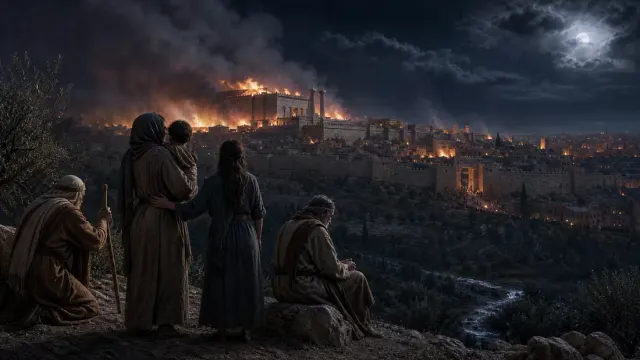
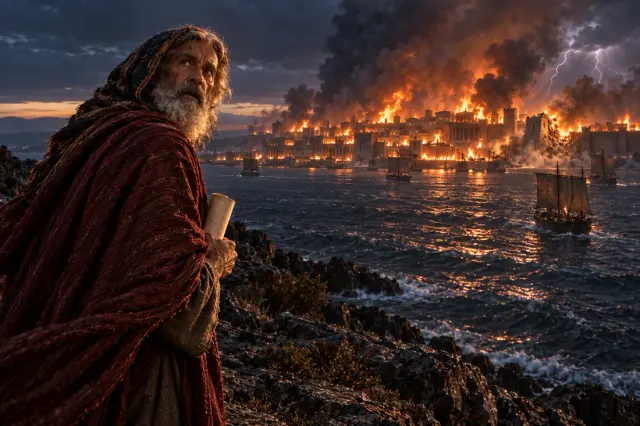
    The fire makes no distinction between the house of the LORD and the king's house. Both stand inside the same sentence, followed by the homes of Jerusalem. The destruction reaches worship, government, and ordinary habitation together. Then the walls come down. A city is losing not merely a battle but the arrangements that made life within it possible.

    The date and Nebuzaradan's title keep the account concrete. This is the work of a named officer in the service of a named king, not an anonymous disaster drifting over the landscape. The following verses catalogue the temple metal carried to Babylon. Things once measured for sacred construction are now broken up for transport. The Book of Kings has devoted chapters to their making; their dismantling is not an incidental inventory.

    Yet the land is not emptied of every person. The poor remain to tend vines and fields. That qualification matters: deportation and devastation do not mean that Judah has ceased to have inhabitants. It also prevents the remaining agricultural life from being mistaken for an untouched countryside. The decision about who leaves and who stays belongs to the occupying captain. Babylon now controls the city's buildings, its valuables, and the movement of its people. Even remaining at home requires his permission.

    Verse by verse

    1. 25:8

      Nebuzaradan is the Babylonian officer who supervises this destruction; Nebuchadnezzar is the king he serves.

    2. 25:9

      The house of the LORD is Solomon's temple; the king's house is the royal palace.

    3. 25:11

      The fugitives that fell away are people who had deserted to Babylon, not simply everyone who escaped the city.

    4. 25:12

      Husbandmen are agricultural workers. The verse explicitly preserves a population remaining in the land.

    2 Kings 25:8-12

    King James Version · 5 verses

    25:8And in the fifth month, on the seventh day of the month, which is the nineteenth year of king Nebuchadnezzar king of Babylon, came Nebuzar-adan, captain of the guard, a servant of the king of Babylon, unto Jerusalem:

    25:9And he burnt the house of the LORD, and the king’s house, and all the houses of Jerusalem, and every great man’s house burnt he with fire.

    25:10And all the army of the Chaldees, that were with the captain of the guard, brake down the walls of Jerusalem round about.

    25:11Now the rest of the people that were left in the city, and the fugitives that fell away to the king of Babylon, with the remnant of the multitude, did Nebuzar-adan the captain of the guard carry away.

    25:12But the captain of the guard left of the poor of the land to be vinedressers and husbandmen.

    2 Kings 25:8-12: He carried away captive all Jerusalem
  2. 02

    Jeremiah 29:4-7

    Seek the peace of the city

    The letter tells them to build, plant, marry and pray for the place holding them, because seventy years is longer than a protest can last.

    This letter comes from Jerusalem before its final destruction, to people already deported to Babylon. That order matters. Jeremiah is not standing among the ashes telling everyone to make the best of things. He is writing into an earlier stage of exile, while other voices are encouraging expectations his letter refuses to support.

    The instructions have roots, walls, and grandchildren. Houses are to be built and inhabited; gardens planted and eaten from; children born and eventually married. This is longer than waiting for a convenient caravan home. The command to increase rather than diminish reaches into the future of a displaced people without pretending that displacement is pleasant. A continuing people, not a suspended population, is to live there.

    The sharpest instruction concerns the city itself. Babylon is not merely to be endured. Its peace is to be sought, and prayer is to be offered for it. Prayer for Babylon is not prayer to Babylon's gods. Allegiance to the LORD remains explicit, while the exiles' welfare is tied to the welfare of their present neighbors. The repeated whom I have caused also keeps Babylon's military success from becoming the final explanation of their position. The God addressing them claims authority over their exile. Their address has changed; the sender of the command has not.

    Verse by verse

    1. 29:4

      Jeremiah 29:1-3 places the letter after Jeconiah's deportation, while Zedekiah still rules in Jerusalem.

    2. 29:5

      The command is to build houses, not to buy them; planting and eating from gardens anticipate settled residence.

    3. 29:6

      Children marrying and bearing children extend the instruction beyond one household's immediate needs.

    4. 29:7

      The LORD is the recipient of the prayer; the foreign city is its beneficiary.

    Jeremiah 29:4-7

    King James Version · 4 verses

    29:4Thus saith the LORD of hosts, the God of Israel, unto all that are carried away captives, whom I have caused to be carried away from Jerusalem unto Babylon;

    29:5Build ye houses, and dwell in them; and plant gardens, and eat the fruit of them;

    29:6Take ye wives, and beget sons and daughters; and take wives for your sons, and give your daughters to husbands, that they may bear sons and daughters; that ye may be increased there, and not diminished.

    29:7And seek the peace of the city whither I have caused you to be carried away captives, and pray unto the LORD for it: for in the peace thereof shall ye have peace.

    Jeremiah 29:4-7: Seek the peace of the city
  3. 03

    Daniel 1:3-7

    Whom they might teach the learning of the Chaldeans

    The strategy is education rather than force. New language, new diet, new names, and one man who negotiates about the diet.

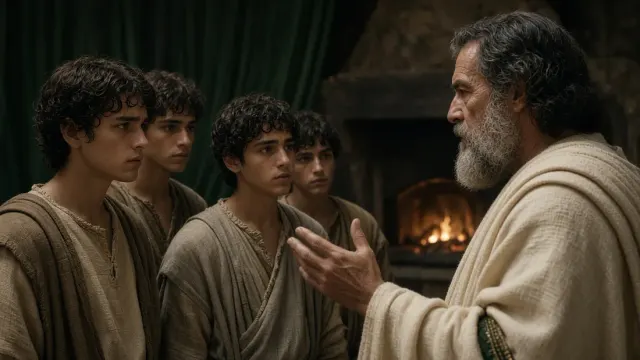
    Babylon does not want these captives merely strong enough to carry stones. It wants them able to stand in the king's palace. The selection begins with royal and noble families and seeks young people already equipped with intelligence and learning. Conquest is recruiting administrators.

    The program reaches into language, food, time, and names. Three years of instruction lead toward royal service, with provisions from the king's own table. Nothing here resembles neglect. The empire is investing in the people it has taken, but the purpose is stated: they are to stand before its king. A fine education can still have a conqueror's destination printed on it.

    The new names are not the last word about the four men. Daniel 1:19 uses their Hebrew names when they stand before the king, and 1:17 attributes their knowledge and skill to God. The chapter can therefore acknowledge their learning without surrendering their identity to the institution providing it. Daniel's refusal concerning food, immediately after this passage, also shows that participation is not the same as unlimited consent. These events belong to an earlier deportation under Jehoiakim, not to the aftermath of the final burning of Jerusalem. Babylon's handling of Judah includes both broken buildings and carefully trained people. The methods differ; the reach is extensive.

    Verse by verse

    1. 1:3

      The official's title does not by itself prove that Daniel and his companions were castrated; this passage does not say so.

    2. 1:4

      Science here means knowledge or understanding, not the modern category of experimental science. Their precise ages are not supplied.

    3. 1:5

      The three-year training has an explicit goal: service in the king's presence.

    4. 1:7

      Daniel 4:8 associates the name Belteshazzar with the king's god; the text does not explain all four new names here.

    Daniel 1:3-7

    King James Version · 5 verses

    1:3And the king spake unto Ashpenaz the master of his eunuchs, that he should bring certain of the children of Israel, and of the king’s seed, and of the princes;

    1:4Children in whom was no blemish, but well favoured, and skilful in all wisdom, and cunning in knowledge, and understanding science, and such as had ability in them to stand in the king’s palace, and whom they might teach the learning and the tongue of the Chaldeans.

    1:5And the king appointed them a daily provision of the king’s meat, and of the wine which he drank: so nourishing them three years, that at the end thereof they might stand before the king.

    1:6Now among these were of the children of Judah, Daniel, Hananiah, Mishael, and Azariah:

    1:7Unto whom the prince of the eunuchs gave names: for he gave unto Daniel the name of Belteshazzar; and to Hananiah, of Shadrach; and to Mishael, of Meshach; and to Azariah, of Abed-nego.

    Daniel 1:3-7: Whom they might teach the learning of the Chaldeans
  4. 04

    Daniel 4:34-37

    I Nebuchadnezzar lift up mine eyes

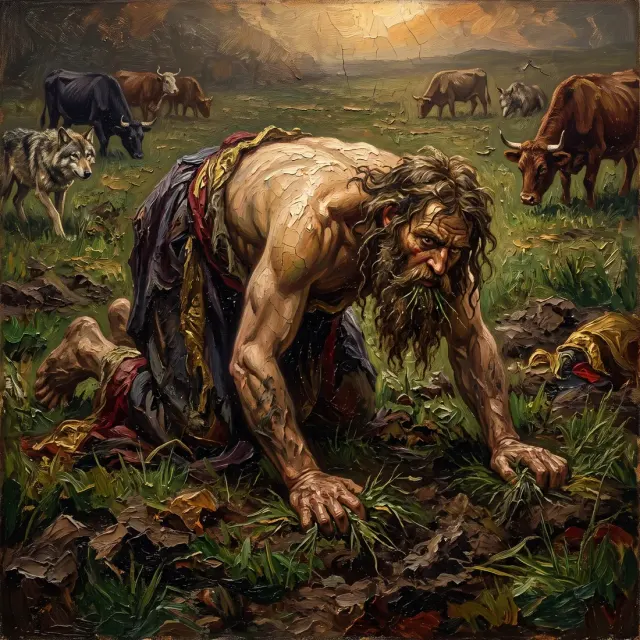
    The emperor writes the chapter himself in the first person, and it ends with a sentence about those that walk in pride being able to abase.

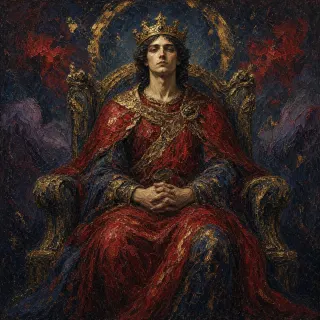
    The voice that celebrated great Babylon now praises the King of heaven. Nebuchadnezzar still speaks in the first person, but the center of the speech has moved. Earlier, the city displayed his power and majesty. Now everlasting dominion belongs to someone whose reign does not depend on Babylon remaining impressive.

    The restoration is substantial. Understanding returns, the king's advisers seek him, and royal honor is restored and increased. The passage does not equate humility with permanent removal from office or loss of every outward distinction. His kingdom returns, but it returns inside a statement about another kingdom. The king who once described himself as the source of Babylon's greatness now describes himself as a man who can be brought low.

    That final sentence is not a medical explanation of the preceding affliction, and the text does not invite a diagnosis from a few ancient descriptions. It is Nebuchadnezzar's own interpretation of his abasement. The works of the King of heaven are truth, and his ways judgment. Even the question no one can put to God is presented as the defeated claim of resistance, not an invitation to conduct a royal inquiry. The account ends with authority restored to the man and ultimate authority denied to him. He is king again. He is not the highest king.

    Verse by verse

    1. 4:34

      This section of Daniel is written in Aramaic; the verse's language of dominion distinguishes God's lasting rule from human kingship.

    2. 4:35

      Stay his hand means restrain or stop his action, not offer hospitality or make him remain somewhere.

    3. 4:36

      The return of royal honor is explicit. Restoration of the throne does not cancel the acknowledgment of divine sovereignty.

    4. 4:37

      The judgment on pride is the king's stated conclusion; no modern psychiatric diagnosis is supplied by the passage.

    Daniel 4:34-37

    King James Version · 4 verses

    4:34And at the end of the days I Nebuchadnezzar lifted up mine eyes unto heaven, and mine understanding returned unto me, and I blessed the most High, and I praised and honoured him that liveth for ever, whose dominion is an everlasting dominion, and his kingdom is from generation to generation:

    4:35And all the inhabitants of the earth are reputed as nothing: and he doeth according to his will in the army of heaven, and among the inhabitants of the earth: and none can stay his hand, or say unto him, What doest thou?

    4:36At the same time my reason returned unto me; and for the glory of my kingdom, mine honour and brightness returned unto me; and my counsellors and my lords sought unto me; and I was established in my kingdom, and excellent majesty was added unto me.

    4:37Now I Nebuchadnezzar praise and extol and honour the King of heaven, all whose works are truth, and his ways judgment: and those that walk in pride he is able to abase.

    Daniel 4:34-37: I Nebuchadnezzar lift up mine eyes
  5. 05

    Revelation 18:11-19

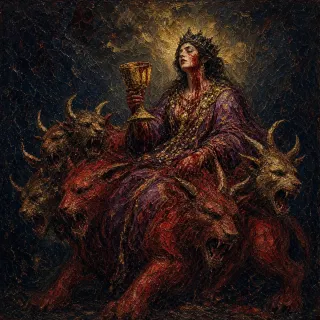
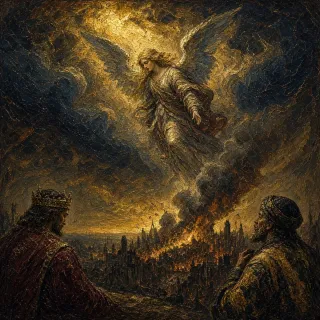
    The merchants of the earth shall weep

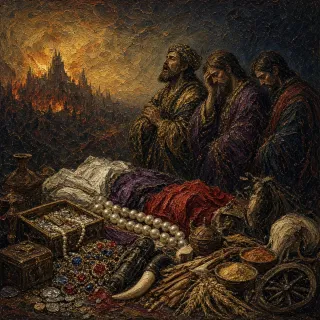
    The lament is an inventory of cargo that ends with slaves and the souls of men, and the mourners are mourning their market.

    The lament begins with a missing customer. The merchants weep because no man buyeth their merchandise any more. The reason is supplied, not guessed. Babylon's ruin is being measured from the trading floor, and the list that follows shows just how much of the world that floor has drawn into itself.

    Gold leads; human beings come last. Between them lie fabrics, ornaments, perfumes, food, livestock, and transport. The sequence makes its final entries terrible by refusing to lift them out of the commercial catalogue. Slaves, and souls of men occupy the same marketplace as cinnamon and horses. The Greek behind slaves is bodies; the people being traded are not merely an abstract symbol of luxury. The inventory reaches human lives.

    The mourners keep their distance. Wealth bound them to the city, but fear holds them away from its burning. The repeated one hour sets the accumulated riches against the speed of their collapse. It is the contrast that matters here, not a calculation that turns prophetic lament into a stopwatch. The Book of Revelation takes the name Babylon into its vision of judged wealth and domination, without making this passage a license to identify a modern city by guesswork. The trading partners praise the city that enriched them. Their final tribute is still an account of what it paid.

    Verse by verse

    1. 18:11

      The merchants' stated reason for mourning is the disappearance of buyers for their goods.

    2. 18:13

      The Greek somata means bodies and is used here for slaves; souls of men refers to human persons, not a separate trade in disembodied souls.

    3. 18:15

      Standing afar off is explicitly connected to fear of the city's torment.

    4. 18:19

      Casting dust on the head is a visible gesture of mourning; the same action appears in Ezekiel 27:30.

    Revelation 18:11-19

    King James Version · 9 verses

    18:11And the merchants of the earth shall weep and mourn over her; for no man buyeth their merchandise any more:

    18:12The merchandise of gold, and silver, and precious stones, and of pearls, and fine linen, and purple, and silk, and scarlet, and all thyine wood, and all manner vessels of ivory, and all manner vessels of most precious wood, and of brass, and iron, and marble,

    18:13And cinnamon, and odours, and ointments, and frankincense, and wine, and oil, and fine flour, and wheat, and beasts, and sheep, and horses, and chariots, and slaves, and souls of men.

    18:14And the fruits that thy soul lusted after are departed from thee, and all things which were dainty and goodly are departed from thee, and thou shalt find them no more at all.

    18:15The merchants of these things, which were made rich by her, shall stand afar off for the fear of her torment, weeping and wailing,

    18:16And saying, Alas, alas, that great city, that was clothed in fine linen, and purple, and scarlet, and decked with gold, and precious stones, and pearls!

    18:17For in one hour so great riches is come to nought. And every shipmaster, and all the company in ships, and sailors, and as many as trade by sea, stood afar off,

    18:18And cried when they saw the smoke of her burning, saying, What city is like unto this great city!

    18:19And they cast dust on their heads, and cried, weeping and wailing, saying, Alas, alas, that great city, wherein were made rich all that had ships in the sea by reason of her costliness! for in one hour is she made desolate.


    Revelation 18:11-19: The merchants of the earth shall weep

Why it matters

That letter is the most surprising document in the exile. Build ye houses, and dwell in them, and plant gardens, and eat the fruit of them, take wives, beget sons and daughters, and seek the peace of the city whither I have caused you to be carried away captive, for in the peace thereof shall ye have peace. It is a command to settle in the place you are praying to leave. And then the name goes on working long after the city stops mattering, until Revelation uses it for a system, and the merchants of the earth weep over it because no man buyeth their merchandise any more.

19 songs

The music

Every song in the catalogue whose passage falls inside these chapters.

  1. 2 Kings 23:31-25:30

    Jerusalem Was Broken Up

  2. 2 Kings 24-25; 2 Chronicles 36

    The City Burned

  3. Daniel 1:1-21

    Daniel Purposed in His Heart

  4. Daniel 1

    Ten Times Better

  5. Daniel 2:1-49

    A Stone Cut without Hands

  6. Daniel 2

    The Stone Without Hands

  7. Daniel 3:16-30

    Gold in the Fire

    Play here
    Open song pageRead lyrics
  8. Daniel 3:1-30

    In the Midst of the Fire

    Play here
    Open song pageRead lyrics
  9. Daniel 3

    Through the Fire

  10. Daniel 3:1-30

    We Will Not Serve Thy Gods

  11. Daniel 4

    The King Ate Grass

  12. Daniel 4:1-37

    Till Seven Times Pass over Thee

  13. Daniel 5:1-31

    Mene, Mene, Tekel, Upharsin

  14. Daniel 5

    Weighed in the Balances

  15. Jeremiah 29:1-32

    Build Houses in Babylon

  16. Revelation 17:1–18:24

    Babylon Is Fallen

  17. Revelation 17:1-15

    Mystery, Babylon the Great

  18. Revelation 18:1-8

    Babylon the Great Is Fallen

  19. Revelation 18:9-24

    The Merchants Weep

Nearby

All the places

Report an error on this page