Before there was a crown, there was dust.
Before there was a cross, there was a garden.
Before the flood, before the wandering,
before the blood cried from the ground.
There was a voice in the darkness.
And when everything was broken,
That voice still spoke promise
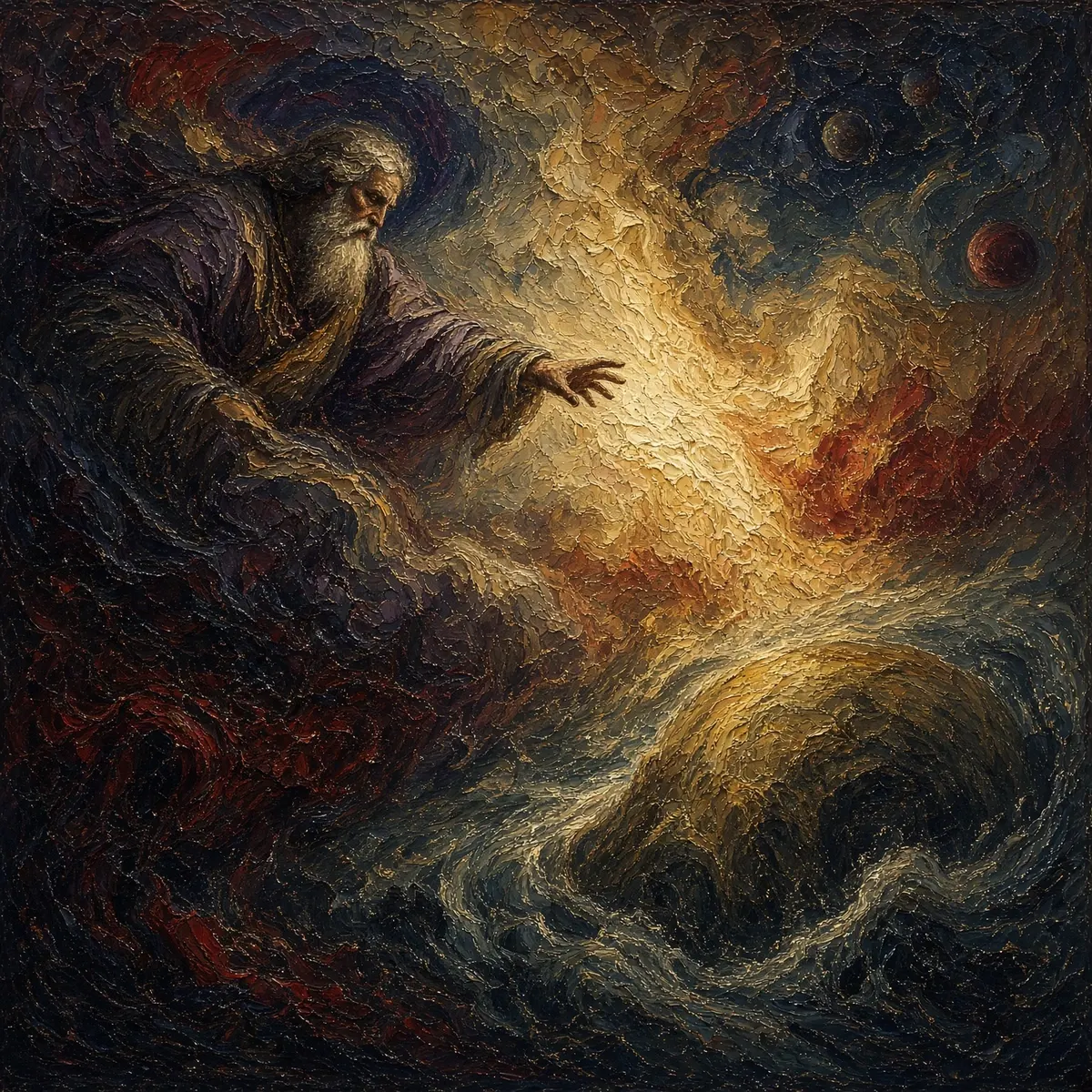
Before the plow had cut the field
Before the sea had learned its name
Before the stars were hung like fire
He spoke and filled the dark with flame
You called the morning from the deep
You drew the rivers from the stone
You breathed the dust and made a man
And said this garden was his home
The beasts were quiet in the shade
The trees were heavy with their fruit
The woman stood beside the man
And all the earth was pure in truth
No wound had yet been born in flesh
No grave had opened in the ground
Only the wind, the light, the breath
And heaven singing all around
In the beginning, you were there
Light in the void and life in the clay
When we were broken, when we were cast out
Still you did not turn away
Over the waters, over the dust, over the sorrow we could not name
You spoke a promise into the night and carried the world with grace
But in the garden came a voice that bent our trust and split the peace
A whispered hunger for the throne
A hand that reached and would not cease
The fruit was taken, eyes were torn
Innocence gave way to shame
We heard your footsteps in the dusk
And nothing in the world remained the same
The thorns came crawling through the earth
The sweat and sorrow took their place
The woman wept, the man bowed low
Exile burned across each face
And east of Eden rose the egg
A flaming sword, a closing door
We lost the country of your nearness
And wandered from it evermore
In the beginning you were there
Light in the void and life in the clay
When we were broken, when we were cast out
Still you did not turn away
Over the waters, over the dust
Over the sorrow we could not name
You spoke a promise into the night
And carried the world with grace
Then blood cried out from broken ground
A brother fallen by his kin
The cities rose, the violence spread
And every heart leaned hard to sin
The heavens broke, the fountains burst
The ark rode high above the grave
A remnant floated through your mercy
Carried by the hands that saved
Yet even dry land did not heal
The pride of man climbed brick by brick
A tower reaching for your height
A name we made with lips too quick
You scattered tongues across the earth
You split the roads of tribe and land
Still through the ruin and the striving
You moved with an unseen hand
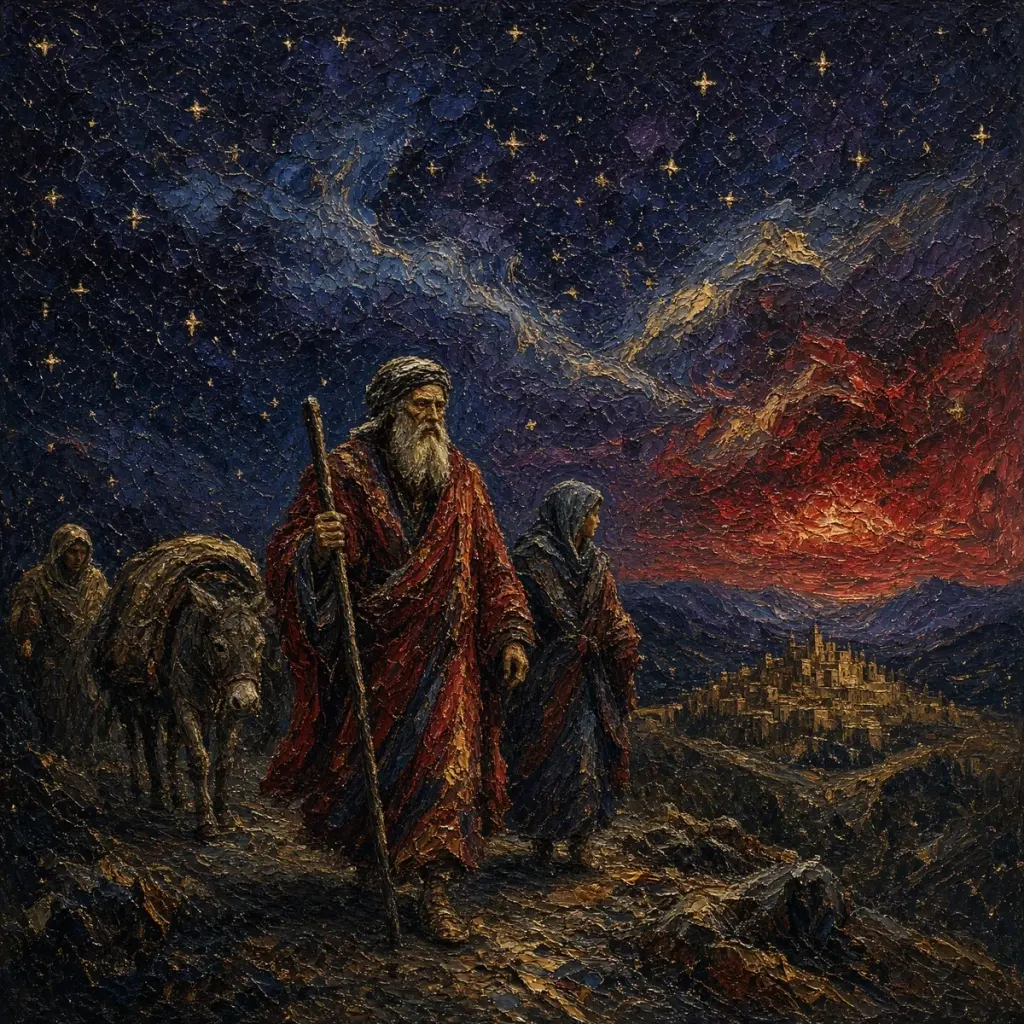
Then to a wanderer you called
Come from your father's house and go
Lift up your eyes and count the stars
If mortal eyes can count that glow
I'll make from dust a covenant
I'll bless the nations through your line
Though years are long and wounds are barren
My word will stand through time
Isaac laughed beneath the promise
Jacob dreamed with stone for bed
Angels moved between the worlds
And mercy followed where he fled
Through wrestling nights and wounded faith
Through sons divided, famine, fear
You kept alive what you had spoken
Though the road ran hard and severe
In the beginning you were there
Light in the void and life in the clay
When we were broken, when we were cast out
Still you did not turn away
Over the waters, over the dust
Over the generations wandering in pain
You kept your promise alive in the dark
And carried the world with grace
A favored son was sold for silver
Cast down to strangers far from home
Yet through the prison and the silence
Your hidden purpose still moved on
For what was meant to curse and bury
You turned to shelter and to bread
A family bruised by sin and envy
Was kept alive instead
So Israel came down to Egypt
With all his children old and worn
Not at the end but at the threshold
Of another fire, another dawn
The grave was near the promised Father
Still not dead, still not undone
For in this book of first beginnings
Your promise had already begun
In the beginning, you were there
Light in the void and life in the clay
When we were broken, when we were cast out
But still you did not turn away
Over the waters, over the dust
Over the generations wandering in pain
You kept your promise alive in the dark
And carried the world with grace
Lyrics transcribed from this recording. Word-for-word review is pending.
Genesis 1 moves with a measured confidence that never gives creation the shape of a struggle. God speaks, separates, names, fills, blesses, and assigns functions until darkness, waters, land, sky, and living things all occupy an ordered world. The sequence matters because prepared spaces receive their inhabitants, and even the heavenly lights are reduced from possible objects of awe to created servants with jobs. Humanity then arrives with a distinction no earlier creature receives: the image of God, borne by male and female together, with dominion given as a task inside a world already declared good. The chapter ends by widening the verdict rather than isolating humanity for praise. God sees everything he has made together and calls the completed arrangement “very good.” Yet the sixth day is not the final movement. Completion still awaits the seventh day’s rest.
Genesis 2: A garden, a boundary, and a fitting companion
Genesis 2 completes creation by giving the seventh day its own blessing, then narrows from the whole cosmos to dust, breath, soil, trees, work, command, and human companionship. The man is formed from the ground he will cultivate, yet he becomes alive only by God’s breath. Eden is generous before it is restrictive: beauty, food, water, and meaningful work surround one clearly stated boundary. The first condition called “not good” is not labor or embodiment but the man’s aloneness. Animals can be named without becoming the corresponding companion he lacks. The woman’s arrival finally produces recognition, “bone of my bones, and flesh of my flesh,” and Genesis uses that union to explain the strength of marriage as a new kinship bond. The chapter closes with nakedness and no shame, a condition whose simplicity will make the hiding of chapter 3 immediately visible as a rupture.
Genesis 3 turns on a change in how God’s command is heard. The serpent recasts a generous arrangement as suspicious restriction, denies the warning of death, and assigns God a withholding motive. The man and woman eat, and the promised opening of their eyes first produces not grandeur but concealment. Leaves, trees, and blame all become ways of managing exposure without undoing the act. God’s questions draw responsibility into speech, while the judgments preserve life even as they place sorrow, strained relations, resistant ground, and return to dust inside it. The serpent’s future also includes opposition rather than uncontested victory. Eve is named in relation to continuing life after death has been announced, and God clothes the pair even as he sends them out. The final image is not of Eden destroyed but of its way guarded. Life continues east of the garden, but access to the tree of life is closed.