12:29And it came to pass, that at midnight the LORD smote all the firstborn in the land of Egypt, from the firstborn of Pharaoh that sat on his throne unto the firstborn of the captive that was in the dungeon; and all the firstborn of cattle.
12:30And Pharaoh rose up in the night, he, and all his servants, and all the Egyptians; and there was a great cry in Egypt; for there was not a house where there was not one dead.
12:31And he called for Moses and Aaron by night, and said, Rise up, and get you forth from among my people, both ye and the children of Israel; and go, serve the LORD, as ye have said.
12:32Also take your flocks and your herds, as ye have said, and be gone; and bless me also.
12:33And the Egyptians were urgent upon the people, that they might send them out of the land in haste; for they said, We be all dead men.
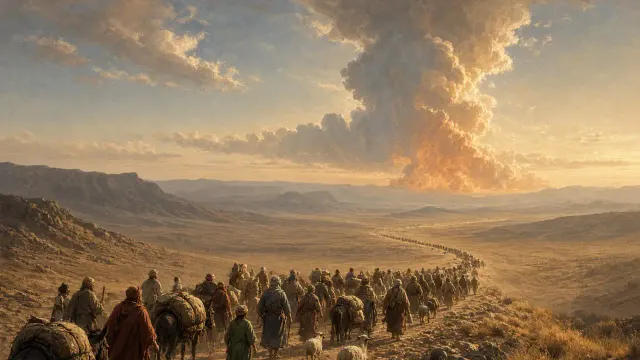
12:34And the people took their dough before it was leavened, their kneadingtroughs being bound up in their clothes upon their shoulders.
12:35And the children of Israel did according to the word of Moses; and they borrowed of the Egyptians jewels of silver, and jewels of gold, and raiment:
12:36And the LORD gave the people favour in the sight of the Egyptians, so that they lent unto them such things as they required. And they spoiled the Egyptians.

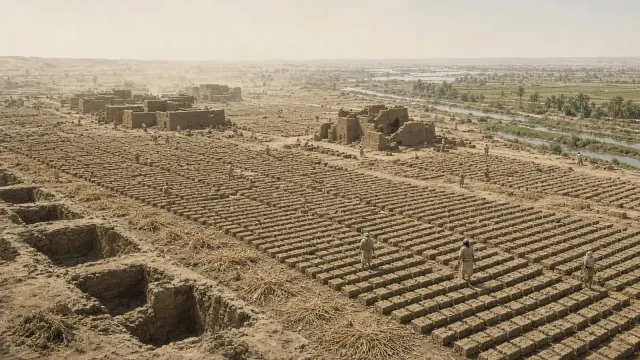
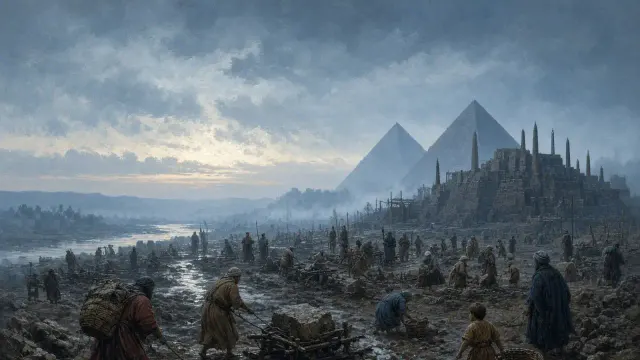
Egypt is not a mistake in Jacob's itinerary. In Genesis 46:3, God promises to make him a great nation there. That last word matters. The country that shelters the family during famine is also the country in which the family becomes a people. The Book of Exodus opens with names rather than chains because the promise was at work before the oppression began.
Then comes a sentence crowded with death: Joseph, his brothers, that whole generation. The next sentence answers with verbs crowded with life. Fruitful. Increased. Multiplied. Filled. The language recalls the blessing of creation in Genesis 1:28, but now the ground filling with life is foreign ground. Joseph's position at court has not made the promise dependent on Joseph's survival.
The opening count also refuses to let Israel become an anonymous mass. Seventy souls belong to an identifiable household, and the names connect these people to the family whose history occupies the end of Genesis. Egypt may eventually treat them as a labor supply. The Book of Exodus introduces them as sons, households, and descendants. Before the bricks, there are names.