New · FreePlay The Witnesses The in-depth puzzle battle quest through Bible history

People of the Bible

Joseph

The dreamer in the coat of many colours, sold by his brothers, jailed on a lie, raised to rule Egypt, and the one who said: ye thought evil against me, but God meant it unto good.

Also called Zaphnath-paaneah, the name Pharaoh gave him; father of Ephraim and Manasseh

Joseph is the first son of Rachel, born to Jacob in his old age and loved more than all his brothers, who see it and hate him. At seventeen he brings his father an evil report of his brothers, wears a coat of many colours, and tells two dreams in which sheaves and stars bow down to him. Sent to find his brothers at Dothan, he is stripped, thrown in a pit, and sold for twenty pieces of silver to a caravan bound for Egypt, while the brothers dip his coat in goat's blood for their father. In Egypt he runs Potiphar's house, refuses Potiphar's wife, is jailed on her lie, and runs the prison. He interprets the dreams of Pharaoh's butler and baker, is forgotten for two years, and then is fetched to interpret Pharaoh's own: seven fat years and seven lean. Pharaoh makes him second in the kingdom at thirty.

He stores grain through the plenty, and when the famine drives his brothers down to buy, he knows them and they do not know him. He tests them across two journeys, accusing them of spying, holding Simeon, demanding Benjamin, and hiding his silver cup in Benjamin's sack. When Judah offers himself in Benjamin's place, Joseph cannot refrain himself, sends the Egyptians out, and says: I am Joseph; doth my father yet live? He brings the whole family to Goshen, presents his father to Pharaoh, buys all Egypt for the crown during the famine, and receives Jacob's blessing on his two sons. After Jacob's burial he calms his brothers' fear: ye thought evil against me, but God meant it unto good. He dies at a hundred and ten, and his bones wait in a coffin in Egypt until Moses carries them out and Joshua buries them at Shechem.

Where he appearsGenesis 37 to 50

Scroll down to the account
Joseph

The movements, in the order the text gives them.

The Account of Joseph

  1. 01

    Genesis 30:22-24

    Rachel's first son

    God remembers Rachel and she bears a son, saying God has taken away her reproach. She calls him Joseph, the LORD shall add to me another son.

    Joseph's first appearance contains no coat, no dream, and not a word from Joseph. It contains three actions with God as their subject: remembered, hearkened, opened. After a chapter in which the adults have bargained over beds and mandrakes, that change matters. Rachel's pregnancy is not credited to the household's ingenuity. The Book of Genesis says who acted.

    Rachel's two sentences then look in opposite directions. God has taken away her reproach; the LORD shall add another son. The name Joseph holds the second thought, so the child she finally has carries a request for a child still to come. This is not a tidy announcement that the household's troubles are over. It is a birth named out of a long deprivation, with room already being made for a brother.

    Verse by verse

    1. 30:22

      The preceding negotiations concern mandrakes and access to Jacob in 30:14-16. This verse attributes the opening of Rachel's womb to God, not to the plants.

    2. 30:23

      Rachel calls her childlessness a reproach. The passage records that burden without saying her earlier infertility was punishment for a particular sin.

    3. 30:24

      The other son is Benjamin, whose birth and Rachel's death are recorded together in Genesis 35:16-19.

    Genesis 30:22-24

    King James Version · 3 verses

    30:22And God remembered Rachel, and God hearkened to her, and opened her womb.

    30:23And she conceived, and bare a son; and said, God hath taken away my reproach:

    30:24And she called his name Joseph; and said, The LORD shall add to me another son.

    Genesis 30:22-24: Rachel's first son
  2. 02

    Genesis 37:1-11

    The coat and the dreams

    Israel loves Joseph more than all his children and makes him a coat of many colours. His brothers hate him and cannot speak peaceably to him. He dreams of their sheaves bowing to his, and of the sun, moon and eleven stars bowing to him, and even his father rebukes him, but observes the saying.

    The first thing broken in this household is conversation. His brothers could not speak peaceably unto him. The coat makes their father's preference visible every time Joseph wears it; the dreams put that preference into a much larger frame. Even the sheaves bow. Grain is already involved before famine gives it its terrible importance.

    Joseph reports the dreams, but the accusation of intending to rule comes from his brothers, and the interpretation of the sun and moon comes from his father. The passage does not supply a private speech in which Joseph congratulates himself. It supplies the family's reactions, and they are not all alike. Jacob rebukes him, then keeps the saying. His brothers envy him. The father who objects is still listening; the brothers who understand the implication have already stopped speaking kindly.

    Verse by verse

    1. 37:2

      Joseph is seventeen here and thirty at his appointment in Genesis 41:46. Those thirteen years include both household service and imprisonment.

    2. 37:10

      Rachel has already died in Genesis 35:19. The dream's mother therefore creates an interpretive difficulty; the chapter does not identify a substitute or explain every symbol.

    3. 37:11

      Jacob's observing the saying means he keeps it in mind. His rebuke is not the same thing as dismissing it entirely.

    Genesis 37:1-11

    King James Version · 11 verses

    37:1And Jacob dwelt in the land wherein his father was a stranger, in the land of Canaan.

    37:2These are the generations of Jacob. Joseph, being seventeen years old, was feeding the flock with his brethren; and the lad was with the sons of Bilhah, and with the sons of Zilpah, his father’s wives: and Joseph brought unto his father their evil report.

    37:3Now Israel loved Joseph more than all his children, because he was the son of his old age: and he made him a coat of many colours.

    37:4And when his brethren saw that their father loved him more than all his brethren, they hated him, and could not speak peaceably unto him.

    37:5And Joseph dreamed a dream, and he told it his brethren: and they hated him yet the more.

    37:6And he said unto them, Hear, I pray you, this dream which I have dreamed:

    37:7For, behold, we were binding sheaves in the field, and, lo, my sheaf arose, and also stood upright; and, behold, your sheaves stood round about, and made obeisance to my sheaf.

    37:8And his brethren said to him, Shalt thou indeed reign over us? or shalt thou indeed have dominion over us? And they hated him yet the more for his dreams, and for his words.

    37:9And he dreamed yet another dream, and told it his brethren, and said, Behold, I have dreamed a dream more; and, behold, the sun and the moon and the eleven stars made obeisance to me.

    37:10And he told it to his father, and to his brethren: and his father rebuked him, and said unto him, What is this dream that thou hast dreamed? Shall I and thy mother and thy brethren indeed come to bow down ourselves to thee to the earth?

    37:11And his brethren envied him; but his father observed the saying.

  3. 03

    Genesis 37:12-36

    The pit at Dothan

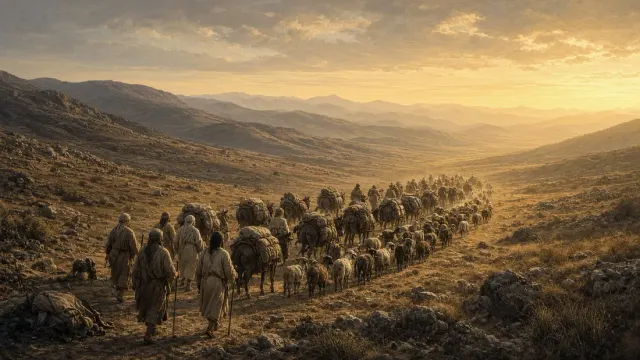
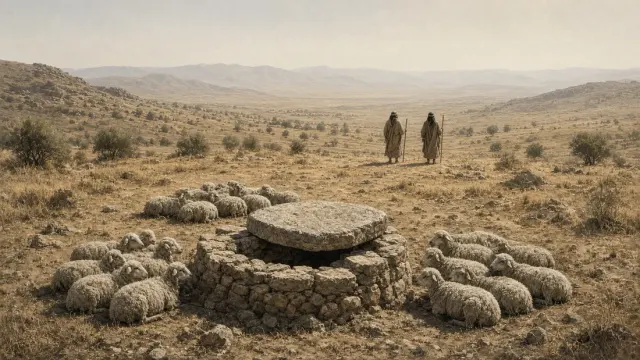
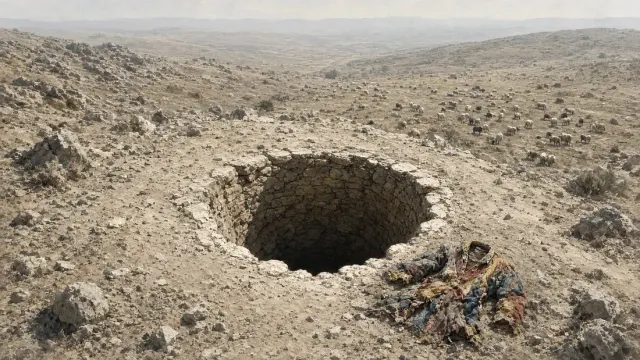
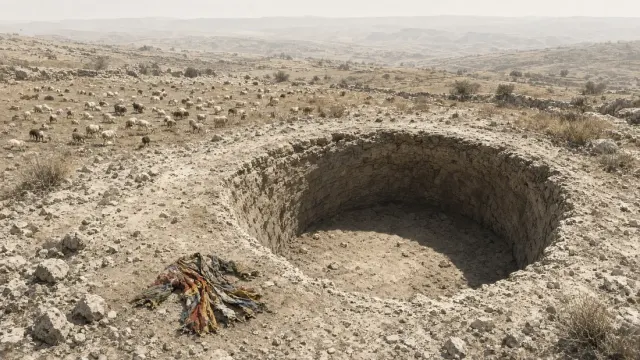
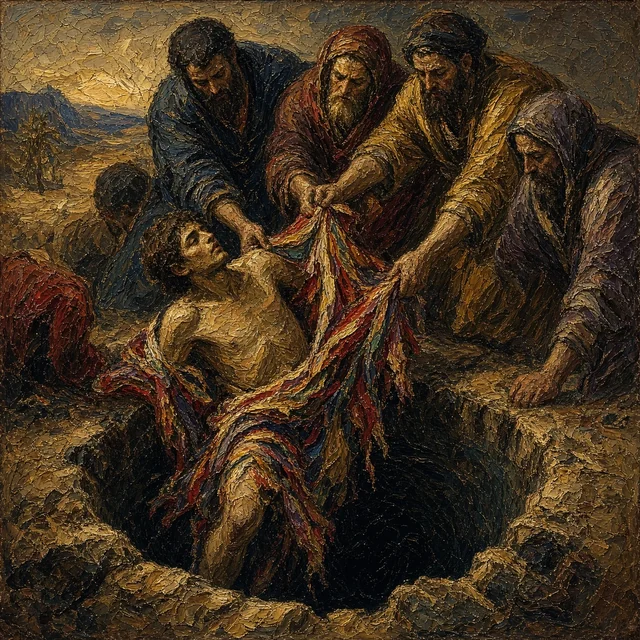
    Sent to Shechem to find his brothers, he finds them at Dothan. They strip off the coat, cast him into a pit, and on Judah's word sell him to Ishmaelites for twenty pieces of silver. They dip the coat in goat's blood, and Jacob mourns him as dead. The Midianites sell him to Potiphar.

    They sit down to eat while their brother is in the pit. The Book of Genesis does not need an adjective after that. Reuben intends a rescue, but Judah's alternative is a sale: brotherhood becomes his reason not to kill Joseph, not his reason to free him. The distinction is appalling and quite explicit.

    Then comes the garment. Their father's special gift is dipped in a goat's blood and returned as evidence. The brothers do not actually say that a beast killed Joseph. They ask Jacob to identify the coat, and he supplies the conclusion himself. A man who once deceived his own father with goatskins and another son's clothing is now deceived through a goat and a son's clothing. The resemblance to Genesis 27 is exact enough to sting without turning his bereavement into a joke. The coat is recognized. The deception is not.

    Verse by verse

    1. 37:24

      The pit has no water. That detail identifies the immediate danger as abandonment and the brothers' actions, not drowning.

    2. 37:28

      The pronouns around the Midianite merchants have produced different readings of who physically pulls Joseph out and sells him. Genesis 45:4 nevertheless explicitly places responsibility for his sale on his brothers.

    3. 37:32

      The brothers call it their father's son's coat, not their brother's coat. Their wording distances them from the kinship Judah has just invoked.

    4. 37:36

      Potiphar is captain of the guard. Genesis 40:3 connects the captain of the guard's house with the prison where Joseph is confined.

    Genesis 37:12-36: The pit at Dothan

    Genesis 37:12-36

    King James Version · 25 verses

    37:12And his brethren went to feed their father’s flock in Shechem.

    37:13And Israel said unto Joseph, Do not thy brethren feed the flock in Shechem? come, and I will send thee unto them. And he said to him, Here am I.

    37:14And he said to him, Go, I pray thee, see whether it be well with thy brethren, and well with the flocks; and bring me word again. So he sent him out of the vale of Hebron, and he came to Shechem.

    37:15And a certain man found him, and, behold, he was wandering in the field: and the man asked him, saying, What seekest thou?

    37:16And he said, I seek my brethren: tell me, I pray thee, where they feed their flocks.

    37:17And the man said, They are departed hence; for I heard them say, Let us go to Dothan. And Joseph went after his brethren, and found them in Dothan.

    37:18And when they saw him afar off, even before he came near unto them, they conspired against him to slay him.

    37:19And they said one to another, Behold, this dreamer cometh.

    37:20Come now therefore, and let us slay him, and cast him into some pit, and we will say, Some evil beast hath devoured him: and we shall see what will become of his dreams.

    37:21And Reuben heard it, and he delivered him out of their hands; and said, Let us not kill him.

    37:22And Reuben said unto them, Shed no blood, but cast him into this pit that is in the wilderness, and lay no hand upon him; that he might rid him out of their hands, to deliver him to his father again.

    37:23And it came to pass, when Joseph was come unto his brethren, that they stript Joseph out of his coat, his coat of many colours that was on him;

    37:24And they took him, and cast him into a pit: and the pit was empty, there was no water in it.

    37:25And they sat down to eat bread: and they lifted up their eyes and looked, and, behold, a company of Ishmeelites came from Gilead with their camels bearing spicery and balm and myrrh, going to carry it down to Egypt.

    37:26And Judah said unto his brethren, What profit is it if we slay our brother, and conceal his blood?

    37:27Come, and let us sell him to the Ishmeelites, and let not our hand be upon him; for he is our brother and our flesh. And his brethren were content.

    37:28Then there passed by Midianites merchantmen; and they drew and lifted up Joseph out of the pit, and sold Joseph to the Ishmeelites for twenty pieces of silver: and they brought Joseph into Egypt.

    37:29And Reuben returned unto the pit; and, behold, Joseph was not in the pit; and he rent his clothes.

    37:30And he returned unto his brethren, and said, The child is not; and I, whither shall I go?

    37:31And they took Joseph’s coat, and killed a kid of the goats, and dipped the coat in the blood;

    37:32And they sent the coat of many colours, and they brought it to their father; and said, This have we found: know now whether it be thy son’s coat or no.

    37:33And he knew it, and said, It is my son’s coat; an evil beast hath devoured him; Joseph is without doubt rent in pieces.

    37:34And Jacob rent his clothes, and put sackcloth upon his loins, and mourned for his son many days.

    37:35And all his sons and all his daughters rose up to comfort him; but he refused to be comforted; and he said, For I will go down into the grave unto my son mourning. Thus his father wept for him.

    37:36And the Midianites sold him into Egypt unto Potiphar, an officer of Pharaoh’s, and captain of the guard.

  4. 04

    Genesis 39

    Potiphar's house and the prison

    The LORD is with Joseph, and Potiphar makes him overseer of everything. Potiphar's wife pursues him daily; he refuses, how can I do this great wickedness and sin against God, and flees, leaving his garment. On her lie he is imprisoned, and the keeper of the prison commits all the prisoners to his hand.

    The LORD was with Joseph is said of a man who is still somebody else's property. That is the chapter's first refusal to make prosperity a simple word. Joseph runs the household so thoroughly that Potiphar's remaining concern is his own bread. The master's comfort rests on the servant's competence. It does not make the servant safe.

    The hands tell the change. Everything is entrusted to Joseph's hand; then his garment is left in the woman's hand. Once again, his clothing can be made to say something false about him. Her accusation stresses the Hebrew outsider, while the chapter has stressed his loyalty. Joseph loses his position rather than consent to what he calls sin against God.

    The prison repeats the household's pattern: favor, responsibility, work that prospers. It also remains a prison. The repeated statement that God is with him does not erase the bars.

    Verse by verse

    1. 39:6

      Wotteth means knows. Potiphar has delegated the management of his possessions, not transferred ownership to Joseph.

    2. 39:10

      The pressure is repeated day by day. Joseph's refusal includes avoiding being with her, not merely refusing one isolated proposal.

    3. 39:19

      Potiphar's wrath is stated, but its precise object is not named. Claims that he secretly disbelieves his wife go beyond the passage.

    4. 39:20

      Psalm 105:18 recalls fetters and iron in Joseph's affliction. His responsibilities in prison should not be mistaken for an absence of suffering.

    Genesis 39: Potiphar's house and the prison

    Genesis 39

    King James Version · 23 verses

    39:1And Joseph was brought down to Egypt; and Potiphar, an officer of Pharaoh, captain of the guard, an Egyptian, bought him of the hands of the Ishmeelites, which had brought him down thither.

    39:2And the LORD was with Joseph, and he was a prosperous man; and he was in the house of his master the Egyptian.

    39:3And his master saw that the LORD was with him, and that the LORD made all that he did to prosper in his hand.

    39:4And Joseph found grace in his sight, and he served him: and he made him overseer over his house, and all that he had he put into his hand.

    39:5And it came to pass from the time that he had made him overseer in his house, and over all that he had, that the LORD blessed the Egyptian’s house for Joseph’s sake; and the blessing of the LORD was upon all that he had in the house, and in the field.

    39:6And he left all that he had in Joseph’s hand; and he knew not ought he had, save the bread which he did eat. And Joseph was a goodly person, and well favoured.

    39:7And it came to pass after these things, that his master’s wife cast her eyes upon Joseph; and she said, Lie with me.

    39:8But he refused, and said unto his master’s wife, Behold, my master wotteth not what is with me in the house, and he hath committed all that he hath to my hand;

    39:9There is none greater in this house than I; neither hath he kept back any thing from me but thee, because thou art his wife: how then can I do this great wickedness, and sin against God?

    39:10And it came to pass, as she spake to Joseph day by day, that he hearkened not unto her, to lie by her, or to be with her.

    39:11And it came to pass about this time, that Joseph went into the house to do his business; and there was none of the men of the house there within.

    39:12And she caught him by his garment, saying, Lie with me: and he left his garment in her hand, and fled, and got him out.

    39:13And it came to pass, when she saw that he had left his garment in her hand, and was fled forth,

    39:14That she called unto the men of her house, and spake unto them, saying, See, he hath brought in an Hebrew unto us to mock us; he came in unto me to lie with me, and I cried with a loud voice:

    39:15And it came to pass, when he heard that I lifted up my voice and cried, that he left his garment with me, and fled, and got him out.

    39:16And she laid up his garment by her, until his lord came home.

    39:17And she spake unto him according to these words, saying, The Hebrew servant, which thou hast brought unto us, came in unto me to mock me:

    39:18And it came to pass, as I lifted up my voice and cried, that he left his garment with me, and fled out.

    39:19And it came to pass, when his master heard the words of his wife, which she spake unto him, saying, After this manner did thy servant to me; that his wrath was kindled.

    39:20And Joseph’s master took him, and put him into the prison, a place where the king’s prisoners were bound: and he was there in the prison.

    39:21But the LORD was with Joseph, and shewed him mercy, and gave him favour in the sight of the keeper of the prison.

    39:22And the keeper of the prison committed to Joseph’s hand all the prisoners that were in the prison; and whatsoever they did there, he was the doer of it.

    39:23The keeper of the prison looked not to any thing that was under his hand; because the LORD was with him, and that which he did, the LORD made it to prosper.

  5. 05

    Genesis 40

    The butler and the baker

    Pharaoh's chief butler and chief baker dream in prison. Joseph says interpretations belong to God, and tells them: the butler will be restored in three days and the baker hanged. It happens as he said. He asks the butler to remember him, and the butler forgets.

    Before Joseph interprets their dreams, he notices their faces. These are Pharaoh's officers, but the attention begins with a servant seeing that two men are sad. His insistence that interpretations belong to God does not prevent a very practical request: remember him, speak to Pharaoh, get him out. Trust in God and a protest against wrongful imprisonment occupy the same conversation.

    The baker speaks only after hearing that the first interpretation is good. Joseph nevertheless gives him a different answer. Neither the social setting nor the encouraging precedent changes what Joseph says the dream means. The two men share a prison, a morning, and a three-day interval; they do not share an outcome.

    The chapter ends by doubling the butler's omission: he did not remember Joseph, but forgat him. The restored official has his cup again. The man who explained its return still has his cell.

    Verse by verse

    1. 40:1

      The butler is Pharaoh's cupbearer, a court officer rather than a modern domestic butler. The offenses that brought either official to prison are not specified.

    2. 40:15

      The Hebrew bor, translated dungeon here, is also the word for the pit in Genesis 37:24. Joseph has been brought out of one pit and confined in another.

    3. 40:23

      Genesis 41:1 places two full years after this episode. That is not a statement that Joseph's entire imprisonment lasted only two years.

    Genesis 40: The butler and the baker

    Genesis 40

    King James Version · 23 verses

    40:1And it came to pass after these things, that the butler of the king of Egypt and his baker had offended their lord the king of Egypt.

    40:2And Pharaoh was wroth against two of his officers, against the chief of the butlers, and against the chief of the bakers.

    40:3And he put them in ward in the house of the captain of the guard, into the prison, the place where Joseph was bound.

    40:4And the captain of the guard charged Joseph with them, and he served them: and they continued a season in ward.

    40:5And they dreamed a dream both of them, each man his dream in one night, each man according to the interpretation of his dream, the butler and the baker of the king of Egypt, which were bound in the prison.

    40:6And Joseph came in unto them in the morning, and looked upon them, and, behold, they were sad.

    40:7And he asked Pharaoh’s officers that were with him in the ward of his lord’s house, saying, Wherefore look ye so sadly to day?

    40:8And they said unto him, We have dreamed a dream, and there is no interpreter of it. And Joseph said unto them, Do not interpretations belong to God? tell me them, I pray you.

    40:9And the chief butler told his dream to Joseph, and said to him, In my dream, behold, a vine was before me;

    40:10And in the vine were three branches: and it was as though it budded, and her blossoms shot forth; and the clusters thereof brought forth ripe grapes:

    40:11And Pharaoh’s cup was in my hand: and I took the grapes, and pressed them into Pharaoh’s cup, and I gave the cup into Pharaoh’s hand.

    40:12And Joseph said unto him, This is the interpretation of it: The three branches are three days:

    40:13Yet within three days shall Pharaoh lift up thine head, and restore thee unto thy place: and thou shalt deliver Pharaoh’s cup into his hand, after the former manner when thou wast his butler.

    40:14But think on me when it shall be well with thee, and shew kindness, I pray thee, unto me, and make mention of me unto Pharaoh, and bring me out of this house:

    40:15For indeed I was stolen away out of the land of the Hebrews: and here also have I done nothing that they should put me into the dungeon.

    40:16When the chief baker saw that the interpretation was good, he said unto Joseph, I also was in my dream, and, behold, I had three white baskets on my head:

    40:17And in the uppermost basket there was of all manner of bakemeats for Pharaoh; and the birds did eat them out of the basket upon my head.

    40:18And Joseph answered and said, This is the interpretation thereof: The three baskets are three days:

    40:19Yet within three days shall Pharaoh lift up thy head from off thee, and shall hang thee on a tree; and the birds shall eat thy flesh from off thee.

    40:20And it came to pass the third day, which was Pharaoh’s birthday, that he made a feast unto all his servants: and he lifted up the head of the chief butler and of the chief baker among his servants.

    40:21And he restored the chief butler unto his butlership again; and he gave the cup into Pharaoh’s hand:

    40:22But he hanged the chief baker: as Joseph had interpreted to them.

    40:23Yet did not the chief butler remember Joseph, but forgat him.

  6. 06

    Genesis 41:1-45

    Pharaoh's dreams

    Two years later Pharaoh dreams of seven fat cows eaten by seven lean, and seven full ears eaten by seven thin. The butler remembers. Joseph, shaved and changed, tells Pharaoh God has shown him seven years of plenty and seven of famine, and advises storing a fifth. Pharaoh sets him over all Egypt, gives him his ring, fine linen, a gold chain, the second chariot, a new name, and Asenath.

    Two full years pass; then Joseph is brought hastily out of the dungeon. The pace changes before his clothes do. Pharaoh presents him as the man who can interpret a dream, and Joseph immediately corrects the introduction: It is not in me. He does not claim that the answer is unavailable. He names a different source for it.

    What follows is more than an interpretation. Joseph moves from cows and ears of grain to officials, collection, local storage, and a reserve against catastrophe. The dream is certain, but the response is not inactivity. A warning becomes an administrative proposal. Egypt does not merely need someone who can explain hungry cows. It needs someone who can organize food.

    The resulting change of clothing reverses earlier losses. His brothers stripped him; Potiphar's wife retained his garment; Pharaoh now dresses him in fine linen and places authority in his hand. The ring matters as much as the robe. Joseph is not just displayed. He is entrusted.

    Verse by verse

    1. 41:1

      The two full years follow the cupbearer's restoration in Genesis 40. They are an additional delay, not the whole interval since Joseph was sold.

    2. 41:32

      Joseph explicitly explains the doubled dream as confirmation that God has established the matter and will bring it about soon.

    3. 41:34

      The proposed collection during the plentiful years is one fifth. The grain is stored under Pharaoh's authority as a reserve, rather than merely counted as current abundance.

    4. 41:45

      Potipherah, priest of On and father of Asenath, is not identified as Potiphar, captain of the guard. Similar names do not establish that they are the same man.

    Genesis 41:1-45: Pharaoh's dreams

    Genesis 41:1-45

    King James Version · 45 verses

    41:1And it came to pass at the end of two full years, that Pharaoh dreamed: and, behold, he stood by the river.

    41:2And, behold, there came up out of the river seven well favoured kine and fatfleshed; and they fed in a meadow.

    41:3And, behold, seven other kine came up after them out of the river, ill favoured and leanfleshed; and stood by the other kine upon the brink of the river.

    41:4And the ill favoured and leanfleshed kine did eat up the seven well favoured and fat kine. So Pharaoh awoke.

    41:5And he slept and dreamed the second time: and, behold, seven ears of corn came up upon one stalk, rank and good.

    41:6And, behold, seven thin ears and blasted with the east wind sprung up after them.

    41:7And the seven thin ears devoured the seven rank and full ears. And Pharaoh awoke, and, behold, it was a dream.

    41:8And it came to pass in the morning that his spirit was troubled; and he sent and called for all the magicians of Egypt, and all the wise men thereof: and Pharaoh told them his dream; but there was none that could interpret them unto Pharaoh.

    41:9Then spake the chief butler unto Pharaoh, saying, I do remember my faults this day:

    41:10Pharaoh was wroth with his servants, and put me in ward in the captain of the guard’s house, both me and the chief baker:

    41:11And we dreamed a dream in one night, I and he; we dreamed each man according to the interpretation of his dream.

    41:12And there was there with us a young man, an Hebrew, servant to the captain of the guard; and we told him, and he interpreted to us our dreams; to each man according to his dream he did interpret.

    41:13And it came to pass, as he interpreted to us, so it was; me he restored unto mine office, and him he hanged.

    41:14Then Pharaoh sent and called Joseph, and they brought him hastily out of the dungeon: and he shaved himself, and changed his raiment, and came in unto Pharaoh.

    41:15And Pharaoh said unto Joseph, I have dreamed a dream, and there is none that can interpret it: and I have heard say of thee, that thou canst understand a dream to interpret it.

    41:16And Joseph answered Pharaoh, saying, It is not in me: God shall give Pharaoh an answer of peace.

    41:17And Pharaoh said unto Joseph, In my dream, behold, I stood upon the bank of the river:

    41:18And, behold, there came up out of the river seven kine, fatfleshed and well favoured; and they fed in a meadow:

    41:19And, behold, seven other kine came up after them, poor and very ill favoured and leanfleshed, such as I never saw in all the land of Egypt for badness:

    41:20And the lean and the ill favoured kine did eat up the first seven fat kine:

    41:21And when they had eaten them up, it could not be known that they had eaten them; but they were still ill favoured, as at the beginning. So I awoke.

    41:22And I saw in my dream, and, behold, seven ears came up in one stalk, full and good:

    41:23And, behold, seven ears, withered, thin, and blasted with the east wind, sprung up after them:

    41:24And the thin ears devoured the seven good ears: and I told this unto the magicians; but there was none that could declare it to me.

    41:25And Joseph said unto Pharaoh, The dream of Pharaoh is one: God hath shewed Pharaoh what he is about to do.

    41:26The seven good kine are seven years; and the seven good ears are seven years: the dream is one.

    41:27And the seven thin and ill favoured kine that came up after them are seven years; and the seven empty ears blasted with the east wind shall be seven years of famine.

    41:28This is the thing which I have spoken unto Pharaoh: What God is about to do he sheweth unto Pharaoh.

    41:29Behold, there come seven years of great plenty throughout all the land of Egypt:

    41:30And there shall arise after them seven years of famine; and all the plenty shall be forgotten in the land of Egypt; and the famine shall consume the land;

    41:31And the plenty shall not be known in the land by reason of that famine following; for it shall be very grievous.

    41:32And for that the dream was doubled unto Pharaoh twice; it is because the thing is established by God, and God will shortly bring it to pass.

    41:33Now therefore let Pharaoh look out a man discreet and wise, and set him over the land of Egypt.

    41:34Let Pharaoh do this, and let him appoint officers over the land, and take up the fifth part of the land of Egypt in the seven plenteous years.

    41:35And let them gather all the food of those good years that come, and lay up corn under the hand of Pharaoh, and let them keep food in the cities.

    41:36And that food shall be for store to the land against the seven years of famine, which shall be in the land of Egypt; that the land perish not through the famine.

    41:37And the thing was good in the eyes of Pharaoh, and in the eyes of all his servants.

    41:38And Pharaoh said unto his servants, Can we find such a one as this is, a man in whom the Spirit of God is?

    41:39And Pharaoh said unto Joseph, Forasmuch as God hath shewed thee all this, there is none so discreet and wise as thou art:

    41:40Thou shalt be over my house, and according unto thy word shall all my people be ruled: only in the throne will I be greater than thou.

    41:41And Pharaoh said unto Joseph, See, I have set thee over all the land of Egypt.

    41:42And Pharaoh took off his ring from his hand, and put it upon Joseph’s hand, and arrayed him in vestures of fine linen, and put a gold chain about his neck;

    41:43And he made him to ride in the second chariot which he had; and they cried before him, Bow the knee: and he made him ruler over all the land of Egypt.

    41:44And Pharaoh said unto Joseph, I am Pharaoh, and without thee shall no man lift up his hand or foot in all the land of Egypt.

    41:45And Pharaoh called Joseph’s name Zaphnath-paaneah; and he gave him to wife Asenath the daughter of Poti-pherah priest of On. And Joseph went out over all the land of Egypt.

  7. 07

    Genesis 41:46-57

    Grain like the sand of the sea

    Through the seven good years he gathers grain without number. Manasseh and Ephraim are born to him. When the famine comes, all countries come to Egypt to Joseph to buy corn.

    The grain defeats the counting before the famine defeats the harvest. Joseph gathers so much that the record stops measuring it, a rare occasion when abandoned bookkeeping is evidence of successful administration. Yet the storage is practical rather than spectacular: food from the surrounding fields is kept in its own cities. The abundance has addresses.

    Joseph's sons receive names that are more complicated than a celebration of promotion. Manasseh speaks of forgetting toil and his father's house, but the very explanation shows that Joseph can still name what he has lost. Ephraim celebrates fruitfulness, then calls Egypt the land of my affliction. Palace, wife, children, authority: none requires him to rename the place where he was sold and imprisoned. His office has changed. His description of the land has not. The man opening the storehouses carries a family history that the grain figures cannot record.

    Verse by verse

    1. 41:46

      Joseph is thirty when he enters Pharaoh's service. The text distinguishes his formal appointment from the earlier years of slavery and confinement.

    2. 41:51

      Manasseh is connected in the naming explanation with forgetting. The sentence expresses relief from former toil, not a clinical claim that Joseph has lost his memory.

    3. 41:52

      Ephraim is connected with fruitfulness. The phrase land of my affliction qualifies the success rather than denying that success has occurred.

    Genesis 41:46-57

    King James Version · 12 verses

    41:46And Joseph was thirty years old when he stood before Pharaoh king of Egypt. And Joseph went out from the presence of Pharaoh, and went throughout all the land of Egypt.

    41:47And in the seven plenteous years the earth brought forth by handfuls.

    41:48And he gathered up all the food of the seven years, which were in the land of Egypt, and laid up the food in the cities: the food of the field, which was round about every city, laid he up in the same.

    41:49And Joseph gathered corn as the sand of the sea, very much, until he left numbering; for it was without number.

    41:50And unto Joseph were born two sons before the years of famine came, which Asenath the daughter of Poti-pherah priest of On bare unto him.

    41:51And Joseph called the name of the firstborn Manasseh: For God, said he, hath made me forget all my toil, and all my father’s house.

    41:52And the name of the second called he Ephraim: For God hath caused me to be fruitful in the land of my affliction.

    41:53And the seven years of plenteousness, that was in the land of Egypt, were ended.

    41:54And the seven years of dearth began to come, according as Joseph had said: and the dearth was in all lands; but in all the land of Egypt there was bread.

    41:55And when all the land of Egypt was famished, the people cried to Pharaoh for bread: and Pharaoh said unto all the Egyptians, Go unto Joseph; what he saith to you, do.

    41:56And the famine was over all the face of the earth: and Joseph opened all the storehouses, and sold unto the Egyptians; and the famine waxed sore in the land of Egypt.

    41:57And all countries came into Egypt to Joseph for to buy corn; because that the famine was so sore in all lands.

  8. 08

    Genesis 42

    Ye are spies

    Ten brothers come to buy and bow to the ground before him. He knows them, remembers the dreams, and speaks roughly, accusing them of spying. He keeps Simeon bound, sends the rest home with grain and their money returned in their sacks, and demands they bring Benjamin. They say to one another: we are verily guilty concerning our brother.

    The brothers say one is not to the brother who is standing in front of them. Their statement is almost unbearable in its ordinary delivery: a missing member of the family, offered as background information to a stranger. Joseph recognizes them, remembers the dreams, and withholds recognition in return. The chapter gives those facts. It does not give a complete explanation of every test he devises.

    The interpreter creates a second, less visible separation. The brothers think Joseph cannot understand their private admission, so they discuss the anguish and pleading of the boy in the pit. Genesis 37 did not record those cries. Now the men who refused to hear them repeat them within Joseph's hearing. He turns away and weeps.

    He still keeps Simeon, yet releases the others with grain for their households. Severity and provision are both present. Neither cancels the other, and neither makes his tears a performance.

    Verse by verse

    1. 42:9

      The nakedness of the land means its exposed or vulnerable places, the sort of information an invading enemy would seek.

    2. 42:21

      The brothers explicitly remember Joseph's distress and entreaty. Those details belong to their testimony here, rather than to an invented reconstruction of Genesis 37.

    3. 42:24

      The passage names Simeon as the hostage but does not explain why Joseph selects him. Assigning him a particular unrecorded role in the original attack exceeds the evidence.

    4. 42:37

      Reuben offers the lives of his own sons as security. Jacob refuses the proposed journey; the text does not present the offer as an effective solution.

    Genesis 42: Ye are spies

    Genesis 42

    King James Version · 38 verses

    42:1Now when Jacob saw that there was corn in Egypt, Jacob said unto his sons, Why do ye look one upon another?

    42:2And he said, Behold, I have heard that there is corn in Egypt: get you down thither, and buy for us from thence; that we may live, and not die.

    42:3And Joseph’s ten brethren went down to buy corn in Egypt.

    42:4But Benjamin, Joseph’s brother, Jacob sent not with his brethren; for he said, Lest peradventure mischief befall him.

    42:5And the sons of Israel came to buy corn among those that came: for the famine was in the land of Canaan.

    42:6And Joseph was the governor over the land, and he it was that sold to all the people of the land: and Joseph’s brethren came, and bowed down themselves before him with their faces to the earth.

    42:7And Joseph saw his brethren, and he knew them, but made himself strange unto them, and spake roughly unto them; and he said unto them, Whence come ye? And they said, From the land of Canaan to buy food.

    42:8And Joseph knew his brethren, but they knew not him.

    42:9And Joseph remembered the dreams which he dreamed of them, and said unto them, Ye are spies; to see the nakedness of the land ye are come.

    42:10And they said unto him, Nay, my lord, but to buy food are thy servants come.

    42:11We are all one man’s sons; we are true men, thy servants are no spies.

    42:12And he said unto them, Nay, but to see the nakedness of the land ye are come.

    42:13And they said, Thy servants are twelve brethren, the sons of one man in the land of Canaan; and, behold, the youngest is this day with our father, and one is not.

    42:14And Joseph said unto them, That is it that I spake unto you, saying, Ye are spies:

    42:15Hereby ye shall be proved: By the life of Pharaoh ye shall not go forth hence, except your youngest brother come hither.

    42:16Send one of you, and let him fetch your brother, and ye shall be kept in prison, that your words may be proved, whether there be any truth in you: or else by the life of Pharaoh surely ye are spies.

    42:17And he put them all together into ward three days.

    42:18And Joseph said unto them the third day, This do, and live; for I fear God:

    42:19If ye be true men, let one of your brethren be bound in the house of your prison: go ye, carry corn for the famine of your houses:

    42:20But bring your youngest brother unto me; so shall your words be verified, and ye shall not die. And they did so.

    42:21And they said one to another, We are verily guilty concerning our brother, in that we saw the anguish of his soul, when he besought us, and we would not hear; therefore is this distress come upon us.

    42:22And Reuben answered them, saying, Spake I not unto you, saying, Do not sin against the child; and ye would not hear? therefore, behold, also his blood is required.

    42:23And they knew not that Joseph understood them; for he spake unto them by an interpreter.

    42:24And he turned himself about from them, and wept; and returned to them again, and communed with them, and took from them Simeon, and bound him before their eyes.

    42:25Then Joseph commanded to fill their sacks with corn, and to restore every man’s money into his sack, and to give them provision for the way: and thus did he unto them.

    42:26And they laded their asses with the corn, and departed thence.

    42:27And as one of them opened his sack to give his ass provender in the inn, he espied his money; for, behold, it was in his sack’s mouth.

    42:28And he said unto his brethren, My money is restored; and, lo, it is even in my sack: and their heart failed them, and they were afraid, saying one to another, What is this that God hath done unto us?

    42:29And they came unto Jacob their father unto the land of Canaan, and told him all that befell unto them; saying,

    42:30The man, who is the lord of the land, spake roughly to us, and took us for spies of the country.

    42:31And we said unto him, We are true men; we are no spies:

    42:32We be twelve brethren, sons of our father; one is not, and the youngest is this day with our father in the land of Canaan.

    42:33And the man, the lord of the country, said unto us, Hereby shall I know that ye are true men; leave one of your brethren here with me, and take food for the famine of your households, and be gone:

    42:34And bring your youngest brother unto me: then shall I know that ye are no spies, but that ye are true men: so will I deliver you your brother, and ye shall traffick in the land.

    42:35And it came to pass as they emptied their sacks, that, behold, every man’s bundle of money was in his sack: and when both they and their father saw the bundles of money, they were afraid.

    42:36And Jacob their father said unto them, Me have ye bereaved of my children: Joseph is not, and Simeon is not, and ye will take Benjamin away: all these things are against me.

    42:37And Reuben spake unto his father, saying, Slay my two sons, if I bring him not to thee: deliver him into my hand, and I will bring him to thee again.

    42:38And he said, My son shall not go down with you; for his brother is dead, and he is left alone: if mischief befall him by the way in the which ye go, then shall ye bring down my gray hairs with sorrow to the grave.

  9. 09

    Genesis 43-44

    Benjamin and the cup

    The brothers return with Benjamin. Joseph feasts them, seats them in order of age, and gives Benjamin five times as much. He has his silver cup hidden in Benjamin's sack and the brothers brought back. Judah offers to stay as a slave in Benjamin's place so that his father will not die.

    Benjamin receives five portions while the others receive one. The unequal treatment is visible again, but this meal produces no recorded outbreak of envy. The brothers once ate beside an abandoned brother's pit. Now they eat food supplied by that brother, with another favored son at the table. The resemblance establishes the conditions; it does not disclose every part of Joseph's intention.

    The cup then creates an accusation the audience knows is false. Joseph has ordered it planted. When it is discovered, all the brothers tear their clothes and all return, although the steward has offered the innocent men freedom. Earlier they stripped one brother and went home without him. Here they refuse to leave one behind. The change is in their bodies before it reaches Judah's speech.

    Judah finally offers his own slavery in Benjamin's place. The man who proposed selling Rachel's first son now offers himself to preserve her second. He even repeats Jacob's words that his wife bore him two sons, though Judah is Leah's son. The old favoritism remains audible. This time Judah's answer is to protect the favored brother and the father who loves him.

    Verse by verse

    1. 43:32

      Joseph, his brothers, and the Egyptians eat separately. His high office has not made every social distinction at the table disappear.

    2. 44:5

      Divination belongs to the accusation staged around the cup. The passage does not describe Joseph actually performing a divination ritual with it.

    3. 44:13

      All the brothers tear their clothes and return together. Their collective response contrasts with the removal of Joseph's coat in Genesis 37:23.

    4. 44:20

      Lad need not mean a small child. Genesis 46:21 lists Benjamin's sons among the family entering Egypt.

    5. 44:33

      Judah offers substitution, not merely a promise to behave better. The contrast with his proposal in Genesis 37:26-27 is carried by what he is prepared to surrender.

    Genesis 43-44: Benjamin and the cup

    Genesis 43-44

    King James Version · 68 verses

    43:1And the famine was sore in the land.

    43:2And it came to pass, when they had eaten up the corn which they had brought out of Egypt, their father said unto them, Go again, buy us a little food.

    43:3And Judah spake unto him, saying, The man did solemnly protest unto us, saying, Ye shall not see my face, except your brother be with you.

    43:4If thou wilt send our brother with us, we will go down and buy thee food:

    43:5But if thou wilt not send him, we will not go down: for the man said unto us, Ye shall not see my face, except your brother be with you.

    43:6And Israel said, Wherefore dealt ye so ill with me, as to tell the man whether ye had yet a brother?

    43:7And they said, The man asked us straitly of our state, and of our kindred, saying, Is your father yet alive? have ye another brother? and we told him according to the tenor of these words: could we certainly know that he would say, Bring your brother down?

    43:8And Judah said unto Israel his father, Send the lad with me, and we will arise and go; that we may live, and not die, both we, and thou, and also our little ones.

    43:9I will be surety for him; of my hand shalt thou require him: if I bring him not unto thee, and set him before thee, then let me bear the blame for ever:

    43:10For except we had lingered, surely now we had returned this second time.

    43:11And their father Israel said unto them, If it must be so now, do this; take of the best fruits in the land in your vessels, and carry down the man a present, a little balm, and a little honey, spices, and myrrh, nuts, and almonds:

    43:12And take double money in your hand; and the money that was brought again in the mouth of your sacks, carry it again in your hand; peradventure it was an oversight:

    43:13Take also your brother, and arise, go again unto the man:

    43:14And God Almighty give you mercy before the man, that he may send away your other brother, and Benjamin. If I be bereaved of my children, I am bereaved.

    43:15And the men took that present, and they took double money in their hand, and Benjamin; and rose up, and went down to Egypt, and stood before Joseph.

    43:16And when Joseph saw Benjamin with them, he said to the ruler of his house, Bring these men home, and slay, and make ready; for these men shall dine with me at noon.

    43:17And the man did as Joseph bade; and the man brought the men into Joseph’s house.

    43:18And the men were afraid, because they were brought into Joseph’s house; and they said, Because of the money that was returned in our sacks at the first time are we brought in; that he may seek occasion against us, and fall upon us, and take us for bondmen, and our asses.

    43:19And they came near to the steward of Joseph’s house, and they communed with him at the door of the house,

    43:20And said, O sir, we came indeed down at the first time to buy food:

    43:21And it came to pass, when we came to the inn, that we opened our sacks, and, behold, every man’s money was in the mouth of his sack, our money in full weight: and we have brought it again in our hand.

    43:22And other money have we brought down in our hands to buy food: we cannot tell who put our money in our sacks.

    43:23And he said, Peace be to you, fear not: your God, and the God of your father, hath given you treasure in your sacks: I had your money. And he brought Simeon out unto them.

    43:24And the man brought the men into Joseph’s house, and gave them water, and they washed their feet; and he gave their asses provender.

    43:25And they made ready the present against Joseph came at noon: for they heard that they should eat bread there.

    43:26And when Joseph came home, they brought him the present which was in their hand into the house, and bowed themselves to him to the earth.

    43:27And he asked them of their welfare, and said, Is your father well, the old man of whom ye spake? Is he yet alive?

    43:28And they answered, Thy servant our father is in good health, he is yet alive. And they bowed down their heads, and made obeisance.

    43:29And he lifted up his eyes, and saw his brother Benjamin, his mother’s son, and said, Is this your younger brother, of whom ye spake unto me? And he said, God be gracious unto thee, my son.

    43:30And Joseph made haste; for his bowels did yearn upon his brother: and he sought where to weep; and he entered into his chamber, and wept there.

    43:31And he washed his face, and went out, and refrained himself, and said, Set on bread.

    43:32And they set on for him by himself, and for them by themselves, and for the Egyptians, which did eat with him, by themselves: because the Egyptians might not eat bread with the Hebrews; for that is an abomination unto the Egyptians.

    43:33And they sat before him, the firstborn according to his birthright, and the youngest according to his youth: and the men marvelled one at another.

    43:34And he took and sent messes unto them from before him: but Benjamin’s mess was five times so much as any of theirs. And they drank, and were merry with him.

    44:1And he commanded the steward of his house, saying, Fill the men’s sacks with food, as much as they can carry, and put every man’s money in his sack’s mouth.

    44:2And put my cup, the silver cup, in the sack’s mouth of the youngest, and his corn money. And he did according to the word that Joseph had spoken.

    44:3As soon as the morning was light, the men were sent away, they and their asses.

    44:4And when they were gone out of the city, and not yet far off, Joseph said unto his steward, Up, follow after the men; and when thou dost overtake them, say unto them, Wherefore have ye rewarded evil for good?

    44:5Is not this it in which my lord drinketh, and whereby indeed he divineth? ye have done evil in so doing.

    44:6And he overtook them, and he spake unto them these same words.

    44:7And they said unto him, Wherefore saith my lord these words? God forbid that thy servants should do according to this thing:

    44:8Behold, the money, which we found in our sacks’ mouths, we brought again unto thee out of the land of Canaan: how then should we steal out of thy lord’s house silver or gold?

    44:9With whomsoever of thy servants it be found, both let him die, and we also will be my lord’s bondmen.

    44:10And he said, Now also let it be according unto your words: he with whom it is found shall be my servant; and ye shall be blameless.

    44:11Then they speedily took down every man his sack to the ground, and opened every man his sack.

    44:12And he searched, and began at the eldest, and left at the youngest: and the cup was found in Benjamin’s sack.

    44:13Then they rent their clothes, and laded every man his ass, and returned to the city.

    44:14And Judah and his brethren came to Joseph’s house; for he was yet there: and they fell before him on the ground.

    44:15And Joseph said unto them, What deed is this that ye have done? wot ye not that such a man as I can certainly divine?

    44:16And Judah said, What shall we say unto my lord? what shall we speak? or how shall we clear ourselves? God hath found out the iniquity of thy servants: behold, we are my lord’s servants, both we, and he also with whom the cup is found.

    44:17And he said, God forbid that I should do so: but the man in whose hand the cup is found, he shall be my servant; and as for you, get you up in peace unto your father.

    44:18Then Judah came near unto him, and said, Oh my lord, let thy servant, I pray thee, speak a word in my lord’s ears, and let not thine anger burn against thy servant: for thou art even as Pharaoh.

    44:19My lord asked his servants, saying, Have ye a father, or a brother?

    44:20And we said unto my lord, We have a father, an old man, and a child of his old age, a little one; and his brother is dead, and he alone is left of his mother, and his father loveth him.

    44:21And thou saidst unto thy servants, Bring him down unto me, that I may set mine eyes upon him.

    44:22And we said unto my lord, The lad cannot leave his father: for if he should leave his father, his father would die.

    44:23And thou saidst unto thy servants, Except your youngest brother come down with you, ye shall see my face no more.

    44:24And it came to pass when we came up unto thy servant my father, we told him the words of my lord.

    44:25And our father said, Go again, and buy us a little food.

    44:26And we said, We cannot go down: if our youngest brother be with us, then will we go down: for we may not see the man’s face, except our youngest brother be with us.

    44:27And thy servant my father said unto us, Ye know that my wife bare me two sons:

    44:28And the one went out from me, and I said, Surely he is torn in pieces; and I saw him not since:

    44:29And if ye take this also from me, and mischief befall him, ye shall bring down my gray hairs with sorrow to the grave.

    44:30Now therefore when I come to thy servant my father, and the lad be not with us; seeing that his life is bound up in the lad’s life;

    44:31It shall come to pass, when he seeth that the lad is not with us, that he will die: and thy servants shall bring down the gray hairs of thy servant our father with sorrow to the grave.

    44:32For thy servant became surety for the lad unto my father, saying, If I bring him not unto thee, then I shall bear the blame to my father for ever.

    44:33Now therefore, I pray thee, let thy servant abide instead of the lad a bondman to my lord; and let the lad go up with his brethren.

    44:34For how shall I go up to my father, and the lad be not with me? lest peradventure I see the evil that shall come on my father.

  10. 10

    Genesis 45

    I am Joseph

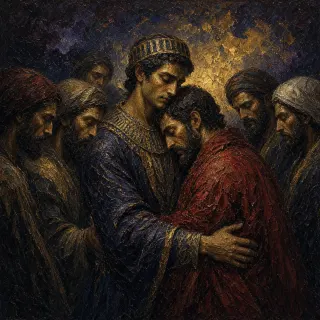
    Joseph cannot refrain himself. He sends every Egyptian out, weeps aloud, and says: I am Joseph; doth my father yet live? Be not grieved that ye sold me hither, for God did send me before you to preserve life. He falls on Benjamin's neck, kisses all his brothers, and sends wagons for his father.

    Joseph can empty the room, but he cannot keep the sound inside it. The Egyptians hear him weep. The carefully managed distance of the preceding chapters collapses, and the governor identifies himself not only by name but by the act that brought him here: their brother, whom they sold. Reconciliation begins without altering that fact.

    His repeated claim that God sent him gives the sale a purpose beyond the sellers' intention; it does not turn their sale into an act of kindness. The purpose he names is life preserved through famine. His explanation immediately takes material form in a place to live and a promise to feed the family. Joseph's theology has provisions attached.

    Then comes a quiet sentence beside the weeping and royal gifts: after that his brethren talked with him. Genesis 37 began the rupture with their inability to speak peaceably to him. Here conversation becomes possible again. The return of ordinary speech is one of the chapter's great events.

    Verse by verse

    1. 45:6

      Earing in the KJV means ploughing or cultivation. It is not a reference to ears of grain.

    2. 45:8

      Father to Pharaoh describes Joseph's position of counsel and authority, not a biological relationship.

    3. 45:15

      The brothers' renewed conversation reverses the broken speech of Genesis 37:4. The text records a relationship becoming speakable, not merely a change in Joseph's status.

    4. 45:26-27

      Jacob first disbelieves the report, then sees the wagons and revives. Visible evidence now supports a true report about Joseph, unlike the bloodied coat.

    Genesis 45: I am Joseph

    Genesis 45

    King James Version · 28 verses

    45:1Then Joseph could not refrain himself before all them that stood by him; and he cried, Cause every man to go out from me. And there stood no man with him, while Joseph made himself known unto his brethren.

    45:2And he wept aloud: and the Egyptians and the house of Pharaoh heard.

    45:3And Joseph said unto his brethren, I am Joseph; doth my father yet live? And his brethren could not answer him; for they were troubled at his presence.

    45:4And Joseph said unto his brethren, Come near to me, I pray you. And they came near. And he said, I am Joseph your brother, whom ye sold into Egypt.

    45:5Now therefore be not grieved, nor angry with yourselves, that ye sold me hither: for God did send me before you to preserve life.

    45:6For these two years hath the famine been in the land: and yet there are five years, in the which there shall neither be earing nor harvest.

    45:7And God sent me before you to preserve you a posterity in the earth, and to save your lives by a great deliverance.

    45:8So now it was not you that sent me hither, but God: and he hath made me a father to Pharaoh, and lord of all his house, and a ruler throughout all the land of Egypt.

    45:9Haste ye, and go up to my father, and say unto him, Thus saith thy son Joseph, God hath made me lord of all Egypt: come down unto me, tarry not:

    45:10And thou shalt dwell in the land of Goshen, and thou shalt be near unto me, thou, and thy children, and thy children’s children, and thy flocks, and thy herds, and all that thou hast:

    45:11And there will I nourish thee; for yet there are five years of famine; lest thou, and thy household, and all that thou hast, come to poverty.

    45:12And, behold, your eyes see, and the eyes of my brother Benjamin, that it is my mouth that speaketh unto you.

    45:13And ye shall tell my father of all my glory in Egypt, and of all that ye have seen; and ye shall haste and bring down my father hither.

    45:14And he fell upon his brother Benjamin’s neck, and wept; and Benjamin wept upon his neck.

    45:15Moreover he kissed all his brethren, and wept upon them: and after that his brethren talked with him.

    45:16And the fame thereof was heard in Pharaoh’s house, saying, Joseph’s brethren are come: and it pleased Pharaoh well, and his servants.

    45:17And Pharaoh said unto Joseph, Say unto thy brethren, This do ye; lade your beasts, and go, get you unto the land of Canaan;

    45:18And take your father and your households, and come unto me: and I will give you the good of the land of Egypt, and ye shall eat the fat of the land.

    45:19Now thou art commanded, this do ye; take you wagons out of the land of Egypt for your little ones, and for your wives, and bring your father, and come.

    45:20Also regard not your stuff; for the good of all the land of Egypt is yours.

    45:21And the children of Israel did so: and Joseph gave them wagons, according to the commandment of Pharaoh, and gave them provision for the way.

    45:22To all of them he gave each man changes of raiment; but to Benjamin he gave three hundred pieces of silver, and five changes of raiment.

    45:23And to his father he sent after this manner; ten asses laden with the good things of Egypt, and ten she asses laden with corn and bread and meat for his father by the way.

    45:24So he sent his brethren away, and they departed: and he said unto them, See that ye fall not out by the way.

    45:25And they went up out of Egypt, and came into the land of Canaan unto Jacob their father,

    45:26And told him, saying, Joseph is yet alive, and he is governor over all the land of Egypt. And Jacob’s heart fainted, for he believed them not.

    45:27And they told him all the words of Joseph, which he had said unto them: and when he saw the wagons which Joseph had sent to carry him, the spirit of Jacob their father revived:

    45:28And Israel said, It is enough; Joseph my son is yet alive: I will go and see him before I die.

  11. 11

    Genesis 46:28-47:12

    His father in Goshen

    He rides to Goshen, falls on Jacob's neck and weeps a good while. He presents five brothers and then his father to Pharaoh, and settles the family in the best of the land, in Rameses, and nourishes them with bread.

    The chariot that marks Joseph's rank becomes transport for a son's reunion with his father. His public position remains, but the detail that holds the scene is the long embrace. He weeps on Jacob's neck a good while. The Book of Genesis measures this meeting by its duration, not by the dignity Joseph manages to preserve.

    His arrangements for the family are just as revealing. He does not coach them to pretend to be Egyptians. They are to name their occupation plainly, even though shepherds are described as an abomination to the Egyptians. Their difference becomes part of the case for settling in Goshen.

    Before Pharaoh, the dependent old immigrant blesses the king, twice. Joseph's authority obtains land and food, but Jacob does not enter the court as a man with nothing to give. The passage finally returns from audience and ceremony to mouths fed. Joseph nourishes the household according to its children. The governor of Egypt is attending to his father's family.

    Verse by verse

    1. 46:28

      Judah is sent ahead to direct the family toward Goshen. His practical role follows his offer to take Benjamin's place in Genesis 44.

    2. 46:34

      The statement about shepherds is the explanation given by Genesis. It should not be expanded into an unsupported claim that Egyptians never owned or tended animals; Pharaoh's own cattle appear in 47:6.

    3. 47:6

      Men of activity means capable or able men, suitable for responsibility over Pharaoh's cattle.

    4. 47:11

      The place-name Rameses is supplied by the text, but this verse does not name Joseph's Pharaoh or settle the date of his reign.

    Genesis 46:28-47:12: His father in Goshen

    Genesis 46:28-47:12

    King James Version · 19 verses

    46:28And he sent Judah before him unto Joseph, to direct his face unto Goshen; and they came into the land of Goshen.

    46:29And Joseph made ready his chariot, and went up to meet Israel his father, to Goshen, and presented himself unto him; and he fell on his neck, and wept on his neck a good while.

    46:30And Israel said unto Joseph, Now let me die, since I have seen thy face, because thou art yet alive.

    46:31And Joseph said unto his brethren, and unto his father’s house, I will go up, and shew Pharaoh, and say unto him, My brethren, and my father’s house, which were in the land of Canaan, are come unto me;

    46:32And the men are shepherds, for their trade hath been to feed cattle; and they have brought their flocks, and their herds, and all that they have.

    46:33And it shall come to pass, when Pharaoh shall call you, and shall say, What is your occupation?

    46:34That ye shall say, Thy servants’ trade hath been about cattle from our youth even until now, both we, and also our fathers: that ye may dwell in the land of Goshen; for every shepherd is an abomination unto the Egyptians.

    47:1Then Joseph came and told Pharaoh, and said, My father and my brethren, and their flocks, and their herds, and all that they have, are come out of the land of Canaan; and, behold, they are in the land of Goshen.

    47:2And he took some of his brethren, even five men, and presented them unto Pharaoh.

    47:3And Pharaoh said unto his brethren, What is your occupation? And they said unto Pharaoh, Thy servants are shepherds, both we, and also our fathers.

    47:4They said moreover unto Pharaoh, For to sojourn in the land are we come; for thy servants have no pasture for their flocks; for the famine is sore in the land of Canaan: now therefore, we pray thee, let thy servants dwell in the land of Goshen.

    47:5And Pharaoh spake unto Joseph, saying, Thy father and thy brethren are come unto thee:

    47:6The land of Egypt is before thee; in the best of the land make thy father and brethren to dwell; in the land of Goshen let them dwell: and if thou knowest any men of activity among them, then make them rulers over my cattle.

    47:7And Joseph brought in Jacob his father, and set him before Pharaoh: and Jacob blessed Pharaoh.

    47:8And Pharaoh said unto Jacob, How old art thou?

    47:9And Jacob said unto Pharaoh, The days of the years of my pilgrimage are an hundred and thirty years: few and evil have the days of the years of my life been, and have not attained unto the days of the years of the life of my fathers in the days of their pilgrimage.

    47:10And Jacob blessed Pharaoh, and went out from before Pharaoh.

    47:11And Joseph placed his father and his brethren, and gave them a possession in the land of Egypt, in the best of the land, in the land of Rameses, as Pharaoh had commanded.

    47:12And Joseph nourished his father, and his brethren, and all his father’s household, with bread, according to their families.

  12. 12

    Genesis 47:13-26

    Egypt bought for Pharaoh

    As the famine grinds on he takes the people's money, then their cattle, then their land and themselves for bread, moving them into the cities, and sets the law that a fifth of every harvest is Pharaoh's. Only the priests' land is exempt.

    The population says Joseph has saved their lives. Joseph says he has bought them and their land for Pharaoh. Both statements belong to this passage, and neither should be edited out to make the other more comfortable. Grain preserves people while money, livestock, land, and their own service pass under royal control. Their request is made under the pressure of hunger, not in an ordinary season of choices.

    Joseph's arrangement does include a future for cultivation: seed is supplied, and four parts of the harvest remain for sowing and household food. The fifth goes to Pharaoh, and the requirement becomes a standing rule. The emergency changes ownership beyond the emergency.

    The priests are the exception because Pharaoh already provides their allowance. That detail explains why one group can keep its land while the others cannot. The Book of Genesis records the mechanism, the exemption, and the people's gratitude. It does not dissolve the transfer of power into a cheerful account of full storehouses.

    Verse by verse

    1. 47:14

      The money is brought into Pharaoh's house. The verse does not say that Joseph pockets the receipts as private wealth.

    2. 47:18

      The second year follows the year of exchanging livestock for food. The verse does not securely identify it as the second year of the entire famine.

    3. 47:22

      The priests retain their land because their royal allowance supplies their food. Their exemption is explained through an existing provision.

    4. 47:24-26

      The fifth is twenty percent of the crop; the other four parts support sowing and household consumption. Verse 26 describes a continuing rule, not merely a one-time payment.

    Genesis 47:13-26: Egypt bought for Pharaoh

    Genesis 47:13-26

    King James Version · 14 verses

    47:13And there was no bread in all the land; for the famine was very sore, so that the land of Egypt and all the land of Canaan fainted by reason of the famine.

    47:14And Joseph gathered up all the money that was found in the land of Egypt, and in the land of Canaan, for the corn which they bought: and Joseph brought the money into Pharaoh’s house.

    47:15And when money failed in the land of Egypt, and in the land of Canaan, all the Egyptians came unto Joseph, and said, Give us bread: for why should we die in thy presence? for the money faileth.

    47:16And Joseph said, Give your cattle; and I will give you for your cattle, if money fail.

    47:17And they brought their cattle unto Joseph: and Joseph gave them bread in exchange for horses, and for the flocks, and for the cattle of the herds, and for the asses: and he fed them with bread for all their cattle for that year.

    47:18When that year was ended, they came unto him the second year, and said unto him, We will not hide it from my lord, how that our money is spent; my lord also hath our herds of cattle; there is not ought left in the sight of my lord, but our bodies, and our lands:

    47:19Wherefore shall we die before thine eyes, both we and our land? buy us and our land for bread, and we and our land will be servants unto Pharaoh: and give us seed, that we may live, and not die, that the land be not desolate.

    47:20And Joseph bought all the land of Egypt for Pharaoh; for the Egyptians sold every man his field, because the famine prevailed over them: so the land became Pharaoh’s.

    47:21And as for the people, he removed them to cities from one end of the borders of Egypt even to the other end thereof.

    47:22Only the land of the priests bought he not; for the priests had a portion assigned them of Pharaoh, and did eat their portion which Pharaoh gave them: wherefore they sold not their lands.

    47:23Then Joseph said unto the people, Behold, I have bought you this day and your land for Pharaoh: lo, here is seed for you, and ye shall sow the land.

    47:24And it shall come to pass in the increase, that ye shall give the fifth part unto Pharaoh, and four parts shall be your own, for seed of the field, and for your food, and for them of your households, and for food for your little ones.

    47:25And they said, Thou hast saved our lives: let us find grace in the sight of my lord, and we will be Pharaoh’s servants.

    47:26And Joseph made it a law over the land of Egypt unto this day, that Pharaoh should have the fifth part; except the land of the priests only, which became not Pharaoh’s.

  13. 13

    Genesis 48

    Jacob blesses his sons

    Told his father is sick, Joseph brings Manasseh and Ephraim. Jacob adopts them as his own, crosses his hands to put the right on Ephraim, blesses them in the name of the God who fed him all his life and the Angel who redeemed him, and gives Joseph one portion above his brothers.

    Joseph, of all people, objects when a younger son is placed ahead of an elder. The family has not become simple just because Joseph now understands his own place in it. He arranges the boys carefully; Jacob crosses his hands deliberately. The failing eyesight recalls Isaac's blessing in Genesis 27, but this time the old man is not deceived. His hands know exactly what they are doing.

    Both sons receive blessing. Manasseh is not discarded, and Joseph's branch gains two places among Jacob's sons through their adoption. The chapter says Jacob blessed Joseph, then gives the blessing spoken over Ephraim and Manasseh. The father's blessing reaches him through his children.

    Rachel's burial briefly interrupts the arrangements. Land, descendants, and precedence are being settled by a man who still names the place where Joseph's mother died. These are not merely tribal allocations. They belong to a family with a grave beside the road. The hands are crossed. The blessings are not confused.

    Verse by verse

    1. 48:5

      Jacob places Ephraim and Manasseh alongside Reuben and Simeon as his own sons. First Chronicles 5:1-2 explains that the birthright went to Joseph's sons, while rulership came through Judah.

    2. 48:12

      The reference to knees does not establish that the sons are toddlers. They were born before the famine, and Jacob has now lived seventeen years in Egypt.

    3. 48:14

      Wittingly means knowingly or deliberately. Jacob's crossed hands are an intentional arrangement, not an accident caused by poor sight.

    4. 48:20

      Hebrews 11:21 specifically recalls Jacob blessing both of Joseph's sons as an act of faith.

    5. 48:22

      Jacob's statement about taking land with sword and bow is not accompanied elsewhere in Genesis by a matching account of his own battle. Its precise historical reference remains disputed.

    Genesis 48: Jacob blesses his sons

    Genesis 48

    King James Version · 22 verses

    48:1And it came to pass after these things, that one told Joseph, Behold, thy father is sick: and he took with him his two sons, Manasseh and Ephraim.

    48:2And one told Jacob, and said, Behold, thy son Joseph cometh unto thee: and Israel strengthened himself, and sat upon the bed.

    48:3And Jacob said unto Joseph, God Almighty appeared unto me at Luz in the land of Canaan, and blessed me,

    48:4And said unto me, Behold, I will make thee fruitful, and multiply thee, and I will make of thee a multitude of people; and will give this land to thy seed after thee for an everlasting possession.

    48:5And now thy two sons, Ephraim and Manasseh, which were born unto thee in the land of Egypt before I came unto thee into Egypt, are mine; as Reuben and Simeon, they shall be mine.

    48:6And thy issue, which thou begettest after them, shall be thine, and shall be called after the name of their brethren in their inheritance.

    48:7And as for me, when I came from Padan, Rachel died by me in the land of Canaan in the way, when yet there was but a little way to come unto Ephrath: and I buried her there in the way of Ephrath; the same is Beth-lehem.

    48:8And Israel beheld Joseph’s sons, and said, Who are these?

    48:9And Joseph said unto his father, They are my sons, whom God hath given me in this place. And he said, Bring them, I pray thee, unto me, and I will bless them.

    48:10Now the eyes of Israel were dim for age, so that he could not see. And he brought them near unto him; and he kissed them, and embraced them.

    48:11And Israel said unto Joseph, I had not thought to see thy face: and, lo, God hath shewed me also thy seed.

    48:12And Joseph brought them out from between his knees, and he bowed himself with his face to the earth.

    48:13And Joseph took them both, Ephraim in his right hand toward Israel’s left hand, and Manasseh in his left hand toward Israel’s right hand, and brought them near unto him.

    48:14And Israel stretched out his right hand, and laid it upon Ephraim’s head, who was the younger, and his left hand upon Manasseh’s head, guiding his hands wittingly; for Manasseh was the firstborn.

    48:15And he blessed Joseph, and said, God, before whom my fathers Abraham and Isaac did walk, the God which fed me all my life long unto this day,

    48:16The Angel which redeemed me from all evil, bless the lads; and let my name be named on them, and the name of my fathers Abraham and Isaac; and let them grow into a multitude in the midst of the earth.

    48:17And when Joseph saw that his father laid his right hand upon the head of Ephraim, it displeased him: and he held up his father’s hand, to remove it from Ephraim’s head unto Manasseh’s head.

    48:18And Joseph said unto his father, Not so, my father: for this is the firstborn; put thy right hand upon his head.

    48:19And his father refused, and said, I know it, my son, I know it: he also shall become a people, and he also shall be great: but truly his younger brother shall be greater than he, and his seed shall become a multitude of nations.

    48:20And he blessed them that day, saying, In thee shall Israel bless, saying, God make thee as Ephraim and as Manasseh: and he set Ephraim before Manasseh.

    48:21And Israel said unto Joseph, Behold, I die: but God shall be with you, and bring you again unto the land of your fathers.

    48:22Moreover I have given to thee one portion above thy brethren, which I took out of the hand of the Amorite with my sword and with my bow.

  14. 14

    Genesis 49:22-26

    A fruitful bough

    Jacob's blessing on Joseph: a fruitful bough by a well, whose branches run over the wall; the archers have sorely grieved him, but his bow abode in strength, by the hands of the mighty God of Jacob. The blessings of thy father shall be on the head of him that was separate from his brethren.

    The wall cannot contain the branches. Jacob's blessing begins with life spreading beyond a boundary, then abruptly changes the picture to a man under attack. Fruitfulness has not meant an absence of enemies. Nor does the steady bow describe Joseph taking revenge: the emphasis is on the strength of the arms that have endured the assault, strengthened by the mighty God of Jacob.

    The blessing then seems to gather the whole landscape around this one son: heaven above, the deep below, breasts and womb, hills and the crown of his head. Joseph's life has been occupied with keeping bodies alive; the blessing is crowded with the sources of life. Its final description, separate from his brethren, retains the distinction that has marked his existence without explaining that distinction only as loss. The son driven away stands within a blessing large enough to overflow its wall.

    Verse by verse

    1. 49:23

      The archers belong to the blessing's imagery. The passage does not identify a literal military campaign fought by Joseph or name every attacker represented.

    2. 49:24

      The strong hands are attributed to the mighty God of Jacob. The compact wording around the shepherd and stone has attracted different interpretations and should not be expanded into an unqualified identification of Joseph with a divine title.

    3. 49:26

      Separate translates nazir, a word for one set apart or distinguished. Its use here does not state that Joseph took the specific Nazirite vow regulated in Numbers 6.

    4. 49:26

      Joseph later names his descendants collectively: Ezekiel 37:16-19 associates his stick with Ephraim, and Revelation 7:8 lists a tribe of Joseph. Those usages are not new episodes in the individual Joseph's life.

    Genesis 49:22-26

    King James Version · 5 verses

    49:22Joseph is a fruitful bough, even a fruitful bough by a well; whose branches run over the wall:

    49:23The archers have sorely grieved him, and shot at him, and hated him:

    49:24But his bow abode in strength, and the arms of his hands were made strong by the hands of the mighty God of Jacob; (from thence is the shepherd, the stone of Israel:)

    49:25Even by the God of thy father, who shall help thee; and by the Almighty, who shall bless thee with blessings of heaven above, blessings of the deep that lieth under, blessings of the breasts, and of the womb:

    49:26The blessings of thy father have prevailed above the blessings of my progenitors unto the utmost bound of the everlasting hills: they shall be on the head of Joseph, and on the crown of the head of him that was separate from his brethren.

    Genesis 49:22-26: A fruitful bough
  15. 15

    Genesis 50:1-21

    God meant it unto good

    He weeps over his father, has him embalmed, and carries him to Machpelah with all Egypt's court. When his brothers fear his revenge and fall before him, he weeps again: am I in the place of God? Ye thought evil against me; but God meant it unto good, to save much people alive. He comforts them and speaks kindly.

    Egypt gives Jacob a great mourning, but it does not become his burial place. Joseph's rank enables an impressive procession; his father's oath determines its destination. Even here, authority serves an obligation Joseph did not invent. The cave in Canaan matters more than the scale of the escort.

    After the burial, the brothers fear that their father's death has removed their protection. Their message claims that Jacob commanded forgiveness, but the earlier deathbed speeches do not record that instruction. The text leaves its origin unconfirmed. Joseph's tears are recorded without such uncertainty. The family has lived together in Egypt, yet the old sale still shapes what the brothers expect from him.

    Joseph does not answer by calling the evil good. He distinguishes their intention from God's intention and names the outcome: many people kept alive. Then he promises food for them and their little ones. His refusal of revenge is not left as a magnificent sentence. It becomes continued responsibility for the people who feared him.

    Verse by verse

    1. 50:3

      The forty days concern embalming, and the seventy concern Egyptian mourning. The verse does not require adding them into a single period of one hundred and ten days.

    2. 50:13

      Jacob is buried in the cave of Machpelah. Joseph's later burial is at Shechem in Joshua 24:32; the two burial places should not be confused.

    3. 50:16-17

      The brothers report an instruction from Jacob that is not otherwise recorded. Calling it certainly authentic or certainly invented goes beyond what this passage establishes.

    4. 50:21

      Nourishment is a repeated commitment: Genesis 45:11 promises it, 47:12 records it, and this verse renews it after Jacob's death.

    Genesis 50:1-21: God meant it unto good

    Genesis 50:1-21

    King James Version · 21 verses

    50:1And Joseph fell upon his father’s face, and wept upon him, and kissed him.

    50:2And Joseph commanded his servants the physicians to embalm his father: and the physicians embalmed Israel.

    50:3And forty days were fulfilled for him; for so are fulfilled the days of those which are embalmed: and the Egyptians mourned for him threescore and ten days.

    50:4And when the days of his mourning were past, Joseph spake unto the house of Pharaoh, saying, If now I have found grace in your eyes, speak, I pray you, in the ears of Pharaoh, saying,

    50:5My father made me swear, saying, Lo, I die: in my grave which I have digged for me in the land of Canaan, there shalt thou bury me. Now therefore let me go up, I pray thee, and bury my father, and I will come again.

    50:6And Pharaoh said, Go up, and bury thy father, according as he made thee swear.

    50:7And Joseph went up to bury his father: and with him went up all the servants of Pharaoh, the elders of his house, and all the elders of the land of Egypt,

    50:8And all the house of Joseph, and his brethren, and his father’s house: only their little ones, and their flocks, and their herds, they left in the land of Goshen.

    50:9And there went up with him both chariots and horsemen: and it was a very great company.

    50:10And they came to the threshingfloor of Atad, which is beyond Jordan, and there they mourned with a great and very sore lamentation: and he made a mourning for his father seven days.

    50:11And when the inhabitants of the land, the Canaanites, saw the mourning in the floor of Atad, they said, This is a grievous mourning to the Egyptians: wherefore the name of it was called Abel-mizraim, which is beyond Jordan.

    50:12And his sons did unto him according as he commanded them:

    50:13For his sons carried him into the land of Canaan, and buried him in the cave of the field of Machpelah, which Abraham bought with the field for a possession of a buryingplace of Ephron the Hittite, before Mamre.

    50:14And Joseph returned into Egypt, he, and his brethren, and all that went up with him to bury his father, after he had buried his father.

    50:15And when Joseph’s brethren saw that their father was dead, they said, Joseph will peradventure hate us, and will certainly requite us all the evil which we did unto him.

    50:16And they sent a messenger unto Joseph, saying, Thy father did command before he died, saying,

    50:17So shall ye say unto Joseph, Forgive, I pray thee now, the trespass of thy brethren, and their sin; for they did unto thee evil: and now, we pray thee, forgive the trespass of the servants of the God of thy father. And Joseph wept when they spake unto him.

    50:18And his brethren also went and fell down before his face; and they said, Behold, we be thy servants.

    50:19And Joseph said unto them, Fear not: for am I in the place of God?

    50:20But as for you, ye thought evil against me; but God meant it unto good, to bring to pass, as it is this day, to save much people alive.

    50:21Now therefore fear ye not: I will nourish you, and your little ones. And he comforted them, and spake kindly unto them.

  16. 16

    Genesis 50:22-26

    A hundred and ten years

    He sees Ephraim's children of the third generation. Dying, he tells his brothers God will surely visit them and bring them out to the land he swore, and takes an oath of them to carry up his bones. He is embalmed and put in a coffin in Egypt.

    The Book of Genesis ends not with Joseph on a throne, but with Joseph in a coffin in Egypt. His long life and the generations born around him are real fulfillments; they do not make Egypt the land sworn to Abraham, Isaac, and Jacob. He can die there without declaring that the family's destination has changed.

    Joseph arranged an immediate journey for his father's burial. For his own bones, he binds the family to a future departure. The difference matters: his remains are to travel with the people when God brings them out. Even his burial instructions belong to something larger than his personal success.

    Hebrews 11:22 chooses this command about his bones as its particular example of Joseph's faith, rather than the dreams or the appointment beside Pharaoh. The final object in his account is portable. Egypt holds his coffin, but his oath names a journey beyond it.

    Verse by verse

    1. 50:23

      Children brought up upon Joseph's knees indicate the close reception of later generations into his family life. The verse names Machir's children through Manasseh as well as descendants through Ephraim.

    2. 50:24

      God's promised visit means intervention that brings the family out, not a casual encounter. Joseph explicitly links it to the oath concerning the ancestral land.

    3. 50:25

      Exodus 13:19 records Moses carrying Joseph's bones out and repeats the oath. Joshua 24:32 records their burial at Shechem, completing the named journey.

    Genesis 50:22-26

    King James Version · 5 verses

    50:22And Joseph dwelt in Egypt, he, and his father’s house: and Joseph lived an hundred and ten years.

    50:23And Joseph saw Ephraim’s children of the third generation: the children also of Machir the son of Manasseh were brought up upon Joseph’s knees.

    50:24And Joseph said unto his brethren, I die: and God will surely visit you, and bring you out of this land unto the land which he sware to Abraham, to Isaac, and to Jacob.

    50:25And Joseph took an oath of the children of Israel, saying, God will surely visit you, and ye shall carry up my bones from hence.

    50:26So Joseph died, being an hundred and ten years old: and they embalmed him, and he was put in a coffin in Egypt.

    Genesis 50:22-26: A hundred and ten years

The people, the places and the rest of Scripture.

Reading Joseph closely

The people he dealt with

His father loves him openly and it costs him everything. The coat, the favouritism and the dreams make his brothers hate him, and Jacob's twenty-two years of mourning are the price of that love. When they meet in Goshen Joseph weeps on his father's neck a good while, and Jacob says he can die now. Joseph is the son who closes his father's eyes, as God promised at Beersheba, and who buries him in Canaan.

His brothers are ten men who sold him and one boy who did not. He tests the ten to find out whether they have changed, and Judah's speech tells him they have. He forgives them twice, once in chapter 45 and once in chapter 50, and both times the forgiveness is theological before it is personal: God sent me, God meant it. Benjamin, his only full brother, is the one for whom he weeps first and gives five portions. Reuben tried to save him at the pit; Judah sold him and then offered himself; Simeon is the one he keeps bound.

The Egyptians are Potiphar, who trusted him; Potiphar's wife, who lied about him; the prison keeper, who trusted him again; the butler, who forgot him; and Pharaoh, who gave him everything. His wife Asenath is the daughter of a priest of On, so his sons are half Egyptian and Jacob adopts them into Israel anyway. He is the only patriarch whose wife the account never shows him speaking to.

Genesis 37
Genesis 37

The dreams

Joseph's life is arranged around three pairs of dreams: his own two, the butler's and baker's, and Pharaoh's two. He says of the second pair, do not interpretations belong to God, and of the third, it is not in me, God shall give Pharaoh an answer. The boy who told his dreams to his brothers has become the man who gives God the credit for reading them. His own dreams come true in chapter 42 when his brothers bow to the ground before him, and the text says he remembered the dreams which he dreamed of them. He is the first person in Scripture whom God guides by dreams rather than by direct speech, and God never speaks to him aloud at all.

Genesis 37

What came before and what followed

Behind Joseph is Rachel's barrenness and her prayer for another son, and the divided house of Jacob in which one wife was loved. Ahead of him is the whole book of Exodus, which opens with a king who knew not Joseph, and the four hundred years in which his family becomes a nation. Moses takes his bones out of Egypt, they travel through the wilderness with the ark, and Joshua buries them at Shechem in the parcel of ground Jacob bought, near the well that still carries his name where Jesus sat with the Samaritan woman.

His two sons become the largest tribes of the north. Joshua is of Ephraim, and so are Jeroboam and the rulers of the northern kingdom, which the prophets simply call Ephraim or Joseph. His policy in the famine, which made Egypt's land and people Pharaoh's, is told without comment, and readers have argued about it since.

Genesis 38

Where the rest of Scripture reaches back

Psalm 105 retells his account as God's doing: he sent a man before them, even Joseph, who was sold for a servant, whose feet they hurt with fetters, until the time that his word came. Moses' blessing in Deuteronomy 33 gives Joseph the precious things of heaven and earth and the goodwill of him that dwelt in the bush, and calls Ephraim and Manasseh his ten thousands and thousands. Ezekiel's vision of the two sticks joined makes Joseph the name of the north reunited with Judah.

Stephen's speech in Acts 7 dwells on Joseph longer than on any figure but Moses: the patriarchs, moved with envy, sold him into Egypt, but God was with him. Hebrews 11 chooses one moment from his whole life to praise, the command about his bones, because it showed he believed the promise of a land he would never see alive. Revelation counts the tribe of Joseph among the sealed. The church has read the rejected brother who became the saviour of his people and the provider of bread for the nations as a portrait of Christ drawn in advance, and the words ye thought evil against me, but God meant it unto good, as the Old Testament's Romans 8:28.

Genesis 38
Genesis 38

Why it matters

Joseph is the reason Israel is in Egypt, and so the reason there is an Exodus. God tells Jacob at Beersheba that he will make of him a great nation there, and it is Joseph's position that gives the family Goshen, the best of the land, to grow in for four hundred years. His own reading of his life, God did send me before you to preserve life, is the Bible's fullest statement that human evil and divine purpose can run through the same events without excusing the evil. Nothing in his account is miraculous. There are only dreams, interpretations, and providence.

He receives the double portion of the birthright: 1 Chronicles says Reuben's birthright was given unto the sons of Joseph, and Jacob's adoption of Ephraim and Manasseh makes Joseph two tribes among the twelve. Joshua, Gideon, Samuel and Jeroboam come from his house, and the northern kingdom is called Joseph and Ephraim by the prophets. Stephen tells his account in Acts 7 as the pattern of a brother rejected by his own and exalted among the Gentiles, and Christian readers since the early church have seen in the sold, falsely accused and exalted son a figure of Christ. Hebrews remembers one act of faith: dying, he made mention of the departing of the children of Israel, and gave commandment concerning his bones.

6 songs

The music

Every song in the catalogue whose passage falls inside these chapters.

  1. Genesis 37

    Into the Pit

  2. Genesis 37:1-38:30

    The Dreamer in the Pit

  3. Genesis 39:1-41:57

    From Prison to the Throne

  4. Genesis 39-40

    The Prisoner Still Dreamed

  5. Genesis 41-50

    What You Meant for Evil

  6. Genesis 42:1-50:26

    You Meant It for Evil

Nearby

All the people

Report an error on this page