New · FreePlay The Witnesses The in-depth puzzle battle quest through Bible history

People of the Bible

Potiphar

Pharaoh's captain of the guard, who bought a Hebrew slave, trusted him with everything, and jailed him on his wife's word.

Also called An officer of Pharaoh, captain of the guard; his wife is unnamed

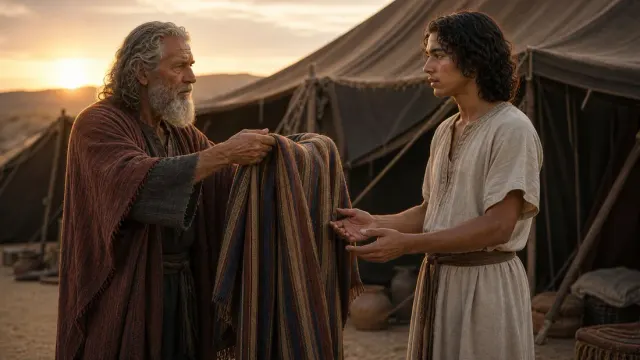
Potiphar is the Egyptian who buys Joseph from the Ishmaelites. Genesis calls him an officer of Pharaoh and captain of the guard, the man in charge of the royal bodyguard and, it seems, of the prison where the king's prisoners were kept. He notices that the LORD is with Joseph and that everything Joseph touches prospers, and he makes him overseer of his house, so that he knows nothing of his affairs save the bread he eats. The Book of Genesis adds that the LORD blessed the Egyptian's house for Joseph's sake.

His wife casts her eyes on Joseph and asks him, day after day, to lie with her. Joseph refuses: his master has kept back nothing from him but her, and how can he do this great wickedness and sin against God. One day, with no one else in the house, she catches him by his garment; he leaves it in her hand and flees. She keeps the garment, calls the men of the house, and tells them and then her husband that the Hebrew servant came in to mock her. Potiphar's wrath is kindled and he puts Joseph in the prison where the king's prisoners are bound. He is not heard of again by name, though the captain of the guard later assigns Joseph to serve the butler and baker, and Joseph's father-in-law is a priest named Potipherah.

Where he appearsGenesis 37 · Genesis 39

Scroll down to the account
Potiphar

The movements, in the order the text gives them.

The Account of Potiphar

  1. 01

    Genesis 37:36

    Sold into his house

    The Midianites sell Joseph into Egypt unto Potiphar, an officer of Pharaoh's, and captain of the guard. Genesis 38 then interrupts, and the thread is picked up in chapter 39.

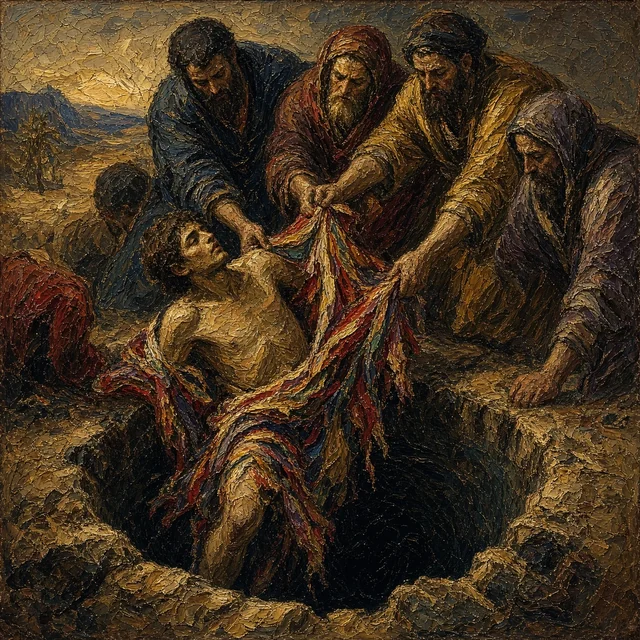
    He arrives in the last verse of the chapter, as a buyer. The Midianites sold him into Egypt unto Potiphar, an officer of Pharaoh's, and captain of the guard. Three facts and no character. Joseph has been thrown into a pit, sold for twenty pieces of silver, and carried down a trade road, and the chapter ends by telling us who now owns him. The title matters more than the man: captain of the guard is the officer over Pharaoh's executioners and the royal prison, which is exactly the place Joseph ends up in two chapters later. The house he is sold into is already, unknowingly, attached to the jail that will hold him.

    Verse by verse

    1. 37:36

      An officer of Pharaoh's: the word can mean a court official or a eunuch, and readers have argued which since antiquity.

    2. 37:36

      Captain of the guard: the same title used of the man over the prison in 40:3, which is why Joseph lands where he does.

    Genesis 37:36

    King James Version · 1 verse

    37:36And the Midianites sold him into Egypt unto Potiphar, an officer of Pharaoh’s, and captain of the guard.

    Genesis 37:36: Sold into his house
  2. 02

    Genesis 39:1-6

    Overseer of his house

    Potiphar sees that the LORD is with Joseph and makes him overseer over his house and all that he has. The LORD blesses the Egyptian's house for Joseph's sake, in the house and in the field, and Potiphar leaves all in Joseph's hand, knowing nothing but the bread he eats.

    The chapter restates the sale and then says the thing that governs everything after it: the LORD was with Joseph, and he was a prosperous man. Potiphar sees it, and the text is careful about what he sees: his master saw that the LORD was with him, and that the LORD made all that he did to prosper. An Egyptian officer draws a correct theological conclusion from watching a slave work. So he promotes him, and keeps promoting him, until he made him overseer over his house, and all that he had he put into his hand. The trust is total and the relief is stated plainly: he knew not ought he had, save the bread which he did eat. Potiphar has stopped counting. The last line of the paragraph is the one that sets up the next: and Joseph was a goodly person, and well favoured.

    Verse by verse

    1. 39:2

      The LORD was with Joseph: said four times in this chapter, twice before the trouble and twice in the prison after it.

    2. 39:3

      His master saw that the LORD was with him: Potiphar recognises the source of the blessing without sharing the faith.

    3. 39:6

      Save the bread which he did eat: he keeps only his own meals in his hands, which some read as a note about Egyptian custom regarding food and foreigners.

    4. 39:6

      A goodly person, and well favoured: the same phrasing used of his mother Rachel in 29:17. The resemblance is deliberate.

    Genesis 39:1-6

    King James Version · 6 verses

    39:1And Joseph was brought down to Egypt; and Potiphar, an officer of Pharaoh, captain of the guard, an Egyptian, bought him of the hands of the Ishmeelites, which had brought him down thither.

    39:2And the LORD was with Joseph, and he was a prosperous man; and he was in the house of his master the Egyptian.

    39:3And his master saw that the LORD was with him, and that the LORD made all that he did to prosper in his hand.

    39:4And Joseph found grace in his sight, and he served him: and he made him overseer over his house, and all that he had he put into his hand.

    39:5And it came to pass from the time that he had made him overseer in his house, and over all that he had, that the LORD blessed the Egyptian’s house for Joseph’s sake; and the blessing of the LORD was upon all that he had in the house, and in the field.

    39:6And he left all that he had in Joseph’s hand; and he knew not ought he had, save the bread which he did eat. And Joseph was a goodly person, and well favoured.

  3. 03

    Genesis 39:7-12

    His wife and the garment

    Potiphar's wife asks Joseph to lie with her, day by day. He refuses: my master hath kept back nothing from me but thee, because thou art his wife. She catches him by his garment; he leaves it in her hand and runs out.

    His master's wife cast her eyes upon Joseph, and the demand is two words in Hebrew: lie with me. Joseph's refusal is long where hers is short, and he gives three reasons in order. His master has withheld nothing from him but her. He has been trusted absolutely. And then the reason that is not about Potiphar at all: how then can I do this great wickedness, and sin against God? He answers a woman who has power over his life by naming a higher claim than the one she holds. The pressure is not a single moment either, she spake to Joseph day by day, and he would not hearken, not even to be with her. The end is physical and fast: she caught him by his garment, and he left it in her hand, and fled, and got him out.

    Verse by verse

    1. 39:8

      He refused: the verb stands alone before the explanation, which is how the sentence is built in Hebrew.

    2. 39:9

      Sin against God: he names the offence as against God before naming the wrong to his master. The order is the point.

    3. 39:10

      Day by day: not one temptation but a campaign. Not even to be with her means he avoided the room.

    4. 39:12

      He left his garment: the second garment taken from him. The first was the coat his brothers used to deceive his father.

    Genesis 39:7-12

    King James Version · 6 verses

    39:7And it came to pass after these things, that his master’s wife cast her eyes upon Joseph; and she said, Lie with me.

    39:8But he refused, and said unto his master’s wife, Behold, my master wotteth not what is with me in the house, and he hath committed all that he hath to my hand;

    39:9There is none greater in this house than I; neither hath he kept back any thing from me but thee, because thou art his wife: how then can I do this great wickedness, and sin against God?

    39:10And it came to pass, as she spake to Joseph day by day, that he hearkened not unto her, to lie by her, or to be with her.

    39:11And it came to pass about this time, that Joseph went into the house to do his business; and there was none of the men of the house there within.

    39:12And she caught him by his garment, saying, Lie with me: and he left his garment in her hand, and fled, and got him out.

    Genesis 39:7-12: His wife and the garment
  4. 04

    Genesis 39:13-18

    The accusation

    She calls the men of the house and says the Hebrew came in to mock her and fled when she cried out, leaving his garment. She keeps it until her lord comes home and tells him the same.

    She has the garment and she uses it twice, and the two speeches are not the same. To the men of the house she says, see, he hath brought in an Hebrew unto us to mock us, which turns the accusation on her husband and invites the servants to share a grievance about a foreigner promoted over them. To Potiphar she changes it: the Hebrew servant, which thou hast brought unto us, came in unto me to mock me. The complaint is now his fault directly. Both versions lean on Hebrew rather than on Joseph, and the garment does the work the coat of many colours did in chapter 37: a piece of clothing produced as evidence, telling an account its owner never told.

    Verse by verse

    1. 39:14

      An Hebrew unto us to mock us: she speaks to the household first, framing it as a grievance they share.

    2. 39:14

      I cried with a loud voice: the detail she adds to make the account hold together, and the one the law of Deuteronomy 22:24 would test.

    3. 39:17

      Which thou hast brought unto us: to her husband she makes it his decision that caused it. The wording shifts between the two tellings.

    Genesis 39:13-18

    King James Version · 6 verses

    39:13And it came to pass, when she saw that he had left his garment in her hand, and was fled forth,

    39:14That she called unto the men of her house, and spake unto them, saying, See, he hath brought in an Hebrew unto us to mock us; he came in unto me to lie with me, and I cried with a loud voice:

    39:15And it came to pass, when he heard that I lifted up my voice and cried, that he left his garment with me, and fled, and got him out.

    39:16And she laid up his garment by her, until his lord came home.

    39:17And she spake unto him according to these words, saying, The Hebrew servant, which thou hast brought unto us, came in unto me to mock me:

    39:18And it came to pass, as I lifted up my voice and cried, that he left his garment with me, and fled out.

    Genesis 39:13-18: The accusation
  5. 05

    Genesis 39:19-20

    Into the prison

    When Potiphar hears his wife's words, his wrath is kindled. He takes Joseph and puts him into the prison, a place where the king's prisoners are bound. And he was there in the prison.

    When his master heard the words of his wife, his wrath was kindled. Then a sentence that does less than it looks: Joseph's master took him, and put him into the prison. A slave accused of assaulting his owner's wife could be killed on the spot and nobody would ask. Instead Potiphar puts him in the royal jail, which he himself commands, and Joseph is alive at the end of the verse. Whether that is because he half believed his wife, or half believed Joseph, or simply could not afford to be seen doing nothing, Genesis does not say. It gives the anger and it gives the outcome, and the gap between them is where readers have looked for Potiphar's real opinion ever since.

    Verse by verse

    1. 39:19

      His wrath was kindled: at whom is not specified. The verse says only that he heard her words and became angry.

    2. 39:20

      The place where the king's prisoners were bound: not a labour camp but the royal jail, under Potiphar's own office. The punishment is unexpectedly mild.

    3. 39:20

      But the LORD was with Joseph: the next verse repeats the phrase from verse 2, so the prison is framed exactly as the house was.

    Genesis 39:19-20

    King James Version · 2 verses

    39:19And it came to pass, when his master heard the words of his wife, which she spake unto him, saying, After this manner did thy servant to me; that his wrath was kindled.

    39:20And Joseph’s master took him, and put him into the prison, a place where the king’s prisoners were bound: and he was there in the prison.

    Genesis 39:19-20: Into the prison
  6. 06

    Genesis 40:1-4

    The captain of the guard again

    Pharaoh's butler and baker are put in ward in the house of the captain of the guard, and the captain of the guard charges Joseph with them. Joseph serves them, and interprets their dreams.


    Pharaoh's butler and baker offend him and are put in ward in the house of the captain of the guard, into the prison, the place where Joseph was bound. Then the detail that closes his part in the account: and the captain of the guard charged Joseph with them, and he served them. The officer who jailed him assigns him the two most sensitive prisoners in Egypt, men who may yet be restored to the king's table. That is not the act of a master who believes the charge. Potiphar is never mentioned again, and Genesis offers no scene of vindication or apology. His last recorded decision is to trust Joseph with something that matters, which is the same thing he did in chapter 39, and the dreams that begin two verses later are what carry Joseph out of the prison for good.

    Verse by verse

    1. 40:3

      The house of the captain of the guard: the prison is inside his own establishment, so Joseph never leaves his authority.

    2. 40:4

      Charged Joseph with them: the captain gives the accused man responsibility for royal prisoners. The gesture is quiet and it is not nothing.

    3. 40:4

      Potiphar is not named again in Scripture. The account moves to Pharaoh and never returns to settle the accusation.

    Genesis 40:1-4

    King James Version · 4 verses

    40:1And it came to pass after these things, that the butler of the king of Egypt and his baker had offended their lord the king of Egypt.

    40:2And Pharaoh was wroth against two of his officers, against the chief of the butlers, and against the chief of the bakers.

    40:3And he put them in ward in the house of the captain of the guard, into the prison, the place where Joseph was bound.

    40:4And the captain of the guard charged Joseph with them, and he served them: and they continued a season in ward.

    Genesis 40:1-4: The captain of the guard again

The people, the places and the rest of Scripture.

Reading Potiphar closely

The people he dealt with

Joseph is the slave who became his steward. Potiphar's trust is complete, and the Book of Genesis says twice that he left everything in Joseph's hand. When the accusation comes he acts on his wife's word without any recorded inquiry, and Joseph goes from the best position in the house to the prison. Joseph never speaks a word of complaint about him, and his refusal of the wife is framed as loyalty to Potiphar as much as obedience to God.

His wife is the aggressor of the chapter. She is given no name and no motive beyond desire, and her lie is told twice, once to the servants with a jab at her husband, he hath brought in an Hebrew unto us to mock us, and once to Potiphar himself. Pharaoh is the master he serves, and the king's prisoners are under his charge, which is why Joseph ends up in the same prison as the butler and the baker. The keeper of the prison, a separate officer, becomes Joseph's next admirer.

Genesis 37
Genesis 37

The prison under his command

Genesis 40 says the butler and baker were put in the house of the captain of the guard, and the captain of the guard assigned Joseph to serve them. If that captain is still Potiphar, then he is the one who set Joseph, his own accused slave, over Pharaoh's officers, which suggests he did not fully believe the charge against him. Some readers take the phrase as a title held by a successor. Either way, the chain that leads to the throne runs through Potiphar's house: his purchase, his promotion, his prison, and his prisoners.

Genesis 37

What came before and what followed

Before Potiphar there is the pit at Dothan and a caravan of Ishmaelites with spicery, balm and myrrh. After him there are two years in prison, Pharaoh's dreams, and Joseph's rise to second in the kingdom. Pharaoh gives Joseph as wife Asenath, the daughter of Potipherah, priest of On, a name so close to Potiphar's that some ancient readers took them for the same man, though the text keeps them apart. The false accusation is the second wrong done to Joseph, after his brothers' sale, and the reconciliation in chapter 45 forgives the first without ever revisiting the second.

Genesis 39

Where the rest of Scripture reaches back

Potiphar is not named outside Genesis. Psalm 105 remembers Joseph sold for a servant, whose feet they hurt with fetters, he was laid in iron, until the time that his word came. Stephen in Acts 7 says God delivered Joseph out of all his afflictions and gave him favour and wisdom in the sight of Pharaoh. Joseph's answer to Potiphar's wife has been quoted from the earliest Jewish and Christian teachers as the pattern of fleeing temptation, and Hebrews 11 places Joseph among those who lived by faith, though it mentions only his dying words about his bones.

Why it matters

Potiphar is the first Egyptian in the account of Israel's descent into Egypt, and Genesis treats him fairly. He is not cruel. He sees Joseph's competence and hands him his household, and the text says his house was blessed because Joseph was in it, which is the promise to Abraham, in thee shall all families of the earth be blessed, working in miniature. His wife is the temptation Joseph passes, and his prison is where Joseph meets the butler whose dream leads to Pharaoh. Without the false accusation Joseph would have stayed a steward. Every step down in Genesis 39 is a step toward the throne room.

Readers have long noticed that Potiphar put Joseph in prison rather than executing him, which a master could have done to a slave accused of assaulting his wife, and that the prison was one under Potiphar's own command. Whether he believed his wife or not, Genesis does not say. Joseph's word to him, how can I do this great wickedness and sin against God, became one of the Bible's standard answers to temptation, and the garment left in the woman's hand is the second coat used as false evidence against Joseph.

4 songs

The music

Every song in the catalogue whose passage falls inside these chapters.

  1. Genesis 37

    Into the Pit

  2. Genesis 37:1-38:30

    The Dreamer in the Pit

  3. Genesis 39:1-41:57

    From Prison to the Throne

  4. Genesis 39-40

    The Prisoner Still Dreamed

Nearby

All the people

Report an error on this page