

Lyrics · Genesis
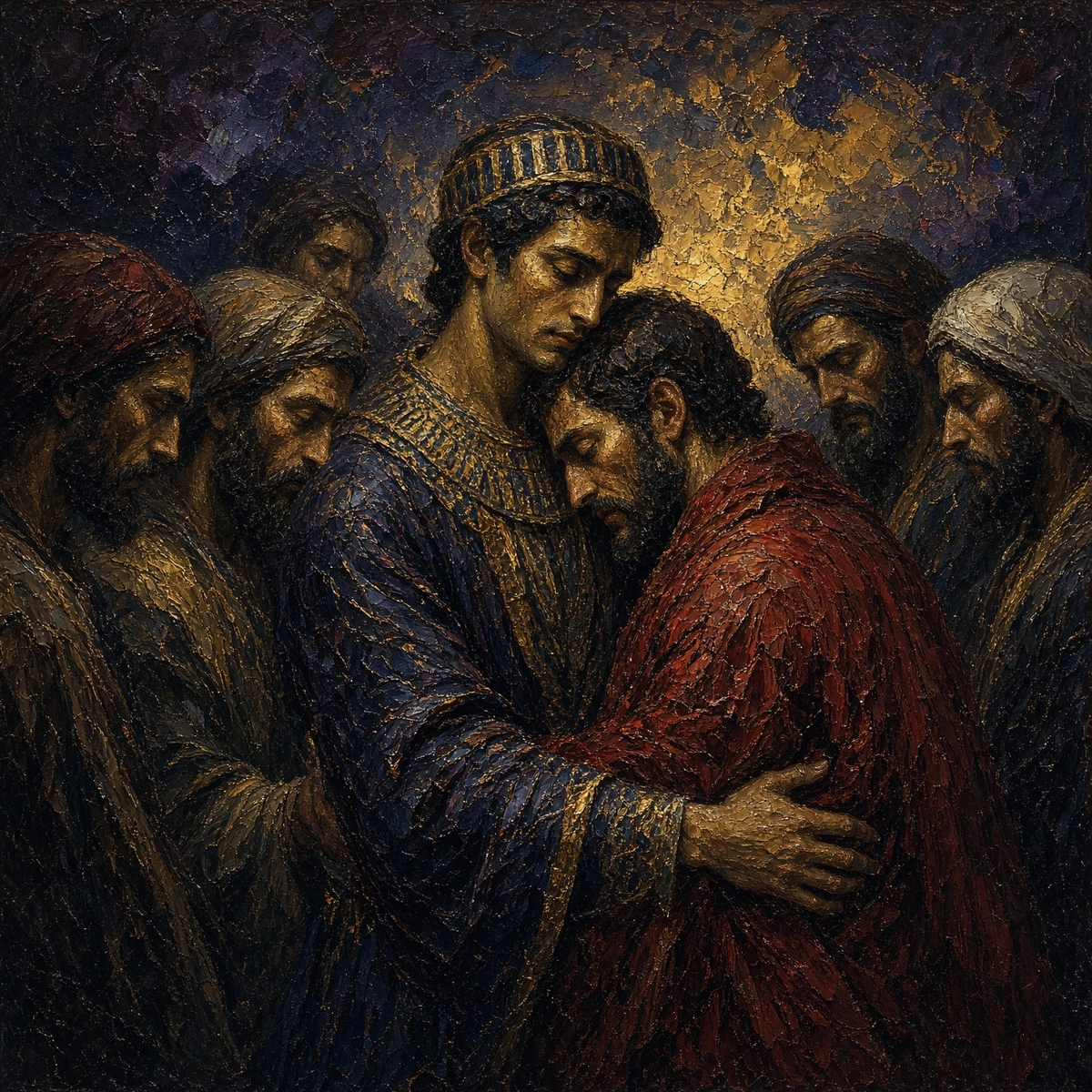
You Meant It for Evil
Genesis 42:1-50:26
Lyrics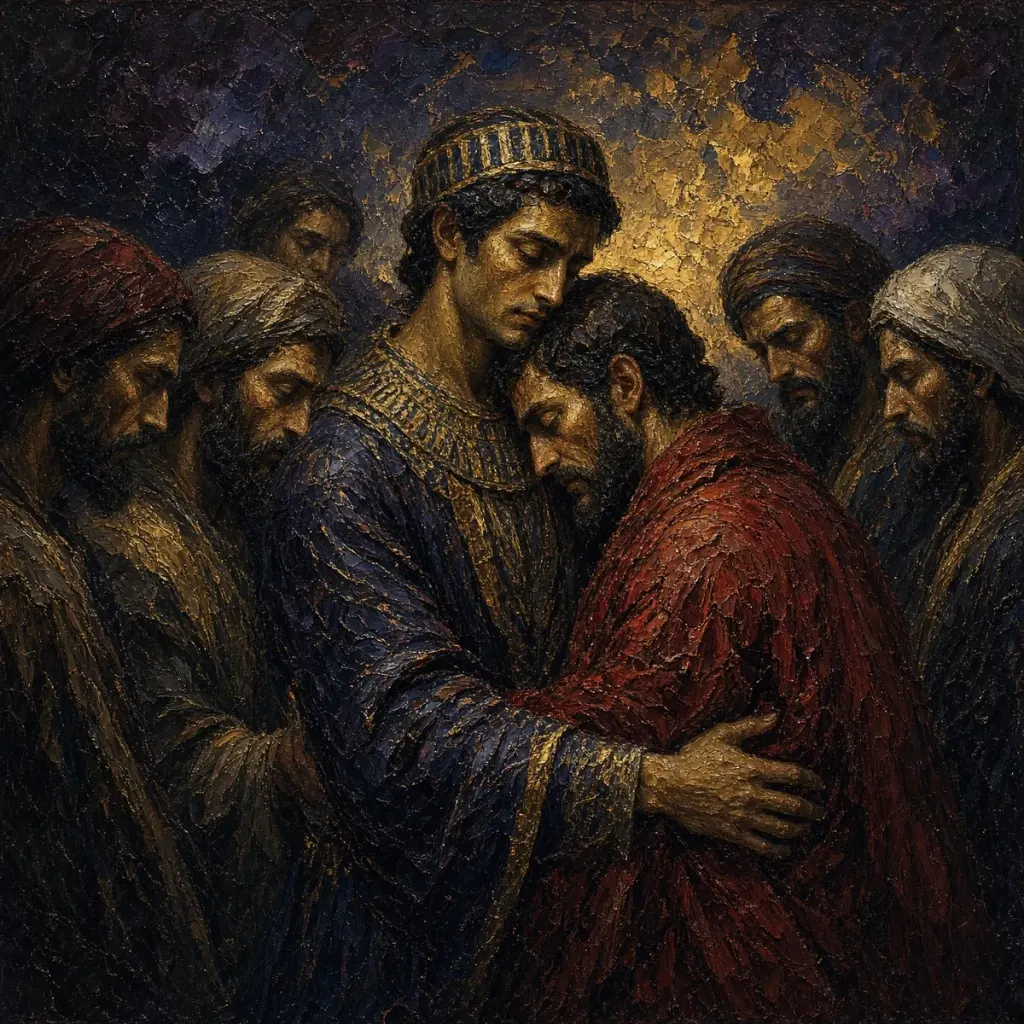
Playing next
About this song
About this song
This song belongs to the Genesis collection. One recording is available to play here, with the complete lyrics below.
- Bible book
- Genesis
- Collection
- Genesis
- Musical styles
- Uncategorized
Named in this songJudahEgyptJacobJosephGoshenMachpelah
About the passage
Genesis 42: The brothers bow without recognizing the man before them
Genesis 42 sends ten of Jacob's sons into Egypt because famine has made food a matter of survival, while Benjamin stays behind under special protection. The brothers bow before the governor without knowing that he is Joseph, and he remembers the dreams they once hated. Their claim to be true men becomes the subject of a test that requires Benjamin's appearance. Joseph then hears what they assume is a private confession: they remember his anguish, his pleading, and their refusal to listen. He weeps out of sight but continues the test, detaining Simeon while the others carry grain home. Joseph also restores their money secretly and gives provisions for the road. What the reader knows to be provision appears to the brothers as danger because they do not know the giver. Back in Canaan, the returned money deepens fear, and the demand for Benjamin collides with Jacob's grief. He counts Joseph as dead, Simeon as lost, and Benjamin as the next threatened son, even while the reader knows his conclusions are incomplete.
Study Genesis 42 in depthGenesis 43: An invitation to dinner looks like a trap
Genesis 43 begins with an emptying storehouse and a decision Jacob can no longer postpone. Judah does more than argue for Benjamin's release. He puts himself behind the promise, accepting lasting blame if the younger brother does not return. Jacob responds by sending everything he still can control: a gift, double money, the restored payment, and finally Benjamin himself. In Egypt, the brothers read hospitality as danger because they still do not understand the man arranging it. The steward tells them their money is accounted for, Simeon is restored, and the feared arrest becomes a meal. Joseph asks after Jacob like a ruler gathering information, but the question is also a son's question. When he sees Benjamin, his concealment has to survive tears. The chapter closes with another unsettling detail: the host somehow knows their birth order and gives Benjamin five times the portion, yet the meal ends in gladness rather than open envy.
Study Genesis 43 in depthGenesis 44: Judah offers the place he once sold his brother into
Genesis 44 turns a silver cup into a test whose result the reader knows before the brothers do. Joseph orders the cup placed in Benjamin's sack, then sends the steward after them with an accusation. The search proceeds from oldest to youngest until the planted evidence appears exactly where Joseph put it. Yet the brothers do not take the escape offered to them. They all return. Joseph then narrows the terms further: Benjamin may remain as a servant while the others go home in peace. That offer recreates the old possibility of saving themselves by leaving a favored son behind. Judah answers not by disputing the search but by talking about their father. He repeats Jacob's preference for Rachel's sons without protesting it, describes the damage Benjamin's loss would do, and finally makes good on his pledge as surety. The man who once proposed selling a brother now asks to remain enslaved so another brother can go free.
Study Genesis 44 in depth