
New · FreePlay The Witnesses The in-depth puzzle battle quest through Bible history

Places of the Bible

Goshen

Given because shepherds were an abomination to the Egyptians, and kept because of it.

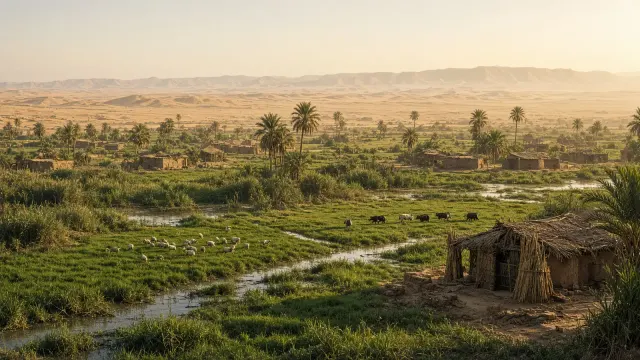
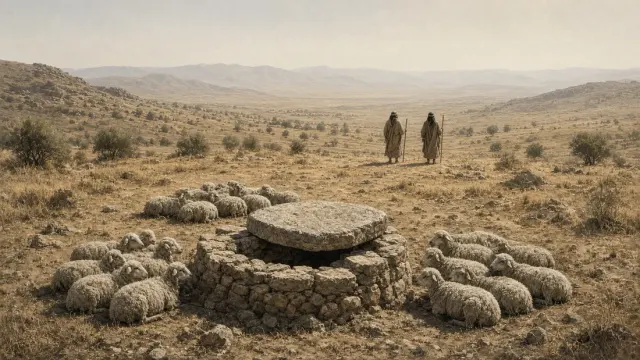
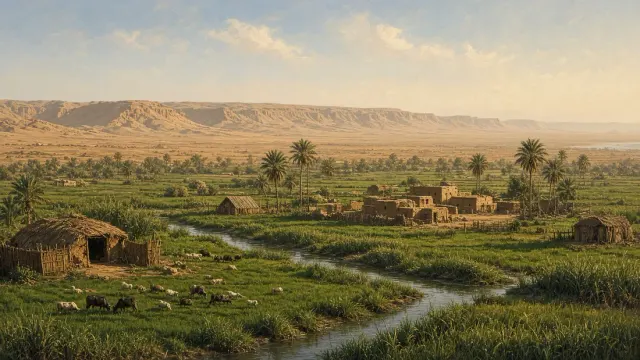
Joseph coaches his brothers before they meet Pharaoh. Say that your servants have been keepers of cattle from our youth, he tells them, for every shepherd is an abomination unto the Egyptians. The advice sounds like a risk and it is a strategy: the answer they give gets them the best of the land in a district apart, where a herding family can live at a distance from a people who will not eat with them. Separation is the gift.

Where it appearsGenesis 46 to 47 · Exodus 8 · Exodus 9

Scroll down to the account

The movements, in the order the text gives them.

The Account of Goshen

  1. 01

    Genesis 46:31-34

    That ye may dwell in the land of Goshen

    Joseph tells them exactly what to say and why it will work. The thing that makes them unwelcome is the thing that gets them the land.

    Joseph does not coach his brothers to make their occupation sound more impressive. He tells them to say exactly what they have always done. Their shepherding, the detail most likely to offend Egyptian society, is also the reason they can be settled in Goshen. The awkward qualification becomes the useful one.

    That ye may dwell gives the practical purpose of the conversation. Joseph is not disguising the family as courtiers or asking them to invent a new background. Their flocks have come with them, and their work reaches back through their fathers. A suitable place must accommodate a household, a livelihood, and a way of living that will not simply disappear on arrival.

    The explanation about Egyptian dislike belongs to the account's description of the situation; it is not permission to invent a complete theory of Egyptian religion. The next chapter even mentions Pharaoh's own cattle. The immediate point is sharper and smaller: a social barrier can make room for the family to remain together. Joseph knows where the discomfort is, and uses it to obtain an address.

    Verse by verse

    1. 46:31-32

      Joseph explicitly identifies the newcomers as his family and their occupation as shepherding. The proposed speech does not conceal either fact.

    2. 46:34

      Cattle in this older English usage can include livestock more broadly than modern beef or dairy cattle.

    3. 46:34

      The purpose clause connects the stated occupation with residence in Goshen. The verse does not give the region's precise boundaries.
    Genesis 46:31-34

    King James Version · 4 verses

    46:31And Joseph said unto his brethren, and unto his father’s house, I will go up, and shew Pharaoh, and say unto him, My brethren, and my father’s house, which were in the land of Canaan, are come unto me;

    46:32And the men are shepherds, for their trade hath been to feed cattle; and they have brought their flocks, and their herds, and all that they have.

    46:33And it shall come to pass, when Pharaoh shall call you, and shall say, What is your occupation?

    46:34That ye shall say, Thy servants’ trade hath been about cattle from our youth even until now, both we, and also our fathers: that ye may dwell in the land of Goshen; for every shepherd is an abomination unto the Egyptians.

    Genesis 46:31-34: That ye may dwell in the land of Goshen
  2. 02

    Genesis 47:5-6

    In the best of the land

    Pharaoh gives more than was asked and adds a job offer for any man of activity among them, over his own cattle.

    The best of the land is not the phrase of a ruler grudgingly tolerating unwanted guests. Pharaoh authorizes a favorable settlement and then notices that experienced stockmen may be useful to his own estate. The same occupation that creates social distance can qualify a man for royal responsibility. Egypt is capable of despising shepherds and employing them. The two facts sit comfortably in one conversation.

    The wording also keeps the grant tied to Joseph. Thy father and thy brethren are come unto thee. This is a particular welcome, mediated through a particular relationship, not a declaration that every later Egyptian ruler will honor the arrangement. The generosity is real without being permanent security.

    Goshen therefore enters Israel's history as provision during famine, not as a prison camp from its first day. The Book of Genesis allows the welcome to be welcome. Reading later slavery backward into every Egyptian gesture would erase the contrast the Book of Exodus needs: the place once offered at its best becomes the place from which the descendants must be brought out.

    Verse by verse

    1. 47:5

      Pharaoh addresses Joseph here, although the brothers have already spoken with him in verses 3-4.

    2. 47:6

      Men of activity means capable or able men. The Hebrew chayil concerns capacity or strength, not simply keeping busy.

    3. 47:6

      Rulers over my cattle explicitly acknowledges royal livestock, qualifying any claim that Egyptians had no use for herding.

    Genesis 47:5-6

    King James Version · 2 verses

    47:5And Pharaoh spake unto Joseph, saying, Thy father and thy brethren are come unto thee:

    47:6The land of Egypt is before thee; in the best of the land make thy father and brethren to dwell; in the land of Goshen let them dwell: and if thou knowest any men of activity among them, then make them rulers over my cattle.

    Genesis 47:5-6: In the best of the land
  3. 03

    Exodus 8:22-23

    I will sever in that day the land of Goshen

    The fourth plague is the first to draw a line on a map. The stated purpose is knowledge rather than rescue.

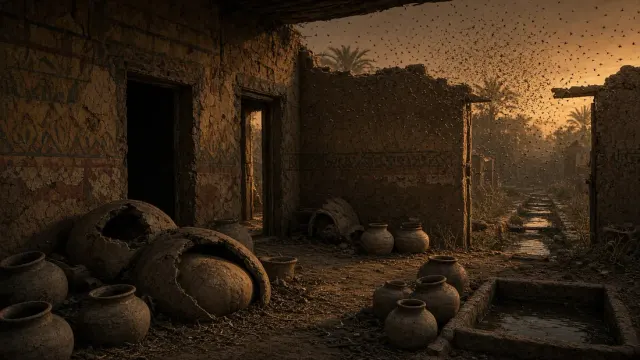
    Goshen receives no new wall. The protection is announced as a distinction God will make within the land Pharaoh rules. Egyptian houses will be full of swarms, while the district where Israel lives will be without them. The same country contains two conditions, and the difference is part of the sign.

    The language moves from geography to relationship: the land of Goshen, then my people and thy people. Pharaoh's administration may count Israel among the labor it controls, but the announcement refuses his claim to be the final one. The purpose is stated as knowledge, that Pharaoh may know the LORD in the midst of the earth. This is not a deity unable to act beyond a distant homeland. The demonstration occurs inside Egypt.

    Tomorrow also matters. Place and time are specified before the event, so the distinction is not an explanation improvised afterward. Goshen, first useful because shepherds could live apart, is now set apart for another reason. Its importance is not a secret property of its soil. The people living there are identified, and the protection is promised.

    Verse by verse

    1. 8:22

      Sever means distinguish or set apart here, not physically cut the district away from Egypt.

    2. 8:22

      In the midst of the earth locates the demonstration of divine authority within the world Pharaoh inhabits, not only in Israel's homeland.

    3. 8:23

      Tomorrow fixes the sign's timing before the plague described in verse 24.

    Exodus 8:22-23

    King James Version · 2 verses

    8:22And I will sever in that day the land of Goshen, in which my people dwell, that no swarms of flies shall be there; to the end thou mayest know that I am the LORD in the midst of the earth.

    8:23And I will put a division between my people and thy people: to morrow shall this sign be.

    Exodus 8:22-23: I will sever in that day the land of Goshen
  4. 04

    Exodus 9:26

    Only in the land of Goshen was there no hail

    One verse, and it does the whole work. The storm is total and the exception is geographic and deliberate.

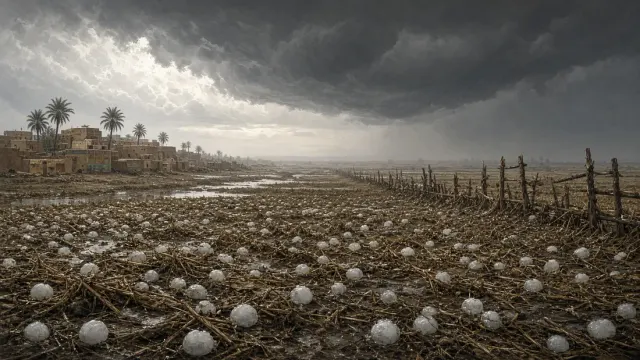
    Only is doing a great deal of work in this short verse. The preceding description sweeps across Egypt's fields, people, animals, plants, and trees. Then the Book of Exodus names a place the hail has not reached. Goshen is not an incidental exception added to the weather report. Its absence of hail is the distinction the account wants preserved.

    The surrounding verses keep that distinction from becoming a careless claim that no Egyptian could be spared. Before the storm, Pharaoh's servants receive a warning to bring people and livestock under shelter. Some fear the word of the LORD and act; others leave them outside. Goshen's protection is geographical, while protection elsewhere is connected with heeding the announced danger. The chapter records both.

    That combination gives the scene its precision. The devastation is terrible, but it is neither described without limits nor announced without warning. Goshen remains visibly different from the land around it. The door of an Egyptian house can also become a place of shelter. The boundary and the warning must both be read.

    Verse by verse

    1. 9:26

      Only qualifies the sweeping account of destruction in verse 25; Goshen is an explicit exception, not a different country.

    2. 9:26

      Exodus 9:20-21 separately records Egyptians responding to the warning by sheltering servants and livestock. The exemption of Goshen does not erase that provision.

    Exodus 9:26

    King James Version · 1 verse

    9:26Only in the land of Goshen, where the children of Israel were, was there no hail.

    Exodus 9:26: Only in the land of Goshen was there no hail

Why it matters

Generations later that separation is what makes the plagues legible. The flies do not come to Goshen, the murrain does not touch the cattle there, the hail falls everywhere else, and the darkness that can be felt stops at its border while the Israelites have light in their dwellings. The text says why, and it is not geography: that thou mayest know that I am the LORD in the midst of the earth. The place that kept them at arm’s length becomes the place where a difference can be pointed at.

2 songs

The music

Every song in the catalogue whose passage falls inside these chapters.

  1. Exodus 7:14-10:29

    Signs Upon Egypt

  2. Exodus 8:20-10:29

    A Difference in Goshen

Nearby

All the places

Report an error on this page