New · FreePlay The Witnesses The in-depth puzzle battle quest through Bible history

Places of the Bible

Canaan

Promised to a man who never owned a field in it except the one he bought to bury his wife.

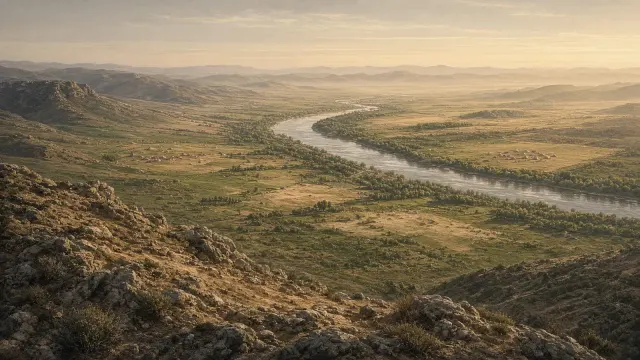
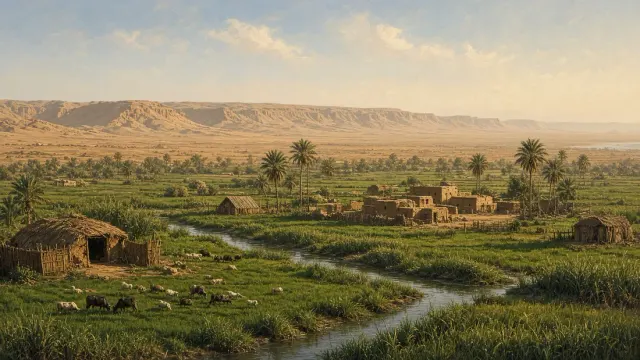
Canaan is a strip of land between a desert and a sea, and the account is careful to say who was already there: and the Canaanite was then in the land. The promise is given standing in it, at Shechem, to a man who is passing through with tents and livestock. He walks its length, builds altars at the places he stops, and goes down to Egypt when the famine comes. He is a resident alien in the country he has been given.

Where it appearsGenesis 12 to 13 · Genesis 15 · Genesis 17

Scroll down to the account
Canaan

The movements, in the order the text gives them.

The Account of Canaan

  1. 01

    Genesis 12:5-7

    Unto thy seed will I give this land

    The promise is made at Shechem with the Canaanite in the land, and an altar goes up on the spot. It is given to descendants, not to him.

    The land has inhabitants before it has Abram. That short sentence about the Canaanite stands directly beside the promise, preventing the landscape from becoming an empty stage conveniently prepared for one arriving family. There are already people here. Abram passes through their country; the LORD promises it to descendants whom Sarai, still childless, has not borne. Both parts of the promise exceed what the household presently possesses.

    The arrival itself is emphatic: they went forth to go into the land of Canaan; and into the land of Canaan they came. The destination named when Terah left Ur in 11:31 has finally become an address. Yet reaching it does not finish the matter. Abram builds an altar, not a capital, and the next movement takes him onward with his tent. The visible response to the promise is worship, not a completed takeover.

    There is something wonderfully exact about that contrast. The Book of Genesis can put a whole country into a divine sentence while leaving the recipient a traveler on its soil. Canaan is no longer an unnamed destination. It is not yet an inherited home.

    Verse by verse

    1. 12:5

      The destination repeats Genesis 11:31, where Terah began the journey toward Canaan but settled in Haran.

    2. 12:6

      Sichem is the King James spelling here of the place later called Shechem.

    3. 12:7

      Seed refers to descendants; Sarai's childlessness was explicitly stated in Genesis 11:30.

    Genesis 12:5-7

    King James Version · 3 verses

    12:5And Abram took Sarai his wife, and Lot his brother’s son, and all their substance that they had gathered, and the souls that they had gotten in Haran; and they went forth to go into the land of Canaan; and into the land of Canaan they came.

    12:6And Abram passed through the land unto the place of Sichem, unto the plain of Moreh. And the Canaanite was then in the land.

    12:7And the LORD appeared unto Abram, and said, Unto thy seed will I give this land: and there builded he an altar unto the LORD, who appeared unto him.

    Genesis 12:5-7: Unto thy seed will I give this land
  2. 02

    Genesis 13:14-17

    Walk through the land

    He is told to look north, south, east and west and then to walk its length and breadth. Surveying is the only form of possession he is offered.

    Two men lift their eyes in this chapter, but they do not receive the same view. Lot looks over the watered plain in verse 10 and chooses it. Abram is told to look after the separation, and the directions come one after another until the whole horizon is included. The man who allowed the first choice is not left with a divine description of the leftovers.

    That does not turn the passage into a rule about profitable generosity. Its interest is more precise: Lot's choice determines where the two households settle, but it does not determine the dimensions of God's promise. A dispute over sufficient grazing room opens into a declaration about descendants as uncountable as dust. The chapter has moved from too many animals for two families to too many descendants to number.

    First the eyes, then the feet. Abram is to walk the length and breadth of what has been promised, encountering as actual ground what has been spoken as a future gift. No boundary transaction or military seizure is reported. The country is real enough to walk across. Its promised future is still larger than the walking man.

    Verse by verse

    1. 13:14

      Lift up thine eyes echoes Lot lifting his eyes in 13:10; the similar gesture highlights the different grounds of their prospects.

    2. 13:16

      Dust expresses an innumerable multitude, not a numerical estimate of future population.

    3. 13:17

      Walking the land is commanded, but the verse does not describe a purchase or an immediate transfer of occupied settlements.

    Genesis 13:14-17

    King James Version · 4 verses

    13:14And the LORD said unto Abram, after that Lot was separated from him, Lift up now thine eyes, and look from the place where thou art northward, and southward, and eastward, and westward:

    13:15For all the land which thou seest, to thee will I give it, and to thy seed for ever.

    13:16And I will make thy seed as the dust of the earth: so that if a man can number the dust of the earth, then shall thy seed also be numbered.

    13:17Arise, walk through the land in the length of it and in the breadth of it; for I will give it unto thee.

    Genesis 13:14-17: Walk through the land
  3. 03

    Genesis 15:13-21

    From the river of Egypt unto the great river

    The boundaries are given and so is the delay: four hundred years of affliction first, because the iniquity of the Amorites is not yet full.

    The answer about inheriting the land includes Abram's funeral. He will reach a good old age and be buried before the promised return of his descendants. That is not an incidental interruption in a reassuring speech. It fixes the scale of the promise: the gift is certain, but its fulfillment will extend beyond the lifetime of the man hearing it. Before the homecoming come foreign residence, servitude, affliction, and judgment upon the oppressing nation. The boundaries arrive with a calendar.

    Even that calendar is not arranged solely around Abram's family. The iniquity of the Amorites is not yet full. The people already occupying the country are not treated as inconvenient furniture to be removed whenever the heirs are ready. Their own moral history matters to the timing. The final list names ten peoples, giving the promised territory a human density that a bare outline on a map could conceal.

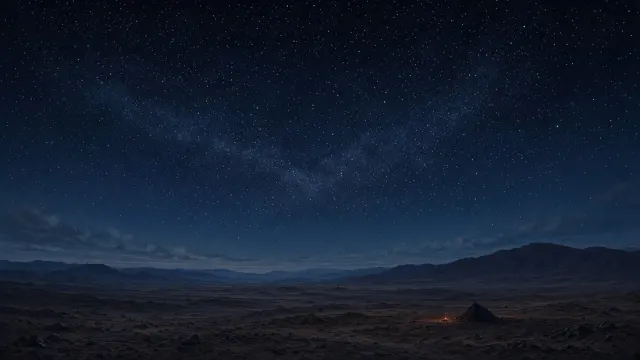
    Then fire moves between the divided animals. Abram had prepared the pieces earlier, but the passage does not put him on that path beside the flame. The LORD makes the covenant. The movement through the pieces answers the request for assurance with an enacted pledge, while the preceding words refuse to disguise the centuries that lie between the pledge and the possession.

    Verse by verse

    1. 15:13

      The foreign country is not named in this verse; the later Egyptian bondage and exodus supply the historical identification.

    2. 15:16

      The stated reason for delayed return concerns the Amorites' iniquity, not only the development of Abram's descendants.

    3. 15:17

      Verse 12 places Abram in a deep sleep; only the smoking furnace and burning lamp are described passing between the pieces.

    4. 15:18

      The Euphrates is explicitly named; the other boundary is designated the river of Egypt.

    5. 15:19-21

      This passage names ten peoples, not the seven found in some later lists, such as Deuteronomy 7:1.

    Genesis 15:13-21

    King James Version · 9 verses

    15:13And he said unto Abram, Know of a surety that thy seed shall be a stranger in a land that is not theirs, and shall serve them; and they shall afflict them four hundred years;

    15:14And also that nation, whom they shall serve, will I judge: and afterward shall they come out with great substance.

    15:15And thou shalt go to thy fathers in peace; thou shalt be buried in a good old age.

    15:16But in the fourth generation they shall come hither again: for the iniquity of the Amorites is not yet full.

    15:17And it came to pass, that, when the sun went down, and it was dark, behold a smoking furnace, and a burning lamp that passed between those pieces.

    15:18In the same day the LORD made a covenant with Abram, saying, Unto thy seed have I given this land, from the river of Egypt unto the great river, the river Euphrates:

    15:19The Kenites, and the Kenizzites, and the Kadmonites,

    15:20And the Hittites, and the Perizzites, and the Rephaims,

    15:21And the Amorites, and the Canaanites, and the Girgashites, and the Jebusites.

    Genesis 15:13-21: From the river of Egypt unto the great river
  4. 04

    Genesis 17:8

    An everlasting possession

    The land of thy sojournings, given for an everlasting possession, in one sentence. Both halves of that are true at once.

    Stranger and everlasting possession occupy the same sentence. The first describes Abraham's present position; the second describes the future secured by God's covenant. Neither cancels the other. He is not pretending to be a stranger in a country already under his control, and the promise is not merely a poetic way of saying that he may continue camping there. The distance between present residence and enduring inheritance is the force of the verse.

    The new name Abraham has just been given points toward nations and kings, but the sentence here closes somewhere more intimate: I will be their God. Land is part of the covenant, not the entire content of the relationship. The following verses require the household to keep the covenant and receive its sign, including males born in the house and those bought from outside it. Promise creates a defined belonging with obligations, not a detached entitlement to acreage.

    Hebrews 11:9 preserves the tension by describing Abraham living in the land of promise as in a strange country, with Isaac and Jacob sharing the promise. Three generations can inhabit the same hope without turning their tents into a kingdom. The place is promised. The relationship is already spoken.

    Verse by verse

    1. 17:8

      The expression land wherein thou art a stranger refers to Abraham's sojournings, not to unfamiliarity with the terrain.

    2. 17:8

      I will be their God repeats the relational promise in 17:7; the land grant belongs within that covenant.

    3. 17:8

      The covenant sign and the duty to keep the covenant follow in 17:9-14; verse 8 should not be isolated from those requirements.

    Genesis 17:8

    King James Version · 1 verse

    17:8And I will give unto thee, and to thy seed after thee, the land wherein thou art a stranger, all the land of Canaan, for an everlasting possession; and I will be their God.

    Genesis 17:8: An everlasting possession

Why it matters

The gap between the promise and the possession is the point, and Scripture never closes it quietly. Abraham is told his seed will be a stranger in a land that is not theirs for four hundred years first. Isaac and Jacob live there in tents. Joseph dies in Egypt and asks for his bones to be carried back. Hebrews reads the whole thing as deliberate: they confessed that they were strangers and pilgrims on the earth, and looked for a city which hath foundations.

3 songs

The music

Every song in the catalogue whose passage falls inside these chapters.

  1. Genesis 11:27-14:24

    Go Forth from Your Country

  2. Genesis 12:1-9

    Go From Your Country

  3. Genesis 15

    Count the Stars

Nearby

All the places

Report an error on this page