
Daniel 3
The fiery furnace

Ages 8 to 11
The account
King Nebuchadnezzar made a huge image of gold on the plain of Dura in Babylon. He ordered important rulers and officers to come. When the music played, everyone was told to bow down and worship the image. Anyone who refused would be thrown into a burning fiery furnace.
Shadrach, Meshach and Abednego did not worship the image. Some men reported them to the king. Nebuchadnezzar became very angry and gave the three men another chance. They answered that their God was able to deliver them, but even if He did not, they still would not serve the king's gods or worship the image.
The king ordered the furnace heated seven times hotter than usual. Strong soldiers bound the three men and threw them in. The fire was so fierce that it killed the soldiers who took them to the furnace.
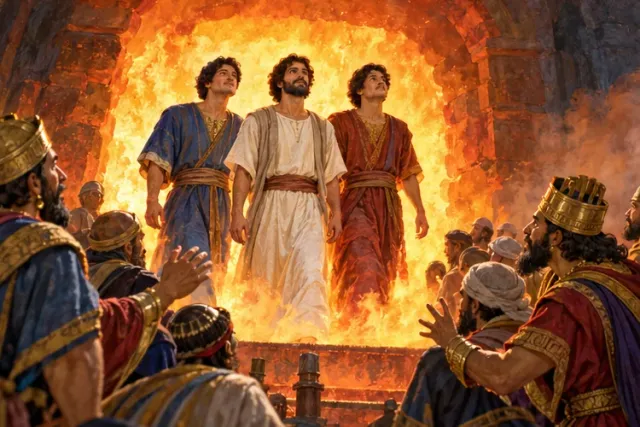
Then the king was astonished. He saw four men walking loose in the fire, and none of them was hurt. He said the fourth looked like the Son of God. He called Shadrach, Meshach and Abednego out. Their hair was not singed, their clothes were not damaged, and they did not even smell of fire.
Nebuchadnezzar praised their God for sending His angel and delivering them. He made a decree honoring their God and promoted the three men.
Memory verse
But if not, be it known unto thee, O king, that we will not serve thy gods, nor worship the golden image which thou hast set up.
Daniel 3:18
Talk about it
- What did the king command everyone to do?
- What did Shadrach, Meshach and Abednego choose to do instead?
- What did the king see inside the furnace?
Try this
Fold a sheet of paper into two columns. In one column, write what the king ordered, and in the other, write what the three men chose to do. Add a small drawing beside each choice if you like.
What can we learn?
One lesson we can draw from this account is that doing what is right can require courage. The three men stayed faithful to God even when the result was uncertain.
Ages 12 to 15
The account
King Nebuchadnezzar of Babylon set up a great golden image on the plain of Dura. It was sixty cubits high and six cubits wide. He gathered the rulers and officials of the kingdom for its dedication. A herald announced that when the instruments sounded, people of every nation and language were to fall down and worship the image. Anyone who refused would be thrown into a burning fiery furnace.
Shadrach, Meshach and Abednego were Jewish men whom the king had placed over affairs in the province of Babylon. Certain Chaldeans accused them because they would not serve the king's gods or worship the image. Nebuchadnezzar, furious, brought the three before him. He gave them another chance and challenged whether any god could deliver them from his hand.
The three men did not try to bargain. They said their God was able to deliver them from the furnace and from the king. They also said that even if He did not, they still would not serve the king's gods or worship the golden image.
Nebuchadnezzar ordered the furnace heated seven times hotter than usual. The three men were bound in their clothes and thrown in. The flames were so fierce that the soldiers who carried out the king's command were killed by the heat.
The king suddenly stood up in astonishment. He had expected to see three bound men, but he saw four men loose, walking in the fire without harm. He said the fourth had a form like the Son of God. He called Shadrach, Meshach and Abednego servants of the most high God and ordered them to come out.
The rulers gathered around them. The fire had not harmed their bodies. Their hair was not singed, their clothes were unchanged, and there was no smell of fire on them. Nebuchadnezzar then praised their God, saying He had sent His angel and delivered His servants because they trusted Him rather than worship another god. The king issued a severe decree against speaking against their God, and he promoted the three men in Babylon. The king who had demanded worship for his own image ended the event by publicly honoring the God of the men who had refused him.
Memory verse
But if not, be it known unto thee, O king, that we will not serve thy gods, nor worship the golden image which thou hast set up.
Daniel 3:18
Think about it
- Why did the king's command put Shadrach, Meshach and Abednego in such a serious position?
- Why is their answer important even before they know whether God will deliver them?
- What does the account show about the limits of Nebuchadnezzar's power?
- What changed in the king's words after he saw the three men come safely from the fire?
Going deeper
The Book of Daniel repeatedly places faithful servants of God inside powerful foreign kingdoms. Daniel 3 shows that an earthly ruler can command worship, but he cannot make himself greater than God. Later in Daniel, other rulers also learn that human authority has limits. The account fits a larger biblical pattern in which God's people are called to remain faithful while living under governments that may not share their worship.
What can we learn?
A lesson we can draw from this account is that faithfulness is not the same as being sure of an easy outcome. Shadrach, Meshach and Abednego believed God could rescue them, yet they chose obedience even without a promise that He would.