
Jonah 1–4
Jonah and the big fish

Ages 8 to 11
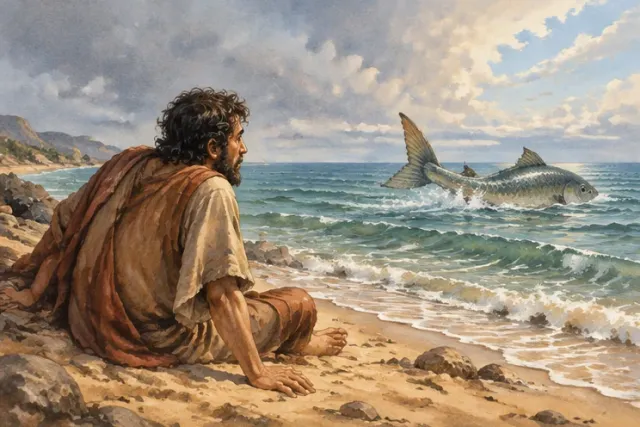
The account
God told Jonah to go to Nineveh because the city's wickedness had come before Him. Jonah went the other way. He traveled to Joppa, paid for passage on a ship going to Tarshish, and tried to flee from the presence of the LORD.
God sent a great wind, and a mighty storm threatened the ship. The sailors were afraid. They cast lots to learn who was connected to the trouble, and the lot fell on Jonah. Jonah told them he feared the LORD, the God who made the sea and the dry land. He told them to throw him into the sea. The sailors first tried to row back to land, but they could not. At last they threw Jonah overboard, and the sea became calm.
God prepared a great fish to swallow Jonah. Jonah was inside the fish three days and three nights. He prayed to God there, and the fish later put him onto dry land.
God again told Jonah to go to Nineveh. Jonah went and warned the city. The people believed God, fasted, and turned from their evil ways. God saw what they did and did not bring the destruction He had warned about.
Jonah was angry that Nineveh was spared. Outside the city, God used a plant, a worm and a strong east wind to teach him. The account ends with God asking Jonah why he pitied a plant but struggled with God's pity for the many people and animals in Nineveh.
Memory verse
Then said the LORD, Doest thou well to be angry?
Jonah 4:4
Talk about it
- Where did God tell Jonah to go?
- What happened after Jonah was thrown into the sea?
- How did the people of Nineveh respond to Jonah's warning?
Try this
Fold a page into four boxes, one for each chapter of Jonah. Draw one main event in each box, then write a short caption under each picture.
What can we learn?
One lesson we can draw from this account is that God can show mercy to people we might rather see punished. Jonah had to face how different his own anger was from God's compassion.
Ages 12 to 15
The account
The word of the LORD came to Jonah with a clear command: go to Nineveh and cry against it because its wickedness had come before God. Jonah instead went down to Joppa, found a ship bound for Tarshish, paid the fare and sailed away, trying to flee from the presence of the LORD.
God sent a great wind onto the sea, and the storm became so violent that the ship seemed likely to break. The sailors cried out to their gods and threw cargo overboard to lighten the vessel. Jonah, meanwhile, was asleep below deck. The shipmaster woke him and told him to call on his God.
The sailors cast lots to discover who was connected with the disaster, and the lot fell on Jonah. He told them he was a Hebrew and feared the LORD, the God of heaven who made the sea and dry land. When the storm grew worse, Jonah told them to throw him into the sea. The sailors tried hard to row back to land instead. When they could not, they prayed to the LORD and finally threw Jonah overboard. The sea became calm, and the sailors feared the LORD, offered a sacrifice and made vows.
God prepared a great fish to swallow Jonah. Jonah remained inside it three days and three nights. From there he prayed, remembering his distress and turning his hope toward God. God spoke to the fish, and it put Jonah onto dry land.
God called Jonah a second time to go to Nineveh. Jonah obeyed. He entered the great city and warned that in forty days Nineveh would be overthrown. The people believed God. They proclaimed a fast and put on sackcloth. The king also humbled himself and ordered the people to turn from violence and evil. God saw that they turned from their evil way, and He did not bring the destruction He had announced.
Jonah was greatly displeased. He said he had fled because he knew God was gracious, merciful, slow to anger and great in kindness. Jonah sat east of the city to see what would happen. God prepared a plant to shade him, then a worm that damaged the plant, followed by a strong east wind. Jonah became angry over the loss of the plant.
God's final question compares Jonah's pity for a plant he did not grow with God's concern for Nineveh, a city of more than one hundred twenty thousand people who could not discern between their right hand and left hand, as well as many animals.
Memory verse
Then said the LORD, Doest thou well to be angry?
Jonah 4:4
Think about it
- Why do you think the sailors' efforts to save Jonah before throwing him overboard matter in the account?
- What does Nineveh's response show about how people can react to a warning?
- Why is Jonah unhappy when God shows mercy to the city?
- What does the plant help reveal about Jonah's priorities and God's concern for Nineveh?
Going deeper
Jonah's three days and three nights in the great fish later become part of Jesus' teaching. In Matthew 12:40, Jesus points to Jonah's time in the fish as a sign connected with His own burial and resurrection. Jonah also fits a wider biblical pattern in which God's mercy reaches beyond Israel to people from other nations.
What can we learn?
A lesson we can draw from this account is that wanting mercy for ourselves can be easier than wanting it for people we dislike. Jonah's anger gives readers a clear picture of that tension.