
Nehemiah 2; 4; 6:15–16
Nehemiah rebuilds the wall

Ages 8 to 11
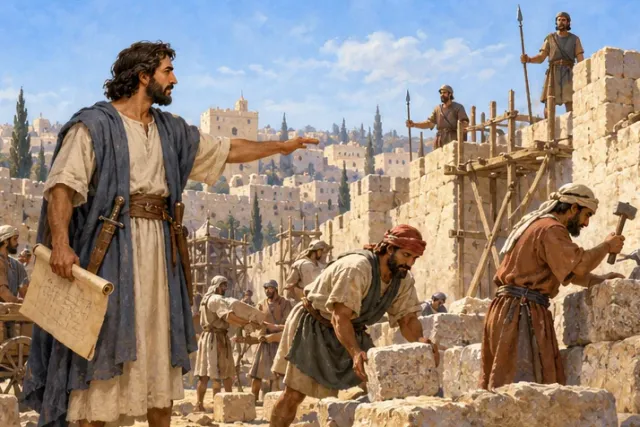
The account
Nehemiah served King Artaxerxes. One day the king noticed that Nehemiah looked sad. Nehemiah explained that Jerusalem, the city of his ancestors' graves, was broken down and its gates had been burned.
The king asked what Nehemiah wanted. Nehemiah prayed to God, then asked permission to go to Judah and rebuild the city. The king agreed. He also gave Nehemiah letters for safe travel and for timber he would need.
After reaching Jerusalem, Nehemiah quietly inspected the damaged walls at night. Then he told the people about God's good hand upon him and the king's support. They agreed to begin rebuilding.
Some nearby leaders mocked them and later became angry. As the wall rose, enemies planned to come against Jerusalem and stop the work. Nehemiah and the people prayed and set guards. Families were placed where the wall was weak. Some people worked while others stood ready to defend them. The builders kept tools in hand and weapons close by. A trumpeter stayed near Nehemiah so everyone could gather quickly if danger came.
The people kept working from early morning until the stars appeared. At last the wall was finished on the twenty-fifth day of Elul, after fifty-two days of work.
When their enemies heard it, they were afraid and realized that the work had been accomplished with God's help.
Memory verse
So built we the wall; and all the wall was joined together unto the half thereof: for the people had a mind to work.
Nehemiah 4:6
Talk about it
- What did Nehemiah ask King Artaxerxes for?
- What did Nehemiah do before asking the people to rebuild?
- How did the workers respond when enemies threatened the city?
Try this
Use blocks, books or folded paper to build a small wall. Take turns being builders and observers, then talk about what helps a group finish a difficult job together.
What can we learn?
One lesson we can draw from this account is that difficult work often needs planning, teamwork and persistence. Nehemiah's group prayed, watched for danger and kept building.
Ages 12 to 15
The account
In the month of Nisan, Nehemiah was serving wine to King Artaxerxes when the king noticed his sadness. Nehemiah explained that the city connected with his ancestors' graves lay in ruins and its gates had been burned. When the king asked what he wanted, Nehemiah prayed to the God of heaven and asked to be sent to Judah so he could rebuild the city.
The king agreed and set a time for his return. Nehemiah also requested letters to the governors beyond the river so he could travel safely, and a letter to the keeper of the king's forest for timber. The king granted his requests. Officers of the army and horsemen went with him.
After three days in Jerusalem, Nehemiah went out at night with only a few men and inspected the damaged walls and burned gates. In places, the rubble was so bad that the animal he was riding could not pass. After returning, he told the Jewish leaders what he had seen. He also told them about God's good hand upon him and the king's words. They agreed to rise up and build.
Sanballat, Tobiah and Geshem mocked the effort and accused Nehemiah's group of rebelling against the king. Nehemiah answered that the God of heaven would prosper them and that they would build.
As the work continued, Sanballat became angry and mocked the builders. Tobiah also made fun of the strength of the wall. Nehemiah prayed, and the people kept working until the wall reached half its height because they had a mind to work.
The opposition then became more serious. Enemies planned to attack Jerusalem and stop the work. Nehemiah's group prayed and set a watch day and night. The workers were tired, there was much rubble, and threats were coming from several directions. Nehemiah stationed people by families with swords, spears and bows and told them not to be afraid.
From then on, part of the group worked while others stood armed. Builders kept their weapons close, and a trumpeter stayed beside Nehemiah so workers could rally if danger appeared. They labored from early morning until the stars came out.
The wall was completed on the twenty-fifth day of Elul in fifty-two days. When the surrounding enemies heard about it, they were afraid and recognized that the work had been accomplished with the help of Nehemiah's God.
Memory verse
So built we the wall; and all the wall was joined together unto the half thereof: for the people had a mind to work.
Nehemiah 4:6
Think about it
- Why did Nehemiah inspect the walls before asking everyone to begin rebuilding?
- Why did the workers combine building with watching and preparing for danger?
- What does the account show about the effect of steady teamwork under pressure?
- Why did the finished wall change the way the surrounding enemies viewed the project?
Going deeper
Nehemiah belongs to the Bible's larger history of Judah after the Babylonian exile. The people had returned to their land, and rebuilding Jerusalem's walls was part of restoring ordinary community life around a city that had been devastated. Alongside Ezra, the Book of Nehemiah shows the returned community rebuilding, organizing and trying to live again as God's people in their own land.
What can we learn?
A lesson we can draw from this account is that prayer and practical planning are not opposites. Nehemiah's group prayed, inspected, organized, guarded and worked, continuing the task even when it became tiring.