
Luke 1:26–38
The angel visits Mary
Ages 8 to 11
The account
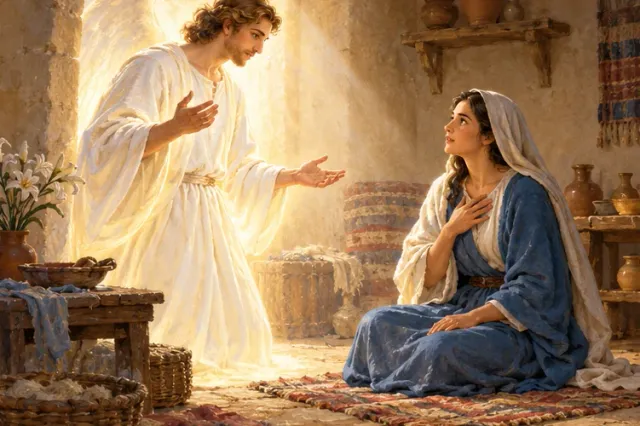
God sent the angel Gabriel to Nazareth, a city in Galilee. Gabriel came to a virgin named Mary. She was promised in marriage to Joseph, a man from the house of David.
Gabriel greeted Mary and told her that she was highly favoured and that the Lord was with her. Mary was troubled by the greeting and wondered what it meant.
The angel told her not to be afraid. He said she had found favour with God. Mary would have a son and was to call His name Jesus. Gabriel said He would be great, would be called the Son of the Highest, and would receive the throne of David. He would reign forever, and His kingdom would have no end.
Mary asked how this could happen because she was a virgin. Gabriel told her that the Holy Ghost would come upon her and the power of the Highest would overshadow her. The child would be holy and would be called the Son of God.
Gabriel also told Mary that her relative Elisabeth, who had been called barren, was now six months pregnant in her old age.
Then Gabriel told Mary that nothing would be impossible with God. Mary answered that she was the handmaid of the Lord and accepted what God had said through the angel. Gabriel then left her.
Memory verse
For with God nothing shall be impossible.
Luke 1:37
Talk about it
- Who came to speak with Mary?
- What name did Gabriel tell Mary to give the child?
- What did Gabriel say about Jesus' kingdom?
Try this
On a sheet of paper, list everything Gabriel says about the child Mary will have. Circle the details that tell who He is, and underline the details about what He will do.
What can we learn?
One lesson we can draw from this account is that Mary listened carefully even when the message surprised her. She asked a question and then accepted what God had told her.
Ages 12 to 15
The account
In the sixth month of Elisabeth's pregnancy, God sent the angel Gabriel to Nazareth in Galilee. He came to Mary, a virgin who was espoused to Joseph, a man from the house of David. That connection to David matters because Gabriel's message will speak directly about David's throne and an everlasting kingdom.
Gabriel greeted Mary as highly favoured and said the Lord was with her. Mary was troubled by his words and considered what kind of greeting this might be. Gabriel told her not to fear because she had found favour with God.
He announced that Mary would conceive and bear a son and was to name Him Jesus. Gabriel said the child would be great and would be called the Son of the Highest. The Lord God would give Him the throne of His father David. He would reign over the house of Jacob forever, and His kingdom would have no end.
Mary asked how this could happen because she did not know a man. Gabriel answered that the Holy Ghost would come upon her and the power of the Highest would overshadow her. Therefore, the holy child to be born would be called the Son of God.
Gabriel then gave Mary news about Elisabeth, her relative. Elisabeth had been called barren and was now expecting a son in her old age. She was already in the sixth month of her pregnancy. Gabriel followed this with the declaration that nothing would be impossible with God.
Mary's response is brief and willing. She called herself the handmaid of the Lord and said that what Gabriel had announced could happen according to his word. The angel then departed from her.
The passage does not add many details about the setting, Mary's age or how the room looked. Its attention stays on the message: who the child will be, how the conception will happen, and Mary's response to what God has announced. Gabriel's announcement also places Jesus inside Israel's royal hope by naming David's throne and the house of Jacob. At the same time, it says His kingdom will never end. Those details make the message larger than the birth of one child in one Galilean town.
Memory verse
For with God nothing shall be impossible.
Luke 1:37
Think about it
- Why does Gabriel's mention of David's throne matter for understanding who Jesus is being announced to be?
- What does Mary's question show about the way she listens to the angel's message?
- Why does Gabriel tell Mary about Elisabeth's pregnancy?
- What does the passage show about God's role in the birth being announced?
Going deeper
Gabriel's words about David's throne and a kingdom with no end connect this announcement to God's covenant with David in 2 Samuel 7. That earlier promise concerned a continuing royal line and a kingdom established by God. Luke 1 presents the coming of Jesus within that larger biblical promise, while also identifying Him as the Son of God.
What can we learn?
A lesson we can draw from this account is that asking an honest question is not the same as refusing to listen. Mary asks how the announced birth will happen, hears Gabriel's answer and responds with willing acceptance.