
Matthew 6:5–15
The Lord's Prayer

Ages 8 to 11
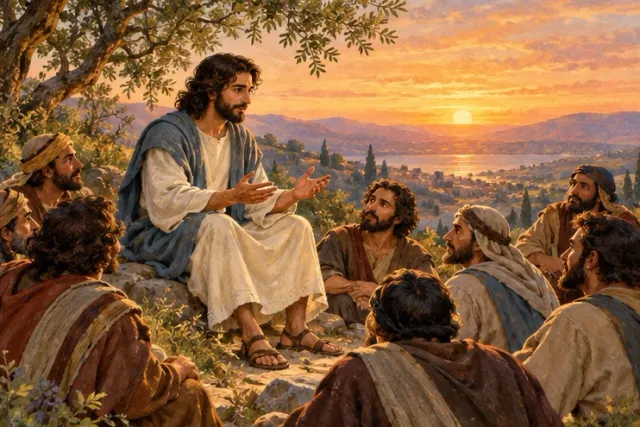
The account
Jesus taught people how to pray. He first warned them not to pray just so other people would notice them. Some people liked to stand where others could see them praying. Jesus said that prayer should not be a performance.
He told his hearers that when they prayed, they could go into a private place and pray to their Father in secret. God sees what is done in secret. Jesus also warned against empty, repeated words said as though many words would make God listen. He said the Father already knows what people need before they ask him.
Then Jesus gave a pattern for prayer. Prayer begins by honoring God as Father and hallowing his name. It looks toward God's kingdom and asks that his will be done. It asks for daily bread, the ordinary needs of each day. It asks God for forgiveness and connects that request with forgiving others. It also asks for help against temptation and evil.
After giving this prayer, Jesus returned to the subject of forgiveness. He said that forgiving others matters. He explained that if people forgive others their trespasses, their heavenly Father will forgive them, but if they refuse to forgive, their Father will not forgive their trespasses.
Jesus' teaching shows prayer as honest, God-centered, trusting, and connected with the way people treat one another.
Memory verse
Give us this day our daily bread.
Matthew 6:11
Talk about it
- What kind of praying did Jesus warn people not to do?
- What kinds of things did Jesus teach people to pray about?
- What did Jesus say about forgiving other people?
Try this
Fold a sheet of paper into four boxes. Label them "God," "needs," "forgiveness," and "help," then write or draw one idea from Jesus' prayer in each box.
What can we learn?
This teaching can help us think of prayer as more than asking for things. Jesus' pattern includes honoring God, trusting him for needs, asking forgiveness, forgiving others, and asking for help.
Ages 12 to 15
The account
Matthew places this teaching in the larger section where Jesus is teaching about life before God. Here, Jesus speaks about prayer. He begins by warning against prayer that is done mainly to be seen by other people. He describes hypocrites who love to pray standing in synagogues and on street corners so that others will notice them. Jesus says that the attention they receive is their reward.
Instead, Jesus tells his hearers to pray privately to their Father, who sees in secret. In this passage, the problem he names is praying in order to be seen by other people. He also warns against vain repetitions, many words spoken as though their amount could force a hearing. The Father, Jesus says, already knows what people need before they ask.
Jesus then gives a pattern for prayer. It begins with God: the Father in heaven, his holy name, his kingdom, and his will. It then includes daily needs, pictured by the request for daily bread. The prayer asks for forgiveness of debts while also speaking about forgiving those who are indebted to us. It asks for guidance away from temptation and for deliverance from evil. The prayer closes by recognizing God's kingdom, power, and glory.
Jesus then gives special attention to forgiveness. He says that if people forgive others their trespasses, their heavenly Father will also forgive them. If they do not forgive others, their Father will not forgive their trespasses. The connection is stated plainly and seriously.
The setting matters because Jesus is not giving a formula for impressing God or other people. He is teaching a way to pray that is centered on God's name, rule, will, provision, forgiveness, and protection. The prayer is brief, but it reaches from the greatness of God to the ordinary need for bread and the difficult work of forgiving other people.
The wording also repeatedly turns outward from one person. Jesus teaches his hearers to speak of their Father, their daily bread, their debts, and their need for guidance and deliverance together. That makes the prayer broad enough to include worship, ordinary needs, relationships with other people, and the choices and dangers of daily life.
Memory verse
Give us this day our daily bread.
Matthew 6:11
Think about it
- Why did Jesus warn against praying in order to be seen by other people?
- What does the prayer show about the kinds of things people may bring before God?
- Why do you think Jesus returned to forgiveness immediately after giving the prayer?
- What difference is there between repeating many words to be heard and praying sincerely about the same need more than once?
Going deeper
The request for daily bread fits a wider biblical pattern of depending on God for what is needed day by day. In Exodus 16, Israel received manna in the wilderness according to each day's need. Jesus' prayer also gathers themes found throughout Scripture: God's holy name, his kingdom, his will, provision, forgiveness, and rescue from evil.
What can we learn?
A lesson drawn from this passage is that prayer does not need to be a performance or a flood of impressive words. Jesus' pattern gives a balanced way to pray, with attention to God, daily needs, forgiveness, and help in difficult choices.