
Exodus 7–12
The plagues and the first Passover
Ages 8 to 11
The account
Moses and Aaron went to Pharaoh with God’s command to let the children of Israel go and serve the LORD. Pharaoh would not listen.
The LORD turned the waters of Egypt to blood. Then came frogs, lice, and swarms of flies. Pharaoh sometimes promised to let the people go, but when a plague was removed, he still refused.
Next, a severe plague struck the Egyptians’ livestock, while the livestock of Israel were spared. Boils came on people and animals. Then hail fell with fire, damaging the land and killing those left outside. Some of Pharaoh’s servants had believed the warning and brought their servants and cattle indoors.
After that came locusts, which ate what the hail had left. Then thick darkness covered Egypt for three days, while the children of Israel had light where they lived. Pharaoh still would not let them go.
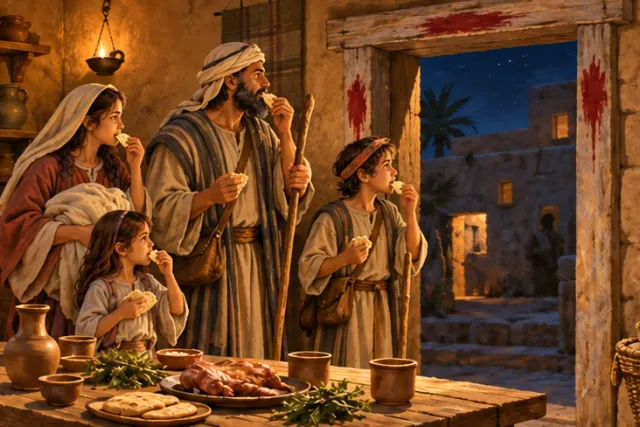
Before the last plague, God told Israel how to keep the first Passover. Each household was to prepare a lamb, put its blood on the side posts and upper doorpost, and eat the meal with unleavened bread and bitter herbs, ready to leave.
That night the firstborn in Egypt died. The LORD passed over the marked houses. Pharaoh called for Moses and Aaron and told Israel to go. The people left Egypt in haste, just as God had said.
Memory verse
And the LORD spake unto Moses, Go unto Pharaoh, and say unto him, Thus saith the LORD, Let my people go, that they may serve me.
Exodus 8:1
Talk about it
- What did Pharaoh keep refusing to do?
- What happened during the three days of darkness?
- What sign did God tell Israel to put on their doorposts?
Try this
Fold a sheet of paper into eleven boxes. Draw one simple picture for each of the ten plagues, then draw a doorway in the last box to remember the Passover instructions. Number the boxes and see if you can put every event in order without looking back.
What can we learn?
One lesson we can draw from this account is that refusing again and again to do what is right can bring serious consequences. It also shows why careful listening and following instructions can matter.
Ages 12 to 15
The account
Moses and Aaron came before Pharaoh in Egypt with the LORD’s command that Pharaoh let the children of Israel go and serve him. Before the plagues began, Aaron cast down his rod before Pharaoh, and it became a serpent. Pharaoh’s magicians did something similar with their enchantments, but Aaron’s rod swallowed their rods. Pharaoh still would not listen.
The first plague struck the Nile and other waters of Egypt, which were turned to blood. Fish died, the river stank, and the Egyptians dug around the river for water to drink. Next came frogs in huge numbers. Pharaoh asked Moses to pray for their removal and said he would let the people go, but after the frogs were gone, he hardened his heart.
Aaron then struck the dust, and it became lice on people and animals. The magicians could not copy this and told Pharaoh it was the finger of God. After that came swarms of flies. This time the LORD made a difference between the Egyptians and the land of Goshen, where his people lived.
A severe plague then struck the Egyptians’ livestock, while Israel’s livestock were spared. Boils followed. Next came a devastating hailstorm. Moses had warned that people and animals should be brought under shelter, and some of Pharaoh’s servants obeyed the warning. After the hail, Pharaoh admitted that he had sinned, but he again refused to let Israel go.
Locusts came next and ate what the hail had left. Then thick darkness covered Egypt for three days, while the children of Israel had light in their homes. Through these events, Exodus says both that Pharaoh hardened his heart and, at other points, that the LORD hardened Pharaoh’s heart. Pharaoh continued to refuse the command.
Before the final plague, the LORD gave Israel instructions for the first Passover. Each household was to take a lamb without blemish, kill it in the evening, put blood on the two side posts and upper doorpost, and eat the lamb with unleavened bread and bitter herbs. They were to eat dressed for travel and in haste. The blood would be a sign on the houses.
At midnight, the LORD struck the firstborn in the land of Egypt, from Pharaoh’s household to the captive in the dungeon, as well as the firstborn of cattle. The marked houses were passed over. Pharaoh called Moses and Aaron during the night and told the Israelites to leave and serve the LORD. The Egyptians urged them to go quickly. Israel departed in haste, carrying unleavened dough, and the first Passover became a memorial to be kept in generations to come.
Memory verse
And the LORD spake unto Moses, Go unto Pharaoh, and say unto him, Thus saith the LORD, Let my people go, that they may serve me.
Exodus 8:1
Think about it
- Why do Pharaoh’s repeated promises and refusals matter to the account?
- What do the times when the LORD made a difference between Egypt and Israel show about his control over the plagues?
- Why do you think the Passover was meant to be remembered by later generations?
- What does the response of Pharaoh’s servants before the hail show about how people can respond differently to the same warning?
Going deeper
The first Passover became a lasting memorial of Israel’s deliverance from Egypt, and later books of the Bible repeatedly look back to the exodus. The New Testament also uses Passover language when speaking about Jesus. In 1 Corinthians 5:7, Paul connects Christ with the Passover sacrifice, linking this earlier account with a later biblical picture of deliverance.
What can we learn?
A lesson we can draw from this account is that repeated refusal can harden a pattern of disobedience, while taking a warning seriously can change what someone does next. The Passover instructions also show the value of remembering important acts of deliverance and teaching their meaning to later generations.