
Acts 2:1–41
Pentecost

Ages 8 to 11
The account
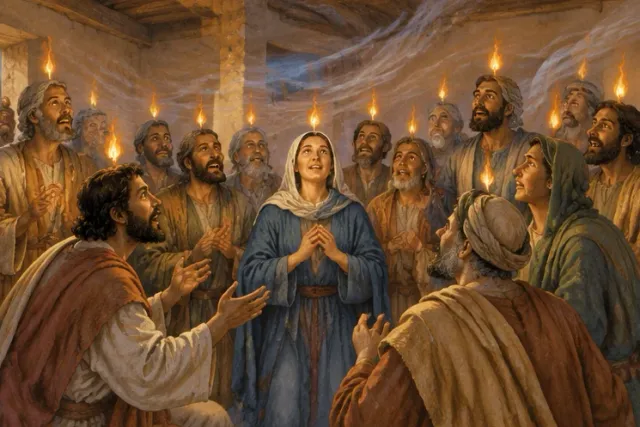
On the day of Pentecost, the disciples were together in one place. Suddenly a sound from heaven came like a rushing mighty wind and filled the house. Something that looked like divided tongues of fire appeared and rested on each of them. They were all filled with the Holy Ghost and began speaking in other tongues as the Spirit gave them words.
Jerusalem was filled with devout Jews from many nations. When they heard the disciples, they were amazed because each person heard them speaking in his own language. Some wondered what it meant. Others mocked and said the disciples were full of new wine.
Peter stood with the eleven apostles and spoke to the crowd. He said they were not drunk. He explained that what was happening matched the words of the prophet Joel about God pouring out his Spirit.
Peter then spoke about Jesus. He said Jesus had done miracles and signs, had been crucified, and had been raised from the dead by God. Peter explained that David had spoken beforehand about the resurrection. He said Jesus was now exalted and had poured out what the people were seeing and hearing.
The people were deeply affected and asked Peter and the other apostles what they should do. Peter told them to repent and be baptized in the name of Jesus Christ. He spoke of forgiveness and the gift of the Holy Ghost. About three thousand people gladly received his word and were baptized that day.
Memory verse
And it shall come to pass, that whosoever shall call on the name of the Lord shall be saved.
Acts 2:21
Talk about it
- What sounds and signs happened when the Holy Ghost came?
- Why were people from many nations amazed when they heard the disciples speaking?
- What did the people ask Peter and the other apostles after hearing his message?
Try this
Write the words wonderful works of God in the middle of a page. Around them, draw speech bubbles and fill them with the names of several languages you know about, showing how one message can be heard by many kinds of people.
What can we learn?
We can learn that God can make his message understood across language boundaries. The account also shows people listening, asking what to do, and responding to what they heard.
Ages 12 to 15
The account
Pentecost was a Jewish feast, and Acts says the disciples were all together in one place when the day fully came. Without warning, a sound from heaven like a rushing mighty wind filled the house. Something like divided tongues of fire appeared and rested on each of them. They were filled with the Holy Ghost and began speaking in other tongues as the Spirit gave them utterance.
Jerusalem at that time included devout Jews from many nations. When the sound drew people together, the crowd was confused because each person heard the disciples speaking in his own language. Acts names people connected with regions stretching from Parthia and Mesopotamia to Egypt, Rome, Crete, Arabia, and other places. They heard the disciples speaking about the wonderful works of God. The crowd was amazed and asked what this meant. Some people, however, mocked and said the disciples were full of new wine.
Peter stood up with the eleven and addressed the crowd. He denied that they were drunk and explained the event through the prophet Joel. Joel had spoken of a time when God would pour out his Spirit, with sons and daughters prophesying and people calling on the name of the Lord.
Peter then turned to Jesus of Nazareth. He said Jesus had been publicly shown by God through miracles, wonders, and signs. Jesus had been delivered up and crucified, but God had raised him from the dead. Peter connected this with words of David, explaining that David had spoken beforehand about the resurrection of Christ. Peter said the apostles were witnesses that God had raised Jesus. He also said Jesus had been exalted at the right hand of God and had poured out what the crowd was now seeing and hearing.
Peter's conclusion was direct: the house of Israel should know that God had made this Jesus, whom they had crucified, both Lord and Christ. The listeners were pricked in their heart and asked Peter and the other apostles what they should do.
Peter told them to repent and be baptized in the name of Jesus Christ for the remission of sins, and he spoke of receiving the gift of the Holy Ghost. He said the promise was for them, for their children, and for those far away whom the Lord would call. With many other words he urged them to respond. About three thousand people gladly received his word and were baptized that day.
Pentecost therefore marks a major change in Acts. The promised Holy Ghost comes, people from many places hear the message, Peter explains the event from Scripture, and the number of believers grows dramatically in a single day.
Memory verse
And it shall come to pass, that whosoever shall call on the name of the Lord shall be saved.
Acts 2:21
Think about it
- Why did speaking in other tongues matter so much in a city filled with visitors from many nations?
- What does Peter's use of Joel and David show about how he explained what the crowd was seeing?
- Why do you think the listeners moved from amazement to asking what they should do?
- What does the baptism of about three thousand people show about the immediate effect of Peter's message?
Going deeper
Acts 2 directly connects Pentecost with the prophet Joel's promise that God would pour out his Spirit. Peter also uses words from David in Psalms 16 and 110 as he explains Jesus' resurrection and exaltation. The event also fulfills Jesus' promise in Acts 1 that the Holy Ghost would come and that his followers would become witnesses.
What can we learn?
Pentecost brings together Scripture, public witness, many languages and a call to respond. A lesson we can draw is that people can listen seriously to what they hear, ask honest questions, and compare explanations with Scripture.