
Psalm 23
"The Lord is my shepherd": Psalm 23
Ages 8 to 11
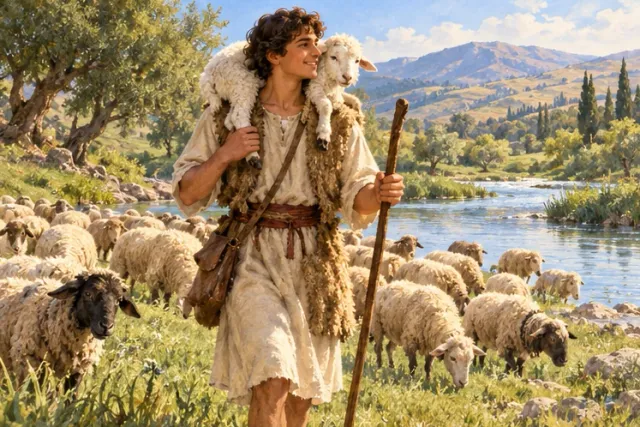
The account
Psalm 23 is a song of David about the LORD’s care. David begins with the picture of a shepherd caring for sheep. He says the LORD is his shepherd, so he will not be without what he needs.
The psalm moves through peaceful pictures. The shepherd makes the sheep lie down in green pastures and leads them beside still waters. David says the LORD restores his soul and leads him in right paths for his name’s sake.
Then the picture becomes darker. David speaks about walking through the valley of the shadow of death. Even there, he says he will not fear evil because the LORD is with him. A shepherd’s rod and staff become signs of comfort and protection.
The picture changes again. David describes a table prepared for him even while enemies are present. His head is anointed with oil, and his cup runs over. The psalm ends with confidence that goodness and mercy will follow him all the days of his life.
David’s final hope is to dwell in the house of the LORD for ever. Psalm 23 does not say that life will never include dark valleys or enemies. Instead, it keeps returning to one steady truth: the LORD is present, guiding, providing and caring for his servant.
Memory verse
The LORD is my shepherd; I shall not want.
Psalm 23:1
Talk about it
- What peaceful places does David picture near the beginning of the psalm?
- What does David say when he speaks about the valley of the shadow of death?
- What two things does David say will follow him all the days of his life?
Try this
Draw a path across a sheet of paper from green pastures to a table and then to the house of the LORD. Along the path, add the pictures Psalm 23 uses in the order they appear.
What can we learn?
A lesson we can draw from Psalm 23 is that God’s care is not pictured only in easy places. David also speaks of God’s presence when the path is dark or difficult.
Ages 12 to 15
The account
Psalm 23 is one of David’s psalms, and its first image is simple and strong: the LORD is a shepherd. David uses that picture to describe his trust in the LORD. Because the LORD is his shepherd, David says he shall not want.
The next lines picture rest and provision. The shepherd makes the sheep lie down in green pastures and leads them beside still waters. David then speaks more directly about himself. The LORD restores his soul and leads him in paths of righteousness for his name’s sake. The psalm is not only about being comfortable. It is about being guided in the right way.
The scene changes when David speaks of the valley of the shadow of death. The wording allows the reader to feel the danger without describing any particular event. David says he will fear no evil because the LORD is with him. The shepherd’s rod and staff comfort him. The same God who leads through green places is present in the dark valley too.
There is also a small but important change in the way David speaks. At first he speaks about the LORD. When the valley appears, David speaks directly to God. The danger does not make God seem farther away in the psalm. David’s words become more direct as he speaks of God being with him.
Then the shepherd image gives way to the picture of a host preparing a table. The table is set in the presence of David’s enemies. His head is anointed with oil, and his cup runs over. The psalm moves from enough to abundance.
The closing lines look beyond one difficult day. David says goodness and mercy will follow him all the days of his life, and that he will dwell in the house of the LORD for ever.
Psalm 23 never says that faithful people avoid hardship. It includes enemies, darkness and danger. What remains constant is the LORD’s presence and care. The psalm moves in a clear sequence: provision, guidance, danger, comfort, welcome and lasting fellowship with God. That pattern is one reason its images have remained easy to remember across generations.
Memory verse
The LORD is my shepherd; I shall not want.
Psalm 23:1
Think about it
- Why is a shepherd a useful picture for David’s description of the LORD?
- What does the change from speaking about the LORD to speaking directly to God show within the psalm?
- Why is it important that Psalm 23 includes a dark valley and enemies as well as green pastures and still waters?
- What does the final line show about where David’s confidence is heading?
Going deeper
The shepherd picture continues across the Bible. Ezekiel 34 uses shepherd language when speaking about God’s care for his people and the failure of bad shepherds. In John 10, Jesus calls himself the good shepherd and speaks about knowing and caring for his sheep. Psalm 23 therefore stands inside a much larger biblical pattern of shepherd language for God’s care and leadership.
What can we learn?
A lesson we can draw from Psalm 23 is that trust in God does not require pretending that danger or hardship is absent. David’s confidence rests on God’s presence, guidance and care through every part of the path he describes.