
Luke 2:8–20; Matthew 2:1–12
The shepherds and the wise men
Ages 8 to 11
The account
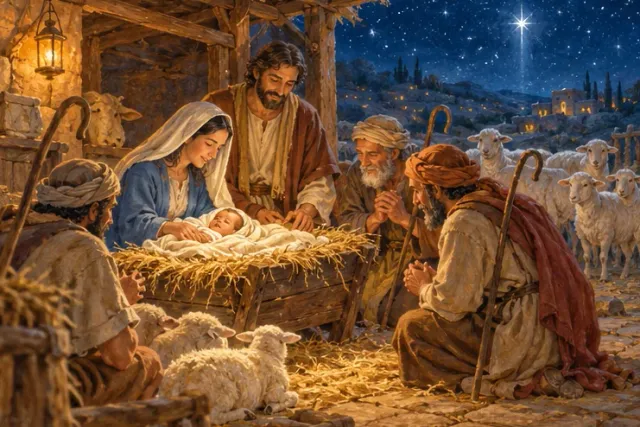
Near Bethlehem, shepherds were watching their flock at night. An angel of the Lord came to them, and the glory of the Lord shone around them. They were afraid, but the angel told them not to fear. He announced good news: a Saviour, Christ the Lord, had been born in the city of David. The sign was a baby wrapped in swaddling clothes and lying in a manger.
Suddenly, many from the heavenly host praised God. After the angels left, the shepherds hurried to Bethlehem. They found Mary, Joseph, and the baby lying in the manger. Then they told others what they had been told about the child. People wondered at it, Mary kept these things in her heart, and the shepherds returned praising God.
Matthew tells about wise men from the east who came to Jerusalem after Jesus was born. They had seen his star and were looking for the King of the Jews. Herod asked religious leaders where Christ should be born, and they answered Bethlehem. The wise men went on, rejoiced when they saw the star, and came into a house. There they saw the young child with Mary. They worshipped him and gave gifts of gold, frankincense, and myrrh. God warned them in a dream not to return to Herod, so they went home another way.
Memory verse
For unto you is born this day in the city of David a Saviour, which is Christ the Lord.
Luke 2:11
Talk about it
- What sign did the angel give the shepherds?
- What did the shepherds do after they found Jesus?
- What did the wise men do when they found the young child?
Try this
Make two columns on a sheet of paper, one labeled Shepherds and one labeled Wise Men. Draw or list only the details the Bible gives for each group, then circle anything that appears in both accounts.
What can we learn?
A lesson we can draw is that careful reading helps us see each part of the account clearly. The shepherds and the wise men came in different scenes, but both were directed toward Jesus and responded to what they had been shown.
Ages 12 to 15
The account
Luke and Matthew give two different scenes connected with Jesus' early life, and it is important not to press them into one moment. Luke begins with shepherds in the country near Bethlehem, keeping watch over their flock by night. An angel of the Lord appeared, the glory of the Lord shone around them, and they were afraid. The angel announced good tidings of great joy for all people: a Saviour, Christ the Lord, had been born that day in the city of David. The shepherds were given a sign, a baby wrapped in swaddling clothes and lying in a manger.
A multitude of the heavenly host then praised God. When the angels had gone, the shepherds went to Bethlehem and found Mary, Joseph, and the baby lying in the manger. They made known what they had been told about the child. Those who heard wondered. Mary kept these things and pondered them in her heart. The shepherds returned, glorifying and praising God for what they had heard and seen.
Matthew's account begins after Jesus had been born in Bethlehem during the reign of Herod. Wise men from the east came to Jerusalem because they had seen the star of the one born King of the Jews and had come to worship him. Matthew does not say how many wise men there were. Herod was troubled. He gathered the chief priests and scribes and asked where Christ should be born. They identified Bethlehem from the prophetic writings.
Herod then spoke privately with the wise men, asked when the star had appeared, and sent them toward Bethlehem. The star went before them until it stood over where the young child was. They rejoiced greatly. Matthew says they entered a house and saw the young child with Mary his mother. They fell down, worshipped him, and gave gold, frankincense, and myrrh. The passage does not call them kings and does not place them at the manger. After God warned them in a dream not to return to Herod, they went back to their own country another way.
The two passages give different details, but both direct attention to Jesus. Luke emphasizes the angelic announcement and the shepherds' response. Matthew emphasizes the wise men's search, Herod's questions, the star, worship, gifts, and God's warning.
Memory verse
For unto you is born this day in the city of David a Saviour, which is Christ the Lord.
Luke 2:11
Think about it
- Why is it important to keep Luke's shepherd scene and Matthew's wise men scene distinct?
- What does the shepherds' response show about how they treated the angel's message?
- Why did Herod ask the chief priests and scribes where Christ should be born?
- What do the wise men's actions show about what they believed was important about the young child?
Going deeper
Both passages connect Jesus with Bethlehem and with royal or messianic language. Luke calls Bethlehem the city of David and records the announcement of Christ the Lord. Matthew records the wise men's search for the one born King of the Jews and includes the prophetic expectation that a ruler would come from Bethlehem. Together, the accounts connect Jesus' early life with promises and expectations already present in the Bible.
What can we learn?
A lesson we can draw is that familiar traditions should be checked against the words of Scripture. Careful reading does not make the account less wonderful; it lets the shepherds, the wise men, the manger, the house, the star, and the worship appear in the places where the Bible actually puts them.