
Matthew 14:22–33
Jesus walks on water

Ages 8 to 11
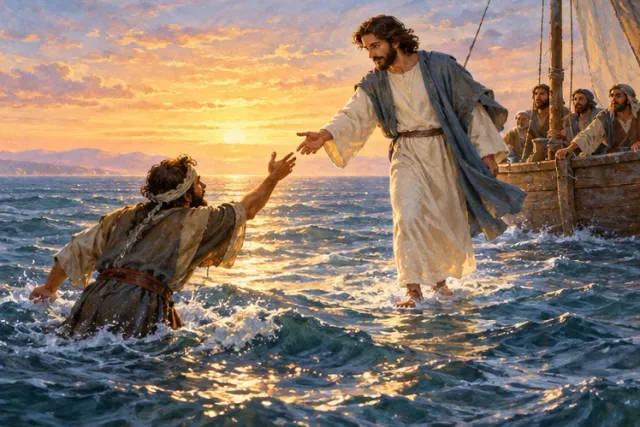
The account
Jesus sent his disciples into a ship to go ahead of him to the other side. He sent the crowds away and went up a mountain by himself to pray. When evening came, he was there alone.
The ship was out on the sea, being tossed by waves because the wind was against it. During the fourth watch of the night, Jesus came toward the disciples, walking on the sea.
When they saw him, they were troubled and cried out in fear. Jesus spoke to them right away and told them to be of good cheer and not be afraid.
Peter answered Jesus. He asked Jesus to command him to come out onto the water if it truly was him. Jesus told him to come. Peter climbed down from the ship and walked on the water toward Jesus.
Then Peter noticed the strong wind. He became afraid and began to sink. He cried out for Jesus to save him. Immediately, Jesus reached out his hand and caught Peter. Jesus asked why he had doubted.
When Jesus and Peter came into the ship, the wind stopped. The people in the ship worshipped Jesus and said that he truly was the Son of God.
The account begins with the disciples struggling against wind and waves. It ends with the wind quiet and the people in the ship focused on who Jesus is.
Memory verse
But straightway Jesus spake unto them, saying, Be of good cheer; it is I; be not afraid.
Matthew 14:27
Talk about it
- What was Jesus doing while the disciples were out on the sea?
- What happened when Peter stepped out of the ship?
- What did the people in the ship say about Jesus at the end?
Try this
Make a simple four-box comic with no extra dialogue: Jesus praying, Jesus walking on the sea, Peter reaching toward Jesus, and the disciples in the ship after the wind stopped. Label each box with a short phrase from the account.
What can we learn?
This account can remind us that fear and doubt can come quickly, but Peter called to Jesus for help and Jesus caught him immediately.
Ages 12 to 15
The account
Jesus made his disciples get into a ship and go ahead of him to the other side while he sent the multitudes away. After dismissing the crowds, he went up a mountain by himself to pray. Evening came, and Jesus was there alone.
The disciples were out on the sea. Their ship was being tossed by waves because the wind was against them. During the fourth watch of the night, Jesus came toward them walking on the sea.
When the disciples saw someone walking on the water, they were troubled. They thought they were seeing a spirit and cried out in fear. Jesus immediately spoke to them, telling them to be of good cheer, identifying himself, and telling them not to be afraid.
Peter answered with a request. If it truly was Jesus, Peter asked Jesus to command him to come to him on the water. Jesus told Peter to come. Peter stepped down from the ship and walked on the water toward Jesus.
Then Peter saw the wind was boisterous. He became afraid and began to sink. He cried out for the Lord to save him. Jesus immediately stretched out his hand and caught him. Then Jesus spoke to Peter about his little faith and asked why he had doubted.
When Jesus and Peter entered the ship, the wind ceased. The people in the ship came and worshipped Jesus. They confessed that he truly was the Son of God.
Matthew's sequence keeps moving from fear toward recognition. The disciples fear what they see on the water. Jesus tells them not to fear. Peter steps out at Jesus' command, then becomes afraid of the wind and begins to sink. Jesus catches him. Finally, when the wind stops, those in the ship respond by worshipping Jesus and naming him as the Son of God.
The account does not praise Peter for trying something spectacular. Its attention stays on Jesus: he comes across the sea, calls Peter, saves him when he sinks, enters the ship, and is worshipped when the wind ceases. Matthew also emphasizes how quickly Jesus responds at key moments. He speaks to the frightened disciples straightway, and when Peter begins to sink, Jesus immediately reaches out and catches him.
Memory verse
But straightway Jesus spake unto them, saying, Be of good cheer; it is I; be not afraid.
Matthew 14:27
Think about it
- Why do you think Jesus first told the disciples not to be afraid before Peter ever stepped out of the ship?
- What does Peter's cry for help show about what he understood in that moment?
- Why is Jesus' immediate response to Peter important in the account?
- What does the worship and confession at the end show about how the people in the ship understood Jesus?
Going deeper
Earlier in Matthew, Jesus calms a storm and the disciples wonder what kind of man he is because the winds and sea obey him (Matthew 8:23–27). Here, Jesus comes to them walking on the sea, the wind ceases when he enters the ship, and those aboard worship him as the Son of God. The two accounts build on the question of Jesus' identity and authority.
What can we learn?
A lesson drawn from this account is that courage is not the same as never feeling fear. Peter became afraid, but he called to Jesus, and the account emphasizes Jesus' immediate act of catching him.