
2 Kings 4:1–7
Elisha and the widow's oil

Ages 8 to 11
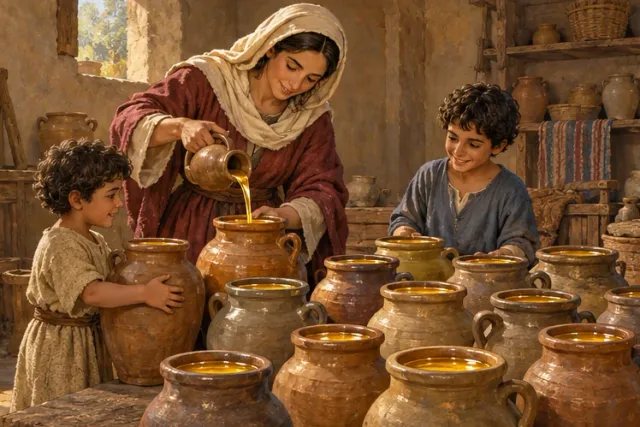
The account
A woman whose husband had been one of the sons of the prophets came to Elisha. Her husband had died. She told Elisha that her husband had feared the Lord, but now a creditor was coming to take her two sons as bondmen because of the debt.
Elisha asked what she had in her house. She said she had nothing except a pot of oil.
Elisha told her to go to her neighbors and borrow empty vessels. He told her not to borrow just a few. Then she was to go inside with her sons, shut the door and pour her oil into the empty vessels. Each full vessel was to be set aside.
The woman did what Elisha said. Her sons brought the vessels to her, and she kept pouring. One vessel filled. Then another filled. She kept going until every vessel they had borrowed was full.
Then she asked one of her sons for another vessel. He told her there were no more. At that moment, the oil stopped.
The woman went back and told Elisha what had happened. Elisha told her to sell the oil, pay her debt and live with her children on what remained.
Memory verse
So she went from him, and shut the door upon her and upon her sons, who brought the vessels to her; and she poured out.
2 Kings 4:5
Talk about it
- What did the widow have left in her house?
- What did Elisha tell her to borrow from her neighbors?
- When did the oil stop?
Try this
Draw several empty containers on paper, then number them as if the widow's sons were bringing them one by one. In each container, write one event from the account in the correct order.
What can we learn?
A lesson we can draw from this account is that small resources should not be dismissed just because they look small. The widow followed Elisha's directions carefully, and the oil became enough to deal with a serious need.
Ages 12 to 15
The account
A widow came to Elisha with a serious problem. Her husband had been one of the sons of the prophets, and she said he had feared the Lord. He had died, and a creditor was coming to take her two sons as bondmen because the family owed a debt.
Elisha first asked what he could do for her, then asked what she had in the house. Her answer was almost nothing: she had a pot of oil.
Elisha told her to borrow empty vessels from all her neighbors, and he specifically told her to borrow many rather than only a few. After gathering the vessels, she was to go inside with her sons, shut the door and pour from her pot of oil into the empty containers. Every vessel that became full was to be set aside.
The widow followed his instructions. She shut the door with her sons inside. They brought the containers to her, and she poured. The passage describes the action simply, without adding an explanation in the middle. The oil continued as one vessel after another became full.
The text does not give a number for the borrowed vessels or tell how much oil the widow had at the beginning beyond calling it a pot of oil. What it does emphasize is the steady sequence: her sons brought vessels, she poured, and full vessels were set aside.
Eventually the widow asked one of her sons to bring another vessel. He answered that there were no more vessels. Only then did the oil stop.
The widow went back to Elisha and reported what had happened. Elisha gave her practical instructions for what came next. She was to sell the oil, pay the debt and live with her children on what remained.
The account begins with a household facing loss, debt and the threatened loss of the widow's sons into bond service. The crisis therefore involved both money and the future of her children. It ends with the debt able to be paid and the family given a way to live. The change happens through an ordinary item already in the house, a pot of oil, and through the many empty vessels gathered in response to Elisha's instructions.
Memory verse
So she went from him, and shut the door upon her and upon her sons, who brought the vessels to her; and she poured out.
2 Kings 4:5
Think about it
- Why do you think Elisha asked what the widow already had in the house before giving her instructions?
- What does the instruction to borrow many vessels show about the size of what was about to happen?
- Why might the detail that the door was shut matter to the way the account is told?
- What does the ending show about the difference between receiving help and using that help wisely?
Going deeper
This account resembles an earlier event in Elijah's ministry. In 1 Kings 17:8–16, a widow's small supply of meal and oil does not fail during a time of need. In both accounts, a household with very little receives provision connected with the ministry of God's prophet.
What can we learn?
One lesson drawn from the account is that wise action often follows help: the widow still had to gather vessels, pour the oil, sell it and pay the debt. The account also shows that what looks too small to matter can become important in meeting a real need.