
Luke 19:1–10
Zacchaeus

Ages 8 to 11
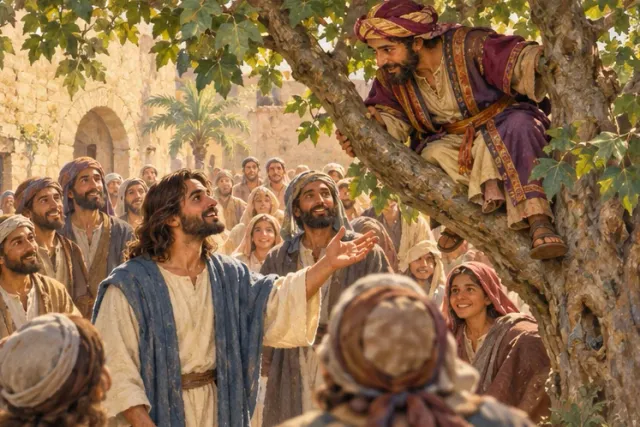
The account
Jesus entered Jericho and was passing through the city. A man named Zacchaeus lived there. He was a chief tax collector, and he was rich.
Zacchaeus wanted to see who Jesus was, but he could not see because of the crowd. He was short. So he ran ahead and climbed into a sycomore tree because Jesus was going to pass that way.
When Jesus reached the place, he looked up and saw Zacchaeus. Jesus told him to hurry down because he would stay at Zacchaeus's house that day. Zacchaeus came down quickly and received Jesus joyfully.
The people who saw this began to murmur. They complained that Jesus had gone to be a guest with a man they called a sinner.
Zacchaeus then stood and spoke to the Lord. He said he gave half of his goods to the poor. He also said that if he had taken anything from anyone by false accusation, he would restore it fourfold.
Jesus said that salvation had come to that house and called Zacchaeus a son of Abraham. Then Jesus explained his purpose: the Son of man had come to seek and save that which was lost.
Memory verse
For the Son of man is come to seek and to save that which was lost.
Luke 19:10
Talk about it:
- Why did Zacchaeus climb the tree?
- What did Jesus tell Zacchaeus to do?
- What did Zacchaeus say about his goods and anything he had taken falsely?
Try this:
Draw a tall tree and a crowd below it. Then write four short steps beside the drawing: Zacchaeus wanted to see, he climbed, Jesus called him down, and Zacchaeus answered Jesus.
What can we learn?
A lesson we can draw from this account is that our choices about money can include care for the poor and making wrongs right. Zacchaeus spoke about giving and repayment as he stood before the Lord.
Ages 12 to 15
The account
Jesus entered Jericho and was passing through. Luke then introduces Zacchaeus, a man who was chief among the publicans and was rich. Zacchaeus wanted to see who Jesus was, but the crowd blocked his view because he was short.
Instead of giving up, Zacchaeus ran ahead and climbed into a sycomore tree. Jesus was going to pass that way, so the tree gave Zacchaeus the view he could not get from the ground.
When Jesus came to the place, he looked up and saw him. Jesus called Zacchaeus by name and told him to hurry down because Jesus would stay at his house that day. Zacchaeus came down quickly and received him joyfully.
The crowd's reaction was very different. Those who saw what happened murmured because Jesus had gone to be the guest of a man they called a sinner. The passage does not describe a private conversation inside the house. Instead, it records what Zacchaeus said openly to the Lord.
Zacchaeus said that he gave half of his goods to the poor. He also said that if he had taken anything from anyone by false accusation, he would restore it fourfold. His response involved both generosity and repayment.
Jesus then said that salvation had come to that house, because Zacchaeus also was a son of Abraham. Jesus finished by stating why the Son of man had come: to seek and to save that which was lost.
The account matters because the crowd had already placed Zacchaeus in a category. They saw a sinner and objected to Jesus being his guest. Jesus did not deny that lost people needed saving. Instead, he described seeking and saving the lost as the very reason he had come. Zacchaeus's own words bring money, the poor, false accusation, and repayment directly into the scene.
There is also a striking change in what Zacchaeus is doing. At first he is trying simply to see who Jesus is from a tree. Soon Jesus is addressing him by name, Zacchaeus is receiving him joyfully, the crowd is reacting, and Zacchaeus is speaking directly to the Lord about how he uses his goods and how he handles anything taken falsely.
Memory verse
For the Son of man is come to seek and to save that which was lost.
Luke 19:10
Think about it:
- Why do you think Luke tells us both that Zacchaeus was rich and that he was chief among the publicans?
- What does the crowd's murmuring show about how they viewed Zacchaeus?
- Why is Zacchaeus's statement about repayment an important part of the account?
- What does Jesus' final statement show about the purpose of his coming?
Going deeper:
The Law of Moses treats repayment for wrongdoing as a serious matter, including cases in Exodus 22 and Numbers 5. Zacchaeus's statement about restoring fourfold fits that wider biblical concern with making restitution when someone has taken what was not rightfully his. Luke places that response beside Jesus' declaration that the Son of man came to seek and save the lost.
What can we learn?
A lesson drawn from this account is that real change can become visible in the way a person treats money and repairs harm done to others. It also warns us not to assume that someone is beyond the reach of Jesus because of his reputation.