
1 Corinthians

16 Chapters
1 Corinthians: The Whole Book, Chapter by Chapter
A Divided Church Meets an Undivided Christ
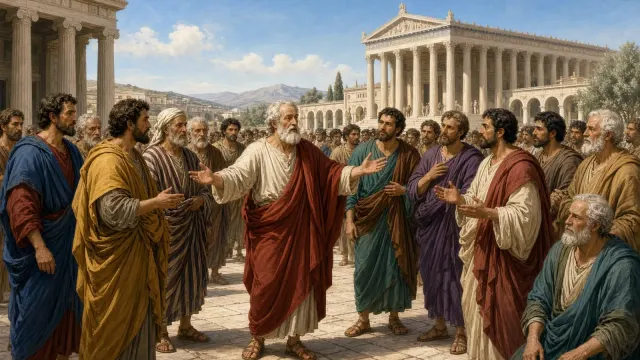
The Book of 1 Corinthians opens by refusing to let Corinth's failures become the first word about Corinth. Paul calls the congregation God's church, thanks God for gifts already present, and only then names the quarrel that has turned teachers into banners. The cure is not a better ranking of Paul, Apollos, Cephas, and Christ. It is a crucified Christ who makes every normal measure of prestige look unstable. The same cross that seems foolish or weak by ordinary standards becomes God's wisdom and power, and the Corinthians themselves are exhibit A: not many arrived with the credentials their city would have prized. By the end of the chapter, boasting has nowhere left to stand except in the Lord. Division is therefore more than bad manners. It is a way of forgetting who called the church, who was crucified for it, and where its entire standing actually comes from.
One complete chapter pageOpen chapter →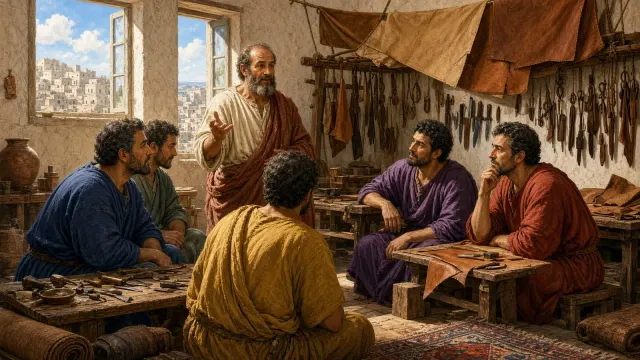
Wisdom That the Cross Reveals
Paul continues the argument about wisdom by recalling how little his arrival in Corinth resembled a polished display of intellectual mastery. The center was Jesus Christ crucified, and the messenger openly carried weakness, fear, and trembling. Yet Paul is not hostile to wisdom. He speaks of a wisdom belonging to God's purpose, hidden from rulers whose failure to recognize the Lord of glory was exposed in the crucifixion itself. What human perception could not discover has been revealed by the Spirit, who knows the deep things of God and communicates what God freely gives. The chapter therefore shifts the ground of discernment. Spiritual understanding is not an elite human faculty, a superior education, or immunity from criticism. It depends on God's self-disclosure and culminates in the mind of Christ. Corinth's claims to spiritual sophistication will soon be tested against something much less glamorous: the way its members treat one another.
One complete chapter pageOpen chapter →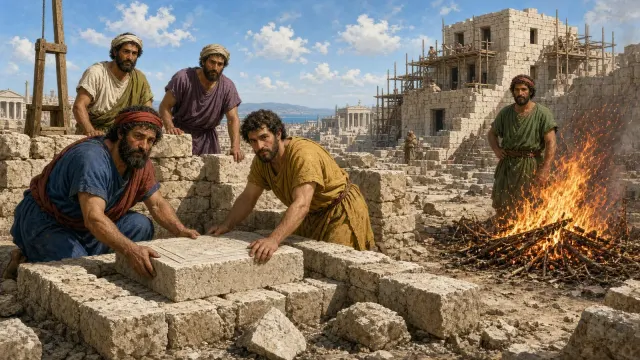
God's Field Is Not a Contest Between Gardeners
The Book of 1 Corinthians now tests Corinth's claim to spiritual maturity against the simplest evidence available: envy, strife, and party slogans. Paul and Apollos are not rival owners of the church but workers in God's field, each doing a real task while God alone gives the growth. The image then shifts from agriculture to construction. Christ is the settled foundation, but what later builders place upon it can survive testing or disappear in the fire. The building itself sharpens into a temple because God's Spirit dwells in the gathered people, making factional damage far more serious than a disagreement about personalities. Paul closes by reversing Corinth's possessive language. The church does not belong to Paul, Apollos, or Cephas. Those servants belong to the church's benefit, while the church belongs to Christ. Its apparent abundance ends not in self-ownership but in a larger and more demanding belonging.
One complete chapter pageOpen chapter →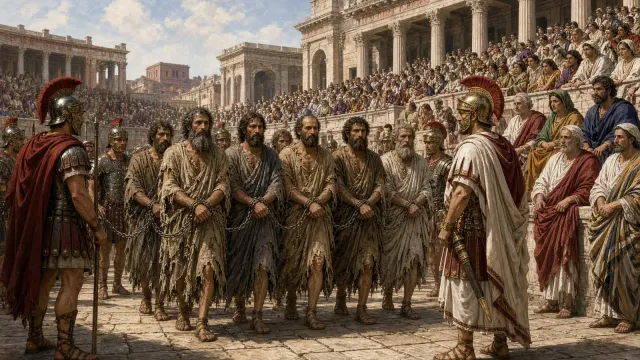
Apostles Without the Royal Treatment
Paul now asks Corinth to see its admired workers as stewards rather than celebrities. A steward handles another person's goods and waits for the owner's verdict, so neither public applause nor private self-confidence can settle the account. From there the chapter turns sharply ironic. Corinth imagines itself full, rich, and already reigning, while the apostles look like the condemned figures at the end of a procession: hungry, homeless, struck, reviled, and still answering abuse without returning it. The irony is not Paul enjoying humiliation for its own sake. He identifies his purpose as a father's warning to beloved children and sends Timothy to remind them of a consistent way of life in Christ. The chapter closes with the possibility of a visit. When Paul comes, inflated speech will be tested against power, and the tone of the encounter will depend on how the Corinthians respond before he arrives.
One complete chapter pageOpen chapter →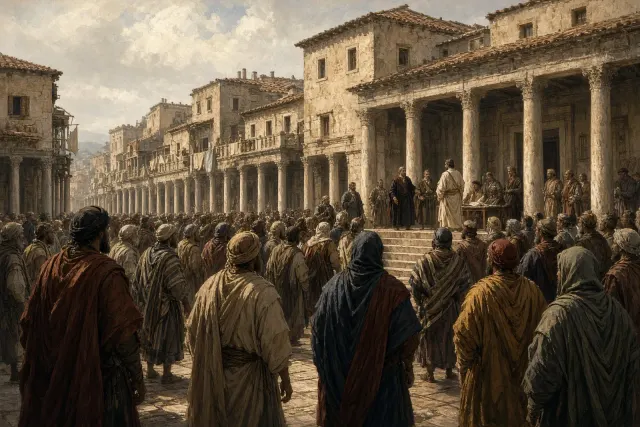
A Tolerated Offense and a Boundary Redrawn
The Book of 1 Corinthians moves from arguments about status to a failure the whole church has allowed to sit in plain sight. A man is living with his father's wife, and Paul is almost as disturbed by the congregation's pride as by the offense itself. He calls for a severe communal judgment whose stated end is still salvation, then uses Passover leaven to show why tolerated evil never stays neatly confined to one person. The cleansing language does not make the church a court over everyone outside its fellowship. Paul explicitly corrects that misunderstanding. His concern is the person called a brother whose conduct contradicts the fellowship being claimed. Outsiders remain under God's judgment, while the church is responsible for the boundary it has failed to maintain within. The chapter is severe, but its severity is not indiscriminate. It is aimed inward, at a community boasting where it should have mourned.
One complete chapter pageOpen chapter →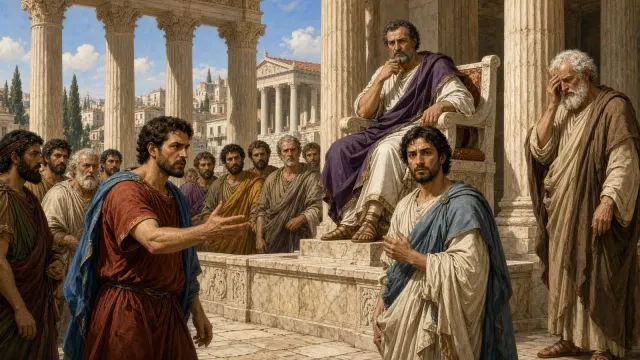
Bodies and Disputes That Belong to Christ
Corinth's public lawsuits expose the same contradiction that has appeared in its factions: people claiming spiritual wisdom are unable to live without defrauding one another. Paul first asks why ordinary disputes must be carried before outsiders, then goes deeper and calls the lawsuits themselves a defeat when brother is wronging brother. The vice list that follows is not detached moral cataloguing. It leads to "such were some of you" and to a changed identity described as washing, sanctification, and justification. The chapter then turns to sexual conduct through another disputed slogan about liberty. Paul grants no freedom that becomes a new master and refuses to treat bodily appetite as self-justifying. Bodies belong to the Lord, are destined for resurrection, are members of Christ, and are temples of the Holy Ghost. The final claim is the one that gathers everything: "ye are not your own." Disputes and bodies alike are being handled under another ownership.
One complete chapter pageOpen chapter →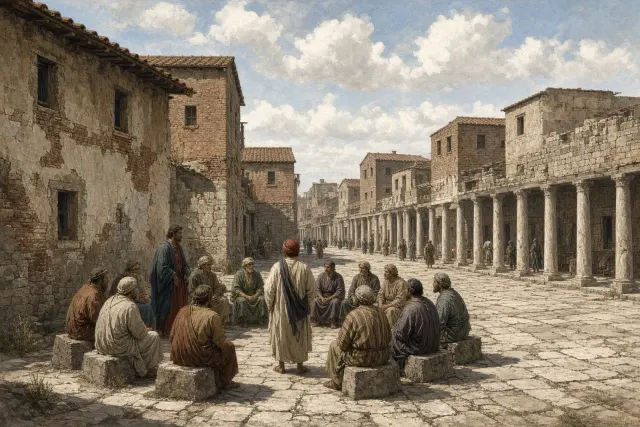
Marriage, Singleness, and a Calling Larger Than Either
Paul answers Corinth's marriage questions without making either marriage or singleness the universal badge of serious faith. He begins with reciprocal obligations between husband and wife, including the striking claim that neither spouse possesses unilateral authority over his or her own body. Singleness can be a gift, marriage can be a legitimate choice, and separation is treated differently depending on the situation. Mixed households are not polluted by an unbelieving spouse, and an unwilling partner cannot be held in place by force. Paul then widens the discussion into calling, status, and the "present distress." Circumcision, slavery, marriage, and singleness are all conditions that must not be mistaken for the final measure of belonging to Christ. His preference for undivided attention is real, but so are his qualifications. Marriage is not sin, counsel is not a trap, and differing gifts prevent a single life arrangement from becoming the spiritual mold for everyone.
One complete chapter pageOpen chapter →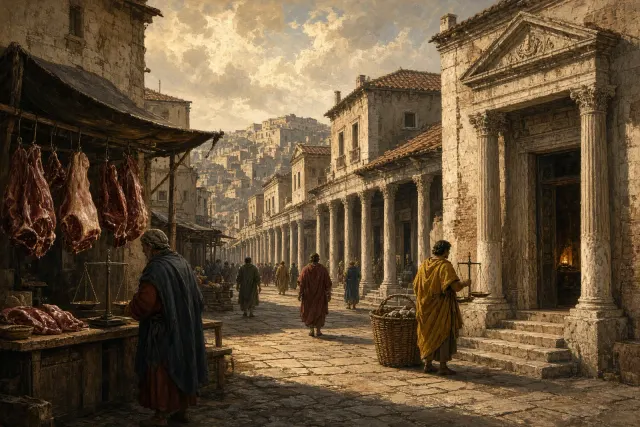
Knowledge Meets the Person It Can Injure
Food offered to idols becomes a test of whether correct knowledge has learned what it is for. Paul agrees with the central theological claim behind Corinth's confidence: an idol is no true god, and Christian allegiance belongs to the one God, the Father, and the one Lord, Jesus Christ. The problem begins when that knowledge is treated as though it automatically makes every action harmless. Some believers still experience idol food through consciences formed by former worship, and an example from a confident Christian can push them into conduct they still understand as religious disloyalty. Paul therefore measures freedom by what it builds. Food neither improves nor diminishes standing before God, so there is no spiritual prize for insisting on it. The brother at risk is someone for whom Christ died. Once Paul frames the issue that way, surrendering meat is not ignorance. It is knowledge finally governed by love.
One complete chapter pageOpen chapter →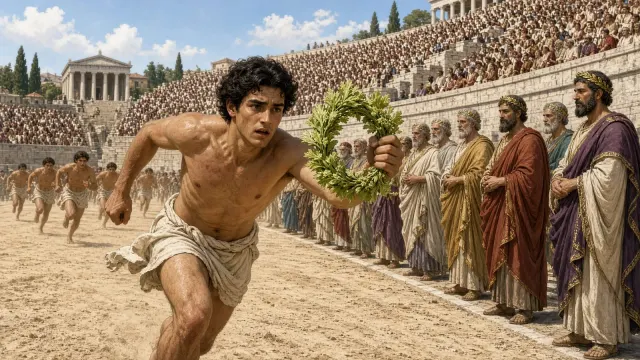
An Apostle's Right Not to Insist on His Rights
Paul now turns his own apostleship into the working example of the freedom he has just described. He carefully establishes that gospel workers possess a real right to material support, drawing on ordinary labor, the law, temple service, and the Lord's own direction. Only after proving the entitlement does he explain why he has chosen not to use it in Corinth. His preaching is a stewardship laid upon him; his distinctive freedom is to offer it without charge rather than convert authority into maximum personal advantage. That same pattern governs his flexibility among different groups. He becomes servant to all without surrendering his allegiance to Christ. Finally, runners and fighters replace legal language with discipline. Freedom does not mean aimlessness, and announcing the contest does not exempt the herald from running it. Paul places himself under the same examination he urges on everyone else.
One complete chapter pageOpen chapter →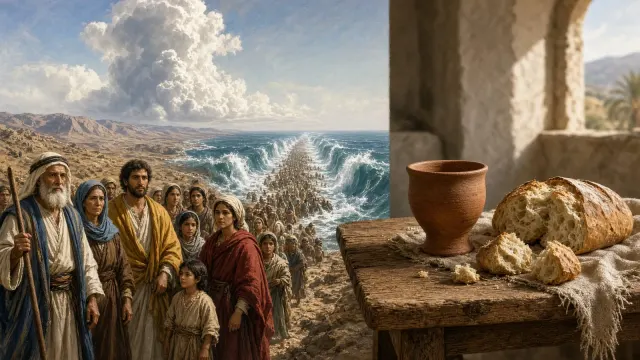
The Table of the Lord Has Real Boundaries
Israel's wilderness privileges give Paul a dangerous precedent for Corinth's confidence. All passed through the sea, all shared provision, and many still fell. Sacred participation is therefore no license to treat idolatry as harmless. Paul names Israel's failures, joins warning with God's faithfulness in temptation, and then draws a hard line around religious meals: the Lord's table and the table of devils represent incompatible fellowship. Yet he refuses to turn that prohibition into superstition about every piece of meat that once passed near an altar. Market food and ordinary hospitality may be received without investigation because the earth is the Lord's. Another person's conscience can still make abstention the loving choice when the food is explicitly identified as sacrificial. The chapter ends by expanding the rule beyond food altogether. Eating, drinking, and everything else come under God's glory and the good of others rather than the maximization of personal liberty.
One complete chapter pageOpen chapter →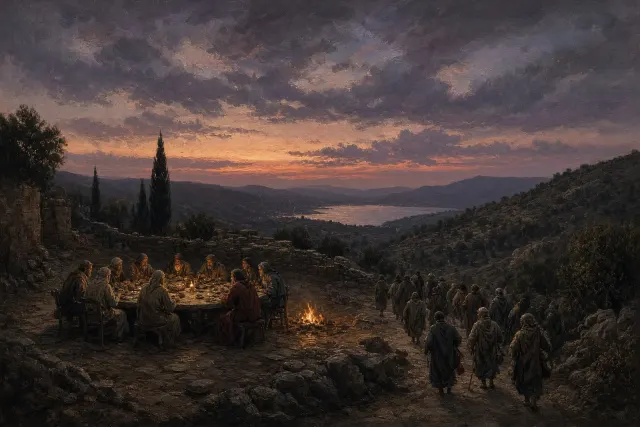
Honor at Worship and Humiliation at the Table
Worship in Corinth exposes relationships that private intention cannot hide. Paul first addresses men and women praying and prophesying, using headship, creation, hair, coverings, and custom in an argument whose details have generated genuine interpretive difficulty. He does not erase that difficulty, and neither does the chapter. The second half is much less obscure and much more severe. At the Lord's supper, social division has turned a shared meal into a scene where some have abundance and others are hungry and ashamed. Paul answers by returning to what he received about Jesus giving bread and cup on the night of betrayal. A meal that proclaims the Lord's self-giving death cannot be organized around taking one's own supper first. Self-examination therefore ends in something practical: discern the body, wait for one another, and do not let ordinary hunger turn the church's gathering into condemnation.
One complete chapter pageOpen chapter →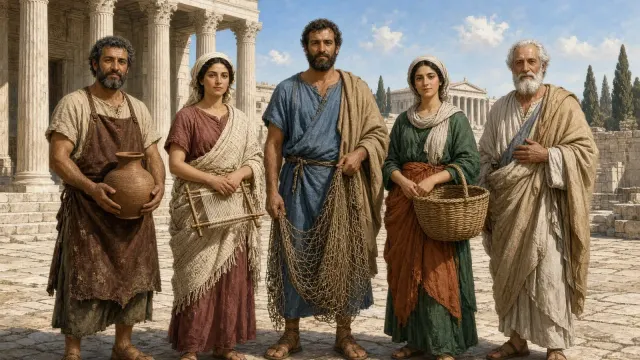
The Spirit Does Not Distribute a Hierarchy of Human Worth
Paul turns to spiritual gifts by refusing two opposite mistakes at once. Variety does not mean rival divine sources, and unity does not require identical gifts. The same Spirit, Lord, and God stand behind different manifestations, all given for common benefit rather than private rank. The body then becomes Paul's controlling image. Jews and Gentiles, enslaved and free, are brought into one body by one Spirit, and no member can cancel its belonging because it envies another role. Paul then reverses the pressure: prominent members cannot declare weaker ones unnecessary. God gives particular honor where human ranking withholds it so that the body may share both suffering and honor. The final list of ministries and gifts ends with questions expecting a simple no. Not everyone is an apostle, prophet, teacher, healer, tongue-speaker, or interpreter. Difference is not a defect in the body. It is how the body works.
One complete chapter pageOpen chapter →
The Gift That Cannot Replace Love
Placed between a chapter about gifts and a chapter about regulating them, love is not a decorative interruption. Paul makes it the test every spiritual ability must survive. Tongues, prophecy, mysteries, knowledge, mountain-moving faith, generosity, and even bodily sacrifice can all become zero in his reckoning when love is absent. He then describes love in verbs and refusals that sound like a direct indictment of Corinth's habits: no envy, boasting, inflation, self-seeking, or delight in wrongdoing. The argument finally reaches time itself. Prophecy, tongues, and present knowledge belong to a partial condition that will not last forever, while love does not fail. Childhood and a dim mirror describe the limitations of the present without making present gifts unreal. Faith, hope, and charity remain, but love is greatest because the church's most prized capacities are temporary while love belongs to the fullness toward which they point.
One complete chapter pageOpen chapter →
Speech That the Gathered Church Can Understand
Paul now applies the priority of love to what happens when the church gathers and people speak. Prophecy is preferred to an uninterpreted tongue for a simple reason: the congregation can understand it and be built up. Instruments, military signals, ordinary languages, prayer, song, and even the outsider walking into worship all make the same point from different angles. Audible sound is not enough. Meaning has to reach someone. Paul therefore regulates tongues and prophecy without abolishing either, requiring interpretation, evaluation, limits on speakers, and the willingness to be silent when order demands it. The disputed instruction about women's speech must be held beside the earlier reference to women praying and prophesying rather than allowed to erase it. The chapter ends with a balance Corinth needs badly: desire prophecy, do not forbid tongues, and let everything be done decently and in order.
One complete chapter pageOpen chapter →
If Christ Is Raised, Death Does Not Keep the Last Word
The Book of 1 Corinthians reaches its longest sustained argument by asking what is left if resurrection is removed from the gospel. Paul begins with the proclamation Corinth already received, then follows denial until preaching, faith, forgiveness, apostolic testimony, and hope for the dead all collapse with it. His answer is not that death has become unimportant, but that Christ is risen as firstfruits and death itself is the last enemy to be destroyed. The question of the resurrection body then receives images of seed, created variety, corruption giving way to incorruption, and the earthly image giving way to the heavenly. Both the dead and the living require transformation. The chapter ends by turning that future victory back toward present labor: because death will not keep what it takes, work in the Lord is not empty.
One complete chapter pageOpen chapter →
A Collection, an Open Door, and Love for Them All
The Book of 1 Corinthians closes by turning large claims about resurrection, charity, and shared labor into arrangements that can be checked. A collection for Jerusalem is prepared in advance and entrusted to carriers the Corinthians approve. Paul's travel plans are genuine without being absolute, and the "great door" at Ephesus exists alongside many adversaries. Timothy's work deserves a peaceful reception, while Apollos remains free to decline an immediate visit despite Paul's strong desire that he come. The final commands place courage and strength under charity, then direct honor toward people known for service rather than display. Greetings widen the horizon beyond Corinth's factions, and Paul's handwritten close puts warning, grace, and affection in the same few lines. The letter ends without pretending its conflicts were trivial, but also without withdrawing love from the church it has corrected.
One complete chapter pageOpen chapter →Source: eBible.org · eng-kjv2006