The big picture
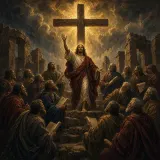
Some believers in Corinth, a Greek city, deny that the dead will rise. Paul, a messenger of Jesus Christ, shows how deeply that claim cuts into their faith. Christ's death, burial, and rising belong to the message they first received. Paul sets out its witnesses, its hope, and the change it promises for the body. Death will not have the last word. That future gives weight to the work believers do now, even when it brings pain and loss.
In this chapter
- The Received Message Has Living Witnesses 1 Corinthians 15:1-11
The good news Paul gave them remains the ground on which they stand.
- Denying Resurrection Empties the Whole Claim 1 Corinthians 15:12-19
Some in Corinth say that dead people do not rise.
- The First to Rise Leads Others 1 Corinthians 15:20-23
Paul now states the fact on which his hope rests: Christ has risen.
- The Last Enemy Will Lose Its Rule 1 Corinthians 15:24-28
The end comes with Christ handing the kingdom to God the Father.
- Future Life Gives Present Risk Its Point 1 Corinthians 15:29-34
Paul asks why some are baptized for the dead if no dead person rises.
- Seeds and Bodies Show Varied Forms 1 Corinthians 15:35-41
An objector asks how the dead rise and what sort of body they receive.
- Weak Bodies Will Be Raised in Glory 1 Corinthians 15:42-49
The body laid in death decays, but the raised body will not.
- The Living and Dead Must Be Changed 1 Corinthians 15:50-53
Flesh and blood in their present state cannot inherit God's kingdom.
- Victory Gives Work a Lasting Future 1 Corinthians 15:54-58
When the mortal body receives deathless life, Scripture's words about victory over death will be fulfilled.
Central truth
Christ's rising promises new life for his people, the defeat of death, and lasting worth for their work in him.

Scripture beside the summary
1 Corinthians · King James Version · 581 Corinthians 15:1-11
The Received Message Has Living Witnesses
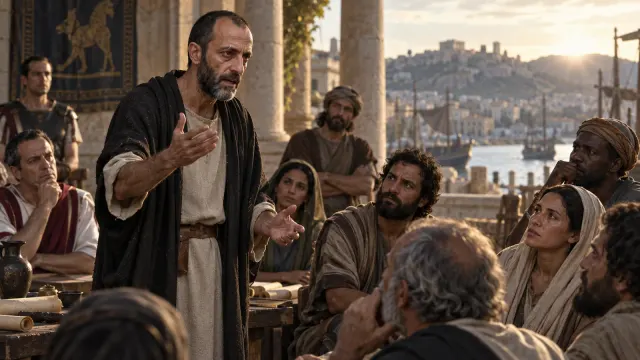
The good news Paul gave them remains the ground on which they stand. Christ died for sins, was buried, and rose on the third day, as Scripture said. He appeared to Cephas, a leading disciple, then the twelve, his close band of followers. More than five hundred saw him together, and most are still alive. James, another leader, and the apostles, Christ's sent messengers, also saw him. Paul came last and feels unworthy because he once attacked the church. God's grace made him a messenger and gave strength to his work. The witnesses share one message, which the Corinthians believed.
In everyday life
A crash investigator checks an account against named witnesses, including a large group still available to speak. She also records one witness's former hostility toward the people whose account he now supports. The claim invites scrutiny rather than resting on a nameless rumour. Paul's witnesses testify that the dead Christ lives, a claim larger than reconstructing an accident.
Notice
1 Corinthians 15:6 Most of the large group are still alive when Paul writes. He places the message among living witnesses, not only memories of people who have died.
1 Corinthians 15:1-11
King James Version1Moreover, brethren, I declare unto you the gospel which I preached unto you, which also ye have received, and wherein ye stand;
2By which also ye are saved, if ye keep in memory what I preached unto you, unless ye have believed in vain.
3For I delivered unto you first of all that which I also received, how that Christ died for our sins according to the scriptures;
4And that he was buried, and that he rose again the third day according to the scriptures:
5And that he was seen of Cephas, then of the twelve:
6After that, he was seen of above five hundred brethren at once; of whom the greater part remain unto this present, but some are fallen asleep.
7After that, he was seen of James; then of all the apostles.
8And last of all he was seen of me also, as of one born out of due time.
9For I am the least of the apostles, that am not meet to be called an apostle, because I persecuted the church of God.
10But by the grace of God I am what I am: and his grace which was bestowed upon me was not in vain; but I laboured more abundantly than they all: yet not I, but the grace of God which was with me.
11Therefore whether it were I or they, so we preach, and so ye believed.
1 Corinthians 15:12-19
Denying Resurrection Empties the Whole Claim
Some in Corinth say that dead people do not rise. Paul follows that claim to its result: then Christ himself has not risen. Preaching becomes empty, faith loses its ground, and the witnesses have spoken falsely about God. Sin still holds believers, and those who died in Christ have perished. Hope confined to this life leaves them deeply to be pitied. Paul does not treat Christ's rising as an optional detail. Remove it, and the message of rescue he has preached no longer stands.
In everyday life
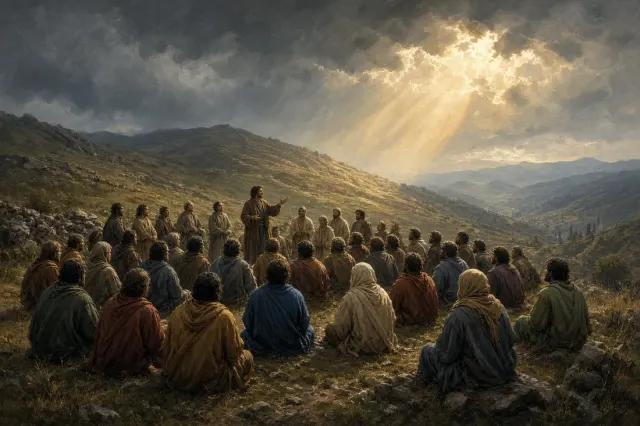
A tower inspector discovers that the foundation named in a tower's plans was never laid. She cannot treat it as one missing feature among many, because every floor depends on it. The whole claim of safety must be reconsidered. Paul tests the basis of Christian faith, not the strength of a structure.
Notice
1 Corinthians 15:17 Paul links rising from death with release from sins. His argument concerns rescue itself, not merely proof that an unusual event took place.
1 Corinthians 15:12-19
King James Version12Now if Christ be preached that he rose from the dead, how say some among you that there is no resurrection of the dead?
13But if there be no resurrection of the dead, then is Christ not risen:
14And if Christ be not risen, then is our preaching vain, and your faith is also vain.
15Yea, and we are found false witnesses of God; because we have testified of God that he raised up Christ: whom he raised not up, if so be that the dead rise not.
16For if the dead rise not, then is not Christ raised:
17And if Christ be not raised, your faith is vain; ye are yet in your sins.
18Then they also which are fallen asleep in Christ are perished.
19If in this life only we have hope in Christ, we are of all men most miserable.
1 Corinthians 15:20-23
The First to Rise Leads Others
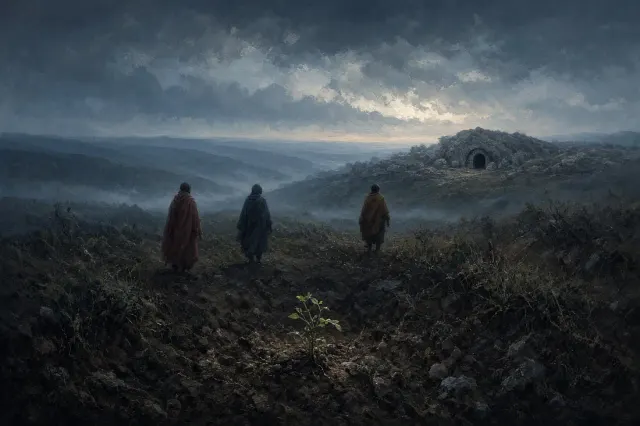
Paul now states the fact on which his hope rests: Christ has risen. His rising is like the first part of a harvest, promising what follows. Adam, the first man, brought death into the human family. Christ brings the rising of the dead. All who share Adam's life face death, while life comes through Christ. There is an order rather than one event with no stages. Christ comes first, and those who belong to him will rise when he comes. Their future rests on his life, not their escape from having a body.
In everyday life
A seed grower carries the first ripe ears into the barn while the rest of the field still stands. That first crop belongs to the same harvest and gives a sign of what is coming. The later gathering has not yet happened. Paul's firstfruits are the risen Christ, whose life promises resurrection rather than another growing season.
Notice
1 Corinthians 15:23 Paul distinguishes Christ's rising from the later rising of those who belong to him. The shared hope has an order and a promised future moment.
1 Corinthians 15:20-23
King James Version20But now is Christ risen from the dead, and become the firstfruits of them that slept.
21For since by man came death, by man came also the resurrection of the dead.
22For as in Adam all die, even so in Christ shall all be made alive.
23But every man in his own order: Christ the firstfruits; afterward they that are Christ’s at his coming.
1 Corinthians 15:24-28
The Last Enemy Will Lose Its Rule
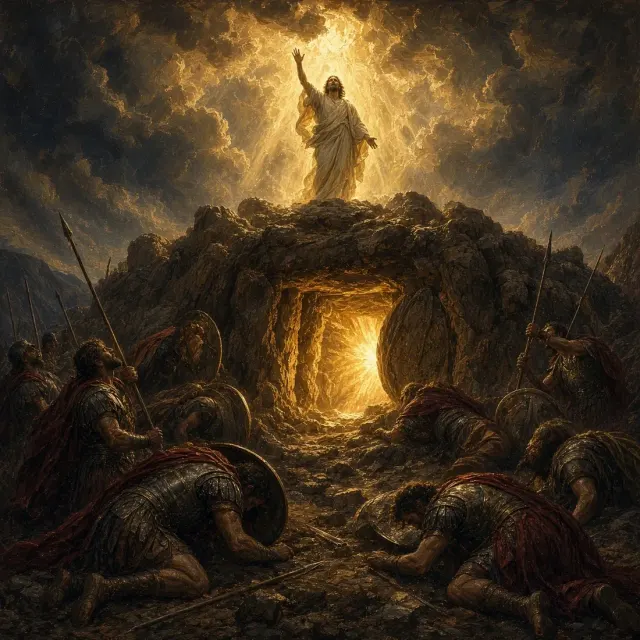
The end comes with Christ handing the kingdom to God the Father. Every hostile rule and power must be put down, for Christ reigns until all enemies are subdued. Death is the last enemy to fall. When Paul says all things come under Christ, he excludes God, who gave that rule. The Son then submits to the Father, so that God is all in all. Christians differ on how to describe this relation within God's life. Paul's main direction is clear: rival powers and death will not keep their hold forever.
In everyday life
A peace envoy closes the last armed checkpoint after a long process of restoring civilian rule. Earlier agreements mattered, but one force still controlled passage until that final barrier fell. She hands the route back to its rightful public authority. Paul's final enemy is death itself, which no peace settlement can abolish.
Notice
1 Corinthians 15:26 Death is named as an enemy to be destroyed. Paul does not describe it as the permanent ruler of the world God intends.
1 Corinthians 15:24-28
King James Version24Then cometh the end, when he shall have delivered up the kingdom to God, even the Father; when he shall have put down all rule and all authority and power.
25For he must reign, till he hath put all enemies under his feet.
26The last enemy that shall be destroyed is death.
27For he hath put all things under his feet. But when he saith all things are put under him, it is manifest that he is excepted, which did put all things under him.
28And when all things shall be subdued unto him, then shall the Son also himself be subject unto him that put all things under him, that God may be all in all.
1 Corinthians 15:29-34
Future Life Gives Present Risk Its Point
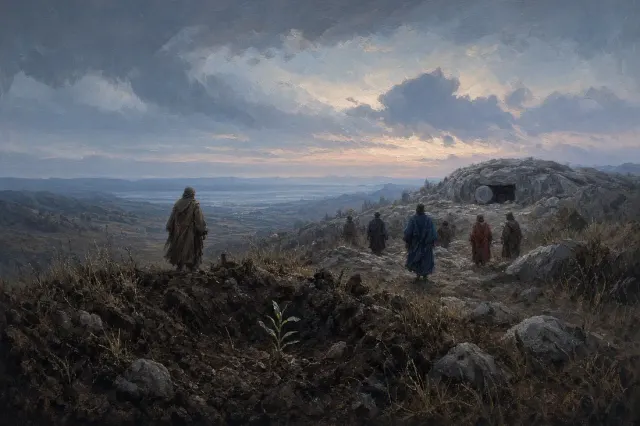
Paul asks why some are baptized for the dead if no dead person rises. Christians differ about the practice he names; he uses it here to expose a mismatch in belief. His own daily danger also makes no sense without future life. He speaks of fighting beasts at Ephesus, a city where he faced great peril. Without rising, eating and drinking before death would seem enough. He warns that bad company spoils conduct and calls them to wake from sin. Their lack of knowledge of God brings shame, not a reason for pride.

In everyday life
A pension adviser finds that a client dismisses every future plan while paying each month toward retirement. She lays the payments beside his stated belief and asks him to face the mismatch. His conduct assumes a future his words deny. Paul uses an obscure baptism practice and his own danger to press the case for resurrection.
Notice
1 Corinthians 15:29 The question appeals to a practice among others without explaining its details. Paul's argument is clear even though the exact custom remains disputed.
1 Corinthians 15:29-34
King James Version29Else what shall they do which are baptized for the dead, if the dead rise not at all? why are they then baptized for the dead?
30And why stand we in jeopardy every hour?
31I protest by your rejoicing which I have in Christ Jesus our Lord, I die daily.
32If after the manner of men I have fought with beasts at Ephesus, what advantageth it me, if the dead rise not? let us eat and drink; for to morrow we die.
33Be not deceived: evil communications corrupt good manners.
34Awake to righteousness, and sin not; for some have not the knowledge of God: I speak this to your shame.
1 Corinthians 15:35-41
Seeds and Bodies Show Varied Forms
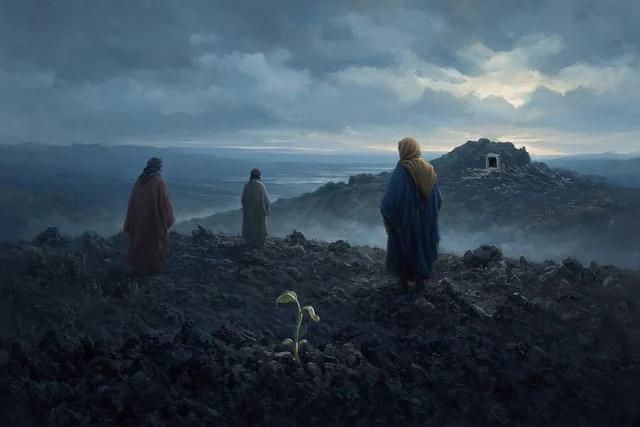
An objector asks how the dead rise and what sort of body they receive. Paul answers with a seed, which must fall and die before new growth comes. The bare grain does not look like the plant God gives it. Each kind receives its own form. Living creatures also differ: humans, animals, fish, and birds do not all have the same flesh. Heaven and earth have different kinds of splendour, and even stars differ from one another. The body's present form therefore does not set a limit on what God can give.
In everyday life
A young gardener plants a dry bean in a clear cup and draws it each morning. Roots, a stem, and leaves emerge from something that first looked small and lifeless. The plant belongs with the seed. Yet they do not look the same. Paul's seed picture supports hope in God's power to raise bodies, not a claim that human death is plant growth.
Notice
1 Corinthians 15:38 God gives each seed its fitting body. Paul locates the answer in God's act rather than in the reader's ability to picture the final form.
1 Corinthians 15:35-41
King James Version35But some man will say, How are the dead raised up? and with what body do they come?
36Thou fool, that which thou sowest is not quickened, except it die:
37And that which thou sowest, thou sowest not that body that shall be, but bare grain, it may chance of wheat, or of some other grain:
38But God giveth it a body as it hath pleased him, and to every seed his own body.
39All flesh is not the same flesh: but there is one kind of flesh of men, another flesh of beasts, another of fishes, and another of birds.
40There are also celestial bodies, and bodies terrestrial: but the glory of the celestial is one, and the glory of the terrestrial is another.
41There is one glory of the sun, and another glory of the moon, and another glory of the stars: for one star differeth from another star in glory.
1 Corinthians 15:42-49
Weak Bodies Will Be Raised in Glory
The body laid in death decays, but the raised body will not. Weakness and shame give way to strength and glory. Paul calls the first a natural body and the raised one a spiritual body. He is describing a changed body, not saying there will be no body. Adam received life from the earth; Christ, called the last Adam, gives life from heaven. The natural comes first, then the spiritual. As believers have shared the earthly man's likeness, they will share the likeness of the heavenly one.
In everyday life
A conservator lifts a worn flag from a dark store and prepares it for display in full light. Its fragile state does not erase its identity, though its place and appearance change. She can preserve the cloth but cannot free it from decay forever. Paul promises a bodily change no careful act of preservation can supply.
Notice
1 Corinthians 15:44 Both sides of Paul's contrast are called a body. The word spiritual describes the raised body's new kind of life, not the loss of embodied life.
1 Corinthians 15:42-49
King James Version42So also is the resurrection of the dead. It is sown in corruption; it is raised in incorruption:
43It is sown in dishonour; it is raised in glory: it is sown in weakness; it is raised in power:
44It is sown a natural body; it is raised a spiritual body. There is a natural body, and there is a spiritual body.
45And so it is written, The first man Adam was made a living soul; the last Adam was made a quickening spirit.
46Howbeit that was not first which is spiritual, but that which is natural; and afterward that which is spiritual.
47The first man is of the earth, earthy: the second man is the Lord from heaven.
48As is the earthy, such are they also that are earthy: and as is the heavenly, such are they also that are heavenly.
49And as we have borne the image of the earthy, we shall also bear the image of the heavenly.
1 Corinthians 15:50-53
The Living and Dead Must Be Changed
Flesh and blood in their present state cannot inherit God's kingdom. What decays cannot enter a life free of decay without change. Paul discloses something previously hidden: not all believers will die, but all will be changed. At the last trumpet, the dead will rise beyond decay, and the living will change too. It happens in an instant. Mortal life must put on life that cannot die. The promise includes both groups, so being alive at Christ's coming does not remove the need for God's transforming act.
In everyday life
A space-suit technician checks every crew member before entry into an airless chamber. Experienced workers need the same protection as new arrivals; their present clothing cannot sustain life there. Nobody enters on the strength of having arrived first. Paul's change is God's gift of immortal bodily life, not equipment people can put on for themselves.
Notice
1 Corinthians 15:51 Some will still be alive, but none can remain unchanged. Paul separates the experience of dying from the need to receive a life death cannot end.
1 Corinthians 15:50-53
King James Version50Now this I say, brethren, that flesh and blood cannot inherit the kingdom of God; neither doth corruption inherit incorruption.
51Behold, I shew you a mystery; We shall not all sleep, but we shall all be changed,
52In a moment, in the twinkling of an eye, at the last trump: for the trumpet shall sound, and the dead shall be raised incorruptible, and we shall be changed.
53For this corruptible must put on incorruption, and this mortal must put on immortality.
1 Corinthians 15:54-58
Victory Gives Work a Lasting Future
When the mortal body receives deathless life, Scripture's words about victory over death will be fulfilled. Paul pictures death and the grave stripped of their claim to triumph. Sin gives death its sting, and the law gives sin its force. Thanks belong to God, who grants victory through Jesus Christ the Lord. This hope leads Paul back to present work. Believers are to stand firm and keep giving themselves to the Lord's service. Their labour is not empty because the Lord who lives gives it a future death cannot cancel.
In everyday life
A coastal volunteer keeps planting dune grass after learning that a lasting protection scheme will secure the shore. Her small tasks now belong to a future larger than the next storm. That prospect gives her reason to persist when the work is tiring. Paul's confidence rests on God's victory over death, not a project's promised success.
Notice
1 Corinthians 15:58 The chapter ends with work rather than speculation about dates. Hope in rising gives present labour weight, even when its full outcome cannot yet be seen.
1 Corinthians 15:54-58
King James Version54So when this corruptible shall have put on incorruption, and this mortal shall have put on immortality, then shall be brought to pass the saying that is written, Death is swallowed up in victory.
55O death, where is thy sting? O grave, where is thy victory?
56The sting of death is sin; and the strength of sin is the law.
57But thanks be to God, which giveth us the victory through our Lord Jesus Christ.
58Therefore, my beloved brethren, be ye stedfast, unmoveable, always abounding in the work of the Lord, forasmuch as ye know that your labour is not in vain in the Lord.
Details worth noticing
The opening image
1 Corinthians 15:1 begins with “Moreover, brethren, I declare unto you the gospel which I preached unto you, which also ye have received, and wherein ye stand;”
Where the chapter turns
1 Corinthians 15:29 forms a natural hinge: “Else what shall they do which are baptized for the dead, if the dead rise not at all? why are they then baptized for the dead?”
The final note
1 Corinthians 15:58 leaves the reader with “Therefore, my beloved brethren, be ye stedfast, unmoveable, always abounding in the work of the Lord, forasmuch as ye know that your labour is not in vain…”
A word trail through the chapter
The words Christ, dead, raised, body, glory, vain help reveal the chapter’s repeated concerns.
KJV words made clear
- firstfruits
- The first part of a harvest, pointing here to more that will follow.
- incorruption
- A state no longer subject to decay or death.
- quickening
- Giving life or making something alive.
Music and video connected to the passage
Related media appears when its Scripture reference overlaps this study. Music and video can illuminate a theme while the biblical text remains the foundation.