
Places of the Bible

Corinth

A port on a four mile neck of land with a harbour on each side, and the most difficult congregation in the New Testament.

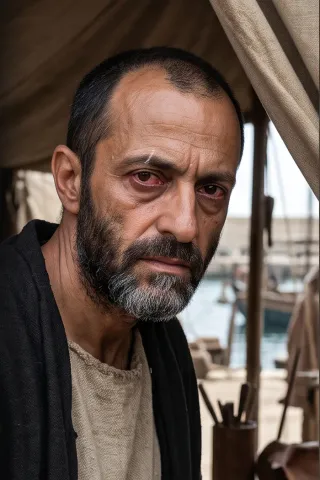
Corinth sits on the isthmus joining mainland Greece to the Peloponnese, with Lechaeum facing Italy and Cenchrea facing Asia. Small ships were dragged overland between them rather than sail around the cape, so the whole traffic of the eastern Mediterranean passed through one town. Rome had destroyed the old city and refounded it as a colony a century before Paul arrived, which means the population was new, mixed, commercial and without much of a past.

Where it appearsActs 18 · 1 Corinthians 1 · 1 Corinthians 13 · 1 Corinthians 15 · 2 Corinthians 12

Scroll down to the account

The movements, in the order the text gives them.

The Account of Corinth

  1. 01

    Acts 18:1-4

    He abode with them, and wrought

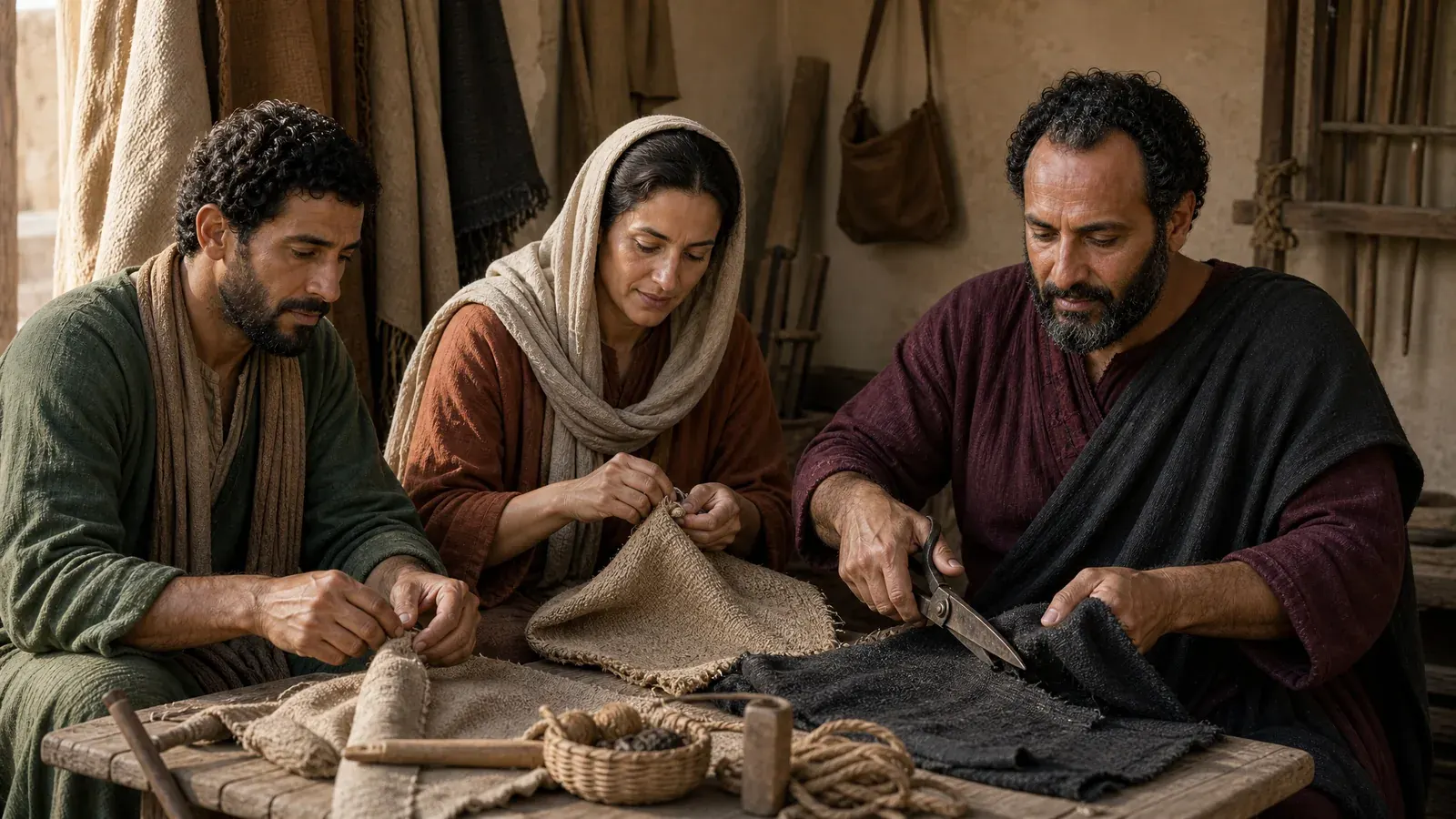
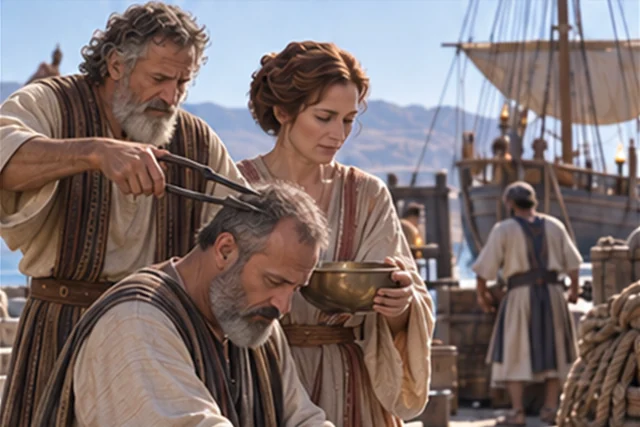
    The founding of the church runs through a workshop. Aquila and Priscilla are in town because an emperor threw them out of another one.

    Corinth begins with a shared trade, not a speaking engagement. Before Paul has an established congregation in the city, he has people with whom he can work. The imperial order that displaced Aquila and Priscilla from Rome has brought them into the path of another traveling Jew. The Book of Acts places the emperor's command inside parentheses; the partnership it helps bring about will outlast this paragraph by a considerable distance.

    He abode with them, and wrought. The sentence gives the work its proper solidity. Paul is not merely visiting a workshop to obtain an illustration for a sermon. He earns his living there, while the repeated every sabbath sets a second rhythm beside the first: labor and sustained argument from Scripture. Neither makes the other unreal.

    Aquila and Priscilla are also more than useful accommodation. Later in this same chapter they will explain the way of God more accurately to Apollos. The hands making tents belong to teachers. Corinth's opening scene already contains more ministry than the man speaking in the synagogue.

    Verse by verse

    1. 18:2

      The passage does not say when Aquila and Priscilla became believers. It should not be made to say that Paul converted them in Corinth.

    2. 18:3

      The Greek skenopoios denotes a tentmaker. The verse does not identify the particular fabric or leather being worked.

    3. 18:4

      The repeated sabbath marks continuing engagement, not a single address. Both Jews and Greeks are named among those Paul sought to persuade.
    Acts 18:1-4

    King James Version · 4 verses

    18:1After these things Paul departed from Athens, and came to Corinth;

    18:2And found a certain Jew named Aquila, born in Pontus, lately come from Italy, with his wife Priscilla; (because that Claudius had commanded all Jews to depart from Rome:) and came unto them.

    18:3And because he was of the same craft, he abode with them, and wrought: for by their occupation they were tentmakers.

    18:4And he reasoned in the synagogue every sabbath, and persuaded the Jews and the Greeks.

    Acts 18:1-4: He abode with them, and wrought
  2. 02

    Acts 18:9-11

    I have much people in this city

    The reason given for staying is not the congregation he has but the one he does not have yet.

    The instruction is to keep speaking, not to find a safer city. That matters because the promise arrives amid an actual dispute, after opposition in the synagogue and the conversion of Crispus in the surrounding verses. Corinth has not become easy. Paul has been told that difficulty does not determine the length of his stay.

    I have much people in this city is a claim of belonging before it is a report of visible numbers. The Lord speaks of people as his own, and the immediate consequence is further teaching. The sentence does not invite Paul to stop because the outcome is settled. It gives him a reason to continue. Divine assurance and human work are placed on the same side of the argument.

    Then the great reassurance receives an unexpectedly ordinary measure: a year and six months. The vision does not replace patient explanation. It supports it. After the night in which the Lord speaks, there are months in which Paul does the speaking. Corinth receives more than a visit.

    Verse by verse

    1. 18:9

      The instruction follows opposition and conversions in Acts 18:6-8. Neither part of that immediate setting should be left out.

    2. 18:10

      The protection is promised to Paul in this setting. The verse is not a general guarantee that every Christian will avoid physical harm.

    3. 18:11

      The verse specifies eighteen months of teaching. Acts 18:18 also describes a further stay without supplying a precise total for every stage.

    Acts 18:9-11

    King James Version · 3 verses

    18:9Then spake the Lord to Paul in the night by a vision, Be not afraid, but speak, and hold not thy peace:

    18:10For I am with thee, and no man shall set on thee to hurt thee: for I have much people in this city.

    18:11And he continued there a year and six months, teaching the word of God among them.

    Acts 18:9-11: I have much people in this city
  3. 03

    1 Corinthians 1:11-13

    Is Christ divided

    The factions are named after preachers, including one who is writing the letter, and the questions are rhetorical.

    Paul begins dismantling the faction carrying his own name. There is no flattering pause over the size of his following, no suggestion that division becomes acceptable when the correct apostle benefits. His name is the first one put on the table. It is not the exemption.

    The report also has an identified source: people connected with Chloe. Paul is addressing information, not decorating an accusation with a convenient everybody says. The four slogans turn relationships with teachers into competing declarations of ownership. Even the final appeal to Christ stands inside a list whose whole arrangement has become a problem, though readers differ over exactly how that last slogan functioned.

    The answer moves from personalities to the cross and baptism. Paul did not purchase the Corinthians by being crucified for them, and baptism did not enroll them as his property. Later, in chapter 3, planting and watering will give Paul and Apollos distinct tasks within one work. Here the boundary is sharper still: a minister's usefulness does not make him the crucified Lord.

    Verse by verse

    1. 1:11

      Chloe is named as the connection identifying Paul's informants. Her residence and the precise composition of the group are not given.

    2. 1:12

      Cephas is the name also used for Peter. Whether the final Christ slogan represents another faction or a different kind of claim remains debated.

    3. 1:13

      Paul contrasts the name attached to a teacher with the one to whom baptism properly belongs. His questions deny a minister ownership of the baptized.

    1 Corinthians 1:11-13

    King James Version · 3 verses

    1:11For it hath been declared unto me of you, my brethren, by them which are of the house of Chloe, that there are contentions among you.

    1:12Now this I say, that every one of you saith, I am of Paul; and I of Apollos; and I of Cephas; and I of Christ.

    1:13Is Christ divided? was Paul crucified for you? or were ye baptized in the name of Paul?

    1 Corinthians 1:11-13: Is Christ divided
  4. 04

    1 Corinthians 13:1-3

    And have not charity, I am nothing

    The chapter is addressed to people competing over gifts, and the opening concedes every gift before withdrawing the point of having one.

    The repeated word is nothing. Not less impressive, not slightly incomplete. Paul imagines eloquence at its highest reach, knowledge with nothing missing, faith moving mountains, possessions given away, and even the body surrendered. Then he removes love, and the impressive totals collapse.

    This paragraph sits between the discussion of diverse gifts in chapter 12 and their orderly use in chapter 14. Its first setting is therefore a congregation arguing about giftedness, not a wedding reading detached from church life. The Corinthians have been distinguishing themselves by what they can do. Paul presses on what those abilities become when the person exercising them does not love. Sound can remain after meaning has gone: brass and a cymbal are quite capable of making themselves heard.

    The third verse closes an especially easy escape. Charity cannot mean simply donating to the poor, because Paul has already imagined giving everything away without it. Even enormous sacrifice is not allowed to prove its own motive. The paragraph does not despise gifts. It refuses to let gifts impersonate love.

    Verse by verse

    1. 13:1

      The tongues of angels occur within a conditional statement pushed to its greatest imaginable extent. The verse is not a technical description of an angelic language.

    2. 13:2

      Faith is described here through its extraordinary power to move mountains. The argument concerns spectacular ability without love.

    3. 13:3

      The King James follows the reading burned; another ancient reading is boast. Under either reading, the sentence denies that an extreme act is sufficient without love.

    1 Corinthians 13:1-3

    King James Version · 3 verses

    13:1Though I speak with the tongues of men and of angels, and have not charity, I am become as sounding brass, or a tinkling cymbal.

    13:2And though I have the gift of prophecy, and understand all mysteries, and all knowledge; and though I have all faith, so that I could remove mountains, and have not charity, I am nothing.

    13:3And though I bestow all my goods to feed the poor, and though I give my body to be burned, and have not charity, it profiteth me nothing.

    1 Corinthians 13:1-3: And have not charity, I am nothing
  5. 05

    2 Corinthians 12:7-10

    My grace is sufficient for thee

    The answer to a request made three times is a refusal with a reason, and the reason is the same logic the whole letter runs on.

    Paul asked for removal before he spoke of sufficiency. Three times. That sequence keeps the passage from becoming a polished celebration of pain by someone safely outside it. The distress was real enough to resist, and the apostle did not initially treat its continuance as the desired answer.

    The abundance of revelations and the thorn belong in the same paragraph. The experiences that might invite exaltation are followed by something that will not permit a picture of effortless superiority. Yet Paul calls it a messenger of Satan, not a pleasant disguise. Its restraining effect does not make the affliction harmless or its agent benevolent. The text can name both the hostility and the purpose without pretending they are identical.

    The reply changes the location of strength. Christ's power does not wait until Paul's weakness has been erased; it rests upon him there. The final list makes weakness concrete: insults, necessities, persecutions, distresses for Christ's sake. This is not admiration for suffering in the abstract. It is an account of ministry whose power cannot be mistaken for the minister's invulnerability.

    Verse by verse

    1. 12:7

      The thorn is not diagnosed. Physical illness and hostile opposition are among the proposed readings, but the passage does not settle its exact identity.

    2. 12:8

      Thrice means three times. The reply is an assurance of sufficient grace, not the removal Paul had requested.

    3. 12:9-10

      Made perfect describes strength reaching its effective expression, not a defect in Christ being repaired. For Christ's sake qualifies the sufferings named in verse 10.

    2 Corinthians 12:7-10

    King James Version · 4 verses

    12:7And lest I should be exalted above measure through the abundance of the revelations, there was given to me a thorn in the flesh, the messenger of Satan to buffet me, lest I should be exalted above measure.

    12:8For this thing I besought the Lord thrice, that it might depart from me.

    12:9And he said unto me, My grace is sufficient for thee: for my strength is made perfect in weakness. Most gladly therefore will I rather glory in my infirmities, that the power of Christ may rest upon me.

    12:10Therefore I take pleasure in infirmities, in reproaches, in necessities, in persecutions, in distresses for Christ’s sake: for when I am weak, then am I strong.

    2 Corinthians 12:7-10: My grace is sufficient for thee

Why it matters

He stays eighteen months, longer than anywhere except Ephesus, and supports himself making tents with a couple who had just been expelled from Rome. The letters that follow are the least edited documents in the New Testament: lawsuits between members, a man sleeping with his father’s wife, drunkenness at the Lord’s table, arguments about hair, and a faction system organised around preachers’ names. In the middle of all of it he writes the chapter about charity, which was not composed for a wedding. It was composed for this church.

4 songs

The music

Every song in the catalogue whose passage falls inside these chapters.

  1. 1 Corinthians 1:1-2:16

    Christ the Power of God

  2. 1 Corinthians 13:1-13

    Charity Never Faileth

  3. 1 Corinthians 15:1-58

    Death Is Swallowed Up in Victory

  4. 2 Corinthians 12:1-21

    My Grace Is Sufficient for Thee

Nearby

All the places

Report an error on this page