
New · FreePlay The Witnesses The in-depth puzzle battle quest through Bible history

People of the Bible

Apollos

Was the best speaker in the book, was quietly told what he had missed, and went back out better.

He is a Jew of Alexandria, an eloquent man and mighty in the Scriptures, fervent in the spirit, teaching diligently the things of the Lord. Then comes the qualifier that makes the account: knowing only the baptism of John. He is preaching accurately about a man he has heard of secondhand, with the last chapter missing, and he is doing it well enough that a synagogue lets him keep going.

Where he appearsActs 18 · Acts 19 · 1 Corinthians 1 to 4 · 1 Corinthians 16

Scroll down to the account
Apollos

The movements, in the order the text gives them.

The Account of Apollos

  1. 01

    Acts 18:24-25

    Mighty in the scriptures

    Everything said about his ability is positive and everything he knows is correct. The gap is at the end rather than in the middle.

    The limitation comes after the compliments, and the compliments are not withdrawn. Apollos knows the Scriptures, speaks effectively, has received instruction, and teaches with fervor. Only then comes knowing only the baptism of John. The Book of Acts can recognize genuine ability without pretending that ability supplies missing information.

    Mighty in the scriptures gives the eloquence its substance. This is not admiration for a pleasant voice with nothing behind it. His strength concerns the writings on which his argument rests. Alexandria names his birthplace, but the text does not give a school transcript or make him a pupil of a particular philosopher. The praise is specific enough without a speculative education added to it.

    There is a useful tension in taught diligently. The Greek can mean accurately, even though his knowledge remains limited. Accuracy and completeness are not identical. Apollos is not introduced as a fraud who needs exposing. He is an energetic, informed teacher who needs further teaching. The chapter makes that distinction before anyone offers the correction.

    Verse by verse

    1. 18:24

      The Scriptures here are the sacred writings of Israel, not a completed New Testament collection.

    2. 18:25

      Fervent describes energetic zeal; it does not mean that Apollos already possesses a complete understanding of the events and teaching concerning Jesus.

    3. 18:25

      The verse names the limitation concerning John's baptism without listing every fact that Apollos does or does not know.
    Acts 18:24-25

    King James Version · 2 verses

    18:24And a certain Jew named Apollos, born at Alexandria, an eloquent man, and mighty in the scriptures, came to Ephesus.

    18:25This man was instructed in the way of the Lord; and being fervent in the spirit, he spake and taught diligently the things of the Lord, knowing only the baptism of John.

    Acts 18:24-25: Mighty in the scriptures
  2. 02

    Acts 18:26

    They expounded unto him the way of God more perfectly

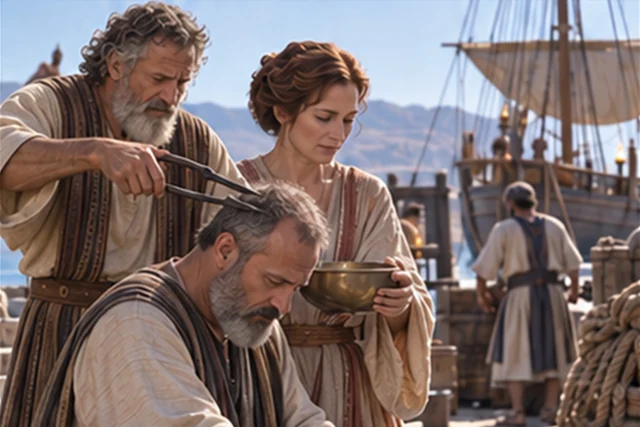
    A tentmaking couple takes the most eloquent preacher in Acts home and fills in what he lacked. Nobody is humiliated in the process.

    The correction contains a comparative, not a cancellation. More perfectly means more accurately. Aquila and Priscilla build on the teaching the previous verse already calls diligent; the improvement is real precisely because the starting point is real too. The text does not require an incompetent Apollos in order to have competent teachers.

    They heard him, took him unto them, and explained. That sequence gives the encounter its shape. There is no recorded public interruption, no contest for the synagogue's applause, and no speech in which Apollos protests his credentials. The Book of Acts is interested in the explanation, not in staging an injured reputation.

    Both members of the couple participate. Their shared work is expressed in plural verbs, while Apollos is the one receiving instruction. This reverses the first impression of the scene without humiliating him: the powerful speaker also occupies the learner's place. His ability has not made further learning unnecessary. His public voice can carry knowledge he received from someone else in a quieter setting.

    Verse by verse

    1. 18:26

      More perfectly translates a comparative expression, more accurately, not a claim that the teachers are morally flawless.

    2. 18:26

      Both Aquila and Priscilla are named as the people who explain. Their individual contributions are not separated.

    3. 18:26

      The verse records instruction but does not record Apollos being baptized here. Acts 19:1-7 concerns another group of disciples.

    Acts 18:26

    King James Version · 1 verse

    18:26And he began to speak boldly in the synagogue: whom when Aquila and Priscilla had heard, they took him unto them, and expounded unto him the way of God more perfectly.

    Acts 18:26: They expounded unto him the way of God more perfectly
  3. 03

    Acts 18:27-28

    He mightily convinced the Jews

    He crosses to Achaia with a letter from the brethren and helps those who had already believed. The public work comes after the private evening.

    The letter of welcome travels before the reputation can speak for itself. Apollos is gifted, but he does not move into Achaia as a self-appointed stranger whose ability should settle every question. The brethren write to the disciples. His work crosses a sea within a network of people prepared to receive one another.

    Then the description of his usefulness has two sides. He helps believers greatly, and he publicly answers opposition from the Scriptures. The second activity explains part of the first: a congregation can be strengthened when the teaching it has received is competently defended. Grace is not replaced by cleverness. Those he helps are described as having believed through grace before his contribution is measured.

    Mightily convinced does not mean that every opponent converted. The Greek describes vigorous refutation, while shewing by the scriptures identifies the evidence and Jesus was Christ identifies the point at issue. Apollos is not merely winning an argument about religion in general. His learning serves a particular claim about a particular person.

    Verse by verse

    1. 18:27

      The brethren's written recommendation asks the receiving disciples to welcome Apollos. The letter itself is not preserved here.

    2. 18:27

      In the KJV wording, through grace qualifies the believers' coming to faith, not an achievement credited to Apollos's speaking ability.

    3. 18:28

      Convinced has the sense of forcefully refuted in this context. It does not count the conversions of those who opposed him.

    Acts 18:27-28

    King James Version · 2 verses

    18:27And when he was disposed to pass into Achaia, the brethren wrote, exhorting the disciples to receive him: who, when he was come, helped them much which had believed through grace:

    18:28For he mightily convinced the Jews, and that publickly, shewing by the scriptures that Jesus was Christ.

  4. 04

    1 Corinthians 3:5-7

    I have planted, Apollos watered

    The Corinthian parties are answered by making both men gardeners. Neither he that planteth is anything, neither he that watereth.

    The Corinthians have turned the workers into rival banners. Paul turns them back into workers. His own name receives no exemption: Paul and Apollos are ministers by whom people believed, not masters to whom believers belong. The correction dismantles the prestige of both names together.

    Planting and watering are different jobs in the same field. Their difference matters, but it is not a competition over ownership of the crop. Paul acknowledges that Apollos's work followed and supplemented his own. Then God gave the increase prevents either man from claiming the life that their labor serves. The gardener is important. The gardener is not the source of growth.

    Neither is any thing sounds severe until verse 8 immediately speaks of each worker's reward according to his labor. Paul is not calling the labor worthless or the people disposable. He is refusing the inflated place assigned to them by partisanship. Apollos's gifts remain useful when his name stops functioning as a dividing line. The field belongs to God, not to the loudest group of admirers.

    Verse by verse

    1. 3:5

      Ministers translates diakonoi, servants. The word here defines Paul's and Apollos's service, not a rivalry between modern clerical offices.

    2. 3:6

      The image credits both planting and watering without assigning the power to produce life to either worker.

    3. 3:7

      Verse 8 safeguards the value and accountability of the workers' labor. The denial of ultimate importance is not a denial that their work matters.

    1 Corinthians 3:5-7

    King James Version · 3 verses

    3:5Who then is Paul, and who is Apollos, but ministers by whom ye believed, even as the Lord gave to every man?

    3:6I have planted, Apollos watered; but God gave the increase.

    3:7So then neither is he that planteth any thing, neither he that watereth; but God that giveth the increase.

    1 Corinthians 3:5-7: I have planted, Apollos watered
  5. 05

    1 Corinthians 16:12

    His will was not at all to come at this time

    Paul greatly desired him to visit and he declined. The disagreement is reported plainly and without a complaint attached.

    An apostle strongly urges a visit, and Apollos does not go. The letter reports both facts without turning the difference into a scandal. Greatly desired on one side and not at all on the other leave no doubt that their plans diverged. Our brother remains Paul's description of him.

    This matters after the Corinthian factions. A rivalry between their admirers does not prove a rivalry between the men. Paul is trying to send Apollos back to the very congregation where his name has become a party label. He does not solve the factional problem by keeping a gifted colleague away from the people who admire him.

    The reason for Apollos's decision is not given. Concern about the factions is possible, but it is not the explanation stated in the verse. The contrast is between this time and a convenient time, not between service and abandonment. Paul can acknowledge another worker's decision while expecting his continued help. A firm refusal of this itinerary is not a resignation from the work.

    Verse by verse

    1. 16:12

      The KJV understands his will as Apollos's decision. The verse states the decision but not its motive.

    2. 16:12

      At this time and convenient time distinguish postponement from a permanent refusal to visit Corinth.

    3. 16:12

      Paul's continued designation brother and his wish for the visit do not support treating Apollos as a hostile rival.

    1 Corinthians 16:12

    King James Version · 1 verse

    16:12As touching our brother Apollos, I greatly desired him to come unto you with the brethren: but his will was not at all to come at this time; but he will come when he shall have convenient time.

    1 Corinthians 16:12: His will was not at all to come at this time

Why it matters

Priscilla and Aquila hear him and take him aside. The correction is private, the teaching is expounded more perfectly, and nothing in the text suggests he resented it. He goes on to Achaia with letters of recommendation, helps them much which had believed through grace, and mightily convinces the Jews publicly from the Scriptures. Later, when the Corinthians start forming parties around preachers, Paul uses him as the example against it: I have planted, Apollos watered, but God gave the increase.

1 song

The music

Every song in the catalogue whose passage falls inside these chapters.

  1. 1 Corinthians 1:1-2:16

    Christ the Power of God

Nearby

All the people

Report an error on this page