
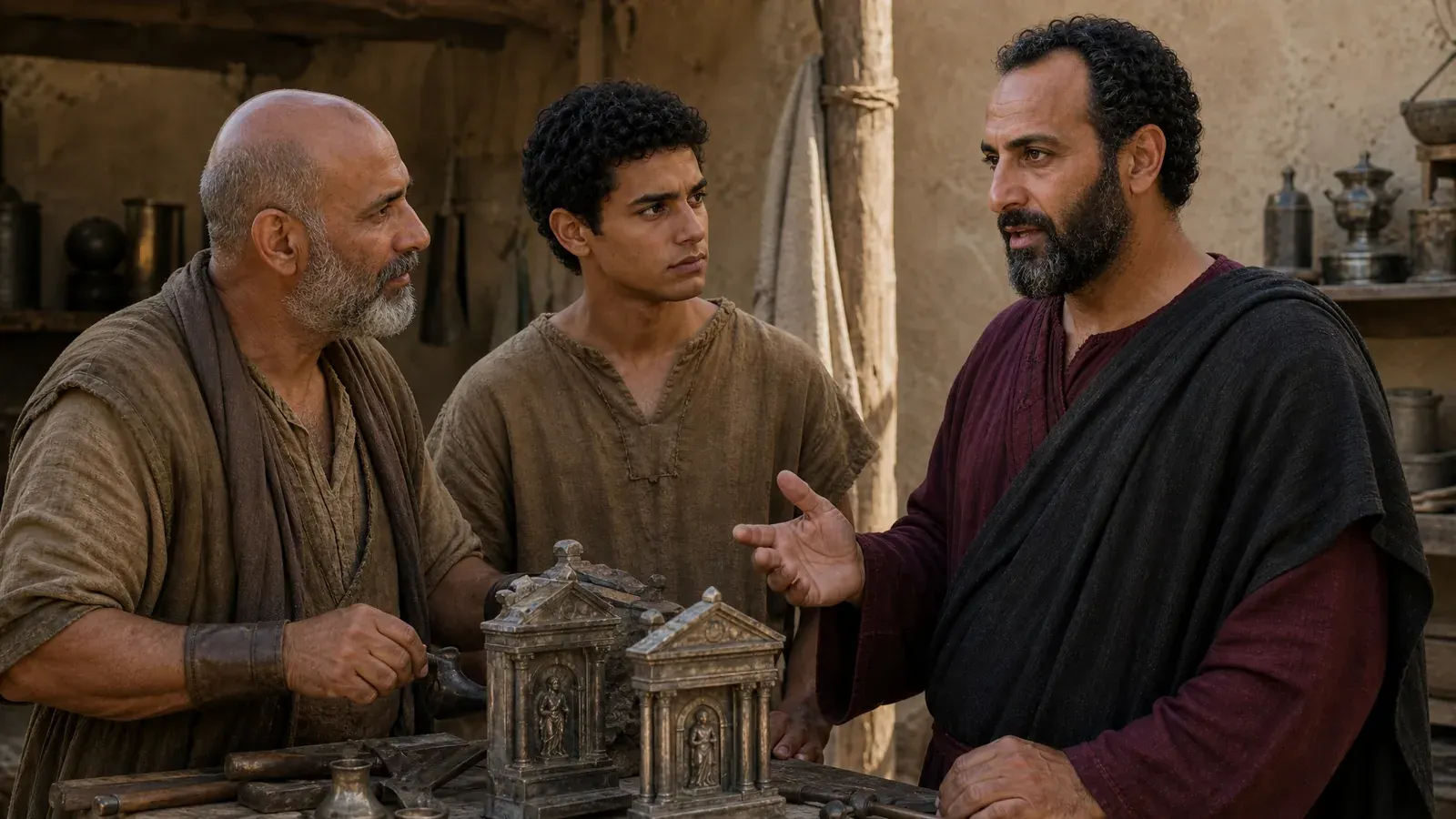

Acts 19:18-20
They burned them before all men
The owners destroy their own property and the account prices it, which is the only time Luke gives a figure for a conversion.
Verse by verse
- 19:18
The confession follows the public exposure of the failed exorcists in Acts 19:13-17. The people confess deeds, not merely a change of opinion.
- 19:19
The owners bring their own books; an order by Paul to confiscate books is not recorded. The Greek gives a silver valuation without naming a coin denomination.
- 19:20
The summary credits the growth and prevailing power of God's word. It does not present the fire itself as a missionary technique.
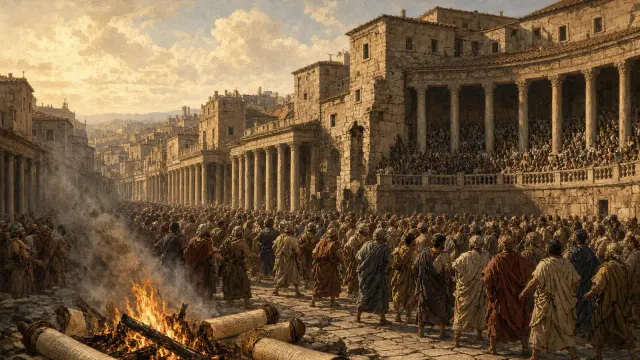
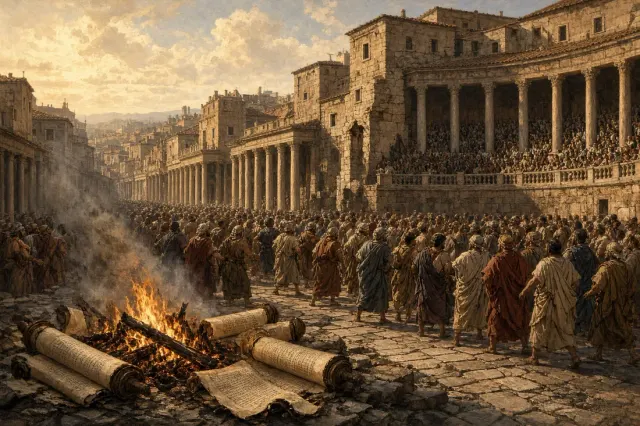
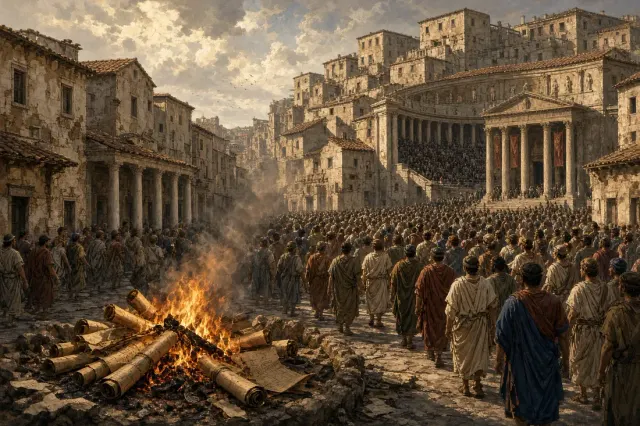



The price is counted even though nothing is being sold. That is the sharp detail. These books still have a market value, and the people bringing them do not recover it by passing the material to another customer. The total makes the break measurable. Fifty thousand pieces of silver become a number attached to something deliberately relinquished.
This follows the failed attempt to use the name of Jesus as an exorcist's borrowed formula. The difference is not between one effective technique and another. The surrounding verses distinguish the Lord whose name is magnified from people trying to handle that name as equipment. Confession and the destruction of the books show an abandonment of former practices, not the addition of a stronger charm to an existing collection.
Their books matters too. No raid on somebody else's shelves is described, and no general campaign against learning is announced. The practitioners bring their own material. The closing sentence then names what is growing while those costly writings disappear: the word of God. The loss is real. It is not the final accounting.