

Lyrics · Revelation
The Voice Like Many Waters
Revelation 1-3
Lyrics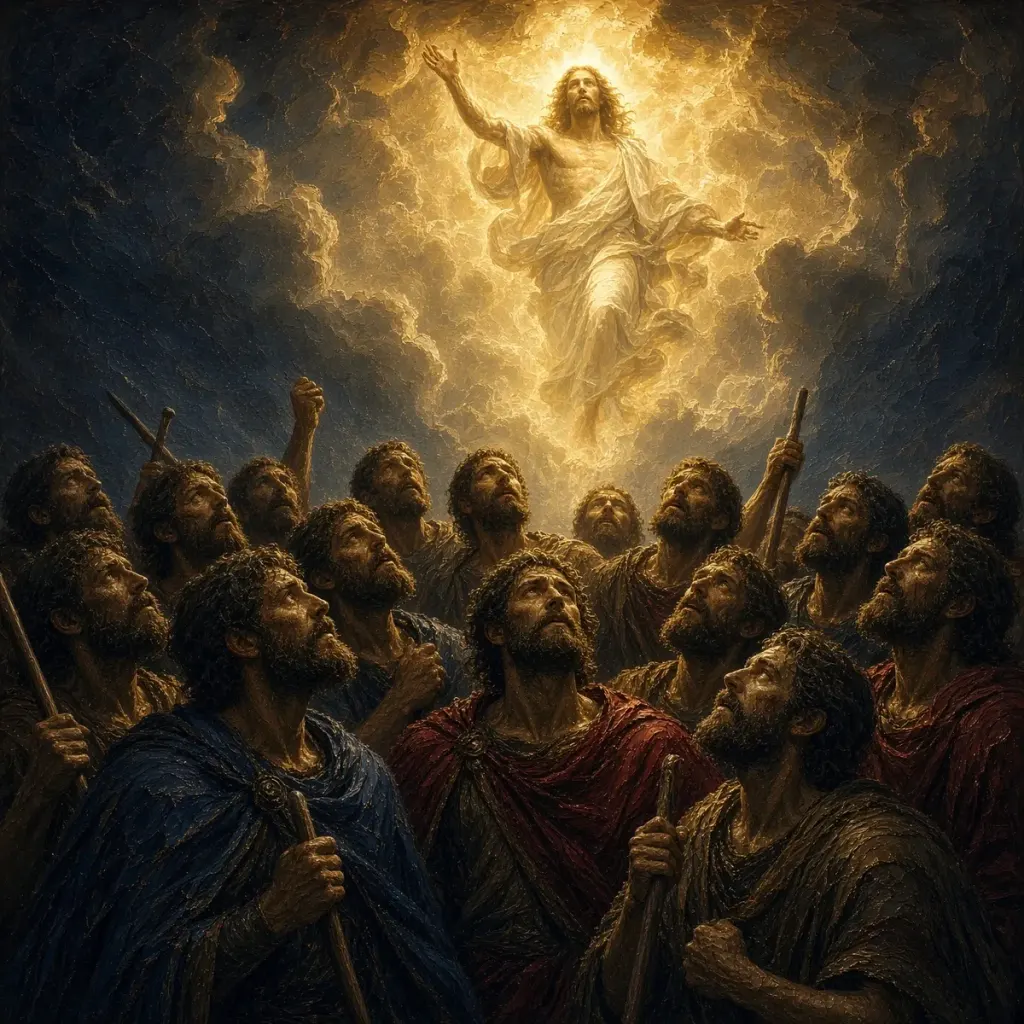
About this song
About this song
This song belongs to the Revelation collection. 8 recordings are available to play here, with the complete lyrics below.
- Bible book
- Revelation
- Collection
- Revelation
- Musical styles
- Pop, Electronic, Rock, Country & Americana, Cinematic Rock
Named in this songPatmosEphesusTree of lifeManna
About the passage
Revelation 1: The risen Christ stands among the churches
The Book of Revelation opens with a blessing before it opens with a beast, trumpet, or judgment. Its message moves from God through Jesus Christ, an angel, and John toward servants who are expected to hear and keep it. John writes from Patmos as a brother sharing tribulation, kingdom, and patience with the churches. When he turns toward the trumpet-like voice, he sees the risen Christ among seven golden lampstands, radiant with imagery drawn from Daniel and holding seven stars in his right hand. John falls as dead, but that same hand touches him. Christ identifies himself as the one who was dead and now lives forever, possesses the keys of death and Hades, and explains that the lampstands are the churches. The chapter therefore begins Revelation with disclosure, presence, authority, and reassurance held together.
Study Revelation 1 in depthRevelation 2: Four churches receive four unsparing diagnoses
Four churches receive four sharply different messages, yet each is addressed by the same Christ introduced in chapter 1. Ephesus has endurance, labor, and doctrinal discernment but has abandoned its first love. Smyrna is poor in material terms while Christ declares it rich and gives no accusation against it, even as suffering approaches. Pergamos has held Christ's name under deadly pressure yet tolerates teachings associated with idolatry and sexual wrongdoing. Thyatira has growing works, love, service, faith, and patience, but also tolerates a self-proclaimed prophetess who leads servants into compromise. The Book of Revelation refuses simple reputational categories. Strong churches can contain dangerous failures, and suffering churches can receive unqualified praise. Each message ends by looking beyond the immediate congregation toward life, hidden manna, a new name, authority, and the morning star.
Study Revelation 2 in depthRevelation 3: Reputation, weakness, and wealth are examined
The messages to Sardis, Philadelphia, and Laodicea dismantle three outward assessments. Sardis has a name for being alive while Christ calls its condition dead and its works unfinished, though a faithful few remain. Philadelphia has only a little strength, yet Christ places before it a door no one can shut and gives no rebuke. Laodicea calls itself rich and self-sufficient while Christ's inventory finds poverty, blindness, and nakedness. The Book of Revelation repeatedly separates public reputation, visible resources, and divine assessment. Its promises answer each condition precisely: true recognition instead of Sardis's empty name, permanent belonging instead of Philadelphia's weakness, and genuine wealth, clothing, sight, fellowship, and shared rule instead of Laodicea's imagined sufficiency. The final message ends at a throne, preparing the reader for the door that opens in heaven in the next chapter.
Study Revelation 3 in depth