New · FreePlay The Witnesses The in-depth puzzle battle quest through Bible history

Objects of the Bible

The manna

They named it after a question. Manna means what is it, and nobody ever answered.

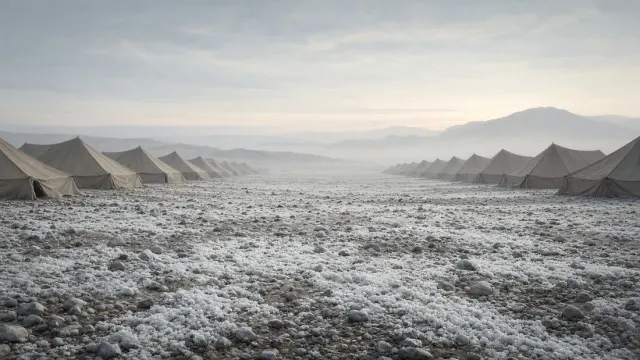
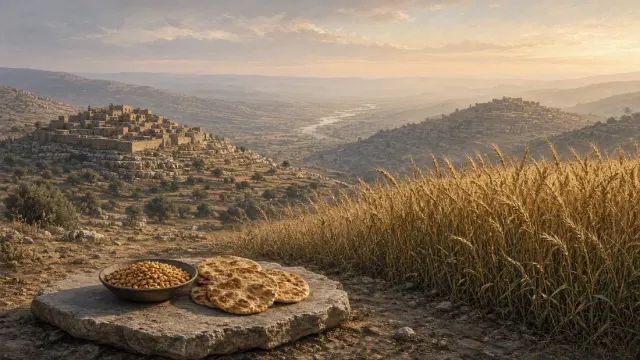
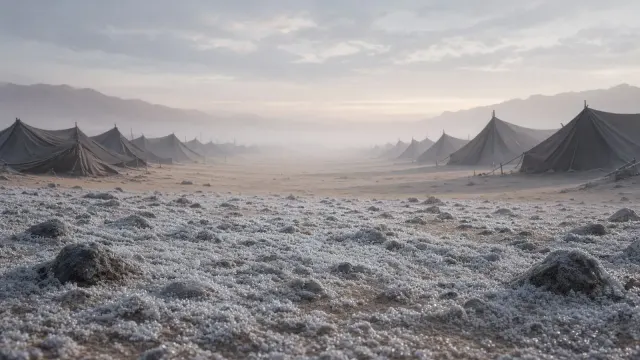
It appears with the dew and is described carefully by people trying to say what an unfamiliar thing is like: a small round thing, as small as the hoar frost on the ground, like coriander seed, white, and the taste of it like wafers made with honey. Numbers adds that it was the colour of bdellium, that it fell with the dew at night, and that they ground it in mills or beat it in a mortar and made cakes of it. The name is the question they asked on seeing it.

Where it appearsExodus 16 · Numbers 11

Scroll down to the account
The manna

The movements, in the order the text gives them.

The Account of The manna

  1. 01

    Exodus 16:14-15

    They said one to another, It is manna

    The name is a question in Hebrew, asked because they did not know what it was. The answer given is not a description but a source.

    The first response to bread from heaven is uncertainty about breakfast. The small substance lies on the ground like frost, and Israel does not recognize it. The wording connects its name with that bewilderment; the name will last much longer than the moment in which it arose. But the passage does not leave the question unanswered. Moses immediately identifies both the food and its giver. It is bread, and the LORD has given it for eating.

    That answer is more precise than an explanation of its chemistry. The people need to know what to do with the substance before them, and verse 16 supplies the gathering instructions. The gift is unfamiliar, but it is not inaccessible. Later, Deuteronomy 8:3 makes the unfamiliarity part of its meaning: this was food neither Israel nor its fathers had known. Jesus quotes that passage's conclusion about life and God's word in Matthew 4:4. The wilderness food becomes part of a later wilderness answer, without ceasing to be actual food here.

    Verse by verse

    1. 16:14

      Hoar frost supplies a comparison for the small appearance of the substance. The verse does not say the manna itself was frozen water.

    2. 16:15

      Moses answers the uncertainty immediately by identifying the substance as bread given by the LORD. The account does not leave its purpose unexplained.
    Exodus 16:14-15

    King James Version · 2 verses

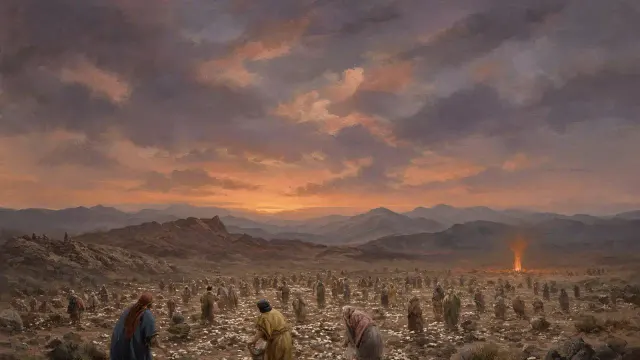
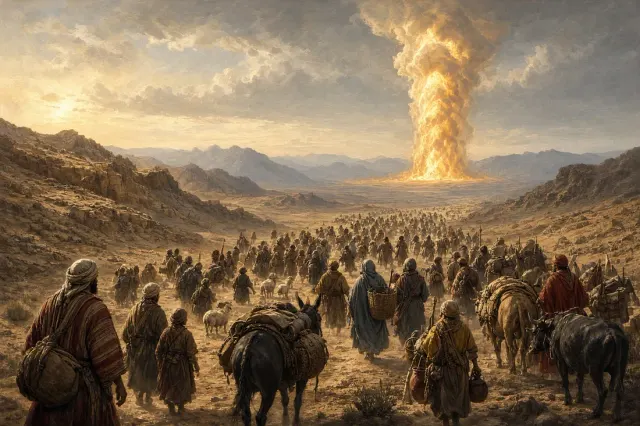
    16:14And when the dew that lay was gone up, behold, upon the face of the wilderness there lay a small round thing, as small as the hoar frost on the ground.

    16:15And when the children of Israel saw it, they said one to another, It is manna: for they wist not what it was. And Moses said unto them, This is the bread which the LORD hath given you to eat.

    Exodus 16:14-15: They said one to another, It is manna
  2. 02

    Exodus 16:17-18

    He that gathered much had nothing over

    Whatever they gathered measured out to the same amount per person. The effort varied and the result did not.

    The measure comes after the gathering, and the result receives more attention than the difference between the gatherers. Some collect more, some less; nobody ends with an excess over the assigned need or a deficiency below it. Verse 16 has already set the household calculation at an omer per person. The point is not an award for the largest heap. The measure belongs to the people who must eat, not to a contest over who can collect most.

    The passage states the outcome without detailing every step by which differing collections met household requirements. It should not be made to describe a distribution mechanism it never explains. What it does insist upon is sufficiency: no lack. Paul quotes precisely this sentence in 2 Corinthians 8:15 while discussing one community's abundance supplying another's need. His use moves from wilderness gathering to material assistance among churches. The connection is not an accidental resemblance. Paul takes Israel's measured bread as language for a provision in which another person's shortage matters.

    Verse by verse

    1. 16:17

      Some more, some less describes the amounts gathered. The preceding instruction relates gathering to the number of people in each tent.

    2. 16:18

      Mete means measure. Paul quotes the result in 2 Corinthians 8:15 in support of material assistance that addresses need.

    Exodus 16:17-18

    King James Version · 2 verses

    16:17And the children of Israel did so, and gathered, some more, some less.

    16:18And when they did mete it with an omer, he that gathered much had nothing over, and he that gathered little had no lack; they gathered every man according to his eating.

    Exodus 16:17-18: He that gathered much had nothing over
  3. 03

    Exodus 16:19-21

    It bred worms, and stank

    Storing it was the one thing forbidden, and some tried. It also melted when the sun waxed hot, so it could not be hoarded either way.

    The disobedience becomes difficult to conceal: it smells. The Book of Exodus reports both worms and stench, then gives Moses' anger without inventing a private explanation for each person who kept the bread. Fear of tomorrow, greed, and habitual thrift are possible guesses, not stated motives. The offense the passage actually identifies is refusing the instruction not to leave it until morning. The food has been given with terms, and those terms reach into storage.

    Outside, a second limit governs the gathering: the heat melts what remains on the ground. The account is not describing an endless stockpile waiting whenever someone finds time for it. Fresh provision arrives within a daily pattern. Yet the chapter will immediately distinguish ordinary overnight storage from the commanded keeping of bread for the Sabbath. That exception prevents the decay from becoming a universal theory about the material. The same giver controls both the provision and the instruction for preserving it. The spoiled portion is evidence of a particular refusal.

    Verse by verse

    1. 16:20

      Moses is explicitly angry at their refusal to listen. The individual motives for keeping the food are not supplied.

    2. 16:21

      The melting explains the morning gathering. The following verses describe a distinct, commanded exception to the normal overnight rule.

    Exodus 16:19-21

    King James Version · 3 verses

    16:19And Moses said, Let no man leave of it till the morning.

    16:20Notwithstanding they hearkened not unto Moses; but some of them left of it until the morning, and it bred worms, and stank: and Moses was wroth with them.

    16:21And they gathered it every morning, every man according to his eating: and when the sun waxed hot, it melted.

    Exodus 16:19-21: It bred worms, and stank
  4. 04

    Exodus 16:22-26

    Tomorrow is the rest of the holy sabbath

    The sixth day gives double and the seventh gives none, and the leftovers do not spoil. The rhythm is taught by bread before it is taught by law.

    Yesterday's disobedient storage is tomorrow's required preparation. The difference is not a new recipe. It is a new instruction for the sixth day, given in advance in verse 5 and explained here when the leaders report the doubled amount. The bread is baked or boiled, the remainder is kept, and the next morning it has neither worms nor smell. The account deliberately reverses the results of verse 20. Keeping can be obedience when keeping is what has been commanded.

    The provision also explains how rest is possible. The seventh day is not a demand to stop gathering while pretending hunger has stopped too; the sixth day supplies food for both. There will be nothing to collect in the field, but there is something to eat in the tent. Verse 27 records that some go out anyway and find nothing, a small practical demonstration of an already plain sentence. The miracle has a weekly order. The extra bread is not an invitation to accumulate without limit; it makes the appointed rest materially possible.

    Verse by verse

    1. 16:22-23

      The doubled sixth-day portion was announced in verse 5. Seethe means boil; both baking and boiling are permitted here.

    2. 16:24

      The absence of stench and worms deliberately contrasts with verse 20. This storage follows an explicit command.

    3. 16:25-26

      The seventh day has food to eat but none to gather. Rest is supported by the previous day's provision.

    Exodus 16:22-26

    King James Version · 5 verses

    16:22And it came to pass, that on the sixth day they gathered twice as much bread, two omers for one man: and all the rulers of the congregation came and told Moses.

    16:23And he said unto them, This is that which the LORD hath said, To morrow is the rest of the holy sabbath unto the LORD: bake that which ye will bake to day, and seethe that ye will seethe; and that which remaineth over lay up for you to be kept until the morning.

    16:24And they laid it up till the morning, as Moses bade: and it did not stink, neither was there any worm therein.

    16:25And Moses said, Eat that to day; for to day is a sabbath unto the LORD: to day ye shall not find it in the field.

    16:26Six days ye shall gather it; but on the seventh day, which is the sabbath, in it there shall be none.

    Exodus 16:22-26: Tomorrow is the rest of the holy sabbath
  5. 05

    Joshua 5:12

    The manna ceased on the morrow

    It stops the day after they eat of the old corn of the land. Forty years of it end without ceremony because it is no longer needed.

    The end of the manna is placed after a meal, not before a famine. Israel has eaten the produce of the land, and only then does the wilderness supply cease. That sequence keeps the verse from sounding like abandonment. The people are not left without food; the source named in the final clause has changed. Canaan is no longer only the destination spoken of along the road. Its produce is now on their table.

    The timing also surrounds the change with Passover. Verses 10-11 place the memorial at Gilgal and the eating of the land's grain immediately afterward. A meal remembering departure now accompanies the end of the food that sustained the journey. Exodus 16:35 had connected the forty years of manna with arrival at an inhabited land; the Book of Joshua gives the transition its concrete finish. John 6:49-51 later distinguishes this sustaining bread, whose eaters still died, from the living bread Jesus identifies with himself. Manna was sufficient for its appointed journey. It was not the last word about life.

    Verse by verse

    1. 5:12

      The manna ceases after the people have eaten the land's grain. The verse presents a transition in provision, not an interval without food.

    2. 5:12

      Old corn in the King James refers to grain of the land. The preceding verses place this change alongside the Passover at Gilgal.

    Joshua 5:12

    King James Version · 1 verse

    5:12And the manna ceased on the morrow after they had eaten of the old corn of the land; neither had the children of Israel manna any more; but they did eat of the fruit of the land of Canaan that year.

    Joshua 5:12: The manna ceased on the morrow

Why it matters

The arrangement around it is stranger than the substance. An omer for every man, and when they measured it he that gathered much had nothing over and he that gathered little had no lack. It bred worms if kept overnight, except on the sixth day, when a double portion kept perfectly, which turned the sabbath into a fact about food before it was a rule about work. They ate it forty years. And Jesus, arguing with a crowd that wants another sign like it, says your fathers did eat manna in the wilderness and are dead, and then says what the true bread is.

3 songs

The music

Every song in the catalogue whose passage falls inside these chapters.

  1. Exodus 15:22-17:16

    Bread from Heaven, Water from Stone

  2. Exodus 16:1-17:7

    Bread from Heaven

  3. Numbers 11:1-12:16

    Is the LORD's Hand Short?

Nearby

All the objects

Report an error on this page