Objects of the Bible

The tree of life restored

The last two chapters of the Bible give back, item by item, what the first three took away.

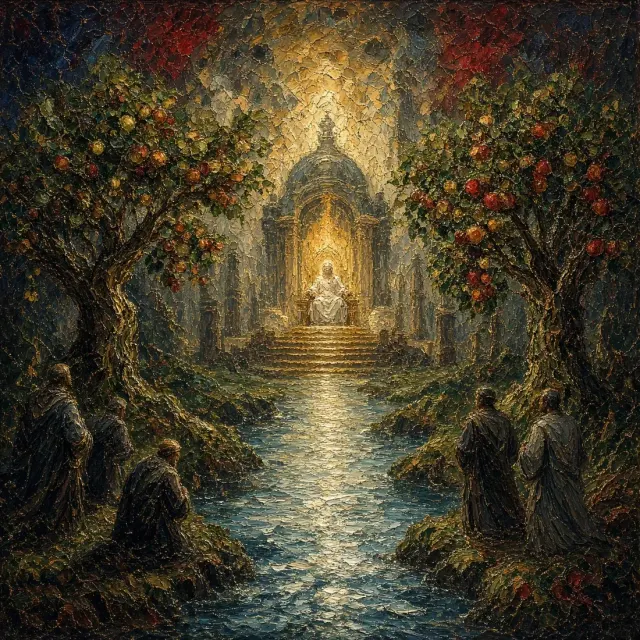
In Genesis a river goes out of Eden to water the garden, a tree of life stands in the midst of it, and at the end of chapter three a guard is posted: cherubims, and a flaming sword which turned every way, to keep the way of the tree of life. That is the last anyone sees of it for sixty four books. In Revelation 22 there is a pure river of water of life, proceeding out of the throne, and in the midst of the street of it, and on either side of the river, was there the tree of life.

Where it appearsRevelation 22

Scroll down to the account
The tree of life restored

The movements, in the order the text gives them.

The Account of The tree of life restored

  1. 01

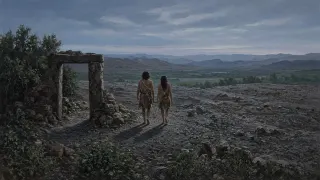
    Genesis 3:24

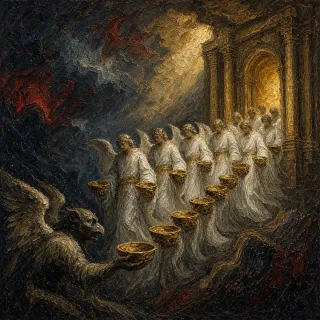
    A flaming sword which turned every way

    The guard is set at the end of the third chapter of the Bible, and nothing removes it for sixty four books.

    The tree is not cut down. The way to it is guarded. That distinction gives the closing sentence of the chapter its particular severity: life has not vanished from creation, but access to it is no longer Adam's to take. The sentence closes a route, not an argument about whether the tree exists.

    The reason has already been stated in verse 22. After taking from the forbidden tree, the man must not also take from the tree of life and live for ever. These are two different trees. Confusing them blurs the movement from disobedience to exclusion. The life-giving tree was not the tree whose fruit had been forbidden in Genesis 2:17.

    God has clothed the man and his wife in verse 21, but clothing is not readmission. Care and expulsion stand in the same chapter without cancelling each other. Nor does the final verse describe an angel brandishing a sword in his hand. It names cherubim and a turning flame of a sword, without explaining how they are arranged. The Book of Genesis ends the scene with guarded access. The tree remains. The way is barred.

    Verse by verse

    1. 3:24

      The tree of life is distinct from the tree of the knowledge of good and evil in Genesis 2:9. The prohibition in 2:17 concerns the latter.

    2. 3:24

      The verse does not say that a cherub holds the sword. It places the cherubim and the turning flame of the sword at the guarded approach.

    3. 3:24

      The stated purpose of the exclusion appears in Genesis 3:22: preventing the man from taking the tree of life's fruit and living for ever.
    Genesis 3:24

    King James Version · 1 verse

    3:24So he drove out the man; and he placed at the east of the garden of Eden Cherubims, and a flaming sword which turned every way, to keep the way of the tree of life.

    Genesis 3:24: A flaming sword which turned every way
  2. 02

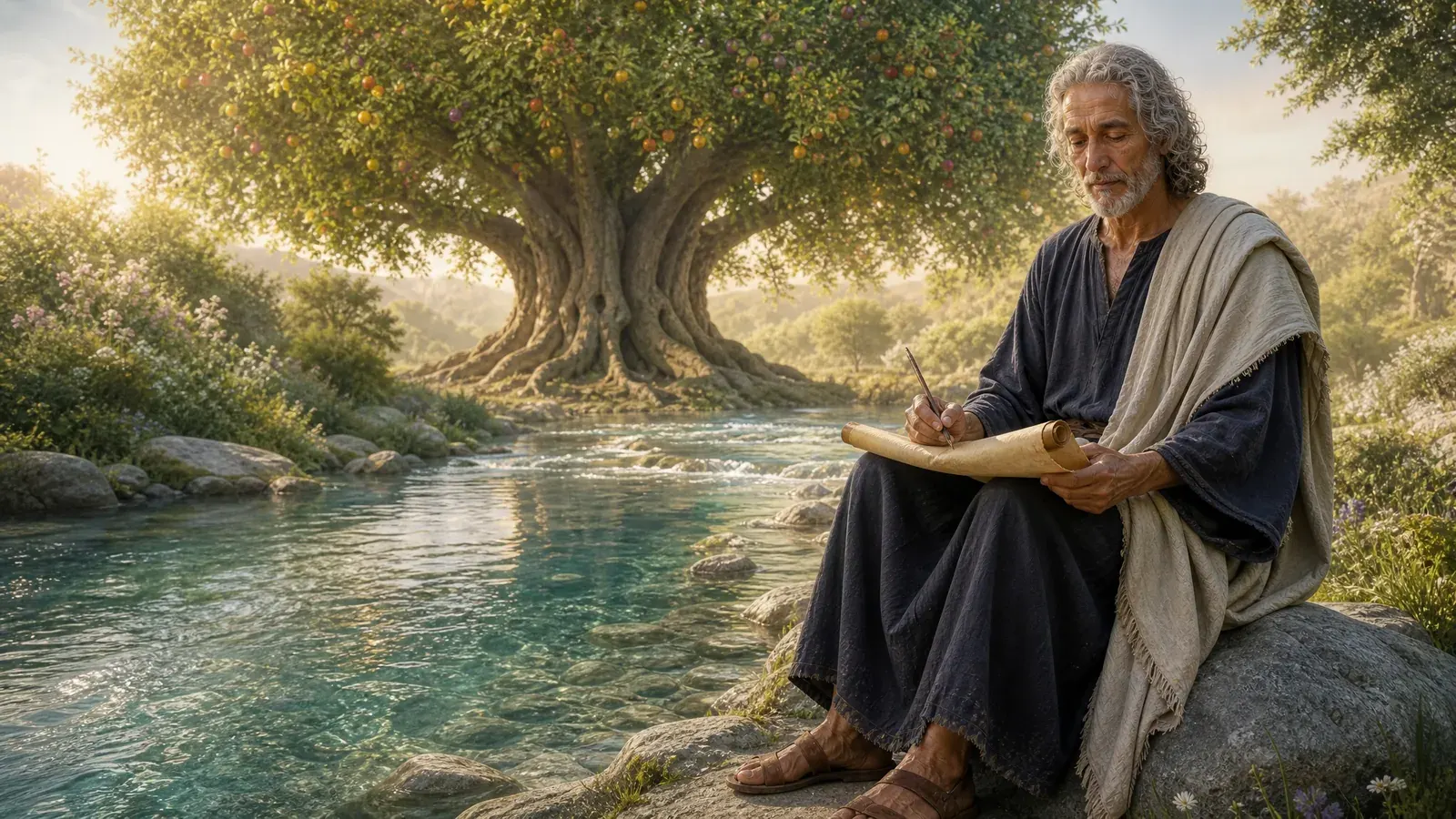
    Revelation 22:1-2

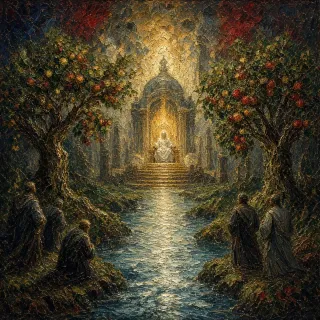
    On either side of the river, was there the tree of life

    The tree is back and the geography has changed. It is in a street now, and there is more than one of it.

    The river begins at a throne. Water and government are not separate features of this city: the seat of God and the Lamb is also the source of its life. Revelation has already said that no temple building is needed because God and the Lamb are its temple. Here, nothing stands between their presence and the water flowing through the city.

    Genesis 2 placed a river and the tree of life in a garden. Revelation brings both into the holy city. The ending is not simply the beginning restored with the intervening pages removed. The imagery has widened from a garden with its first human occupants to a city whose gates receive the glory of the nations.

    The tree's position on either side of the river has produced competing attempts at a diagram. The verse does not settle its botanical arrangement. It does make its abundance unmistakable: fruit every month, with no barren interval inserted into the description. This tree is not waiting for a more favourable season. The throne supplies the river, the river runs through the city, and life is continually given rather than anxiously stored.

    Verse by verse

    1. 22:1

      Revelation 21:22 identifies God and the Lamb as the city's temple. The river in 22:1 proceeds from their throne, not from a separate temple building.

    2. 22:2

      The Greek uses the singular xylon, tree, while describing both sides of the river. The wording does not specify the number of trunks or their arrangement.

    3. 22:2

      The Greek says twelve fruits and then specifies a yield each month. The passage names no fruit species; its unmistakable emphasis is unfailing provision.

    Revelation 22:1-2

    King James Version · 2 verses

    22:1And he shewed me a pure river of water of life, clear as crystal, proceeding out of the throne of God and of the Lamb.

    22:2In the midst of the street of it, and on either side of the river, was there the tree of life, which bare twelve manner of fruits, and yielded her fruit every month: and the leaves of the tree were for the healing of the nations.

    Revelation 22:1-2: On either side of the river, was there the tree of life
  3. 03

    Revelation 22:2

    The leaves of the tree were for the healing of the nations

    A detail with no counterpart in Genesis. The tree is given a use directed outward rather than a prohibition.

    Even the leaves have work to do. The fruit supplies one image of abundance; the foliage supplies another, and its reach is explicitly the nations. The tree of life is not described as a private possession tucked away for a few distinguished residents. Its healing belongs in the city's account of life together.

    There is a striking contrast with the leaves in Genesis 3:7. Those were fig leaves, sewn into coverings after disobedience. These are the leaves of the tree of life, associated with healing rather than the effort to cover nakedness. The books do not claim that one kind of leaf turns into the other. The contrast lies in what leaves are doing at the two ends of Scripture.

    Healing must also be read beside Revelation 21:4, which has already excluded death and pain. The image does not require a hidden population of patients in a city otherwise described as free of suffering. It draws on Ezekiel's life-giving river and medicinal leaves to depict restoration. Nor does the word nations disappear once judgment is over. The peoples whose glory enters the city are not erased from its final landscape. They are named among the recipients of life.

    Verse by verse

    1. 22:2

      Healing translates the Greek therapeia. The wording draws attention to restoration, but it does not specify particular diseases or medical procedures.

    2. 22:2

      Ezekiel 47:12 explicitly assigns the riverside trees' leaves to medicine. Revelation applies that image to the nations.

    3. 22:2

      Revelation 21:4 states that death and pain are gone. The healing image should not be used to reintroduce continuing suffering without textual warrant.

    Revelation 22:2

    King James Version · 1 verse

    22:2In the midst of the street of it, and on either side of the river, was there the tree of life, which bare twelve manner of fruits, and yielded her fruit every month: and the leaves of the tree were for the healing of the nations.

    Revelation 22:2: The leaves of the tree were for the healing of the nations
  4. 04

    Revelation 22:3

    There shall be no more curse

    One clause reverses the sentence passed in Genesis 3, and the passage does not argue for it or explain it.

    No more curse does not mean no more activity. The sentence ends with servants serving. Genesis had placed the man in the garden to work and keep it before the ground was cursed; human vocation was not itself the punishment. Revelation removes the curse without reducing redeemed life to permanent idleness.

    The kind of service matters. The Greek verb is used for service rendered to God, including worship. These servants are not pictured toiling against thorns in estrangement from their maker. The throne of God and of the Lamb is in the city, and the next verse gives them sight of his face. Their activity takes place in the presence from which the first humans hid.

    The throne is singular, although both God and the Lamb are named. The verse does not pause to explain that shared sovereignty; it makes it the centre of the city's life. The curse disappears, the throne remains, and service continues without exclusion from God's presence. Restoration is not the removal of every distinction between creator and creature. His servants are still his servants. What has ended is the curse, not their belonging.

    Verse by verse

    1. 22:3

      The verb latreuo denotes service offered to God, often specifically worship. The verse describes active devotion rather than a detailed schedule of future occupations.

    2. 22:3

      Genesis 2:15 assigns work in the garden before Genesis 3:17 curses the ground. Work and curse should not be treated as identical.

    3. 22:3

      One throne belongs to God and the Lamb, as in 22:1. The following verse joins service with seeing his face.

    Revelation 22:3

    King James Version · 1 verse

    22:3And there shall be no more curse: but the throne of God and of the Lamb shall be in it; and his servants shall serve him:

    Revelation 22:3: There shall be no more curse
  5. 05

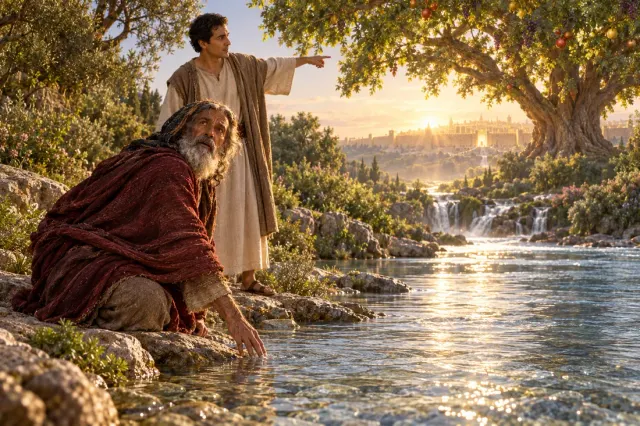
    Revelation 22:14

    That they may have right to the tree of life

    The word is right, not permission, and the book closes on access restored rather than on a gate defended.

    The movement is through the gates, not around the guards. Genesis ended the garden scene with access denied; this blessing names people who have right to the tree of life. The contrast is not between a well-defended garden and a poorly defended city. It is between exclusion and authorised entrance.

    The King James wording places obedience directly in that blessing: they that do his commandments. That belongs beside Revelation 14:12, where the saints keep God's commandments and the faith of Jesus. It should not be diluted into a statement that conduct no longer matters. Neither should the sentence be detached from 22:17, where the water of life is offered freely. The chapter does not describe a purchase, even while it distinguishes the blessed from those outside.

    The tree also completes a promise made near the beginning of Revelation. In 2:7, Christ promised the overcomer food from the tree of life in the paradise of God. Here the promised access stands beside entry into the city. The image reaches back further than the book's opening churches, to the guarded way in Genesis. The final blessing does not pretend that expulsion never happened. It announces a right of entrance where there had been a barrier.

    Verse by verse

    1. 22:14

      The KJV follows the Greek reading concerning doing his commandments. The alternative reading, washing their robes, is recorded separately rather than substituted into the verse.

    2. 22:14

      Right translates exousia, authority or entitlement. Here it concerns authorised access to the tree, not ownership of the source of life.

    3. 22:14

      Revelation 2:7 promises access to the tree of life to the one who overcomes. The tree therefore connects the letters to the churches with the closing vision.

    Revelation 22:14

    King James Version · 1 verse

    22:14Blessed are they that do his commandments, that they may have right to the tree of life, and may enter in through the gates into the city.

    Revelation 22:14: That they may have right to the tree of life

Why it matters

The differences are the argument. In Eden the tree is in a garden; here it is in the middle of a city street. There it bore fruit; here it bare twelve manner of fruits, and yielded her fruit every month, and the leaves of the tree were for the healing of the nations. And the guard is gone. There shall be no more curse. The one sentence in the passage that quotes Genesis directly is the one that reverses it, and the book that began with a door closed ends with a right to enter through the gates.

5 songs

The music

Every song in the catalogue whose passage falls inside these chapters.

  1. Revelation 21-22

    All Things Made New

  2. Revelation 21:1–22:21

    All Things New

  3. Revelation 22:1-5

    The River and the Tree of Life

  4. Revelation 22:1-5

    The River of Water of Life

  5. Revelation 22:6-21

    The Spirit and the Bride Say, Come

Nearby

All the objects

Report an error on this page