
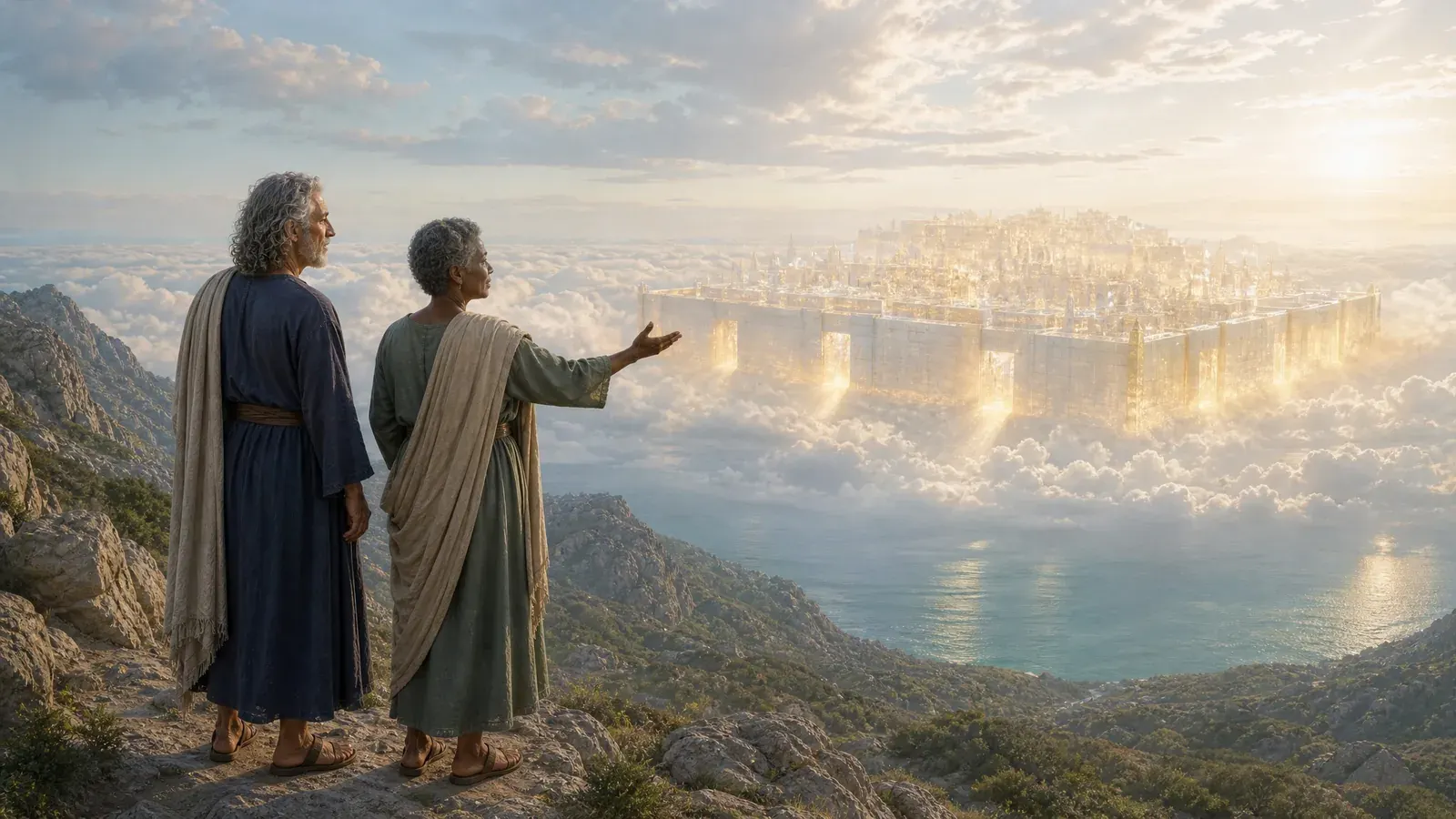

Revelation 21:2-4
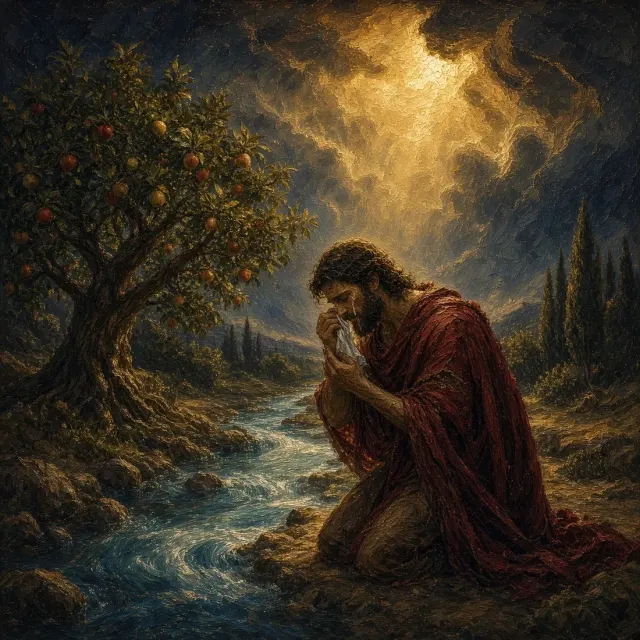
God shall wipe away all tears from their eyes
The comfort is described as an action performed one face at a time, not as a condition that simply obtains.
Verse by verse
- 21:2
The bridal image is interpreted further in Revelation 21:9-10, where the angel promises to show the Lamb's wife and shows the holy city. The vision joins the community and its dwelling.
- 21:3
Tabernacle and will dwell come from the related Greek words skene and skenoo. Ezekiel 37:27 likewise joins God's dwelling with the declaration that he is their God and they are his people.
- 21:4
The removal of death, sorrow, crying, and pain belongs to the new-creation setting of this chapter. It is not a claim that believers in the churches addressed earlier presently experience none of them.
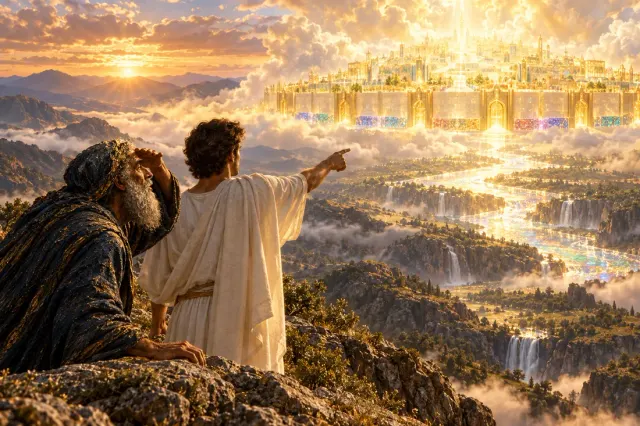
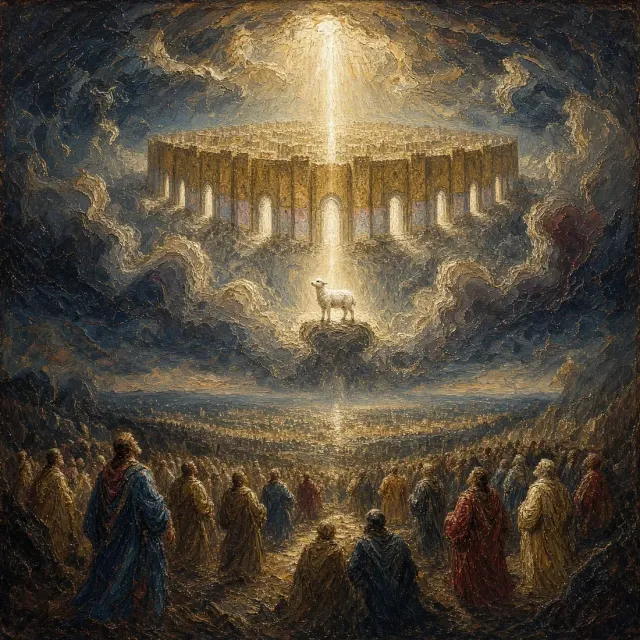
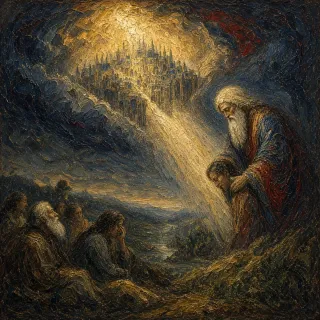
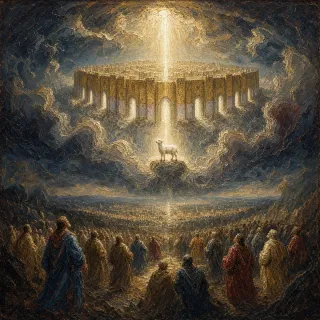
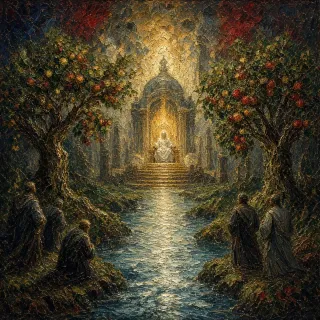

The movement is downward. The holy city comes from God out of heaven; the scene is not a crowd escaping upward from creation. Against the new heaven and new earth of verse 1, God's dwelling comes to humanity. The repeated with them makes the center unmistakable. Before the walls are measured or the jewels listed, the city is defined by the presence of its God.
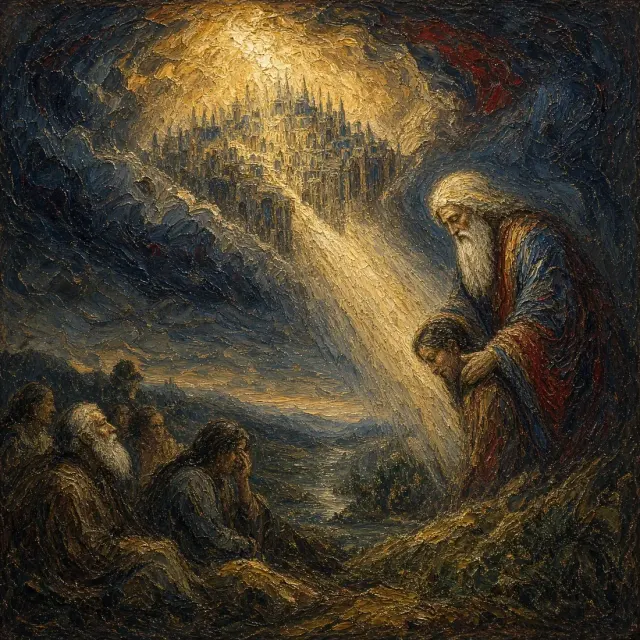
Its bridal preparation also refuses to leave the picture at architecture. Verses 9-10 will identify the bride, the Lamb's wife, with the city John is shown. Place and people belong together in the vision. Then the great announcement narrows to tears on faces. The promise does not belittle what produced them or congratulate the sufferers on having endured. God wipes them away, and the list that follows removes their terrible companions: death, sorrow, crying, pain. These things are not described as permanent features made easier to bear. They belong to the former order that has passed away. God himself shall be with them carries the weight of the whole passage. The city is not the greatest gift in the city.