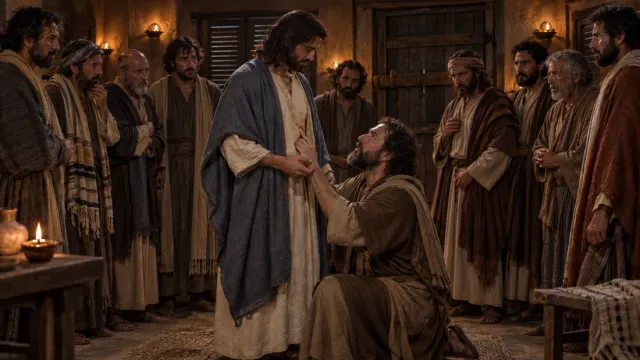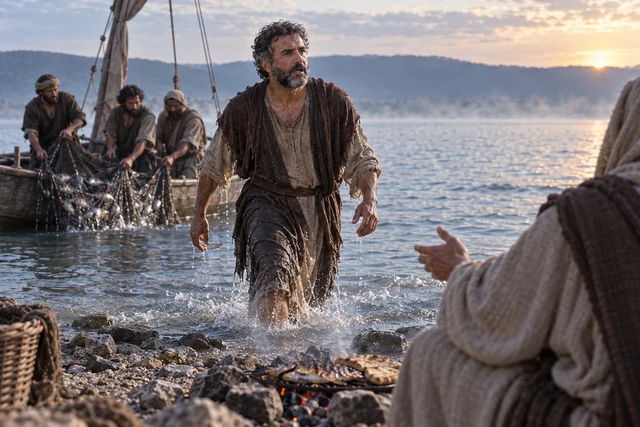

New · FreePlay The Witnesses The in-depth puzzle battle quest through Bible history

People of the Bible

John

Never names himself in his own gospel, and calls himself the disciple whom Jesus loved instead.

Also called The beloved disciple

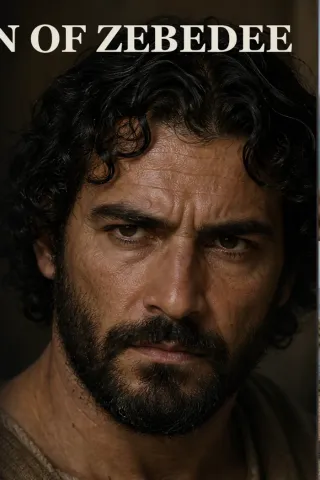
John is the younger son of Zebedee and one of the inner three. In the other gospels he is a son of thunder who wants fire called down on a village and the best seat in the kingdom. In his own book he is never named, and appears only as the disciple whom Jesus loved: leaning on him at supper, standing at the cross, outrunning Peter to the tomb, and recognising him from a boat. He is given the care of Mary from the cross, and takes her home that hour.

Where he appearsMatthew 4 · Matthew 17 · Mark 9 to 10 · John 13 · John 19 to 21

Scroll down to the account
John

The movements, in the order the text gives them.

The Account of John

  1. 01

    Mark 9:38-40

    We forbade him

    He reports stopping a man casting out devils in that name because he was not one of us. The answer is that whoever is not against us is on our part.

    John gives the same reason twice: the man does not follow their company. The objection is not that the exorcism failed, or that Jesus' name was being insulted. The man is doing the work, but he is outside the recognized circle. Earlier in this same chapter, the disciples could not cast out a spirit. Now John reports that they have stopped someone who can. The contrast has teeth without needing an extra joke.

    Jesus moves the question back to his own name. A work genuinely done in that name is not to be treated as opposition merely because the worker is absent from the disciples' traveling party. The answer is specific, not a declaration that every religious claim is equally true. This man is acting in Jesus' name, and John has supplied no charge against him except the company he does not keep. The correction belongs beside the preceding argument over greatness: the disciples are still learning that being chosen does not make them owners of everything their Master is doing.

    Verse by verse

    1. 9:38

      The preceding failure to cast out a spirit is recorded in Mark 9:18,28. That placement sharpens the contrast with the successful outsider.

    2. 9:39

      Greek tachu, rendered "lightly," carries the sense of quickly or readily. Jesus is speaking of the incongruity of performing such a work and promptly maligning him.

    3. 9:40

      Luke 11:23 addresses opposition to Jesus in a different dispute. Neither saying should be detached from the conduct being discussed.

    Mark 9:38-40

    King James Version · 3 verses

    9:38And John answered him, saying, Master, we saw one casting out devils in thy name, and he followeth not us: and we forbad him, because he followeth not us.

    9:39But Jesus said, Forbid him not: for there is no man which shall do a miracle in my name, that can lightly speak evil of me.

    9:40For he that is not against us is on our part.

    Mark 9:38-40: We forbade him
  2. 02

    John 13:23-25

    Leaning on Jesus’ bosom

    At supper Peter beckons to him to ask who the betrayer is, because he is closest. He lies back and asks quietly, and gets an answer nobody else at the table understands.

    Peter has a question, but he sends it through the disciple within easy speaking distance of Jesus. Even at this table, proximity matters. The word translated leaning describes reclining at a meal, not the upright seating familiar from many paintings. The movement toward Jesus' breast belongs to that arrangement. The Gospel of John gives a small, physical exchange: a signal, a change of position, a quiet inquiry amid bewildered disciples.

    The identifying phrase is more important than a seat assignment. Whom Jesus loved says what Jesus gives, not what this disciple has achieved. It does not mean Jesus loved nobody else; the chapter has already spoken of his love for his own. Here the phrase singles out a particular witness without supplying his name. Christian tradition identifies him as John. The passage itself keeps the identification relational. Nearness makes him able to ask, but not already able to answer. He still needs Jesus to explain the betrayal. Being close and knowing everything are, evidently, different things.

    Verse by verse

    1. 13:23

      The beloved disciple is unnamed here. Irenaeus identifies the disciple who reclined beside Jesus with John in Against Heresies 3.1.1.

    2. 13:24

      Peter initiates the inquiry through a gesture. The verse does not explain his exact position at the table.

    3. 13:25

      The question concerns the betrayer announced in John 13:21. The surrounding verses show that the table as a whole remains confused.

    John 13:23-25

    King James Version · 3 verses

    13:23Now there was leaning on Jesus’ bosom one of his disciples, whom Jesus loved.

    13:24Simon Peter therefore beckoned to him, that he should ask who it should be of whom he spake.

    13:25He then lying on Jesus’ breast saith unto him, Lord, who is it?

    John 13:23-25: Leaning on Jesus’ bosom
  3. 03

    John 19:26-27

    Behold your mother

    He is standing by the cross with the women. From that hour the mother of Jesus goes to live in his house, which is the only domestic arrangement made from a cross.

    The disciple receives a mother, not a commemorative title. That is the force of the final clause: from that hour he takes her into his own household. Jesus' words produce an actual arrangement for care. The Gospel of John does not pause to inventory the house, establish its address, or describe how many years the arrangement lasted. Its interest is the connection between the words from the cross and the responsibility immediately accepted below it.

    The two people are identified by their relationship to Jesus: his mother and the disciple whom he loved. Those existing bonds become a new bond between them. The scene is tender without supplying speeches of grief that the text does not record. Immediately around it, soldiers divide clothing and Jesus speaks of thirst; within that stripped and brutal setting, a household is being provided. Interpretations that see a wider picture of a family formed around Jesus can rest on that pattern, but the concrete act must not disappear into symbolism. A woman needs care. A disciple receives her. The cross does not make that need too small to notice.

    Verse by verse

    1. 19:26

      Jesus also addresses his mother as "Woman" in John 2:4. The form of address is not, by itself, an insult.

    2. 19:27

      "From that hour" makes the response immediate. The verse supplies no location for the household.

    3. 19:27

      John 7:5 says Jesus' brothers did not then believe in him, but this passage does not explicitly give that as the reason for the arrangement.

    John 19:26-27

    King James Version · 2 verses

    19:26When Jesus therefore saw his mother, and the disciple standing by, whom he loved, he saith unto his mother, Woman, behold thy son!

    19:27Then saith he to the disciple, Behold thy mother! And from that hour that disciple took her unto his own home.

    John 19:26-27: Behold your mother
  4. 04

    John 20:1-8

    He outran Peter

    Two men running to a tomb in the dark. He gets there first and stops at the entrance and looks in. Peter goes straight past him and inside, and then he follows and believes.

    The Gospel keeps a surprisingly precise record of who reached the tomb first, and then refuses to confuse speed with understanding. The other disciple wins the run; Peter is first through the entrance. Neither action is yet the final point. The decisive sentence comes after the other disciple also enters: he saw, and believed. Legs, eyes, and faith do not all arrive together.

    What remains in the tomb matters as much as what is missing. Mary has reported a removed body, but the linen clothes and the separate head cloth require attention. The passage does not describe thieves, a body passing through fabric, or a secret message in a folded napkin. Those are additions. It records what the men see and the response of one of them. The next verse adds that they did not yet understand the Scripture about rising from the dead. Some readers therefore take believed as accepting Mary's report; others, more naturally within the Gospel's emphasis on belief, understand an initial recognition of the resurrection. Either way, the account distinguishes a response to evidence from a complete understanding of Scripture. The witness does not pretend that everything became clear at once.

    Verse by verse

    1. 20:2

      Mary reports removal, not resurrection. Her explanation of the empty tomb must not be mistaken for the Gospel's final explanation.

    2. 20:4

      The passage gives no ages for the two runners. Being faster does not establish the other disciple's age.

    3. 20:7

      Greek entetuligmenon means wrapped or rolled up. The text says the cloth is separate; it does not assign it a coded message.

    4. 20:8

      John 20:9 qualifies the disciples' understanding of Scripture. The precise object of "believed" in verse 8 is debated.

    John 20:1-8

    King James Version · 8 verses

    20:1The first day of the week cometh Mary Magdalene early, when it was yet dark, unto the sepulchre, and seeth the stone taken away from the sepulchre.

    20:2Then she runneth, and cometh to Simon Peter, and to the other disciple, whom Jesus loved, and saith unto them, They have taken away the Lord out of the sepulchre, and we know not where they have laid him.

    20:3Peter therefore went forth, and that other disciple, and came to the sepulchre.

    20:4So they ran both together: and the other disciple did outrun Peter, and came first to the sepulchre.

    20:5And he stooping down, and looking in, saw the linen clothes lying; yet went he not in.

    20:6Then cometh Simon Peter following him, and went into the sepulchre, and seeth the linen clothes lie,

    20:7And the napkin, that was about his head, not lying with the linen clothes, but wrapped together in a place by itself.

    20:8Then went in also that other disciple, which came first to the sepulchre, and he saw, and believed.

    John 20:1-8: He outran Peter
  5. 05

    John 21:24-25

    The world could not contain the books

    The gospel closes by naming its own witness and then admitting its own limits, which is an unusual way to finish a book about someone you loved.

    The Gospel ends by distinguishing truthful witness from an exhaustive archive. These things have been testified to and written; many other things have not. That is not an apology for a defective record. John 20:30-31 has already explained the selection: particular signs have been written so that belief may rest on who Jesus is. The book has a purpose, not a claim to contain every movement of his ministry.

    There is also a deliberate change in grammatical voice. The disciple is spoken of in the third person, the assurance of his testimony comes in the plural, and the final sentence uses I suppose. Readers differ over whether these are shifts by the same writer or evidence of an attesting editorial voice. The text does not name the people behind the plural. What it does insist on is the connection between the written account and a witness. Then the closing image expands beyond any conceivable library. The world that could not hold all the books recalls the opening assertion that the world was made through the Word. The account ends. Its subject is not exhausted.

    Verse by verse

    1. 21:24

      John 21:20 links this witness to the disciple at supper. The verse attributes both testimony and writing to him.

    2. 21:24

      The identity of the people indicated by the plural "we know" is not supplied. Editorial attestation and authorial plural are interpretive proposals.

    3. 21:25

      The language is expansive hyperbole, not an estimate of library space. John 20:30-31 explains why the record is selective.

    John 21:24-25

    King James Version · 2 verses

    21:24This is the disciple which testifieth of these things, and wrote these things: and we know that his testimony is true.

    21:25And there are also many other things which Jesus did, the which, if they should be written every one, I suppose that even the world itself could not contain the books that should be written. Amen.

    John 21:24-25: The world could not contain the books

Why it matters

The gospel he writes is unlike the other three: seven signs instead of many miracles, long conversations instead of short sayings, and a prologue that starts before Genesis does. He is also the one who says the quiet thing at the end, that if everything were written the world could not contain the books. Tradition gives him the longest life of the twelve and the last book in the Bible, written on an island.

19 songs

The music

Every song in the catalogue whose passage falls inside these chapters.

  1. Matthew 4:1-11

    It is Written

  2. Matthew 4:18-22; Mark 1:16-20; Luke 5:1-11; John 1:35-51

    Leave the Nets

  3. Matthew 4:12-25

    Light upon Galilee

  4. Matthew 4:1-11; Mark 1:12-13; Luke 4:1-13

    Not by Bread Alone

  5. Matthew 17:1-13

    His Face Did Shine

  6. Matthew 17:1-13; Mark 9:2-13; Luke 9:28-36

    On the Holy Mount

  7. Matthew 17:24-27

    The Coin in the Fish's Mouth

  8. Mark 9:14-29

    Help Thou Mine Unbelief

    Play here
    Open song pageRead lyrics
  9. Mark 9:33-37

    The Servant of All

    Play here
    Open song pageRead lyrics
  10. Mark 9:2-13

    This Is My Beloved Son

    Play here
    Open song pageRead lyrics
  11. Mark 10:13-31

    Let the Little Children Come

  12. Mark 10:35-45

    The Ransom for Many

    Play here
    Open song pageRead lyrics
  13. John 13:1-38

    He Loved Them unto the End

    Play here
    Open song pageRead lyrics
  14. John 13:1-17

    Ye Ought Also to Wash One Another's Feet

  15. John 19:1-37

    It is Finished

    Play here
    Open song pageRead lyrics
  16. John 20:24-31

    Blessed Are They That Have Not Seen, and Yet Have Believed

  17. John 20:1-31

    These Are Written That Ye Might Believe

    Play here
    Open song pageRead lyrics
  18. John 21

    Feed His Sheep

  19. John 21:1-25

    Lovest Thou Me

    Play here
    Open song pageRead lyrics

The videos

The videos

Every release whose passage falls inside these chapters, playing here.

Nearby

All the people

Report an error on this page