New · FreePlay The Witnesses The in-depth puzzle battle quest through Bible history

People of the Bible

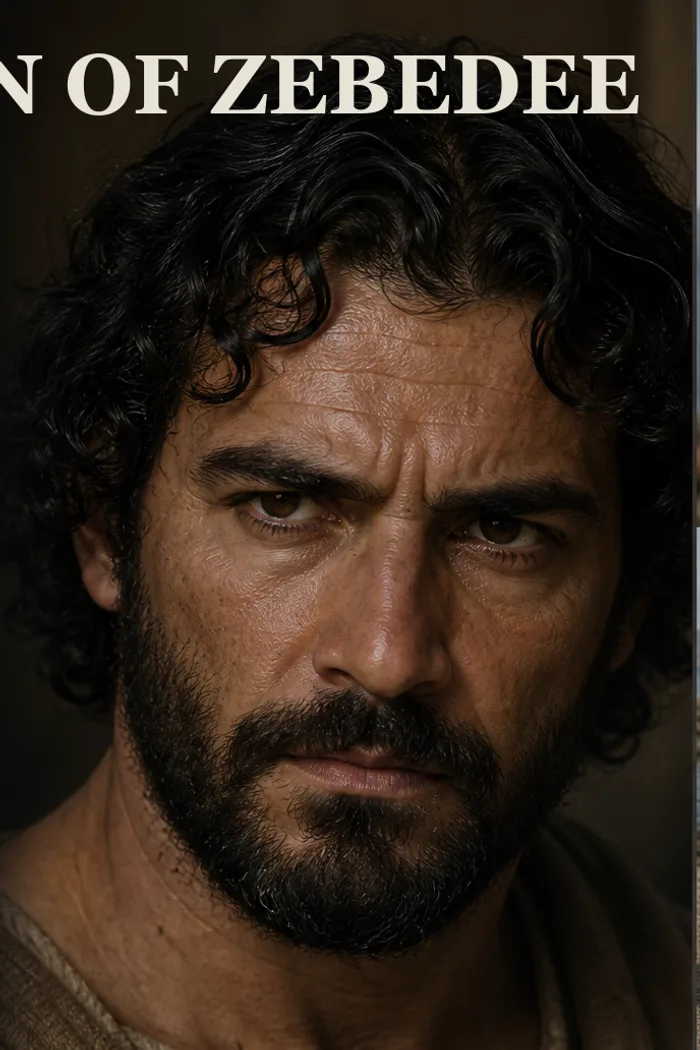
James son of Zebedee

One of the three taken up the mountain, and the first of the twelve to be killed for it.

Also called One of the sons of thunder

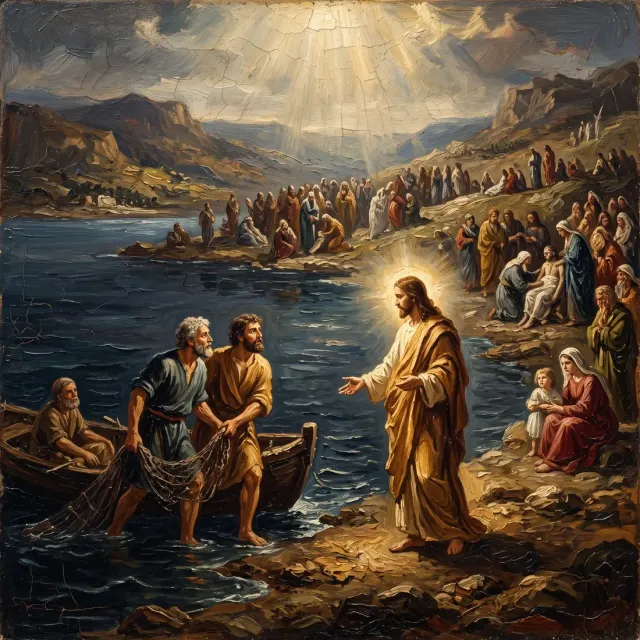
James works the family fishing business with his brother John and their father, and they leave the boat and the hired servants the day they are called. He is in the inner three at every closed door: the raising of Jairus’ daughter, the transfiguration, and Gethsemane. He and his brother are surnamed Boanerges, sons of thunder, and the two scenes that earn it are both bad ones. He is not quoted often, and he is the first apostle to die.

Where he appearsMatthew 4 · Matthew 17 · Matthew 20 · Mark 9 to 10 · Luke 9

Scroll down to the account
James son of Zebedee

The movements, in the order the text gives them.

The Account of James son of Zebedee

  1. 01

    Matthew 4:21-22

    They left the ship and their father

    Mending nets with Zebedee when the call comes. Mark adds that they left their father in the boat with the hired servants, which tells you it was a business rather than subsistence.

    The nets are being prepared for more fishing. That is what makes the interruption visible: James and John are not described as closing a failed business or already standing on the road. They are working in the boat with their father. The call reaches into an occupation that has equipment, work still to do, and a family attached to it.

    Matthew has just described Simon and Andrew leaving their nets. With this second pair of brothers, the wording becomes more personal: the ship and their father. Zebedee is named in the first verse and named by his relationship in the second. Leaving has a human object as well as a material one. Yet Matthew supplies no quarrel, no angry farewell, and no verdict on Zebedee's response. Mark 1:20 adds that hired servants remained in the boat with him. That detail prevents a familiar embellishment in which an entirely deserted father watches his livelihood disappear. The departure is costly enough without an invented catastrophe.

    No reply from James is quoted. His response is carried by the verbs: they left and followed. Immediately gives the movement its sharpness, while him gives it its destination. The passage is not describing two men who simply decide to stop fishing. The boat is behind them because Jesus is ahead of them. The change is defined by the person they follow.

    Verse by verse

    1. 4:21

      The father's name distinguishes this James from James the son of Alphaeus, another member of the Twelve named in Mark 3:18.

    2. 4:22

      Immediately describes the response to this call. Matthew does not provide a full account of any earlier acquaintance with Jesus or record a farewell conversation.

    Matthew 4:21-22

    King James Version · 2 verses

    4:21And going on from thence, he saw other two brethren, James the son of Zebedee, and John his brother, in a ship with Zebedee their father, mending their nets; and he called them.

    4:22And they immediately left the ship and their father, and followed him.

    Matthew 4:21-22: They left the ship and their father
  2. 02

    Luke 9:51-56

    Shall we call down fire

    A Samaritan village will not receive him. The brothers propose the Elijah solution and are turned and rebuked, which is the surname earning itself.

    The rebuke falls on the disciples, not on the village. That is the sharp turn in this encounter. James and John see a refusal of hospitality and propose a response that would kill the people responsible. Consume them is not a request for an impressive warning in the sky. The proposal has bodies in it.

    The refusal concerns Jesus' destination: his face is set toward Jerusalem. John 4:20 records the dispute over worship on the Samaritan mountain or in Jerusalem, which helps explain why the route itself could become an objection. Luke names one village, not every Samaritan. The brothers, meanwhile, supply a biblical precedent. In 2 Kings 1:10-12, fire consumes the companies sent to seize Elijah. They have a precedent. They do not have a command. The distinction becomes unmistakable when Jesus turns and rebukes them. Only a few verses earlier, John had reported trying to stop a man casting out devils because he did not accompany their group, and Jesus had corrected that too. Proximity to Jesus has not made every proposal from his companions an expression of his purpose.

    The KJV gives that purpose in the contrast between destroying lives and saving them. At the beginning of the passage, Jesus' resolve is directed toward Jerusalem and his being received up, not toward retaliation at each rejected lodging. The final action is wonderfully concrete: another village. No fire descends, and the rejected visit does not become an abandoned journey. Jesus changes the stopping place, not the destination. James must continue following the man whose purpose his proposal has just contradicted.

    Verse by verse

    1. 9:51

      Received up points toward Jesus' ascension, narrated in Luke 24:51. The journey therefore extends beyond the rejection and death already announced in Luke 9:22.

    2. 9:53

      John 4:20 identifies the competing claims about the place of worship. Luke describes the refusal of one particular village, not a universal Samaritan response.

    3. 9:54

      The precedent is the judgment on royal companies in 2 Kings 1:10-12, not the burning altar on Carmel. Some early Greek witnesses omit the explicit Elijah comparison.

    4. 9:55-56

      Some early Greek witnesses lack the longer speech preserved by the KJV. Both textual forms retain Jesus' rebuke and the departure to another village.

    Luke 9:51-56

    King James Version · 6 verses

    9:51And it came to pass, when the time was come that he should be received up, he stedfastly set his face to go to Jerusalem,

    9:52And sent messengers before his face: and they went, and entered into a village of the Samaritans, to make ready for him.

    9:53And they did not receive him, because his face was as though he would go to Jerusalem.

    9:54And when his disciples James and John saw this, they said, Lord, wilt thou that we command fire to come down from heaven, and consume them, even as Elias did?

    9:55But he turned, and rebuked them, and said, Ye know not what manner of spirit ye are of.

    9:56For the Son of man is not come to destroy men’s lives, but to save them. And they went to another village.

    Luke 9:51-56: Shall we call down fire
  3. 03

    Mark 10:35-45

    Grant that we may sit

    They ask for the two best seats and the other ten are indignant. The reply is about a cup and a baptism, and then the sentence about the Son of man coming to serve and give his life a ransom.

    They ask for agreement before revealing the request. James and John first seek an undertaking that Jesus will do whatever they desire; only when he asks them to specify it do the two places of honor emerge. Mark places this exchange immediately after Jesus has described condemnation, mockery, scourging, spitting, death, and resurrection. The contrast hardly needs decoration. Jesus has been speaking of being handed over. They are asking where to sit.

    His answer changes the terms from seats to a cup and a baptism. These are images of sharing his suffering, not ceremonial qualifications for a preferred position. The brothers declare themselves able, and Jesus says that they will indeed share what he undergoes. He does not, however, turn their future suffering into a reservation for the requested places. Participation and precedence are not the same promise. The ten become displeased, but Mark does not say that their displeasure proves them free of ambition. Jesus summons the whole group. The correction is not confined to the two men who happened to speak first.

    Greatness is then described through service, with the chiefest becoming servant of all. The final word matters: not merely service to people powerful enough to repay it. Jesus grounds this reversal in his own coming to serve and to give his life a ransom for many. The connection with Isaiah 53:11-12 is substantial: the servant, his life poured out, and the many who benefit. This is more than a useful principle for managing a group. The explanation reaches the giving of a life. Acts 12:2 records James killed with the sword, while the same chapter records Peter's release from prison. It supplies no comparison of their merit to explain the different outcomes. For James, the promised cup acquires a brutally concrete meaning. The assurance was a share in suffering, not an exemption from it.

    Verse by verse

    1. 10:36

      In Mark 10:51 Jesus asks Bartimaeus a closely parallel question about what he wants done. The brothers request places of honor; the blind man requests sight.

    2. 10:38

      The cup reappears in Jesus' prayer in Mark 14:36. In this context the cup and baptism describe the ordeal ahead, rather than a way to purchase rank.

    3. 10:39

      Acts 12:2 identifies the man killed as James the brother of John. It records neither his last words nor the date in the verse itself.

    4. 10:40

      Jesus distinguishes sharing his cup from receiving the requested seats. The places are prepared, not promised here as compensation for suffering.

    5. 10:45

      Ransom presents Jesus' life as the cost of release for others. The verse does not identify a recipient of a payment.

    Mark 10:35-45

    King James Version · 11 verses

    10:35And James and John, the sons of Zebedee, come unto him, saying, Master, we would that thou shouldest do for us whatsoever we shall desire.

    10:36And he said unto them, What would ye that I should do for you?

    10:37They said unto him, Grant unto us that we may sit, one on thy right hand, and the other on thy left hand, in thy glory.

    10:38But Jesus said unto them, Ye know not what ye ask: can ye drink of the cup that I drink of? and be baptized with the baptism that I am baptized with?

    10:39And they said unto him, We can. And Jesus said unto them, Ye shall indeed drink of the cup that I drink of; and with the baptism that I am baptized withal shall ye be baptized:

    10:40But to sit on my right hand and on my left hand is not mine to give; but it shall be given to them for whom it is prepared.

    10:41And when the ten heard it, they began to be much displeased with James and John.

    10:42But Jesus called them to him, and saith unto them, Ye know that they which are accounted to rule over the Gentiles exercise lordship over them; and their great ones exercise authority upon them.

    10:43But so shall it not be among you: but whosoever will be great among you, shall be your minister:

    10:44And whosoever of you will be the chiefest, shall be servant of all.

    10:45For even the Son of man came not to be ministered unto, but to minister, and to give his life a ransom for many.

    Mark 10:35-45: Grant that we may sit
  4. 04

    Matthew 17:1-8

    Up the high mountain

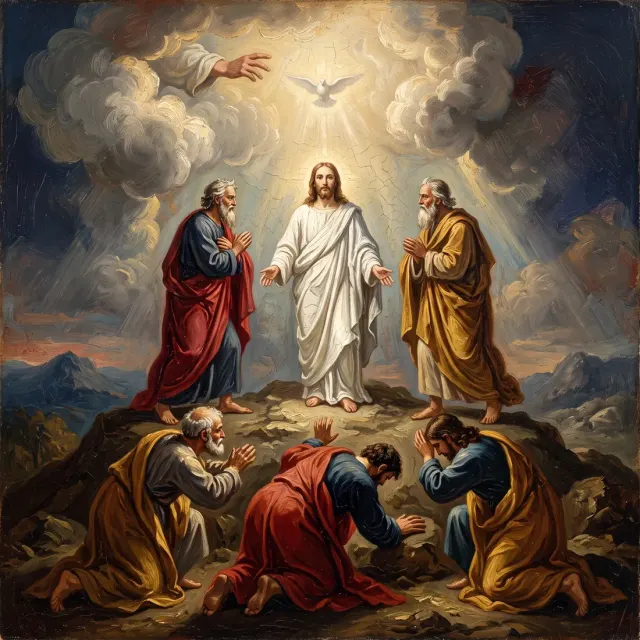
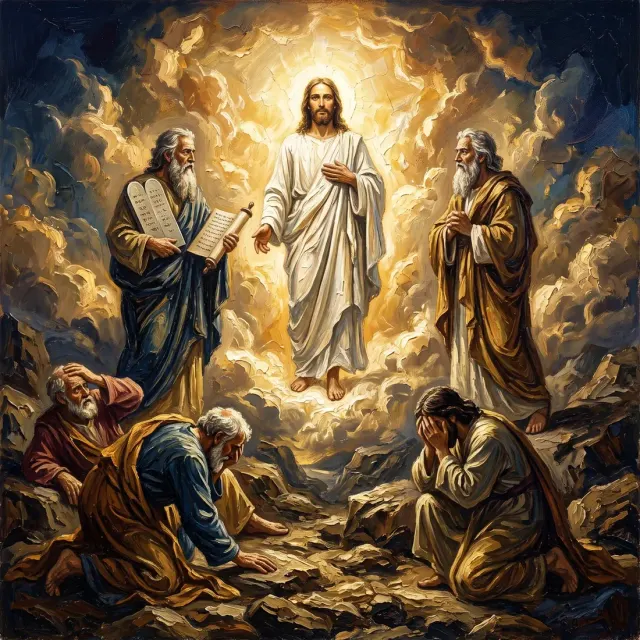
    One of three taken up after six days. His face shone as the sun, Moses and Elijah appear, and a bright cloud overshadows them with a voice out of it.

    One face shines like the sun; three faces fall to the ground. Matthew gives both the glory and its effect in physical terms. James is one of the three brought apart, but nothing he says is recorded. His privilege here is to witness, not to explain. Mark names this same company beside Jairus' dead daughter in 5:37 and in Gethsemane in 14:33. Their nearness includes power over death, unveiled glory, and sorrow unto death. It is not restricted to the impressive occasions.

    The mountain does not cancel the suffering Jesus has just announced in Matthew 16:21. Luke 9:31 makes the connection even more explicit: Moses and Elijah speak of his decease, which he should accomplish at Jerusalem. In that account, glory and the approach to death occupy the same conversation. The word accomplish matters. His departure is not presented merely as the unfortunate interruption of a promising ministry. Matthew likewise puts a restriction on reporting the vision in 17:9: it must remain unannounced until the Son of man has risen from the dead. The brightness is not permission to edit the cross out of his identity.

    Peter proposes three tabernacles, but while he is still speaking the cloud brings one unmistakable identification: the beloved Son. The instruction is to hear him. Moses and Elijah are truly present, yet their presence does not turn the encounter into a choice between three equivalent voices. Deuteronomy 18:15 had already joined the promise of a prophet like Moses to the command to hear him. Then Matthew lets the great declaration end with a small, tangible action: Jesus approaches and touches the frightened disciples. The man whose face shone is the man who comes near. When James and the others lift their eyes, the passage ends not with three shelters standing but with Jesus only. The vision has concentrated their attention, not divided it.

    Verse by verse

    1. 17:1

      Matthew does not name the mountain. Identifications with particular mountains go beyond the information supplied in this passage.

    2. 17:3

      Luke 9:31 uses exodos, departure, for what the KJV calls Jesus' decease. With Moses present, that wording gives the discussion a notable connection with the language of exodus.

    3. 17:5

      Second Peter 1:16-18 appeals to this heavenly voice and to being eyewitnesses of Jesus' majesty. It treats the mountain encounter as testimony, not merely a private impression.

    4. 17:7-8

      The touch precedes the disciples lifting their eyes. Matthew records their fear and Jesus' reassurance, but supplies no separate speech or private reaction from James.

    Matthew 17:1-8

    King James Version · 8 verses

    17:1And after six days Jesus taketh Peter, James, and John his brother, and bringeth them up into an high mountain apart,

    17:2And was transfigured before them: and his face did shine as the sun, and his raiment was white as the light.

    17:3And, behold, there appeared unto them Moses and Elias talking with him.

    17:4Then answered Peter, and said unto Jesus, Lord, it is good for us to be here: if thou wilt, let us make here three tabernacles; one for thee, and one for Moses, and one for Elias.

    17:5While he yet spake, behold, a bright cloud overshadowed them: and behold a voice out of the cloud, which said, This is my beloved Son, in whom I am well pleased; hear ye him.

    17:6And when the disciples heard it, they fell on their face, and were sore afraid.

    17:7And Jesus came and touched them, and said, Arise, and be not afraid.

    17:8And when they had lifted up their eyes, they saw no man, save Jesus only.

    Matthew 17:1-8: Up the high mountain

Why it matters

His whole ministry is inside the gospels and his death gets one verse in Acts: Herod killed James the brother of John with the sword. That is all. The request he and his brother make, to sit on the right and the left, is answered with a question about a cup they do not understand, and the answer is that they will indeed drink it. For James that came true first, and Acts records it without any comment at all.

14 songs

The music

Every song in the catalogue whose passage falls inside these chapters.

  1. Matthew 4:1-11

    It is Written

  2. Matthew 4:18-22; Mark 1:16-20; Luke 5:1-11; John 1:35-51

    Leave the Nets

  3. Matthew 4:12-25

    Light upon Galilee

  4. Matthew 4:1-11; Mark 1:12-13; Luke 4:1-13

    Not by Bread Alone

  5. Matthew 17:1-13

    His Face Did Shine

  6. Matthew 17:1-13; Mark 9:2-13; Luke 9:28-36

    On the Holy Mount

  7. Matthew 17:24-27

    The Coin in the Fish's Mouth

  8. Matthew 20:1-16

    The Eleventh Hour

  9. Mark 9:14-29

    Help Thou Mine Unbelief

    Play here
    Open song pageRead lyrics
  10. Mark 9:33-37

    The Servant of All

    Play here
    Open song pageRead lyrics
  11. Mark 9:2-13

    This Is My Beloved Son

    Play here
    Open song pageRead lyrics
  12. Mark 10:13-31

    Let the Little Children Come

  13. Mark 10:35-45

    The Ransom for Many

    Play here
    Open song pageRead lyrics
  14. Luke 9:28-45

    This Is My Beloved Son: Hear Him

The videos

The videos

Every release whose passage falls inside these chapters, playing here.

Nearby

All the people

Report an error on this page