
The big picture
Asa, king of Judah, the southern kingdom of God's people, receives a warning after victory. Azariah, a man moved by God's spirit, tells him that seeking God matters more than resting in success. Benjamin, the tribe joined to Judah, hears the message too. Asa removes more idols and gathers the people in Jerusalem, the royal city. They make a solemn covenant, a binding pledge, whose severe terms must be heard alongside their joy.
In this chapter
- Azariah Calls the People to Keep Seeking 2 Chronicles 15:1-7
God's spirit comes on Azariah, who meets Asa and addresses Judah and Benjamin.
- The Warning Moves Asa to Act 2 Chronicles 15:8-11
Asa takes courage from the prophetic words.
- The People Swear a Severe Shared Pledge 2 Chronicles 15:12-15
The gathering enters a covenant to seek the God of their ancestors with heart and soul.
- Royal Rank Does Not Protect an Idol 2 Chronicles 15:16-19
Asa removes Maachah from her rank as queen because she made an idol in a grove.
Central truth
Asa answers God's warning with renewed worship and a national pledge, while removing an idol even from his own royal household.

Scripture beside the summary
2 Chronicles · King James Version · 192 Chronicles 15:1-7
Azariah Calls the People to Keep Seeking
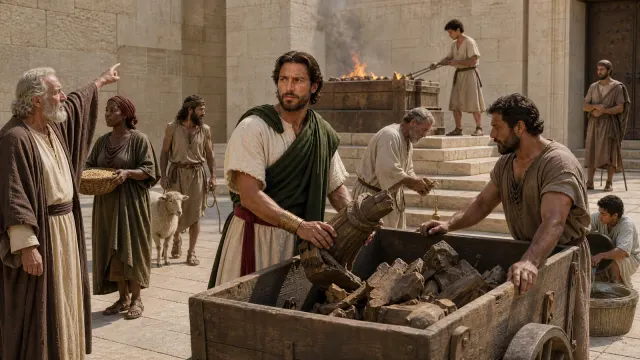
God's spirit comes on Azariah, who meets Asa and addresses Judah and Benjamin. God is with them while they remain with him; seeking will find him, but abandonment will bring abandonment. Azariah recalls a long time without true worship, teaching priests or law. Trouble drove the people back to God, and he let them find him. War and unrest had made daily life unsafe. The prophet now urges courage because their work will receive a reward. Past rescue does not make continued seeking unnecessary. The warning is also a reason to keep working.
In everyday life
The recovery coach meets a runner after a successful return from injury. She praises the progress but reminds him why the daily exercises still matter. Earlier pain came when he stopped attending to the underlying weakness. A good result is a reason to continue, not permission to drift. Azariah speaks God's promise and warning about seeking him.
Notice
2 Chronicles 15:7 The call to be strong follows a warning about abandoning God. Courage is directed toward continuing faithful work, not assuming that the danger of turning away has ended.
2 Chronicles 15:1-7
King James Version1And the Spirit of God came upon Azariah the son of Oded:
2And he went out to meet Asa, and said unto him, Hear ye me, Asa, and all Judah and Benjamin; The LORD is with you, while ye be with him; and if ye seek him, he will be found of you; but if ye forsake him, he will forsake you.
3Now for a long season Israel hath been without the true God, and without a teaching priest, and without law.
4But when they in their trouble did turn unto the LORD God of Israel, and sought him, he was found of them.
5And in those times there was no peace to him that went out, nor to him that came in, but great vexations were upon all the inhabitants of the countries.
6And nation was destroyed of nation, and city of city: for God did vex them with all adversity.
7Be ye strong therefore, and let not your hands be weak: for your work shall be rewarded.
2 Chronicles 15:8-11
The Warning Moves Asa to Act
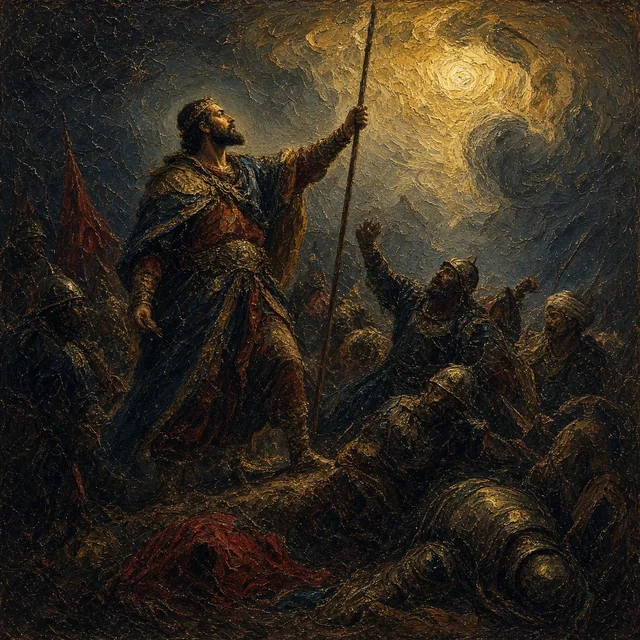
Asa takes courage from the prophetic words. He removes hateful idols from Judah, Benjamin and towns he has taken in the northern hills. He renews God's altar before the temple porch. He gathers his own people and newcomers from northern tribes who have joined him because they see God is with him. In the third month of his fifteenth year, they meet at Jerusalem. They offer cattle and sheep from the spoils they brought. The response is public and practical, reaching objects, a neglected altar and a gathering of people.
In everyday life
The neighbourhood organiser hears a report that gives her courage to reopen a neglected meeting room. She removes misleading notices, repairs the central table and invites both longtime residents and newcomers. The response has places and people in view, not only strong feelings. Asa's work removes idols and renews the altar for sacrifices to God.
Notice
2 Chronicles 15:8 Asa's courage leads both to removing idols and renewing God's altar. The response clears away false worship while restoring the place where the people are to serve God.
2 Chronicles 15:8-11
King James Version8And when Asa heard these words, and the prophecy of Oded the prophet, he took courage, and put away the abominable idols out of all the land of Judah and Benjamin, and out of the cities which he had taken from mount Ephraim, and renewed the altar of the LORD, that was before the porch of the LORD.
9And he gathered all Judah and Benjamin, and the strangers with them out of Ephraim and Manasseh, and out of Simeon: for they fell to him out of Israel in abundance, when they saw that the LORD his God was with him.
10So they gathered themselves together at Jerusalem in the third month, in the fifteenth year of the reign of Asa.
11And they offered unto the LORD the same time, of the spoil which they had brought, seven hundred oxen and seven thousand sheep.
2 Chronicles 15:12-15
The People Swear a Severe Shared Pledge
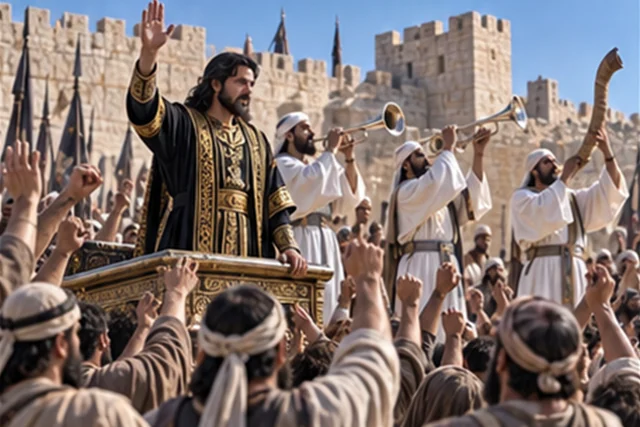
The gathering enters a covenant to seek the God of their ancestors with heart and soul. Its terms require death for anyone who refuses, whether young or old, male or female, high or low. The people swear loudly with shouts and trumpets. Judah rejoices because they have sought God with their whole desire, and God is found by them. He gives rest on every side. The joyful response does not erase the oath's deadly penalty. The covenant binds the nation through both willing public devotion and a severe demand placed on every person.

In everyday life
The ethics observer listens from the back of a hall as a group celebrates a pledge with harsh penalties. The sound of agreement does not answer what happens to anyone unable to join it. She records the terms as carefully as the applause. A united room still requires attention to its demands. Judah's covenant explicitly requires death for refusing God.
Notice
2 Chronicles 15:13 The death penalty reaches every rank and both sexes. The verse makes the covenant's severity explicit, so the later joy must not be used to soften its terms.
2 Chronicles 15:12-15
King James Version12And they entered into a covenant to seek the LORD God of their fathers with all their heart and with all their soul;
13That whosoever would not seek the LORD God of Israel should be put to death, whether small or great, whether man or woman.
14And they sware unto the LORD with a loud voice, and with shouting, and with trumpets, and with cornets.
15And all Judah rejoiced at the oath: for they had sworn with all their heart, and sought him with their whole desire; and he was found of them: and the LORD gave them rest round about.
2 Chronicles 15:16-19
Royal Rank Does Not Protect an Idol
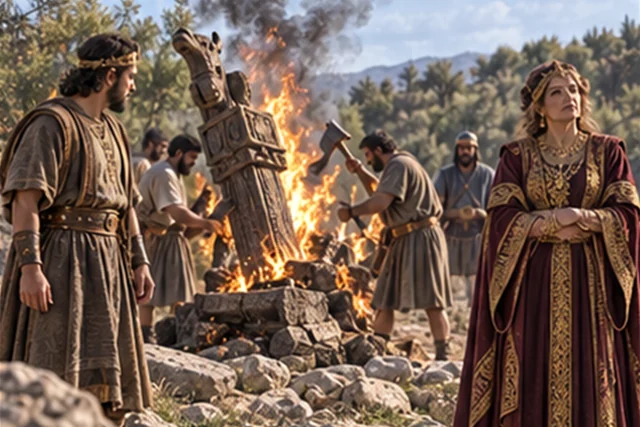
Asa removes Maachah from her rank as queen because she made an idol in a grove. She is his royal mother, yet that tie does not shield the object. He cuts it down, crushes it and burns it by the brook Kidron, a stream near Jerusalem. The account still notes that the high places were not removed from Israel. Asa's heart remains fully directed toward God, and he brings dedicated silver, gold and vessels into the temple. Peace continues until his thirty-fifth year. Reform reaches the household but is not described as complete everywhere.
In everyday life
The club treasurer withdraws a privilege from a relative after finding that it breaks the rules everyone else must keep. The family connection makes the decision harder, not less necessary. She records the change openly and returns the disputed funds. Loyalty to a role can cost favour at home. Asa removes royal rank over an idol made for false worship.
Notice
2 Chronicles 15:16 Maachah's position in the royal family does not preserve her title. Asa acts against the idol even where the decision reaches someone closely connected to him.
2 Chronicles 15:16-19
King James Version16And also concerning Maachah the mother of Asa the king, he removed her from being queen, because she had made an idol in a grove: and Asa cut down her idol, and stamped it, and burnt it at the brook Kidron.
17But the high places were not taken away out of Israel: nevertheless the heart of Asa was perfect all his days.
18And he brought into the house of God the things that his father had dedicated, and that he himself had dedicated, silver, and gold, and vessels.
19And there was no more war unto the five and thirtieth year of the reign of Asa.
Details worth noticing
The opening image
2 Chronicles 15:1 begins with “And the Spirit of God came upon Azariah the son of Oded:”
Where the chapter turns
2 Chronicles 15:4 forms a natural hinge: “But when they in their trouble did turn unto the LORD God of Israel, and sought him, he was found of them.”
The final note
2 Chronicles 15:19 leaves the reader with “And there was no more war unto the five and thirtieth year of the reign of Asa.”
A word trail through the chapter
The words LORD, Israel, Judah, Benjamin, heart, seek help reveal the chapter’s repeated concerns.
KJV words made clear
- unto
- to
- hath
- has
Music and video connected to the passage
Related media appears when its Scripture reference overlaps this study. Music and video can illuminate a theme while the biblical text remains the foundation.