The big picture
Ezekiel ends with land assigned to Israel's tribes. These are the family groups of God's people. East-to-west strips lie on both sides of a shared centre. This holds the sanctuary, its workers, and the city. The prince's land lies beside that shared centre. The city has gates named for the tribes, so the whole people is represented around it. After many measures and boundaries, the closing name gives the vision's central assurance: the Lord is present there.
In this chapter
- Seven Tribes Receive the Northern Portions Ezekiel 48:1-7
The northern boundary begins a sequence of land strips running from east to west.
- The Sacred Centre Cannot Be Traded Away Ezekiel 48:8-14
Beside the last northern portion lies the land offered to God, with the sanctuary within it.
- The City and Prince Have Defined Places Ezekiel 48:15-22
The remaining strip provides common ground for the city, homes, and open space.
- Five Tribes Complete the Southern Shares Ezekiel 48:23-29
South of the central area, Benjamin, another tribe, receives the next east-to-west portion.
- Twelve Gates Lead to a City with God Ezekiel 48:30-35
The city has three gates on each side, each bearing a tribal name.
Central truth
God gives every tribe its place around a protected sacred centre, and the city's final name declares that the Lord is there.
Scripture beside the summary
Ezekiel · King James Version · 35Ezekiel 48:1-7
Seven Tribes Receive the Northern Portions
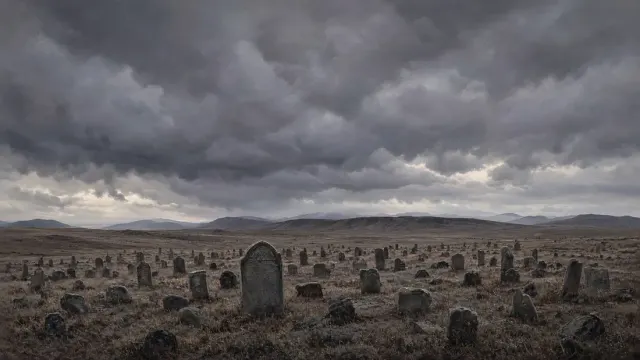
The northern boundary begins a sequence of land strips running from east to west. Dan, one tribal family, receives the first. Asher, Naphtali, Manasseh, Ephraim, Reuben, and Judah, six more tribes, follow in order towards the centre. Each portion lies beside the one named before it. The same form is used each time. It makes each share clear without a new account for each group. Each tribe has its own place in the same land. No tribe must look for a gap after other families take what they want.
In everyday life
A housing-allocation clerk lays seven numbered plots in order on a board, each beside the one before it. Families can see their assigned place without competing to claim an empty corner. She checks the names against the agreed sequence. Ezekiel assigns ancestral tribes their land under God's command, not applicants their plots through a housing scheme.
Notice
Ezekiel 48:7 Judah's portion closes this northern sequence immediately before the central offering. Its position helps locate the sacred area within the wider arrangement rather than outside the people's land.
Ezekiel 48:1-7
King James Version1Now these are the names of the tribes. From the north end to the coast of the way of Hethlon, as one goeth to Hamath, Hazar-enan, the border of Damascus northward, to the coast of Hamath; for these are his sides east and west; a portion for Dan.
2And by the border of Dan, from the east side unto the west side, a portion for Asher.
3And by the border of Asher, from the east side even unto the west side, a portion for Naphtali.
4And by the border of Naphtali, from the east side unto the west side, a portion for Manasseh.
5And by the border of Manasseh, from the east side unto the west side, a portion for Ephraim.
6And by the border of Ephraim, from the east side even unto the west side, a portion for Reuben.
7And by the border of Reuben, from the east side unto the west side, a portion for Judah.
Ezekiel 48:8-14
The Sacred Centre Cannot Be Traded Away
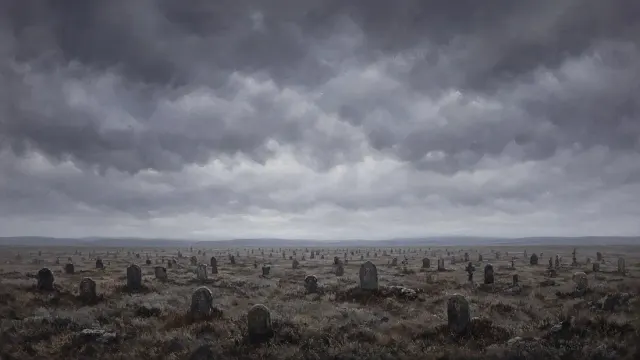
Beside the last northern portion lies the land offered to God, with the sanctuary within it. Priests descended from Zadok, a faithful priestly ancestor, receive the holy section because they kept God's charge when others strayed. Levites, the tribe's other temple servants, receive an adjoining area. Set lengths and widths keep both places clear in the plan. This land cannot be sold, exchanged, or transferred away. It is holy ground. Its holders cannot do all they wish with it. It is provision for service, not an asset to turn into a private bargain.
In everyday life
A trust steward declines an offer to buy the end of land permanently assigned to a community service. The price would help the current budget, but the deed protects the ground for that purpose. She leaves the boundary in place. Ezekiel's prohibition rests on land being holy to the Lord, not only on a trust's legal terms.
Notice
Ezekiel 48:14 The ban includes exchange as well as sale. The land's holy status is not protected merely by changing the form of a transaction that would transfer it away.
Ezekiel 48:8-14
King James Version8And by the border of Judah, from the east side unto the west side, shall be the offering which ye shall offer of five and twenty thousand reeds in breadth, and in length as one of the other parts, from the east side unto the west side: and the sanctuary shall be in the midst of it.
9The oblation that ye shall offer unto the LORD shall be of five and twenty thousand in length, and of ten thousand in breadth.
10And for them, even for the priests, shall be this holy oblation; toward the north five and twenty thousand in length, and toward the west ten thousand in breadth, and toward the east ten thousand in breadth, and toward the south five and twenty thousand in length: and the sanctuary of the LORD shall be in the midst thereof.
11It shall be for the priests that are sanctified of the sons of Zadok; which have kept my charge, which went not astray when the children of Israel went astray, as the Levites went astray.
12And this oblation of the land that is offered shall be unto them a thing most holy by the border of the Levites.
13And over against the border of the priests the Levites shall have five and twenty thousand in length, and ten thousand in breadth: all the length shall be five and twenty thousand, and the breadth ten thousand.
14And they shall not sell of it, neither exchange, nor alienate the firstfruits of the land: for it is holy unto the LORD.
Ezekiel 48:15-22
The City and Prince Have Defined Places
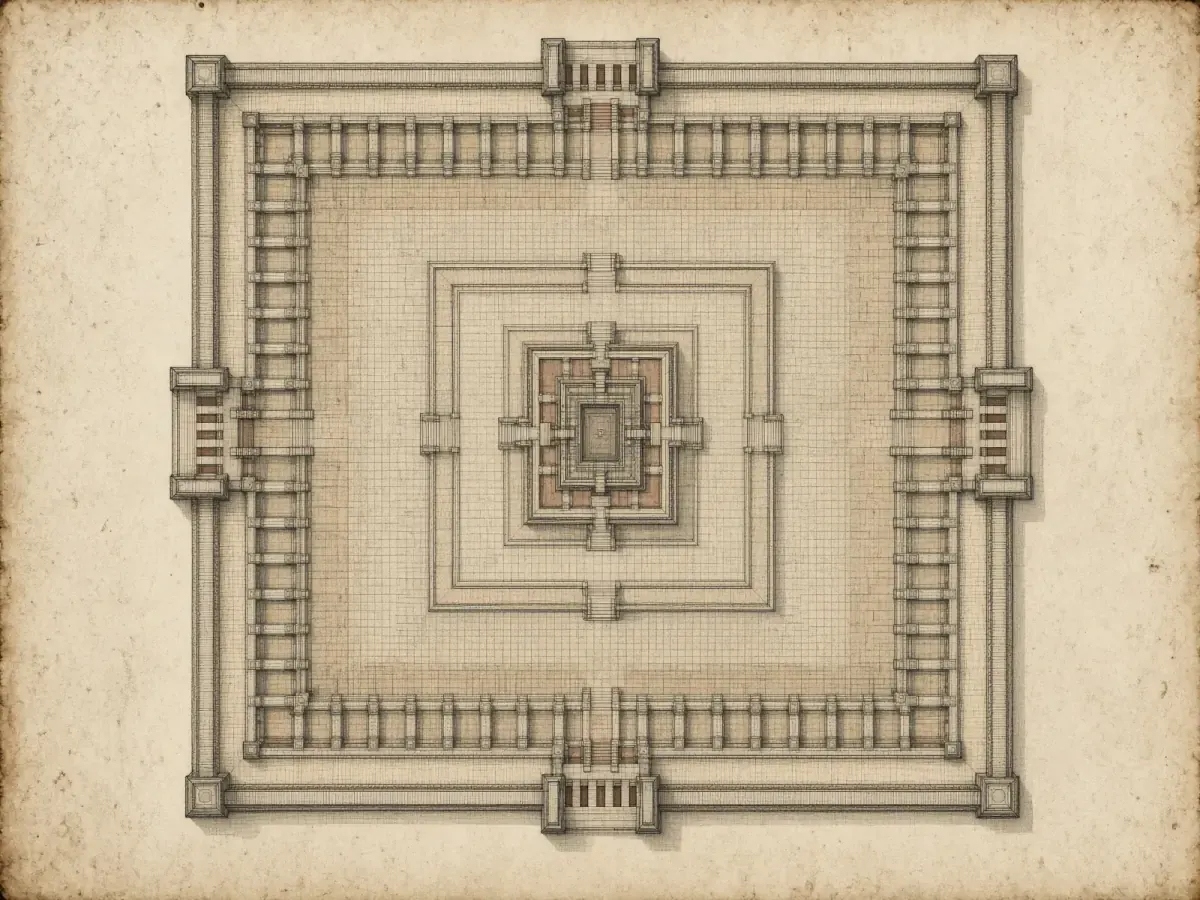
The remaining strip provides common ground for the city, homes, and open space. The square city measures four thousand five hundred on each side. An open strip two hundred fifty wide surrounds it. Fields to east and west feed its workers, who come from all the tribes. Together the sacred and city areas form a larger square. The prince's land extends on either side towards the borders, with the shared centre between his portions. The city serves all the people. The ruler's own land lies beside it. It does not take the place of their shared ground.
In everyday life
A municipal gardener checks a food-growing plot assigned to the city's maintenance crews and sees workers from several districts on the rota. The neighbouring official residence has a separate boundary. Shared service is supported without becoming the official's private garden. Ezekiel's measured centre joins holy land, city, and prince under God's allocation, not a municipal land-use plan.
Notice
Ezekiel 48:19 Workers serving the city come from all the tribes. The city's daily care is a shared responsibility rather than the possession or privilege of one local family group.
Ezekiel 48:15-22
King James Version15And the five thousand, that are left in the breadth over against the five and twenty thousand, shall be a profane place for the city, for dwelling, and for suburbs: and the city shall be in the midst thereof.
16And these shall be the measures thereof; the north side four thousand and five hundred, and the south side four thousand and five hundred, and on the east side four thousand and five hundred, and the west side four thousand and five hundred.
17And the suburbs of the city shall be toward the north two hundred and fifty, and toward the south two hundred and fifty, and toward the east two hundred and fifty, and toward the west two hundred and fifty.
18And the residue in length over against the oblation of the holy portion shall be ten thousand eastward, and ten thousand westward: and it shall be over against the oblation of the holy portion; and the increase thereof shall be for food unto them that serve the city.
19And they that serve the city shall serve it out of all the tribes of Israel.
20All the oblation shall be five and twenty thousand by five and twenty thousand: ye shall offer the holy oblation foursquare, with the possession of the city.
21And the residue shall be for the prince, on the one side and on the other of the holy oblation, and of the possession of the city, over against the five and twenty thousand of the oblation toward the east border, and westward over against the five and twenty thousand toward the west border, over against the portions for the prince: and it shall be the holy oblation; and the sanctuary of the house shall be in the midst thereof.
22Moreover from the possession of the Levites, and from the possession of the city, being in the midst of that which is the prince’s, between the border of Judah and the border of Benjamin, shall be for the prince.
Ezekiel 48:23-29
Five Tribes Complete the Southern Shares
South of the central area, Benjamin, another tribe, receives the next east-to-west portion. Simeon, Issachar, Zebulun, and Gad, the remaining named tribes, follow. The southern border runs through Tamar and Kadesh, boundary places, towards the sea. God closes the list by identifying these as the portions to divide by lot for inheritance. This list completes what the northern list began. The plan gives all the tribes room around the centre. It states the last family's place and the land's outer edge.
In everyday life
A cooperative surveyor completes the final row of assigned fields and checks that the last family's boundary still matches the total parcel. Finishing the early names did not finish the work. She reads the closing entries aloud before filing the plan. God gives a complete tribal inheritance, not a surveyor merely balancing a cooperative's acreage.
Notice
Ezekiel 48:29 The finished list is the people's land to inherit, God says. All the boundaries have been given. They are not hints left for tribes to fight over later.
Ezekiel 48:23-29
King James Version23As for the rest of the tribes, from the east side unto the west side, Benjamin shall have a portion.
24And by the border of Benjamin, from the east side unto the west side, Simeon shall have a portion.
25And by the border of Simeon, from the east side unto the west side, Issachar a portion.
26And by the border of Issachar, from the east side unto the west side, Zebulun a portion.
27And by the border of Zebulun, from the east side unto the west side, Gad a portion.
28And by the border of Gad, at the south side southward, the border shall be even from Tamar unto the waters of strife in Kadesh, and to the river toward the great sea.
29This is the land which ye shall divide by lot unto the tribes of Israel for inheritance, and these are their portions, saith the Lord GOD.
Ezekiel 48:30-35
Twelve Gates Lead to a City with God
The city has three gates on each side, each bearing a tribal name. Reuben, Judah, and Levi, the priestly tribe, face north. Joseph, Benjamin, and Dan face east. Simeon, Issachar, and Zebulun face south; Gad, Asher, and Naphtali face west. Its full circuit measures eighteen thousand. The final name says that the Lord is there. The closing emphasis is not a ruler's fame or the precision of the plan alone. God's presence defines the settled city. The book of judgement and exile ends with him there.
In everyday life
A reunion organiser places family names over every entrance to a shared hall, then sets the hosts' welcome at its centre. Each branch has a place, but the gathering means more than signs and assigned doors. The family is actually together. Ezekiel's city is defined by God's presence, not by the attendance of human hosts.
Notice
Ezekiel 48:35 The final name centres on the Lord being there. After all the measurements, the city's defining promise is presence rather than size, wealth, or military strength.
Ezekiel 48:30-35
King James Version30And these are the goings out of the city on the north side, four thousand and five hundred measures.
31And the gates of the city shall be after the names of the tribes of Israel: three gates northward; one gate of Reuben, one gate of Judah, one gate of Levi.
32And at the east side four thousand and five hundred: and three gates; and one gate of Joseph, one gate of Benjamin, one gate of Dan.
33And at the south side four thousand and five hundred measures: and three gates; one gate of Simeon, one gate of Issachar, one gate of Zebulun.
34At the west side four thousand and five hundred, with their three gates; one gate of Gad, one gate of Asher, one gate of Naphtali.
35It was round about eighteen thousand measures: and the name of the city from that day shall be, The LORD is there.
Details worth noticing
The opening image
Ezekiel 48:1 begins with “Now these are the names of the tribes. From the north end to the coast of the way of Hethlon, as one goeth to Hamath, Hazar-enan, the border of Damascus…”
Where the chapter turns
Ezekiel 48:1 forms a natural hinge: “Now these are the names of the tribes. From the north end to the coast of the way of Hethlon, as one goeth to Hamath, Hazar-enan, the border of Damascus…”
The final note
Ezekiel 48:35 leaves the reader with “It was round about eighteen thousand measures: and the name of the city from that day shall be, The LORD is there.”
A word trail through the chapter
The words side, border, five, east, west, portion help reveal the chapter’s repeated concerns.
KJV words made clear
- oblation
- A portion offered and set apart for God.
- alienate
- Transfer ownership away from those to whom the land has been assigned.
- suburbs
- Open ground around a city, rather than modern residential neighbourhoods.
Music and video connected to the passage
Related media appears when its Scripture reference overlaps this study. Music and video can illuminate a theme while the biblical text remains the foundation.