
Ezekiel
48 Chapters
Ezekiel: The Whole Book, Chapter by Chapter
A Throne Appears Where the Captives Are
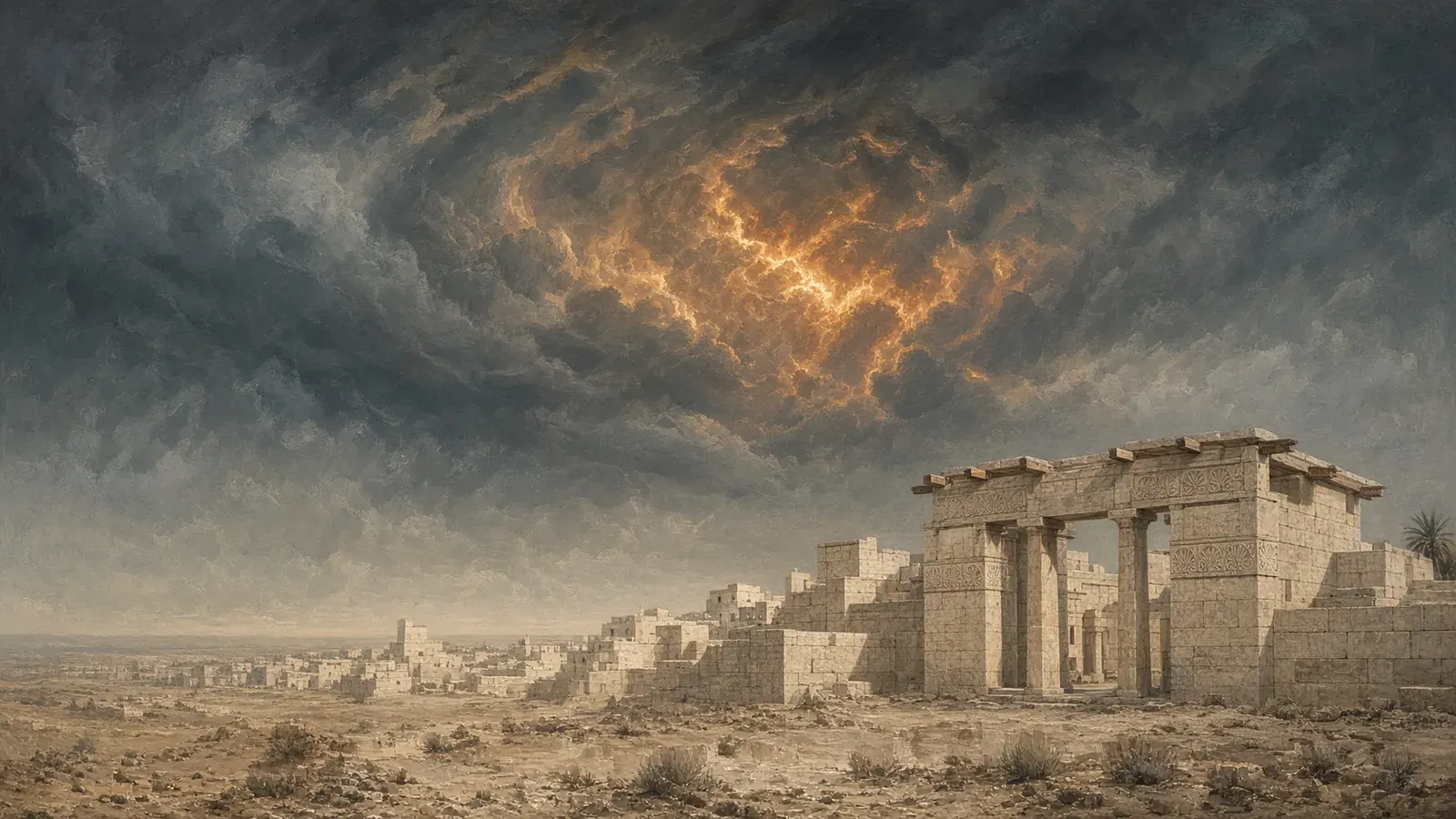
The Book of Ezekiel opens among captives, not in Jerusalem, and the location matters before the vision even begins. The hand of the LORD reaches Ezekiel beside Chebar, where a storm of cloud, fire, brightness, living creatures, and impossible wheels gathers into ordered movement rather than chaos. Every strange feature points upward. Wings thunder and then become still. An expanse separates the creatures from what stands above them. There a sapphire-like throne and a human-like appearance blaze within fire and rainbow brightness. Ezekiel's careful language keeps saying "likeness" and "appearance," refusing to turn the vision into a diagram of God. The chapter's great reveal is not merely spectacle but presence: "the appearance of the likeness of the glory of the LORD" has appeared in exile, and the prophet falls before the voice that follows.
One complete chapter pageOpen chapter →
A Commission Without a Promise of Applause
The glory that put Ezekiel on his face now gives him work to do, and the first act of the commission is to set him back on his feet. The Book of Ezekiel separates authorization from reception from the beginning. Israel is called rebellious, hardhearted, and resistant, yet Ezekiel is not promised that better delivery will make the people listen. His responsibility is to speak the words given to him whether they hear or refuse. Briers, thorns, scorpions, hostile words, and intimidating looks describe a genuinely painful audience without making that audience the source of the message. The commission then turns inward. Before Ezekiel can expose rebellion, he is warned not to become rebellious himself. A scroll written within and without, full of lamentation, mourning, and woe, is placed before him. The messenger must hear and receive before he speaks.
One complete chapter pageOpen chapter →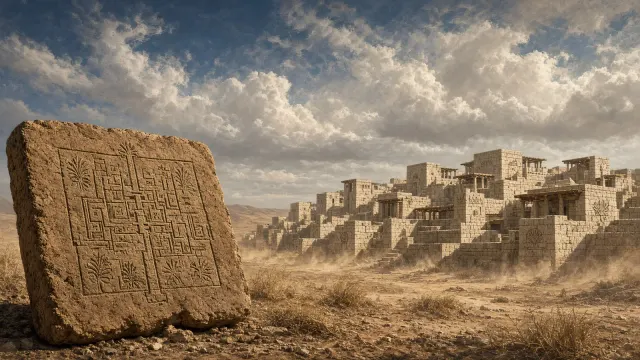
A Sweet Scroll and a Silent Watchman
A scroll full of lamentation becomes sweet in Ezekiel's mouth without becoming a pleasant message. That tension shapes the chapter. The Book of Ezekiel gives its prophet a strong face and a forehead harder than flint, but pairs that toughness with commands to receive God's words in his heart and hear them with his ears. Carried to Tel-abib in bitterness, Ezekiel spends seven astonished days sitting where the captives sit before the watchman's charge defines his responsibility. He must warn, while the hearer remains accountable for the response. Silence where warning is required brings guilt on the watchman; a delivered warning does not make him sovereign over another person's choice. The chapter then closes on a strange restriction. Ezekiel, commissioned to speak, is confined and made mute except when God opens his mouth. Even prophetic boldness remains governed by a received word.
One complete chapter pageOpen chapter →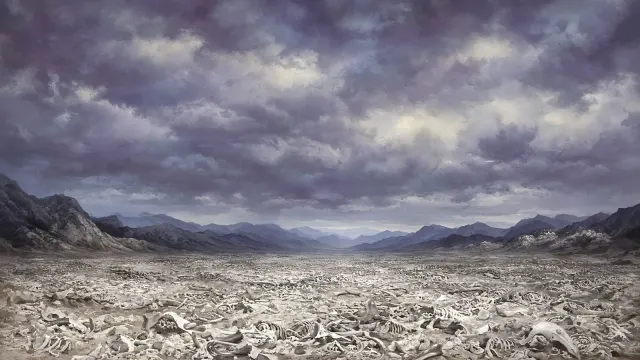
Jerusalem Besieged on a Tile
Jerusalem's siege is reduced to objects small enough to place before Ezekiel and hardships personal enough to enter his own body. A tile becomes the city, military works surround it, and an iron pan stands as a hard barrier while the prophet sets his face against the model. Then time itself becomes part of the sign as Ezekiel bears Israel and Judah's iniquity in appointed days representing years. Food brings the message still closer. A mixture of grains and legumes sounds abundant until bread and water are weighed into anxious rations, and the fuel for cooking introduces the defilement associated with exile. Ezekiel's protest over ritual pollution receives a real concession, but the altered fuel does not change the announced deprivation. The Book of Ezekiel makes the point through ordinary necessities: bread and water may remain present while losing their power to signify security.
One complete chapter pageOpen chapter →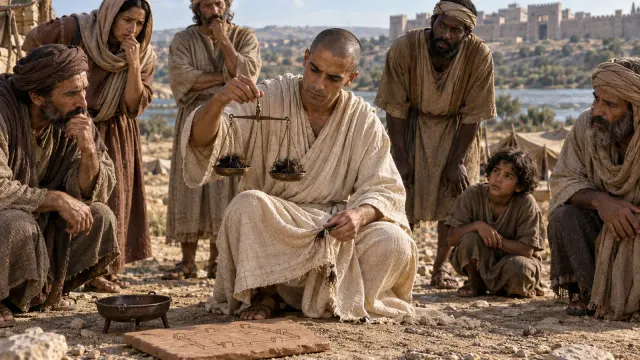
Jerusalem Weighed Out in a Barber’s Scales
A razor and a set of balances turn Ezekiel's hair into a measured representation of Jerusalem's fate. One portion burns, one is struck with the sword, and one is scattered, yet the sword follows even the scattered. A few hairs are kept in the prophet's garment, but even that preserved handful is not treated as automatically untouchable. The explanation then widens from sign to indictment. Jerusalem's position among the nations has made its rebellion more visible, not less accountable, and the sanctuary itself becomes part of the charge because it has been defiled. Famine, pestilence, sword, scattering, beasts, and bloodshed attack every ordinary source of continuity. The Book of Ezekiel ends the chapter by turning surrounding nations into witnesses. The city once placed conspicuously among them will now become a visible warning when its supposed privilege proves unable to cancel its conduct.
One complete chapter pageOpen chapter →
The Mountains Hear a Charge Against Their Worship
The oracle leaves Jerusalem's walls and addresses the mountains, hills, valleys, and dwelling places where Israel's illicit worship has spread. Altars are broken, images cease, and bodies fall at the very sites approached for religious benefit. The geography becomes an argument: the land has been filled with worship that cannot protect its worshippers, and the judgment reaches the same breadth as the practice. Yet the Book of Ezekiel interrupts the devastation with a remnant. Some survive the sword and are scattered among the nations, where remembering the LORD includes a changed judgment on their own former conduct. Survival is therefore not self-congratulation or an untouched escape. It becomes recognition. The chapter closes by surveying distance itself. Far away, nearby, or trapped under siege are not alternative routes around the sentence, and the repeated refrain keeps returning to the identity of the one speaking: "ye shall know that I am the LORD."
One complete chapter pageOpen chapter →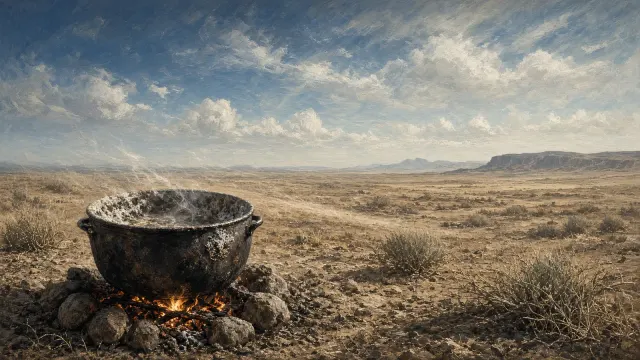
The End Interrupts Ordinary Business
"The end is come" keeps sounding until postponement has nowhere left to hide. The Book of Ezekiel moves through nearly every structure by which ordinary life expects tomorrow to resemble today and shows each one failing. Buyers and sellers lose the normal meaning of their bargains. A trumpet sounds, but no effective defense forms. Sword waits outside while famine and pestilence work within. Survivors mourn rather than celebrate escape. Silver and gold cannot buy deliverance or fill an empty belly, and the sanctuary's splendor is exposed to plunder after being turned toward abomination. The chapter finishes by moving through the city's offices: prophet, priest, elders, king, prince, and people cannot manufacture the peace being sought. Rumor follows rumor while counsel disappears. Judgment is not presented as a random collapse of institutions but as an answer to violence, bloody crimes, and the ways that have filled the land.
One complete chapter pageOpen chapter →
The Sanctuary’s Hidden Rooms Are Opened
A vision carries Ezekiel from his house among the exiles into Jerusalem's sanctuary, where the presence of divine glory makes the offenses he sees more, not less, severe. The Book of Ezekiel opens the temple by stages. An image provoking jealousy stands near the entrance. A hidden chamber reveals creatures, idols, incense, and seventy elders who assume that darkness means the LORD cannot see. Women mourn for Tammuz at the gate. Men in the inner court turn their backs toward the temple and face east to worship the sun. Each scene intensifies the charge without requiring Ezekiel to invent what lies behind it. Then the indictment leaves ceremonial space and names violence throughout the land. Sanctuary corruption and public wrongdoing belong to the same case. The chapter ends with announced fury, preparing the judgment that follows while exposing the contradiction in the elders' claim that God neither sees nor remains concerned.
One complete chapter pageOpen chapter →
A Mark Before the Judgment Begins
The temple inspection turns into judgment, but not before a distinction is made. Armed agents appear, yet a linen-clothed figure carrying a writer's inkhorn receives the first task: mark those who sigh and cry over Jerusalem's abominations. The glory moves to the threshold while the city is separated before the weapons move through it. Then the sentence begins at the sanctuary, overturning any assumption that nearness to holy space guarantees safety. The breadth of the killing is severe enough that Ezekiel falls on his face and pleads over what he fears could be the end of Israel's remnant. The Book of Ezekiel leaves that plea in the account rather than smoothing the scene into detached certainty. God's answer returns to bloodshed, perverseness, and the claim that he does not see. The final report comes from the man with the inkhorn: his distinguishing assignment has been completed.
One complete chapter pageOpen chapter →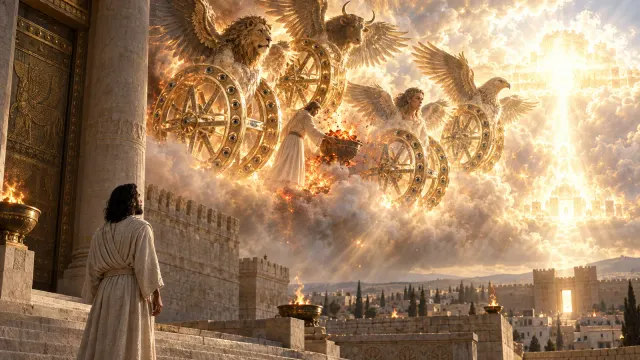
The Glory Moves Toward the Gate
The throne vision from Chebar reappears inside the temple scene, now with the living creatures identified as cherubim. The Book of Ezekiel keeps the imagery familiar on purpose: sapphire-like throne, wheels within wheels, eyes, wings, hands, and coordinated motion all establish that the glory in Jerusalem is the same glory encountered among the captives. Fire from between the cherubim is handed to the linen-clothed man for the city, making judgment an ordered act rather than an accidental blaze. Yet the chapter's central movement is not the fire. It is departure. The glory rises from the cherub, stands over the threshold, then moves with the cherubim to the eastern gate. Ezekiel repeatedly recognizes the creatures he saw by Chebar. Jerusalem's sanctuary is being left by a presence that has already shown it is not imprisoned within Jerusalem.
One complete chapter pageOpen chapter →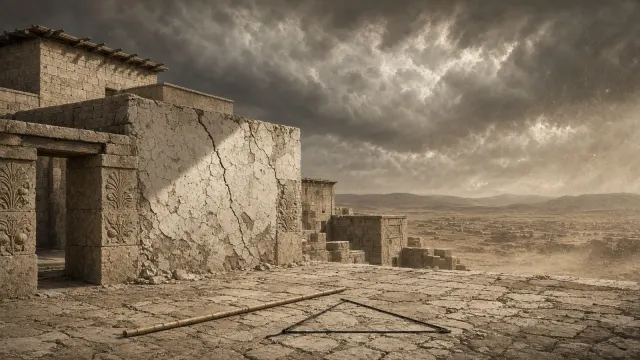
A Sanctuary for Those Sent Far Away
At the eastern gate, Jerusalem's leaders speak as though the city were a secure cooking pot and they the protected contents. The Book of Ezekiel turns their proverb against them: the flesh in the pot is the people they have slain, while the leaders themselves will be brought out for judgment. Pelatiah's death within the vision drives Ezekiel to another plea over the remnant, and the answer redirects hope away from those who claim possession of the land. The exiles dismissed as far from the LORD are promised that God will be "as a little sanctuary" to them. Gathering, removal of abominations, a new heart, and a new spirit follow that promise without erasing accountability for those who persist in idolatry. Finally the glory leaves the city and stands on the mountain to the east. Ezekiel returns in vision to Chaldea and reports everything to the captives.
One complete chapter pageOpen chapter →
Packed Baggage and an Expired Proverb
Ezekiel becomes a moving sign again. He packs the belongings of an exile in daylight, digs through a wall, and carries the load out at twilight with his face covered, all "in their sight" before people described as having eyes that do not see. The explanation fixes the sign on Jerusalem's prince and people: royal status will not turn flight into freedom, and the prince will reach Babylon without seeing it. A few survivors remain to testify among the nations about the conduct behind the scattering. Then the Book of Ezekiel changes signs from baggage to a meal. Bread and water are consumed with shaking and anxiety, showing that provision can remain while security disappears. The closing dispute is about time itself. One proverb says visions fail because days pass; another pushes fulfillment into a distant future. Both defenses are answered with the same claim: the word will no longer be prolonged.
One complete chapter pageOpen chapter →
A Coat of Plaster Is Not a Wall
The problem in this chapter is not merely bad prediction but borrowed authority. Prophets speak from their own hearts, follow their own spirits, and attach "The LORD saith" to what God has not spoken. The Book of Ezekiel compares them first to foxes occupying ruins instead of repairing breaches, then to plasterers coating a weak wall with material that cannot make it sound. Their promise of peace does not create peace; it makes weakness look habitable until storm and hail expose the foundation. The chapter then addresses women who likewise prophesy from their own hearts, using poorly understood ritual objects while taking payment in food and making false declarations about life and death. The closing accusation is exact: lies make the righteous sad and strengthen the wicked against turning. God tears away the instruments of deception and releases those who have been hunted by words presented as help.
One complete chapter pageOpen chapter →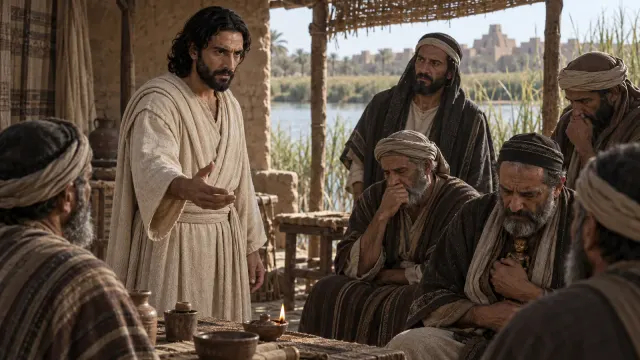
Idols in the Heart and Righteousness That Cannot Be Borrowed
Elders sit respectfully before Ezekiel while carrying idols in their hearts, and the chapter makes that hidden allegiance the real subject of their consultation. The Book of Ezekiel refuses to treat outward inquiry as neutral when the inquirer has already installed a rival commitment within. The call to turn from idols is followed by a difficult warning that both deceptive prophet and idolatrous seeker remain accountable when false guidance circulates between them. Then the chapter expands the issue from consultation to communal security. Even Noah, Daniel, and Job could deliver only themselves in the hypothetical judgments described. Righteousness cannot be borrowed from a famous figure, a family member, or a small righteous presence within a guilty land. Yet Jerusalem will still have survivors. When they come among the exiles, their ways and deeds will disclose that the city's devastation was not causeless, making the remnant part of the explanation rather than a denial of the judgment.
One complete chapter pageOpen chapter →
A Vine Branch That Cannot Hold a Peg
A vine carries honorable associations, but the Book of Ezekiel deliberately ignores fruit and asks a less flattering question: what can the wood actually do? It is not useful timber, not even for the modest task of making a peg to hold a vessel. Once both ends burn and the middle is charred, survival from the flame does not somehow improve the material. That compact comparison is then applied directly to Jerusalem's inhabitants. Coming out of one fire does not amount to acquittal when another fire still waits. The image strips away confidence in distinction without declaring human beings worthless. The closing explanation gives the moral ground of the sentence: the land becomes desolate because of trespass. Jerusalem cannot answer that charge by appealing to an honored symbol or to the fact that some part of it remains after an earlier disaster.
One complete chapter pageOpen chapter →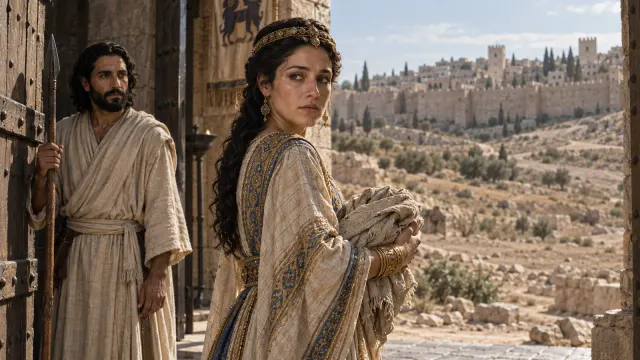
The City That Forgot How It Began
Jerusalem's entire past is retold as the life of a woman who forgets that everything impressive about her came after rescue. The Book of Ezekiel begins the allegory with an abandoned infant in blood, given life before she possesses beauty, wealth, or status. Covenant, washing, clothing, jewelry, food, and a crown then create the splendor for which she becomes known, and the text immediately says whose comeliness made that beauty possible. The betrayal is therefore traced through the gifts themselves. Garments, silver, gold, oil, incense, food, children, public worship, and foreign relationships are all redirected. Jerusalem even pays the lovers she pursues, only to have those same alliances become agents of exposure and destruction. The comparison with Samaria and Sodom destroys the city's habit of judging others from a position of assumed superiority. Yet "Nevertheless" opens the final movement. God remembers the covenant Jerusalem forgot and promises an everlasting covenant that leaves the restored city ashamed rather than boastful.
One complete chapter pageOpen chapter →
Two Eagles, One Broken Oath, and a Different Planting
A political riddle turns international policy into a question of faithfulness. A great eagle removes the top of a cedar, plants seed in good ground by abundant water, and produces a low but viable vine. The vine nevertheless bends toward another eagle for help. The Book of Ezekiel then names the empires: Babylon established the reduced kingdom, while Jerusalem's ruler sought Egyptian horses and troops in rebellion against the oath that allowed that kingdom to stand. The decisive issue is not whether Egypt has enough soldiers. God calls the violated agreement "mine oath" and "my covenant," making the political pledge part of the ruler's accountability before him. Capture, Babylon, sword, and scattering follow. Then the imagery changes hands. God himself takes a tender shoot from the high cedar and plants it on Israel's mountain, where it becomes a great sheltering tree. Human maneuvering ends with a divine planting.
One complete chapter pageOpen chapter →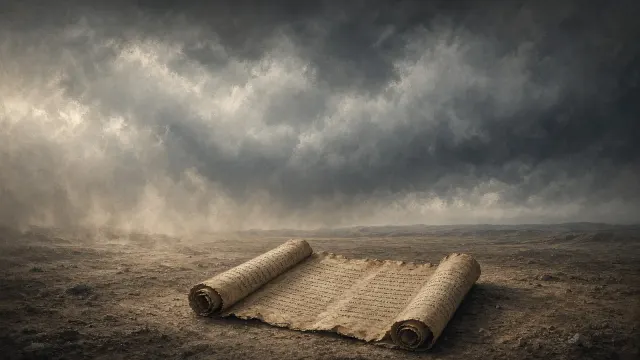
The Proverb Cannot Decide Who Lives
A proverb about sour grapes gives Israel a compact explanation for its condition: the fathers acted, and the children suffer the taste. Ezekiel answers by separating responsibility without pretending that generations have no effect on one another. A righteous father does not rescue a violent son, and a violent father does not condemn a son who sees his conduct and refuses it. The argument then moves inside a single life. Wickedness can be left, and righteousness can be abandoned, so neither past failure nor past achievement becomes permanent moral credit. Israel calls this unequal, but the chapter insists that the same possibility of turning governs both directions. It closes with judgment according to each person's ways, the demand for a new heart and spirit, and God's repeated declaration that he takes no pleasure in death.
One complete chapter pageOpen chapter →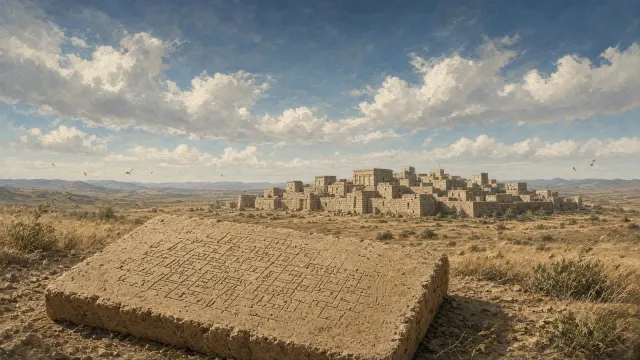
A Lament for Lions That Can No Longer Roar
Ezekiel turns the royal house into a lament before he turns it into an explanation. A lioness raises strong cubs, but the strength they learn is predatory: they devour people, ravage the land, and are finally caught by the nations they once seemed able to dominate. The first is carried to Egypt, the second to Babylon, and the sound of royal power ends in confinement and silence. Then the image changes. The mother becomes a well-watered vine with branches strong enough for scepters, only to be uprooted, dried, and burned. The last fire comes from one of the vine's own rods, so the ruin is not pictured as pressure from outside alone. The chapter mourns the disappearance of rule without romanticizing the conduct of the rulers who carried it.
One complete chapter pageOpen chapter →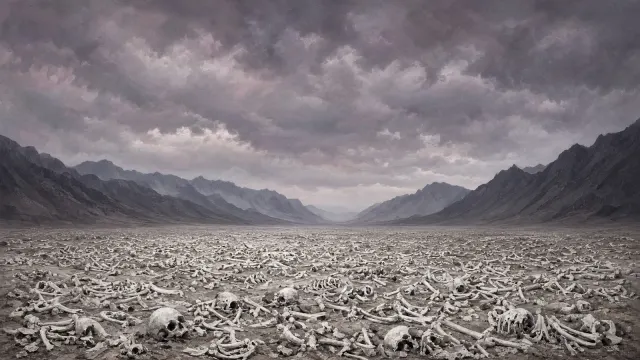
An Inquiry Becomes a Reckoning with Israel’s Past
Certain elders come to inquire of the LORD, but the answer becomes a prosecution of the history their question leaves untouched. Ezekiel begins in Egypt, where Israel already resists the command to abandon idols, then follows the same rebellion through the wilderness and into the land. Each generation receives instruction and each is addressed for its own conduct, yet the old pattern keeps returning. God's restraint repeatedly preserves the people for his name's sake without erasing judgment. The difficult reference to statutes that are not good belongs to that judicial setting, not to a reversal of the life-giving statutes praised earlier. The present elders are finally brought inside the charge. A future gathering is promised, but it includes another wilderness, examination, covenant obligation, and the removal of rebels. The chapter ends with a burning forest while the audience complains about Ezekiel's use of parables.
One complete chapter pageOpen chapter →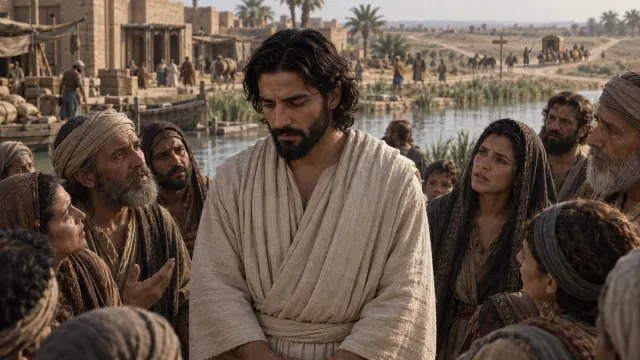
The Sword Reaches the City and the Crown
The burning forest of the previous chapter is translated into unmistakable terms: Jerusalem, the holy places, the land, and a sword that will not return to its sheath. Ezekiel must sigh publicly before the news arrives, making his own body an advance sign of the collapse the report will produce. The sword is sharpened, polished, and handed over for slaughter, reaching princes as well as people and passing through gates and private rooms. Babylon then appears at a crossroads between Rabbath and Jerusalem, using divination that points toward Jerusalem while the city's own remembered iniquity supplies the real ground of judgment. The royal office receives no exemption. The prince's diadem and crown are removed, though the chapter still leaves a future horizon for the one to whom rule truly belongs. Ammon, spared at the crossroads, is not therefore acquitted.
One complete chapter pageOpen chapter →
The City’s Protections Have Become Its Dangers
Jerusalem is called the bloody city, and Ezekiel's indictment refuses to isolate the problem in one office or one kind of sin. Violence, idolatry, sexual wrongdoing, exploitation, dishonest gain, contempt for vulnerable people, and profanation of holy things all appear within the same civic life. The repeated phrase 'in thee' makes the location of the failure impossible to outsource. Princes use power for bloodshed, priests erase distinctions they are supposed to preserve, prophets cover lies with divine language, and the people themselves practice oppression. Even gathering into Jerusalem becomes threatening, because the city is pictured as a furnace and its inhabitants as dross collected for melting. The chapter ends with a search for someone to repair the breach and stand in the gap for the land. None is found, and the closing judgment answers the city's own ways rather than an unexplained divine hostility.
One complete chapter pageOpen chapter →
Two Sisters and the Powers They Desired
Samaria and Jerusalem become two sisters whose pursuit of foreign powers is told through deliberately severe sexual imagery. The attraction is political, religious, and visual at once: uniforms, horses, painted figures, ornaments, and distant prestige become objects of desire, while idolatry gives that desire its covenant meaning. The powers once courted return as conquerors, and the very military splendor that looked desirable becomes the equipment surrounding the city. Jerusalem's disgust with one alliance does not restore faithfulness; it merely redirects the appetite toward another. The allegory eventually strips away any possibility of treating the charge as only metaphorical. Children are passed through the fire, blood is in their hands, and the sanctuary is entered on the same day. God's own incense and oil appear on a table prepared for others. The final verdict names both idolatry and bloodshed and ends without the covenant restoration that closes Ezekiel 16.
One complete chapter pageOpen chapter →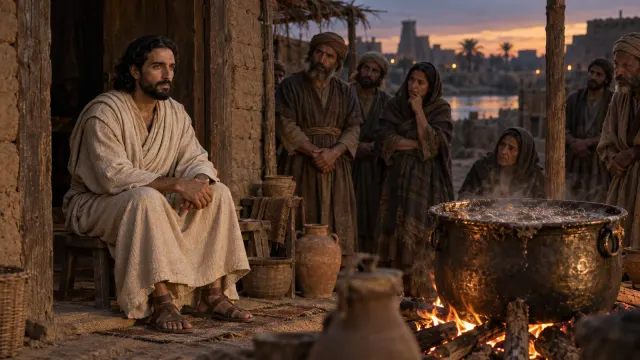
A Dated Siege and a Household’s Bereavement
The warnings become attached to a calendar when Ezekiel is told to record the exact day Babylon sets itself against Jerusalem. The city is pictured as a cooking pot, but the vessel that once sounded like protection now holds its inhabitants over the fire. Its corrosion remains even after the contents are removed, and the exposed blood within Jerusalem explains why the pot itself must be heated. Then the chapter moves from public siege to private bereavement. Ezekiel's wife, called 'the desire of thine eyes,' dies, and he is commanded to refrain from the expected signs of mourning. The people ask what his conduct means, and the answer joins his loss to the coming loss of sanctuary, sons, and daughters. The chapter closes with a survivor who will eventually report Jerusalem's fall and with the promise that Ezekiel's restricted speech will open again.
One complete chapter pageOpen chapter →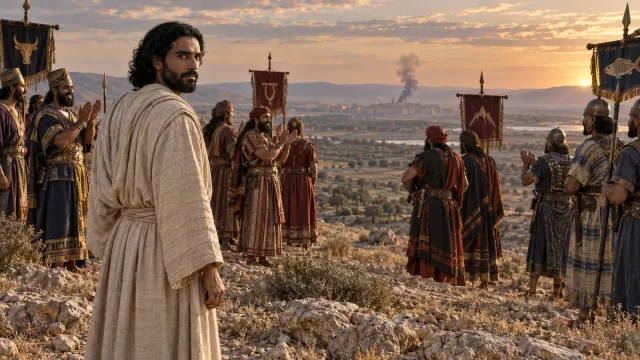
The Neighbors Who Applauded the Ruin
Judah's fall creates an opening for neighboring nations to reveal what they think the catastrophe means. Ammon celebrates the profaning of the sanctuary and the captivity of Judah. Moab and Seir treat the disaster as proof that Judah is merely like every other nation. Edom uses the moment for revenge, and Philistia acts out of an old hostility. Ezekiel does not deny that Judah has been judged. He denies that judgment gives surrounding peoples an independent commission to mock, exploit, or settle their own accounts. Each oracle therefore names a different offense rather than flattening the neighbors into a single hostile mass. Their punishments also differ in form, but each ends by insisting that the LORD remains active beyond Jerusalem's ruined walls. The sanctuary's fall is not evidence that Judah's God has disappeared from the affairs of the region.
One complete chapter pageOpen chapter →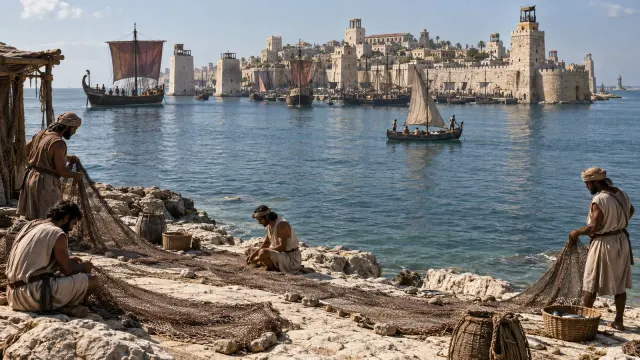
Tyre Hears the Sound of Its Own Fall
Tyre hears that Jerusalem's gates are broken and immediately calculates the commercial advantage. Ezekiel answers that expectation with a long dismantling of the city's confidence. Nations rise like waves, walls and towers come down, and the rocky site once supporting maritime strength is reduced to a place for spreading nets. Nebuchadrezzar is then named within the assault, with the machinery of siege, dust, hooves, shattered buildings, seized merchandise, and silenced music making the destruction tangible. The wording later broadens beyond one named commander, leaving room for the wider succession of attackers already announced. Tyre's maritime princes respond by descending from thrones, stripping off embroidered clothing, and sitting in trembling on the ground. The final movement goes deeper still: waters cover the city, the imagery descends into the pit, and Tyre's confident future is replaced by disappearance from the land of the living.
One complete chapter pageOpen chapter →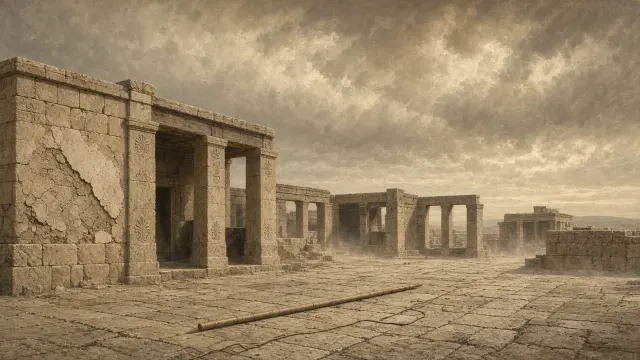
The Magnificent Ship That Carried a World
Tyre becomes a ship so magnificent that Ezekiel spends most of the chapter loading it before he wrecks it. Timber, linen, ivory, colors, skilled sailors, pilots, repairers, soldiers, animals, metals, food, spices, precious stones, fabrics, and goods from a wide network of peoples accumulate until the vessel appears full and glorious in the sea. The catalogue is not decorative delay. It shows how much of the world is tied to the city's prosperity, including the disturbing appearance of human beings among its merchandise. Then the east wind breaks the ship. Wealth, cargo, crew, craftsmen, soldiers, and the structure holding them all go down together. Those who remain at sea or on shore become mourners. The same merchants and rulers once enriched by Tyre now measure the size of the loss, and the chapter ends with fear, astonishment, and hissing where commercial acclaim once stood.
One complete chapter pageOpen chapter →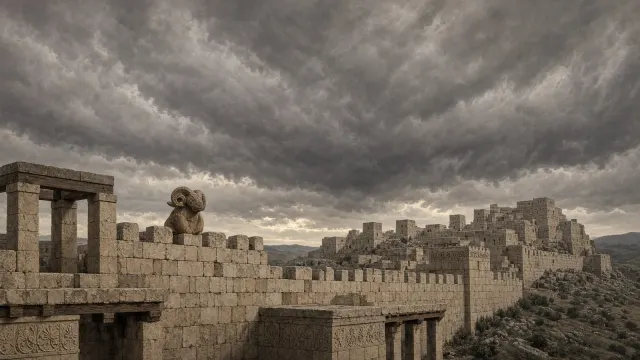
The Ruler Who Mistook Wealth for Divinity
Tyre's ruler has converted real achievements into an impossible claim. Wisdom and commerce have produced wealth, but the prince lets those results lift his heart until he speaks as though a throne in the sea had made him divine. Ezekiel answers not by denying his brilliance but by insisting on the mortal body that swords can reach. A second lament then rises into far stranger language: Eden, precious stones, God's mountain, a covering cherub, beauty, corruption, and expulsion. Interpretations differ over how far that imagery extends beyond the king of Tyre, but the stated addressee and the commercial language remain in view. Sidon follows with a shorter judgment, and the chapter finally turns away from magnificent rulers toward ordinary restoration. Israel is gathered, hostile thorns are removed, and the future is pictured through houses, vineyards, settled land, and secure dwelling.
One complete chapter pageOpen chapter →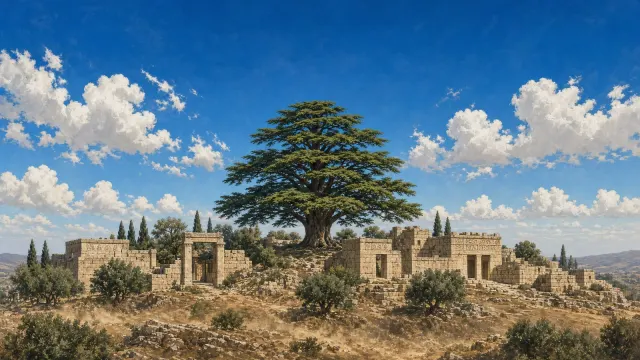
The River's Owner Is Taken Out of the Water
Pharaoh appears first as a great creature lying in the river and claiming the river as his own creation. The LORD answers that boast with hooks, dragging the creature from the element in which it seemed most secure. Egypt is then pictured in the opposite scale as a reed staff that breaks when Israel leans on it and injures the one seeking support. The judgment empties the land and scatters its people for a stated forty years, after which Egypt is promised a return but not a restoration of former supremacy. Its reduced position is tied to the end of Israel's confidence in it. A much later dated oracle then revisits Nebuchadrezzar's exhausting labor against Tyre, explicitly saying his army received no wages there. Egypt's spoil is assigned as recompense, while the chapter closes by giving Israel, not the imperial powers under discussion, the brief image of a horn beginning to bud.
One complete chapter pageOpen chapter →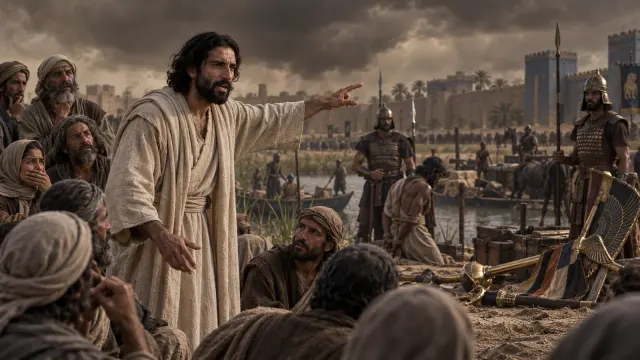
The Day Reaches Egypt's Allies and Cities
Egypt's collapse is announced as a day whose reach exceeds Egypt itself. Allies, neighboring peoples, cities, waterways, religious centers, and royal supports all enter the judgment, so the country's apparent network of strength becomes a network through which fear travels. Nebuchadrezzar is named as the human instrument, but the repeated divine declarations prevent the king of Babylon from becoming the ultimate explanation of his success. The oracle then moves across a map of Egyptian centers, naming places associated with idols, political authority, defenses, population, and prestige. A second dated word compresses the struggle into a bodily image. Pharaoh's arm is broken and cannot be bound strongly enough to hold the sword, while the king of Babylon's arms are strengthened and the LORD's sword is placed in his hand. Egypt's scattering follows from that transfer of effective strength, and the recurring conclusion is recognition of the LORD.
One complete chapter pageOpen chapter →
The Cedar That Rose Above Its Source
Pharaoh is told to look at Assyria and answer a question about greatness. Ezekiel turns the former empire into a cedar of extraordinary height, beauty, reach, and usefulness. Birds nest in its branches, animals gather beneath it, and nations live under its shade. Yet the poem keeps naming what lies below the visible magnificence: abundant water, roots, and finally God himself as the one who made the tree beautiful. The tree's error begins when its heart rises with its height. It is handed over, cut down, and abandoned until the branches that once sheltered life become fallen timber. The descent continues into the pit, where other former powers are already gathered. The final identification turns the comparison back on Egypt. Pharaoh is not being invited to admire a ruined predecessor from safety, but to recognize his own place inside the same pattern of dependence, pride, and descent.
One complete chapter pageOpen chapter →
Egypt Joins the Assembly of the Fallen
Ezekiel 32 closes the sequence against Egypt by stripping Pharaoh of every image of exceptional greatness. He is first a river creature whose strength fouls the waters, then prey caught in a net and cast out under darkened heavens. Babylon's sword empties the land until even the rivers run with the stillness of desolation. The second lament changes the scene from Egypt's collapse above ground to its arrival among powers already slain. Asshur, Elam, Meshech, Tubal, Edom, northern princes, and the Zidonians all retain their names and former reputations, but not their ability to escape the grave. Pharaoh's final comfort is severe: he discovers that others who once spread terror share his condition. Company is granted. Rescue is not.
One complete chapter pageOpen chapter →
The Warning Arrives, and Jerusalem Has Fallen
Ezekiel 33 returns to the watchman and makes responsibility painfully exact. Ezekiel must sound the warning he receives from the LORD, while the hearer remains responsible for what he does with it. The chapter then rejects two opposite evasions: despair that past wickedness makes turning useless, and confidence that past righteousness can excuse present wrongdoing. A fugitive finally arrives with the words, "The city is smitten," confirming Jerusalem's fall and marking a changed phase in the prophet's work. Survivors in the land misread Abraham as a numerical precedent for automatic inheritance, but their conduct contradicts the claim. The exiles present a different problem. They enjoy Ezekiel as though he were a lovely song, gathering eagerly to hear him while leaving their lives untouched by what they hear.
One complete chapter pageOpen chapter →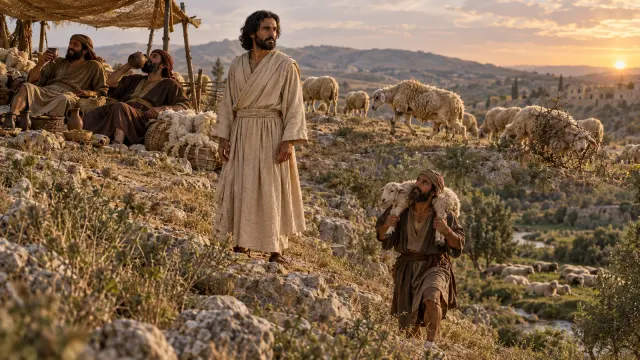
The Flock Is Taken Out of the Shepherds' Mouths
Ezekiel 34 turns Israel's leadership failure into the unforgettable image of shepherds eating the flock they were supposed to feed. The neglected duties are specific: the sick were not strengthened, the broken were not bound, the driven away were not brought back, and the lost were not sought. The LORD therefore removes the flock from the shepherds' mouths and repeatedly declares that he himself will search, gather, feed, heal, and give rest. Judgment also reaches inside the flock, where strong animals trample pasture, foul water, and shove the weak away. Restoration must answer both predatory leaders and predatory neighbors. One shepherd, God's servant David, is promised over the gathered people. The covenant of peace that follows has weather, food, safety, broken yokes, and sleep without fear, making restored care visible in ordinary life.
One complete chapter pageOpen chapter →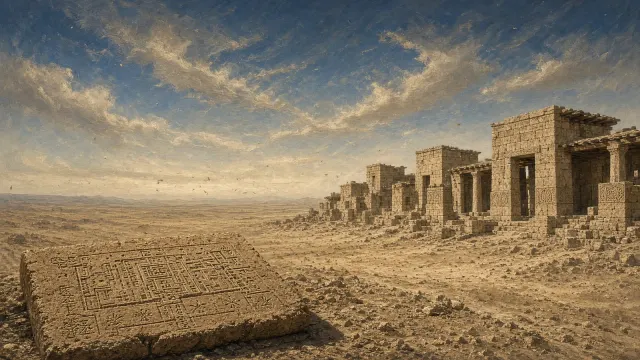
The Mountain That Wanted Its Neighbor's Land
Ezekiel 35 addresses Mount Seir at the point where Israel's land is about to become the subject of restoration. Edom's "perpetual hatred" has not remained an attitude. It became bloodshed at the moment of Israel's calamity, an attempt to turn a neighbor's judgment into an opportunity for violence and possession. The oracle answers that conduct in matching terms. Because Edom did not hate blood, blood becomes its pursuer. Because its hostility endured, desolation is described with enduring force. Most revealing is Edom's claim that the two countries will become its own. The LORD interrupts the assumption with the fact of his continuing presence and ownership. Israel's defeat did not create abandoned property. Edom's rejoicing over ruined inheritance is heard, remembered, and answered before the next chapter turns directly to Israel's mountains.
One complete chapter pageOpen chapter →
A Restored Land and a Heart That Can Answer
Ezekiel 36 begins by speaking to the mountains that enemies had mocked and claimed, then moves inward until the real restoration reaches the human heart. The land will be cultivated, populated, and made fruitful again, but the chapter refuses to base that future on a flattering account of Israel's past. Bloodshed and idols defiled the land, exile was judgment, and the LORD says plainly that he acts for his holy name. Gathering is therefore joined to cleansing. A stony heart is removed, a living heart is given, and God's Spirit is placed within the people so that renewed obedience grows from renewed persons. Material abundance follows rather than replacing this inward work. Ruined cities are rebuilt, fields yield again, and a land once described as devouring its inhabitants becomes able to hold them. Restoration remembers exactly why restoration was necessary.
One complete chapter pageOpen chapter →
The People Who Said Their Hope Was Gone
Ezekiel 37 gives hopelessness a landscape: a valley crowded with very dry bones. Ezekiel is made to inspect them before he is commanded to speak, and the vision carefully distinguishes assembly from life. Bones join, flesh and skin return, yet the bodies remain breathless until the breath is summoned and the host stands. God then interprets the sign himself as the whole house of Israel, a people saying that their hope is lost and they are cut off. A second sign uses two labeled pieces of wood for Judah and Joseph, making reunion as important as return. The promise gathers, cleanses, and joins the divided people under one king and one shepherd, God's servant David. The chapter's destination goes beyond survival: an everlasting covenant and God's sanctuary in their midst define the restored life.
One complete chapter pageOpen chapter →
The Invader Who Mistakes Peace for Opportunity
Ezekiel 38 introduces Gog with a massive coalition, careful military preparation, and an ambition the text itself names. He sees a gathered people dwelling securely in unwalled settlements and calculates that their peace has made them easy to plunder. Cattle, goods, silver, and gold keep the motive concrete. Yet Gog's intention does not exhaust the meaning of his movement. The LORD has already declared opposition to him and says the invasion will become an occasion for making his holiness known before the nations. The army arrives like a cloud, but the final confrontation removes the stable world beneath military planning. Earth shakes, mountains fall, weapons turn inward, and pestilence and overwhelming weather strike the coalition. The chapter ends not with Gog's strategy explained but with the LORD's greatness publicly disclosed.
One complete chapter pageOpen chapter →
The Spoil Becomes Fuel, and the Land Is Cleansed
Ezekiel 39 follows Gog's defeat beyond the moment of battle and into the long labor of aftermath. Weapons are knocked from the invaders' hands and then become fuel for the people they intended to despoil. The reversal is explicit: spoilers are spoiled and robbers robbed. Victory still leaves bodies, graves, bones, and a land that must be cleansed. Seven months of burial and continuing searches make the aftermath concrete rather than decorative. Birds and beasts are summoned to a terrible feast upon the fallen mighty, turning princely and military rank into no protection at all. The chapter then widens its explanation. Israel's former exile was not proof that its God had been defeated, but judgment for Israel's own iniquity. Gathering, restored divine favor, and the outpouring of the Spirit answer that estrangement and prepare for the sanctuary vision that follows.
One complete chapter pageOpen chapter →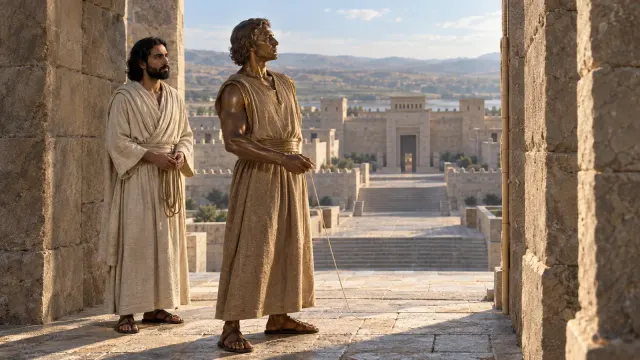
A Measuring Reed Where the Ruins Had Been
Ezekiel 40 begins fourteen years after Jerusalem was struck and replaces the sight of ruins with a vision of ordered space. Ezekiel is brought to the land, shown a great complex, and told to use eyes, ears, and heart because he must report what he sees. The measuring guide spends extraordinary time on gates, thresholds, chambers, windows, steps, posts, palms, and distances. The repetition is not empty. It establishes a coherent plan in which approach has direction and boundaries. As Ezekiel moves from the outer court toward the inner one, the chapter introduces rooms for washing offerings, tables for sacrifice, chambers for priests and singers, and the sons of Zadok in relation to altar service. Only at the end does the altar stand before the house and the prophet reach the sanctuary porch.
One complete chapter pageOpen chapter →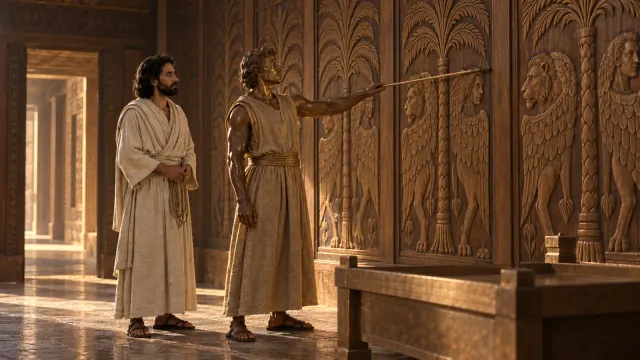
The House Within the Measured Courts
Ezekiel 41 moves inside the house that the preceding chapter approached so deliberately. The guide measures the main room and then enters the smaller square chamber identified as the most holy place, preserving a distinction between the guide's movement and Ezekiel's narrated access. Around the sanctuary rise side chambers whose structure remains separate from the main wall. A western building is measured without having its exact purpose supplied, reminding the reader that not every architectural question is answered. The description then turns from distances to worked surfaces. Wood paneling, palms, and two-faced cherubim cover the interior, making the sanctuary more than bare geometry. A wooden object is called an altar and then "the table that is before the LORD," and the chapter closes with folding doors, windows, palms, and carefully repeated decoration.
One complete chapter pageOpen chapter →
Holy Rooms and a Boundary That Matters
Ezekiel 42 turns to the large priestly chamber blocks facing the courts and explains why their arrangement matters. Northern and southern rooms, walks, galleries, doors, and narrowing upper levels are distinguished from the chambers attached directly to the sanctuary. Their purpose is then stated: priests who approach the LORD eat and store the most holy portions there, and the clothing used in ministry remains there when they return toward the people. Holiness is therefore maintained not only by walls but by food, garments, and ordinary movement through assigned spaces. The final measurement draws a square boundary around the whole complex. The KJV's reading of five hundred reeds creates a genuine scale question, but the stated function is plain. The wall separates the sanctuary from common space and makes the distinction visible.
One complete chapter pageOpen chapter →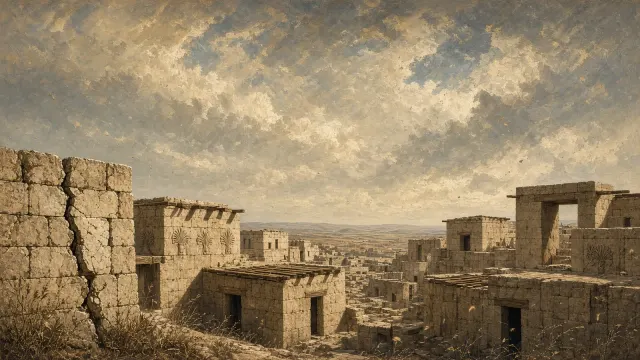
The Glory Returns by the Way It Left
Ezekiel 43 supplies what measurements alone could never provide: the return of the glory of the God of Israel. It comes from the east, reversing the direction of the earlier departure, and fills the house while Ezekiel falls on his face. The LORD then names the sanctuary as the place of his throne and enduring dwelling, while recalling the practices that had once pressed defilement against holy space. Ezekiel is told to show the house to Israel so that its ordered pattern exposes their iniquities rather than merely satisfying architectural curiosity. Attention then turns to the altar. Its levels, borders, horns, and steps are measured before a seven-day sequence of blood and offerings consecrates it. The chapter closes on the promised result of ordered approach: "I will accept you," saith the Lord GOD.
One complete chapter pageOpen chapter →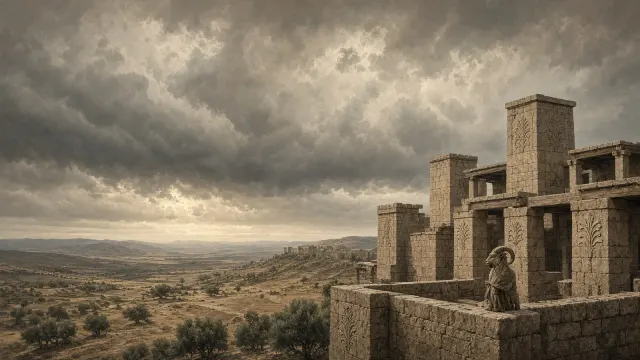
The House Has Servants, Not Self-Appointed Owners
Ezekiel 44 shows that restored presence does not produce casual access. The eastern outer gate remains shut precisely because the LORD has entered through it, while the prince receives a defined place to eat before him. Ezekiel again sees the glory filling the house, and the regulations that follow address failures of the former sanctuary order. Levites who participated in idolatry retain substantial service but lose priestly nearness, while the sons of Zadok, who kept the charge, approach the altar. Clothing, hair, wine, marriage, contact with death, teaching, and judgment all become part of priestly responsibility. The priests must distinguish holy from common and teach the people to do the same. Their inheritance is the LORD, yet the chapter immediately specifies food and offerings for their support. Sacred office includes both privilege and disciplined provision.
One complete chapter pageOpen chapter →
The Holy Portion and the Honest Measure
Ezekiel 45 places worship, civic life, royal authority, and economic justice inside one restored arrangement. Land is set apart for the sanctuary, priests, Levites, the city, and the prince, but the prince's portion is immediately paired with a prohibition against oppressing the people or swallowing their inheritance. Honest balances and fixed measures appear beside sanctuary regulations because public justice is not treated as a separate moral universe. The people's contributions go to the prince, yet his role is not simple accumulation. He must provide the recurring offerings for feasts, sabbaths, new moons, and other solemn occasions. The calendar then orders sanctuary cleansing, Passover, and another seven-day observance. The prince prepares a sin offering for himself as well as the people, keeping him within the worshiping community rather than above its need for ordered approach.
One complete chapter pageOpen chapter →
Gates, Daily Offerings, and Protected Homes
Ezekiel 46 turns restored worship into a working rhythm rather than a spectacle reserved for special days. The eastern gate opens for sabbaths and new moons, the prince supplies offerings and worships at the threshold, and the people share the occasion without his office swallowing the assembly. Festival movement is regulated from one gate to the opposite, voluntary offerings receive their own provisions, and the daily morning lamb keeps ordinary time inside the sanctuary's order. The chapter then shifts from worship to property and makes the same principle concrete: the prince may give from his own inheritance, but he may not dispossess the people to enrich his household. The closing kitchens complete the picture. Holiness includes where food is prepared, who handles it, and how sacred and common spaces remain distinct.
One complete chapter pageOpen chapter →
The River That Gives Life Beyond the Walls
Ezekiel 47 begins with water slipping from beneath the sanctuary and ends with inheritance reaching beyond native birth. The river grows deeper at each measured interval until Ezekiel can no longer cross it on foot, then flows east into the sea and changes its waters into a place of abundant fish and working fishermen. Trees along the banks bear continually because their water comes from the sanctuary, providing food and medicine even while the marshes remain distinct. The chapter then moves from miraculous abundance to borders, because restored life still requires an actual place to inhabit. The tribes receive a defined inheritance grounded in the LORD's oath, not in a new contest for land. Finally resident foreigners who have formed families among Israel receive portions within the tribes where they live. Life and inheritance both move outward from the center.
One complete chapter pageOpen chapter →
The City Whose Final Name Is Presence
Ezekiel 48 finishes the vision by turning promise into an ordered map of people, sanctuary, city, and ruler. Seven tribal portions are named north of the central offering and five south of it, completing the twelve without letting the sanctuary erase anyone from the inheritance. The central land is carefully divided among priests, Levites, the city, and the prince, with holy portions protected from sale and common civic land treated as a legitimate part of restored life. People from every tribe serve the city, so its maintenance belongs to the reunited community rather than to one tribal estate. The final measurements then move to the city's gates, which bear the names of Israel's tribes. After all the dimensions are stated, the closing name interprets the whole arrangement. Ezekiel ends not with a number but with presence: "The LORD is there."
One complete chapter pageOpen chapter →Source: eBible.org · eng-kjv2006