The big picture
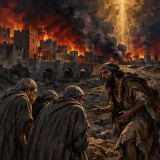
Jerusalem, Judah's capital, receives a rebuke through an extended picture of a woman. God tells his prophet Ezekiel to deliver it. The city begins as an abandoned infant whom God preserves. He later binds himself to her and gives her wealth and honour. She uses his gifts for idols, foreign lovers, and the sacrifice of children. The language is severe and includes sexual betrayal and violent punishment. It describes a city's breach with God, not permission to harm women. The chapter ends with shame and a promise of a lasting covenant.
In this chapter
- The Abandoned Infant Is Kept Alive Ezekiel 16:1-7
God pictures the city's beginnings in Canaan, the land of its early inhabitants.
- God Gives a Covenant and Royal Gifts Ezekiel 16:8-14
When the woman reaches the age for love, God covers her and swears a covenant with her.
- The Gifts Are Given to Idols Ezekiel 16:15-22
The city trusts its beauty and reputation, pictured as a woman offering herself to passers-by.
- The City Pays for Its Betrayal Ezekiel 16:23-34
Shrines stand throughout the streets as the city seeks more foreign lovers.
- Former Lovers Become Agents of Judgement Ezekiel 16:35-43
God gathers the city's lovers and enemies against it.
- The Despised Sisters Expose Greater Guilt Ezekiel 16:44-52
God names Samaria, the northern capital, and Sodom, a city known for grave sin, as Jerusalem's sisters.
- Restoration Comes with Public Shame Ezekiel 16:53-59
God speaks of restoring the fortunes of the two sisters and their dependent towns.
- God Remembers and Renews His Covenant Ezekiel 16:60-63
Despite the broken oath, God will remember the covenant from the city's youth and give it a lasting bond.
Central truth
Jerusalem turns God's rescue and gifts into means of betrayal, yet God promises a lasting covenant that leaves no room for pride.
Scripture beside the summary
Ezekiel · King James Version · 63Ezekiel 16:1-7
The Abandoned Infant Is Kept Alive
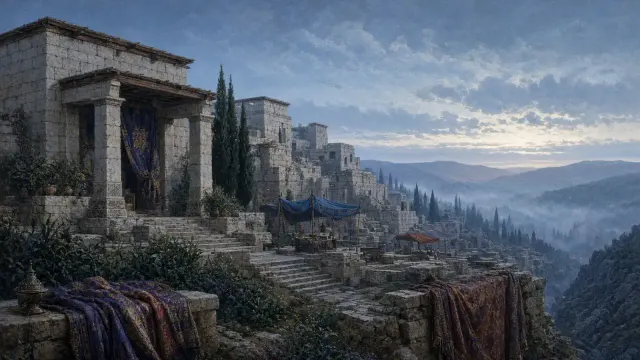
God pictures the city's beginnings in Canaan, the land of its early inhabitants. He calls her father an Amorite and her mother a Hittite, peoples of that land. The family picture accuses the city of sharing their ways. As an infant she received none of the usual care: no washing, cord cutting, or wrapping. She was left in a field without pity. God passed by and commanded her to live. Under his care she grew to maturity, though still unclothed. Her life began with help she had neither earned nor supplied for herself.
In everyday life
A care-leaver opens an old placement file and finds the record of people who ensured she survived her first months. The pages name needs she was too young to meet herself. She sits quietly with the evidence of that dependence. God uses an abandoned infant to describe a city's beginnings; the file concerns one person's actual care.
Notice
Ezekiel 16:6 The command to live is repeated while the infant remains in her blood. God's care begins before she has beauty, status, or any resource to offer.
Ezekiel 16:1-7
King James Version1Again the word of the LORD came unto me, saying,
2Son of man, cause Jerusalem to know her abominations,
3And say, Thus saith the Lord GOD unto Jerusalem; Thy birth and thy nativity is of the land of Canaan; thy father was an Amorite, and thy mother an Hittite.
4And as for thy nativity, in the day thou wast born thy navel was not cut, neither wast thou washed in water to supple thee; thou wast not salted at all, nor swaddled at all.
5None eye pitied thee, to do any of these unto thee, to have compassion upon thee; but thou wast cast out in the open field, to the lothing of thy person, in the day that thou wast born.
6And when I passed by thee, and saw thee polluted in thine own blood, I said unto thee when thou wast in thy blood, Live; yea, I said unto thee when thou wast in thy blood, Live.
7I have caused thee to multiply as the bud of the field, and thou hast increased and waxen great, and thou art come to excellent ornaments: thy breasts are fashioned, and thine hair is grown, whereas thou wast naked and bare.
Ezekiel 16:8-14
God Gives a Covenant and Royal Gifts
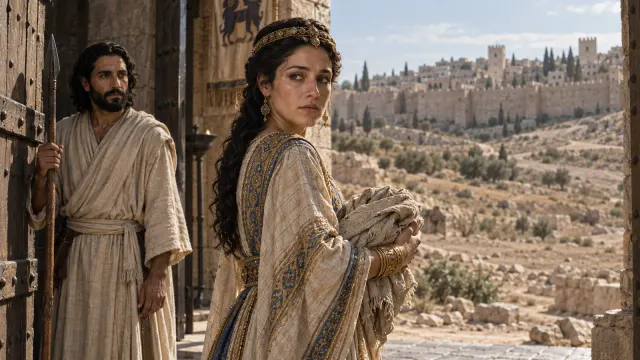
When the woman reaches the age for love, God covers her and swears a covenant with her. The picture becomes one of marriage. He washes her, anoints her with oil, and gives fine clothing, shoes, and jewels. Good food and a crown accompany these gifts. She grows into a kingdom, and other nations hear of her beauty. God says that her splendour comes from what he placed upon her. Her public standing is received within a bond with him. The gifts are not proof that she has become independent of their giver.

In everyday life
The newlywed craft worker lays a family necklace beside the deed to a home provided through shared trust. The gifts carry a bond, not merely a price. She reads the signed commitment before putting them away. God's covenant makes a city his own and gives it royal standing; a marriage gift cannot confer that national role.
Notice
Ezekiel 16:14 God traces the city's beauty to the splendour he gave her. The praise she receives from other nations rests on a gift whose source she will soon forget.
Ezekiel 16:8-14
King James Version8Now when I passed by thee, and looked upon thee, behold, thy time was the time of love; and I spread my skirt over thee, and covered thy nakedness: yea, I sware unto thee, and entered into a covenant with thee, saith the Lord GOD, and thou becamest mine.
9Then washed I thee with water; yea, I throughly washed away thy blood from thee, and I anointed thee with oil.
10I clothed thee also with broidered work, and shod thee with badgers’ skin, and I girded thee about with fine linen, and I covered thee with silk.
11I decked thee also with ornaments, and I put bracelets upon thy hands, and a chain on thy neck.
12And I put a jewel on thy forehead, and earrings in thine ears, and a beautiful crown upon thine head.
13Thus wast thou decked with gold and silver; and thy raiment was of fine linen, and silk, and broidered work; thou didst eat fine flour, and honey, and oil: and thou wast exceeding beautiful, and thou didst prosper into a kingdom.
14And thy renown went forth among the heathen for thy beauty: for it was perfect through my comeliness, which I had put upon thee, saith the Lord GOD.
Ezekiel 16:15-22
The Gifts Are Given to Idols
The city trusts its beauty and reputation, pictured as a woman offering herself to passers-by. She uses clothing to decorate shrines and turns God's gold and silver into images. Oil, incense, and food that he gave her are offered to those idols. Worse follows: sons and daughters are killed and burned as sacrifices. God calls them his children. The accusation joins misuse of gifts to the shedding of children's blood. Through it all, the city forgets its helpless beginning. The one once left without care now destroys lives entrusted to her.

In everyday life
A child-protection archivist reviews records of money meant for care. It was diverted while serious harm went unanswered. She keeps the children's names separate from the accounts. Money must not eclipse their lives. Ezekiel accuses the city of killing children as offerings to idols, a horror the records scene does not reenact.
Notice
Ezekiel 16:21 God calls the sacrificed children his own. Their deaths are not treated as possessions spent by parents, but as lives taken from the one who claims them.
Ezekiel 16:15-22
King James Version15But thou didst trust in thine own beauty, and playedst the harlot because of thy renown, and pouredst out thy fornications on every one that passed by; his it was.
16And of thy garments thou didst take, and deckedst thy high places with divers colours, and playedst the harlot thereupon: the like things shall not come, neither shall it be so.
17Thou hast also taken thy fair jewels of my gold and of my silver, which I had given thee, and madest to thyself images of men, and didst commit whoredom with them,
18And tookest thy broidered garments, and coveredst them: and thou hast set mine oil and mine incense before them.
19My meat also which I gave thee, fine flour, and oil, and honey, wherewith I fed thee, thou hast even set it before them for a sweet savour: and thus it was, saith the Lord GOD.
20Moreover thou hast taken thy sons and thy daughters, whom thou hast borne unto me, and these hast thou sacrificed unto them to be devoured. Is this of thy whoredoms a small matter,
21That thou hast slain my children, and delivered them to cause them to pass through the fire for them?
22And in all thine abominations and thy whoredoms thou hast not remembered the days of thy youth, when thou wast naked and bare, and wast polluted in thy blood.
Ezekiel 16:23-34
The City Pays for Its Betrayal
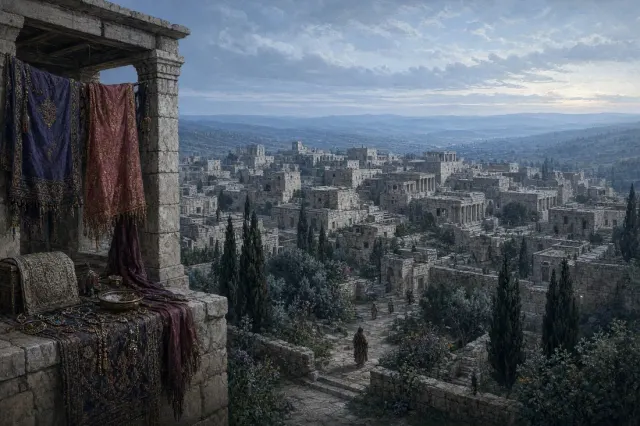
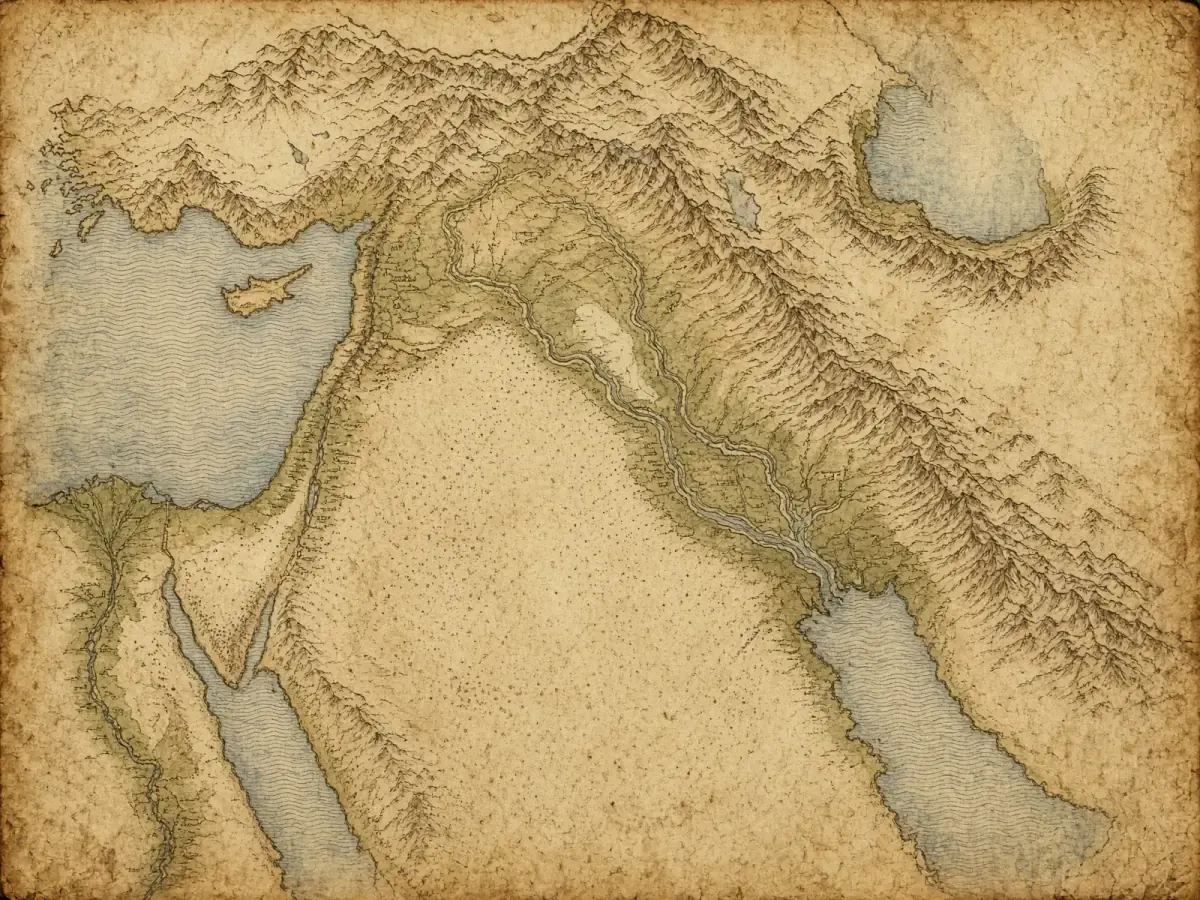
Shrines stand throughout the streets as the city seeks more foreign lovers. The sexual image describes its unfaithful ties and worship. It turns towards Egypt, the southern kingdom, then Assyria, a great foreign power, and Chaldea, the captors' land. God reduces its provision and gives it to hostile neighbours who despise its conduct. Still it is not satisfied. The picture then reverses normal payment: instead of receiving a prostitute's fee, the city pays others to come. It spends its own wealth to pursue betrayal. Its restless choices deepen the breach rather than meeting a need.
In everyday life
A cooperative treasurer finds payments to rival traders alongside promises of loyalty to the members. The spending is not a forced loss; the manager has paid to secure relationships that undermine the group. She sets the transfers beside the signed pledge. Ezekiel uses adultery to accuse a city's religious and foreign loyalties, not a trading dispute.
Notice
Ezekiel 16:33 The city gives gifts to its lovers instead of receiving payment. That reversal stresses how actively it spends resources to pursue the very ties God condemns.
Ezekiel 16:23-34
King James Version23And it came to pass after all thy wickedness, (woe, woe unto thee! saith the Lord GOD;)
24That thou hast also built unto thee an eminent place, and hast made thee an high place in every street.
25Thou hast built thy high place at every head of the way, and hast made thy beauty to be abhorred, and hast opened thy feet to every one that passed by, and multiplied thy whoredoms.
26Thou hast also committed fornication with the Egyptians thy neighbours, great of flesh; and hast increased thy whoredoms, to provoke me to anger.
27Behold, therefore I have stretched out my hand over thee, and have diminished thine ordinary food, and delivered thee unto the will of them that hate thee, the daughters of the Philistines, which are ashamed of thy lewd way.
28Thou hast played the whore also with the Assyrians, because thou wast unsatiable; yea, thou hast played the harlot with them, and yet couldest not be satisfied.
29Thou hast moreover multiplied thy fornication in the land of Canaan unto Chaldea; and yet thou wast not satisfied herewith.
30How weak is thine heart, saith the Lord GOD, seeing thou doest all these things, the work of an imperious whorish woman;
31In that thou buildest thine eminent place in the head of every way, and makest thine high place in every street; and hast not been as an harlot, in that thou scornest hire;
32But as a wife that committeth adultery, which taketh strangers instead of her husband!
33They give gifts to all whores: but thou givest thy gifts to all thy lovers, and hirest them, that they may come unto thee on every side for thy whoredom.
34And the contrary is in thee from other women in thy whoredoms, whereas none followeth thee to commit whoredoms: and in that thou givest a reward, and no reward is given unto thee, therefore thou art contrary.
Ezekiel 16:35-43
Former Lovers Become Agents of Judgement
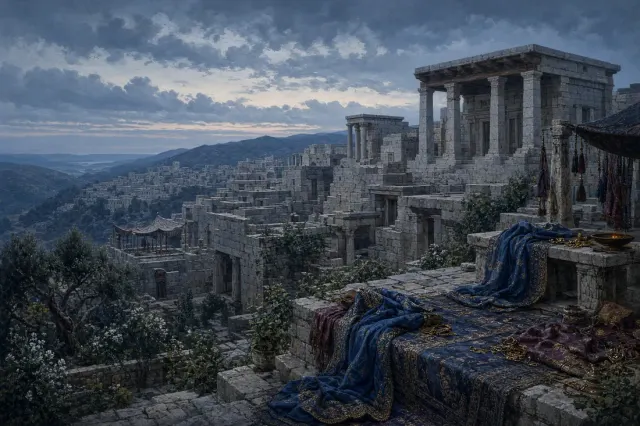
God gathers the city's lovers and enemies against it. Within the woman image, he announces public exposure and judgement for adultery and bloodshed. They will strip away clothes and jewels, destroy shrines, stone and pierce her, and burn houses. The account is violent: the city's ruin is pictured through an assaulted woman. God says this will end her paid pursuit of lovers and bring his anger to rest. He ties the punishment to forgotten rescue and accumulated evil. The image must not be turned into an instruction for human violence against women.
In everyday life
A trauma-informed guide pauses a reading of an ancient city's destruction to make room for listeners affected by its language. She names the violence plainly and refuses to perform it for the audience. The weight remains without a reenactment. Ezekiel presents the ruin as God's judgement through a severe image, not as a guide's chosen teaching device.
Notice
Ezekiel 16:39 The stripping takes away clothing and jewels once given by God. The loss reverses the earlier gifts and leaves the city's claimed splendour unable to protect it.
Ezekiel 16:35-43
King James Version35Wherefore, O harlot, hear the word of the LORD:
36Thus saith the Lord GOD; Because thy filthiness was poured out, and thy nakedness discovered through thy whoredoms with thy lovers, and with all the idols of thy abominations, and by the blood of thy children, which thou didst give unto them;
37Behold, therefore I will gather all thy lovers, with whom thou hast taken pleasure, and all them that thou hast loved, with all them that thou hast hated; I will even gather them round about against thee, and will discover thy nakedness unto them, that they may see all thy nakedness.
38And I will judge thee, as women that break wedlock and shed blood are judged; and I will give thee blood in fury and jealousy.
39And I will also give thee into their hand, and they shall throw down thine eminent place, and shall break down thy high places: they shall strip thee also of thy clothes, and shall take thy fair jewels, and leave thee naked and bare.
40They shall also bring up a company against thee, and they shall stone thee with stones, and thrust thee through with their swords.
41And they shall burn thine houses with fire, and execute judgments upon thee in the sight of many women: and I will cause thee to cease from playing the harlot, and thou also shalt give no hire any more.
42So will I make my fury toward thee to rest, and my jealousy shall depart from thee, and I will be quiet, and will be no more angry.
43Because thou hast not remembered the days of thy youth, but hast fretted me in all these things; behold, therefore I also will recompense thy way upon thine head, saith the Lord GOD: and thou shalt not commit this lewdness above all thine abominations.
Ezekiel 16:44-52
The Despised Sisters Expose Greater Guilt
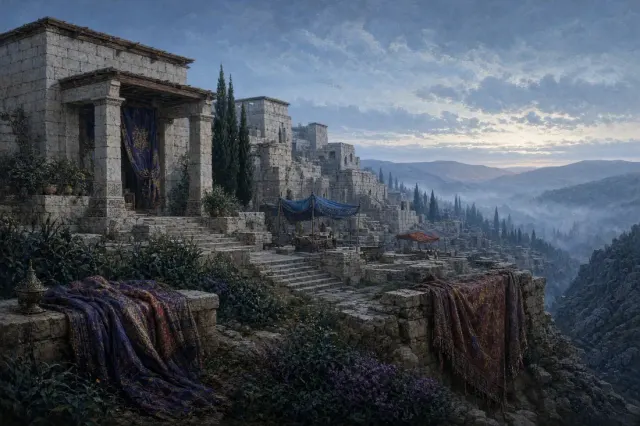
God names Samaria, the northern capital, and Sodom, a city known for grave sin, as Jerusalem's sisters. The city has surpassed both in wrongdoing. Sodom was proud, well fed, and at ease, yet failed to help poor people. It also acted arrogantly and committed detestable acts, so God removed it. Samaria's sins are described as far fewer than Jerusalem's. The city that judged its sisters must now bear its own shame. Its conduct makes theirs look more righteous by comparison. Contempt for another community cannot prove innocence when the accuser's own acts are worse.
In everyday life
A residents' association chair reads complaints about neglected neighbours after years of criticising another estate. Full cupboards and well-kept gardens stand beside requests for help that her group ignored. She puts aside the comparison that once made them feel superior. God's charge includes idolatry and greater guilt before him, not merely a failure of neighbourhood care.
Notice
Ezekiel 16:49 Sodom's guilt includes abundance without help for poor and needy people. The charge names what the city withheld as well as the proud attitude behind it.
Ezekiel 16:44-52
King James Version44Behold, every one that useth proverbs shall use this proverb against thee, saying, As is the mother, so is her daughter.
45Thou art thy mother’s daughter, that lotheth her husband and her children; and thou art the sister of thy sisters, which lothed their husbands and their children: your mother was an Hittite, and your father an Amorite.
46And thine elder sister is Samaria, she and her daughters that dwell at thy left hand: and thy younger sister, that dwelleth at thy right hand, is Sodom and her daughters.
47Yet hast thou not walked after their ways, nor done after their abominations: but, as if that were a very little thing, thou wast corrupted more than they in all thy ways.
48As I live, saith the Lord GOD, Sodom thy sister hath not done, she nor her daughters, as thou hast done, thou and thy daughters.
49Behold, this was the iniquity of thy sister Sodom, pride, fulness of bread, and abundance of idleness was in her and in her daughters, neither did she strengthen the hand of the poor and needy.
50And they were haughty, and committed abomination before me: therefore I took them away as I saw good.
51Neither hath Samaria committed half of thy sins; but thou hast multiplied thine abominations more than they, and hast justified thy sisters in all thine abominations which thou hast done.
52Thou also, which hast judged thy sisters, bear thine own shame for thy sins that thou hast committed more abominable than they: they are more righteous than thou: yea, be thou confounded also, and bear thy shame, in that thou hast justified thy sisters.
Ezekiel 16:53-59
Restoration Comes with Public Shame
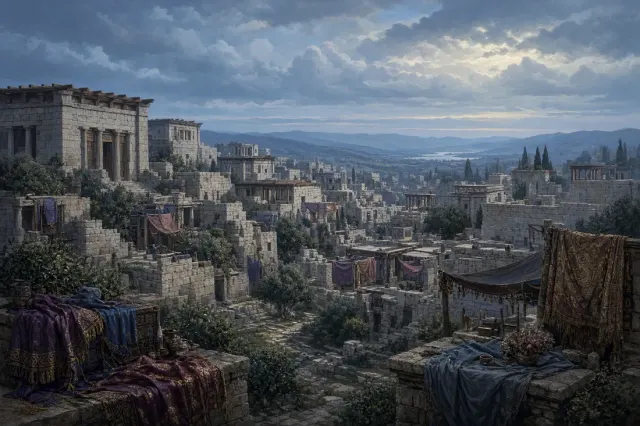
God speaks of restoring the fortunes of the two sisters and their dependent towns. Jerusalem's restoration will come alongside theirs. It must bear shame for conduct that has made those it despised seem less guilty. Once too proud even to speak of Sodom, it now faces contempt from surrounding peoples. The reversal strips away its former claim to superiority. God says he will deal with it according to its own breach of the oath. The promise of restoration does not pretend that the covenant was kept or that the shame has no cause.
In everyday life
A returning club member takes her place beside people she once demanded should be excluded. The reinstatement letter covers them too, and the record of her own conduct lies before the committee. Return gives her no ground for renewed contempt. God promises restoration among cities under his judgement, not membership restored by a committee vote.
Notice
Ezekiel 16:54 The city's conduct has become a comfort to its sisters because it is worse than theirs. That comparison brings shame rather than allowing a proud claim to special treatment.
Ezekiel 16:53-59
King James Version53When I shall bring again their captivity, the captivity of Sodom and her daughters, and the captivity of Samaria and her daughters, then will I bring again the captivity of thy captives in the midst of them:
54That thou mayest bear thine own shame, and mayest be confounded in all that thou hast done, in that thou art a comfort unto them.
55When thy sisters, Sodom and her daughters, shall return to their former estate, and Samaria and her daughters shall return to their former estate, then thou and thy daughters shall return to your former estate.
56For thy sister Sodom was not mentioned by thy mouth in the day of thy pride,
57Before thy wickedness was discovered, as at the time of thy reproach of the daughters of Syria, and all that are round about her, the daughters of the Philistines, which despise thee round about.
58Thou hast borne thy lewdness and thine abominations, saith the LORD.
59For thus saith the Lord GOD; I will even deal with thee as thou hast done, which hast despised the oath in breaking the covenant.
Ezekiel 16:60-63
God Remembers and Renews His Covenant
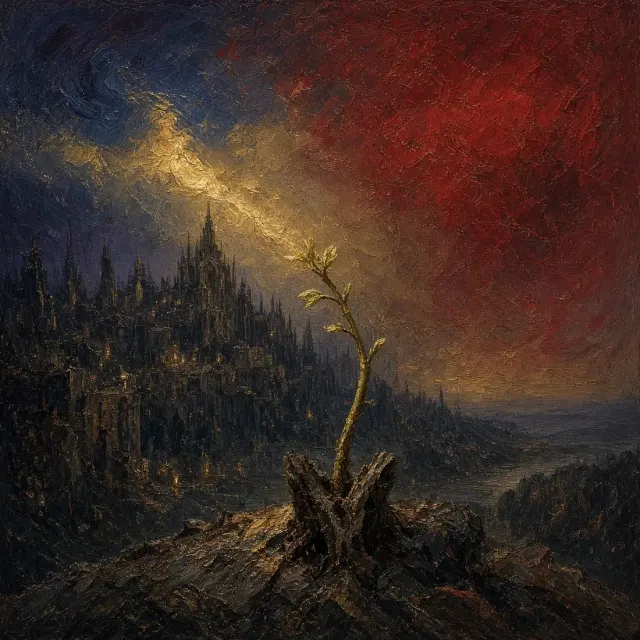
Despite the broken oath, God will remember the covenant from the city's youth and give it a lasting bond. The city will recall its ways and feel shame when its sisters are given to it as daughters. This gift will not rest on its own covenant claim. God will make his commitment firm, and the city will know him. Forgiveness will leave it without a proud answer for what it has done. The last word is not earned innocence. It is God's remembered commitment, received by a people who can no longer boast.
In everyday life
An estranged heir receives a letter restoring a family bond after years of broken promises. The letter also welcomes relatives she once scorned. She reads it without preparing a defence of her conduct, because the kindness leaves that defence hollow. God's lasting covenant and forgiveness concern his people, not an inheritance decision within one household.
Notice
Ezekiel 16:63 The city's silence follows God's being reconciled towards it. Remembered wrongdoing remains shameful even within forgiveness; the renewed bond does not rewrite the past as innocence.
Ezekiel 16:60-63
King James Version60Nevertheless I will remember my covenant with thee in the days of thy youth, and I will establish unto thee an everlasting covenant.
61Then thou shalt remember thy ways, and be ashamed, when thou shalt receive thy sisters, thine elder and thy younger: and I will give them unto thee for daughters, but not by thy covenant.
62And I will establish my covenant with thee; and thou shalt know that I am the LORD:
63That thou mayest remember, and be confounded, and never open thy mouth any more because of thy shame, when I am pacified toward thee for all that thou hast done, saith the Lord GOD.
Details worth noticing
The opening image
Ezekiel 16:1 begins with “Again the word of the LORD came unto me, saying,”
Where the chapter turns
Ezekiel 16:32 forms a natural hinge: “But as a wife that committeth adultery, which taketh strangers instead of her husband!”
The final note
Ezekiel 16:63 leaves the reader with “That thou mayest remember, and be confounded, and never open thy mouth any more because of thy shame, when I am pacified toward thee for all that thou hast…”
A word trail through the chapter
The words daughters, LORD, wast, abominations, blood, whoredoms help reveal the chapter’s repeated concerns.
KJV words made clear
- nativity
- Birth or the circumstances surrounding the start of life.
- swaddled
- Wrapped snugly in cloths, as an infant is cared for.
- covenant
- A binding commitment that forms a relationship with stated obligations.
Music and video connected to the passage
Related media appears when its Scripture reference overlaps this study. Music and video can illuminate a theme while the biblical text remains the foundation.