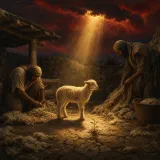
The big picture
Damascus, the capital of Syria, faces ruin alongside Israel, God's people in the northern kingdom. Isaiah, God's prophet, also calls that kingdom Ephraim and Jacob. Their former strength will be thinned like a field after harvest. A few survivors remain, and attention turns from handmade objects of worship to God. The closing scene hears nations rushing like a great sea. Their noise seems overwhelming until God rebukes them. The force that threatens at evening is gone before morning.
In this chapter
- A Great Harvest Leaves Only a Few Isaiah 17:1-6
God announces that Damascus will become a heap of ruins.
- People Look Beyond the Things They Made Isaiah 17:7-11
In that day people will look towards their Maker, the holy God of Israel.
- The Roaring Nations Scatter Before Morning Isaiah 17:12-14
The prophet hears many peoples rushing like a loud sea.
Central truth
God strips away proud strength and false worship, preserves a few survivors, and rebukes the nations that come to plunder his people.

Scripture beside the summary
Isaiah · King James Version · 14Isaiah 17:1-6
A Great Harvest Leaves Only a Few
God announces that Damascus will become a heap of ruins. The towns of Aroer, a named district, will be left for flocks to occupy without fear. Israel loses its fortress, and Syria loses its kingdom. Jacob's glory becomes like a body wasting away. The image then shifts to grain gathered in Rephaim, a valley used for farming. Most of the crop is removed. A few olives remain beyond reach on the branches. Those scattered pieces of fruit picture the small number who survive the loss of national strength.
In everyday life
A harvest worker looks across a stripped orchard after the picking crews leave. He spots a few olives high above the bare lower branches and counts what remains. The visible handful shows how much has gone. Isaiah's harvest measures surviving people after judgement, not the success of a farming season.
Notice
Isaiah 17:6 The remaining fruit is scattered on high and outer branches. Survival is real, but the image prevents the small remnant from being mistaken for an untouched nation.
Isaiah 17:1-6
King James Version1The burden of Damascus. Behold, Damascus is taken away from being a city, and it shall be a ruinous heap.
2The cities of Aroer are forsaken: they shall be for flocks, which shall lie down, and none shall make them afraid.
3The fortress also shall cease from Ephraim, and the kingdom from Damascus, and the remnant of Syria: they shall be as the glory of the children of Israel, saith the LORD of hosts.
4And in that day it shall come to pass, that the glory of Jacob shall be made thin, and the fatness of his flesh shall wax lean.
5And it shall be as when the harvestman gathereth the corn, and reapeth the ears with his arm; and it shall be as he that gathereth ears in the valley of Rephaim.
6Yet gleaning grapes shall be left in it, as the shaking of an olive tree, two or three berries in the top of the uppermost bough, four or five in the outmost fruitful branches thereof, saith the LORD God of Israel.
Isaiah 17:7-11
People Look Beyond the Things They Made
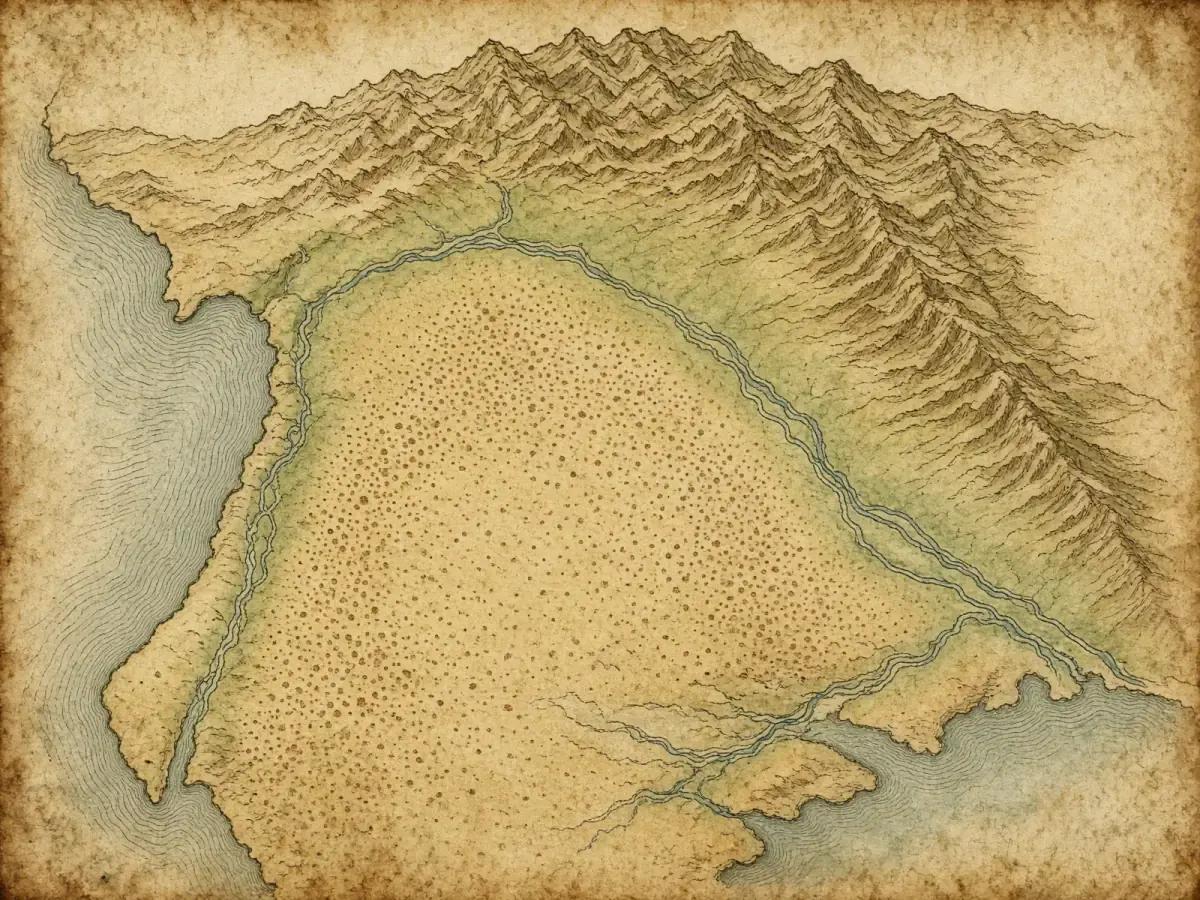
In that day people will look towards their Maker, the holy God of Israel. Their own altars and sacred objects will no longer hold their trust. Strong cities become abandoned places. The reason is that the people forgot the God who rescued them and served as their rock of strength. They carefully plant pleasing gardens with foreign cuttings and watch early growth appear. Yet the promised crop becomes grief at harvest. Skilled care for what they planted cannot replace the God they have left out of their lives.
In everyday life
A greenhouse owner tends imported seedlings while neglecting the cracked main water tank. The first leaves look healthy, but the supply fails before the crop matures. He stands among the beds with nothing ready to gather. Isaiah's failure comes from forgetting the saving God, not merely neglecting a farm's water system.
Notice
Isaiah 17:10 The forgotten one is named as the God of rescue and the rock of strength. The charge concerns abandoned dependence on someone who had already sustained them.
Isaiah 17:7-11
King James Version7At that day shall a man look to his Maker, and his eyes shall have respect to the Holy One of Israel.
8And he shall not look to the altars, the work of his hands, neither shall respect that which his fingers have made, either the groves, or the images.
9In that day shall his strong cities be as a forsaken bough, and an uppermost branch, which they left because of the children of Israel: and there shall be desolation.
10Because thou hast forgotten the God of thy salvation, and hast not been mindful of the rock of thy strength, therefore shalt thou plant pleasant plants, and shalt set it with strange slips:
11In the day shalt thou make thy plant to grow, and in the morning shalt thou make thy seed to flourish: but the harvest shall be a heap in the day of grief and of desperate sorrow.
Isaiah 17:12-14
The Roaring Nations Scatter Before Morning
The prophet hears many peoples rushing like a loud sea. Their force seems to fill the world with moving water. God rebukes them, and they flee far away. The image changes from a sea to dry chaff blown from mountains and light debris chased by a storm. Evening brings terror, but by morning the threat is gone. Isaiah identifies this as the fate of those who rob and plunder his people. Their loud approach does not determine the outcome once God speaks against them.
In everyday life
A campsite warden stands beside tents shaking in a sudden night squall. By first light the wind has dropped, and he gathers the loose leaves driven across the ground. What filled every ear has passed. Isaiah's swift reversal concerns God scattering invading nations, not the natural end of a storm.
Notice
Isaiah 17:14 The change from evening to morning makes the reversal abrupt. The robbers' apparent strength lasts only until the point set by God's rebuke.
Isaiah 17:12-14
King James Version12Woe to the multitude of many people, which make a noise like the noise of the seas; and to the rushing of nations, that make a rushing like the rushing of mighty waters!
13The nations shall rush like the rushing of many waters: but God shall rebuke them, and they shall flee far off, and shall be chased as the chaff of the mountains before the wind, and like a rolling thing before the whirlwind.
14And behold at eveningtide trouble; and before the morning he is not. This is the portion of them that spoil us, and the lot of them that rob us.
Details worth noticing
The opening image
Isaiah 17:1 begins with “The burden of Damascus. Behold, Damascus is taken away from being a city, and it shall be a ruinous heap.”
Where the chapter turns
Isaiah 17:7 forms a natural hinge: “At that day shall a man look to his Maker, and his eyes shall have respect to the Holy One of Israel.”
The final note
Isaiah 17:14 leaves the reader with “And behold at eveningtide trouble; and before the morning he is not. This is the portion of them that spoil us, and the lot of them that rob us.”
A word trail through the chapter
The words Israel, rushing, Damascus, bough, children, cities help reveal the chapter’s repeated concerns.
KJV words made clear
- gleaning
- Gathering the small amount of fruit or grain left after the main harvest.
- strange slips
- Foreign plant cuttings set in the ground to grow.
Music and video connected to the passage
Related media appears when its Scripture reference overlaps this study. Music and video can illuminate a theme while the biblical text remains the foundation.